
Understanding the future of your financial security requires a deep dive into one of the most significant pillars of American retirement: Social Security. For many, the question “What would my social security benefit be?” is not just a matter of curiosity, but a fundamental component of long-term wealth management and lifestyle planning. While the Social Security Administration (SSA) provides annual statements, the actual math behind your monthly check is governed by a complex set of variables, including your earnings history, the timing of your claim, and even your marital status. To build a robust financial plan, you must look beyond the surface level and understand the mechanics that dictate your future cash flow.
Understanding the Foundation of Social Security Calculations
The journey to determining your benefit begins with your Lifetime Earnings Record. Unlike many private pension plans that might only look at your “high five” years of earnings, Social Security considers a much broader window. The system is designed to reward long-term participation in the workforce while providing a progressive structure that assists lower-income earners.
The Role of Average Indexed Monthly Earnings (AIME)
The first step the SSA takes is identifying your 35 highest-earning years. If you worked for 40 years, the five years with the lowest inflation-adjusted earnings are dropped. Conversely, if you worked for only 30 years, the formula will include five years of “zero” income, which significantly drags down the average.
These earnings are “indexed” to account for changes in average wages over time. This ensures that the $20,000 you earned in 1990 is weighted appropriately against the $60,000 you might earn today. Once the top 35 years are selected and indexed, they are summed and divided by 420 (the number of months in 35 years) to produce your Average Indexed Monthly Earnings (AIME).
Primary Insurance Amount (PIA) and Bend Points
Your AIME is not the amount you receive. Instead, the SSA applies a formula to your AIME to determine your Primary Insurance Amount (PIA). This formula is progressive, meaning it replaces a higher percentage of lower earnings and a lower percentage of higher earnings.
The formula uses “bend points,” which are dollar thresholds that change annually. For a worker reaching age 62 in 2024, the PIA formula is the sum of:
-
90% of the first $1,174 of AIME.
-
32% of AIME between $1,174 and $7,078.
-
15% of AIME above $7,078.
This PIA represents the monthly benefit you are entitled to if you claim at exactly your Full Retirement Age (FRA).
Key Factors That Influence Your Monthly Payout
While the PIA sets the baseline, your actual monthly check is rarely equal to that number. The timing of your application is perhaps the most significant lever you have in controlling your financial outcome.
Age Matters: Early Retirement vs. Full Retirement Age (FRA)
For everyone born in 1960 or later, the Full Retirement Age is 67. You can choose to begin receiving benefits as early as age 62, but doing so comes with a permanent “reduction for early retirement.” If your FRA is 67 and you claim at 62, your benefit is reduced by 30%. This reduction is prorated monthly; for every month you claim before your FRA, your check is slightly smaller.
This reduction is designed to be actuarially neutral, meaning that if you live to the average life expectancy, the total amount you receive over your lifetime should be roughly the same whether you start early or at your FRA. However, for those in good health with a family history of longevity, claiming early can result in leaving hundreds of thousands of dollars on the table over a thirty-year retirement.
The Power of Delayed Retirement Credits
On the other side of the spectrum, you can choose to delay your benefits past your FRA. For every year you wait beyond age 67, up until age 70, your benefit increases by 8% per year in “delayed retirement credits.”
This means that by waiting until age 70, you can receive 124% of your PIA. There is no financial incentive to wait past age 70, as the credits stop accumulating. For many high-net-worth individuals or those still working in their late 60s, waiting until 70 acts as a form of “longevity insurance,” guaranteeing the highest possible inflation-adjusted floor for the remainder of their lives.
The Impact of the 35-Year Work History
It is vital to reiterate the impact of “zeros” in your work history. If you are at year 33 of your career and considering early retirement, working just two more years could replace two “zero-income” years from your early twenties with high-earning years from your peak career phase. This can result in a disproportionate boost to your AIME and, subsequently, your monthly benefit.
Strategic Considerations for Maximizing Your Benefit
Social Security is not just an individual benefit; it is often a household asset. Strategic planning involving spouses can significantly alter the “what would my benefit be” equation.
Spousal and Survivor Benefits
If you are married, you may be eligible for a spousal benefit that can be up to 50% of your spouse’s PIA. This is particularly relevant for households where one spouse earned significantly more than the other. The SSA will automatically provide you with the higher of your own earned benefit or the spousal benefit.
Furthermore, survivor benefits are a critical component of estate and protection planning. When one spouse passes away, the surviving spouse is entitled to the higher of the two monthly checks currently being received by the household. This is a primary reason why the higher-earning spouse is often encouraged to delay their benefit until age 70; doing so maximizes the “survivor floor” for the remaining spouse.
The Impact of Post-Retirement Earnings
Many retirees choose to work part-time, but if you do so before reaching your FRA, you must be aware of the Social Security Earnings Test. In 2024, if you are under FRA, the SSA deducts $1 from your benefits for every $2 you earn above $22,320. In the year you reach FRA, the threshold increases significantly.
It is important to note that these “withheld” benefits are not lost forever. Once you reach FRA, the SSA recalculates your benefit amount to account for the months they withheld payment, effectively giving you a “raise” to compensate for the earlier deductions. However, from a cash-flow perspective, working while claiming early can lead to unexpected shortfalls.
Taxation of Social Security Benefits
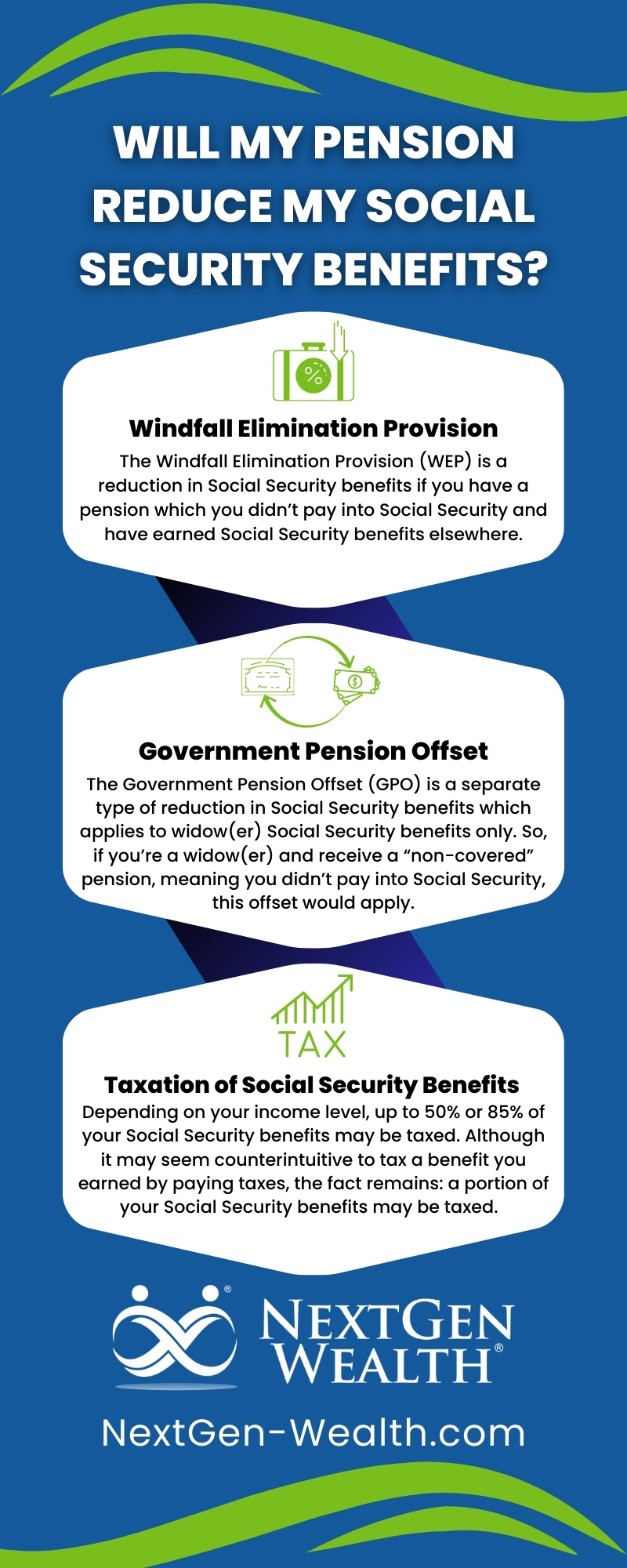
The “net” benefit you receive may be lower than the “gross” benefit calculated by the SSA due to federal income taxes. Your benefits are taxed based on your “provisional income,” which is the sum of your Adjusted Gross Income (AGI), non-taxable interest, and half of your Social Security benefits.
-
If your provisional income is between $25,000 and $34,000 (individual) or $32,000 and $44,000 (joint), up to 50% of your benefits may be taxable.
-
If your provisional income exceeds those ranges, up to 85% of your benefits may be subject to income tax.
Understanding this tax drag is essential for accurate retirement budgeting.
Integrating Social Security into a Broader Financial Plan
Social Security was never intended to be the sole source of income for retirees; it was designed to be a “safety net.” On average, it replaces about 40% of an average worker’s pre-retirement income. To maintain your lifestyle, you must integrate this benefit with your other assets.
The “Bridge Strategy”
A common sophisticated strategy involves using 401(k) or IRA distributions to “bridge” the gap between your retirement date and age 70. Instead of claiming Social Security at 65, you might withdraw more from your private investments for five years to allow your Social Security benefit to grow by 8% annually. Because Social Security is inflation-indexed and backed by the federal government, this 8% “return” is often more attractive than the volatile returns of the stock market.
Longevity Risk and the Safety Net
The greatest risk in modern retirement is “outliving your money.” Most assets—like stocks, bonds, and cash—can be depleted. Social Security, however, is a life annuity. It continues as long as you are alive and is adjusted annually for the Cost of Living (COLA). When calculating “what would my benefit be,” you should view the result as the foundation of your portfolio’s “fixed-income” allocation. The higher your guaranteed Social Security check, the more aggressively you may be able to invest your remaining portfolio, or conversely, the less you have to worry about market downturns affecting your ability to pay for basic necessities.
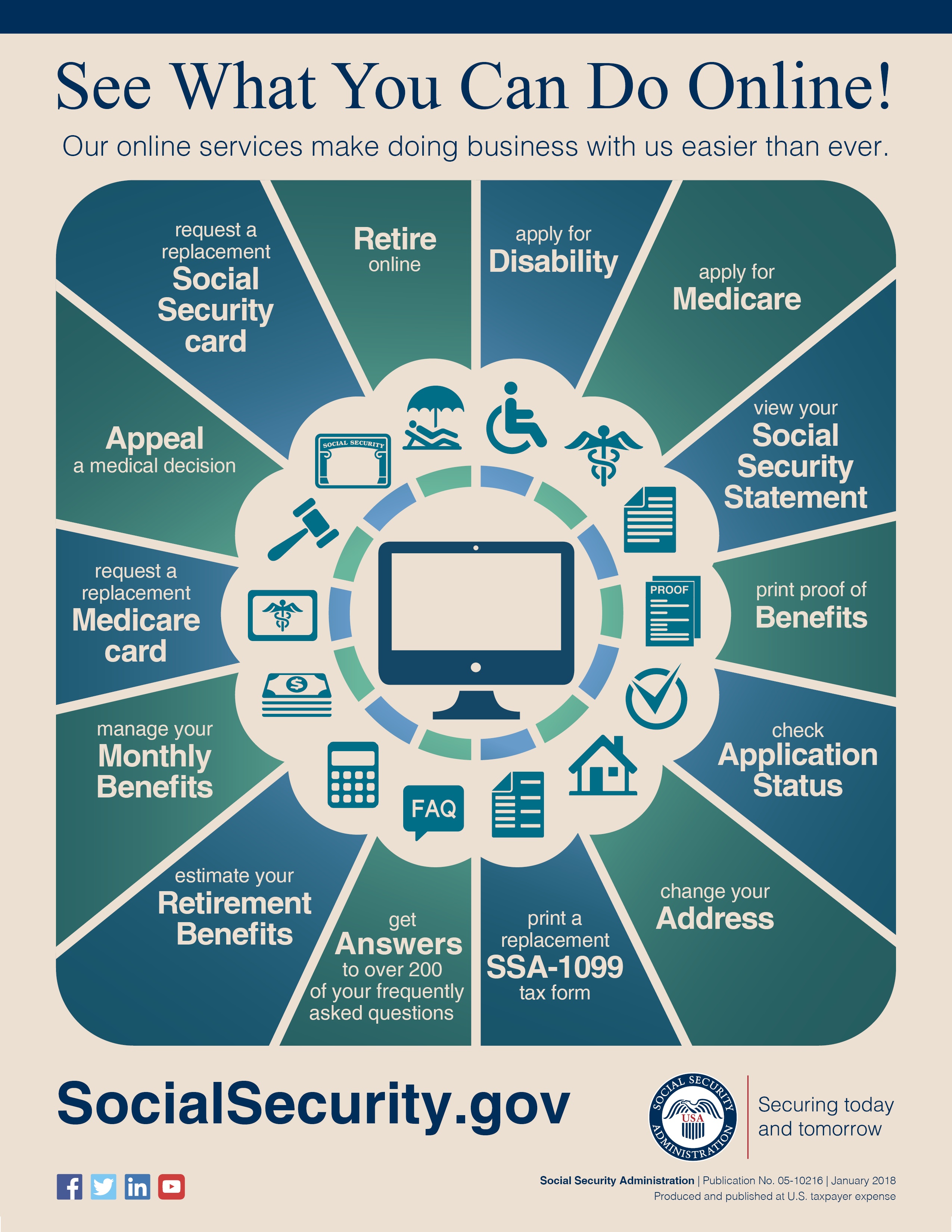
Determining your Social Security benefit is a dynamic process. By creating a “my Social Security” account on the SSA website, you can access your actual earnings record and see real-time estimates based on various claiming ages. However, the true value lies in understanding the variables—the 35-year rule, the bend points, the 8% delay credits, and the tax implications—to ensure that when you finally do click “apply,” you are doing so with a strategy that maximizes your lifetime wealth.
aViewFromTheCave is a participant in the Amazon Services LLC Associates Program, an affiliate advertising program designed to provide a means for sites to earn advertising fees by advertising and linking to Amazon.com. Amazon, the Amazon logo, AmazonSupply, and the AmazonSupply logo are trademarks of Amazon.com, Inc. or its affiliates. As an Amazon Associate we earn affiliate commissions from qualifying purchases.