
The dream of human life on Mars is no longer confined to the realm of science fiction; it is rapidly becoming a tangible goal for space agencies and private enterprises alike. However, realizing this audacious vision hinges entirely on our ability to develop, deploy, and master an unprecedented suite of advanced technologies. Life on Mars would not merely involve living with technology; it would be defined by it, an intricate ballet between human ingenuity and the harsh realities of an alien world. From the air we breathe to the food we eat and the homes we inhabit, every aspect of Martian existence will be a testament to technological prowess.

Establishing the Martian Frontier: Essential Infrastructure Technology
Before humans can even contemplate daily life on Mars, the foundational infrastructure must be established. This demands cutting-edge technological solutions for construction, environmental control, power generation, and communication, all designed to function autonomously or semi-autonomously in an unforgiving extraterrestrial environment.
Habitat Construction and Material Science
The first critical challenge is building shelters that can withstand Mars’s thin atmosphere, intense radiation, extreme temperatures, and pervasive dust storms. Early concepts include inflatable habitats, offering lightweight transport and rapid deployment, which would then be covered with Martian regolith (soil) for radiation shielding. More permanent structures would likely leverage additive manufacturing (3D printing) technologies, using locally sourced regolith mixed with polymer binders or sintered directly. This “building with local resources” significantly reduces the logistical burden of transporting materials from Earth. Advanced material sciences are also crucial, focusing on developing lightweight, high-strength composites that are resilient to cosmic radiation, UV exposure, and thermal cycling, potentially incorporating self-healing properties for long-term durability. Robotics and AI-driven construction systems would be indispensable, performing most of the hazardous building tasks before human arrival.
Advanced Life Support Systems (LSS)
The very breath of Martian life depends on sophisticated Closed-Loop Life Support Systems (CLLS). Unlike Earth’s natural biosphere, a Martian habitat must artificially create and sustain a breathable atmosphere, potable water, and manageable waste. This involves an array of interlinked technologies: atmospheric processing units that scrub carbon dioxide and generate oxygen, potentially through electrolysis of water ice or advanced chemical reactions; water reclamation systems that filter and recycle every drop of wastewater, urine, and atmospheric condensate with near-perfect efficiency; and environmental control systems (ECS) that precisely regulate temperature, humidity, and pressure within habitats. Bioregenerative life support systems, incorporating plants and potentially microorganisms, offer a more sustainable, long-term approach by naturally recycling air, water, and nutrients, mimicking Earth’s ecosystems on a smaller scale. These systems are not merely passive filters but active, self-regulating biological and mechanical networks.
Power Generation and Storage Solutions
Mars lacks the extensive sunlight needed for conventional terrestrial solar farms, especially during dust storms or at higher latitudes. Therefore, robust and reliable power generation is paramount. Advanced solar panel technologies with enhanced efficiency and dust-repelling surfaces would be essential, supplemented by sophisticated energy storage systems like high-capacity lithium-ion batteries or solid-state batteries capable of enduring extreme Martian temperatures. For more sustained and powerful energy needs, Small Modular Nuclear Reactors (SMRs) or even more compact radioisotope thermoelectric generators (RTGs) offer continuous power regardless of solar conditions or dust storms. Distributing this power across a growing settlement would require intelligent microgrids capable of load balancing and fault detection, managed by AI to optimize energy usage and ensure uninterrupted supply.
Communication Networks: Bridging the Interplanetary Gap
Effective communication is the lifeline of any off-world colony. From Earth-Mars links to internal habitat networks, robust technological solutions are critical. For interplanetary communication, advanced deep-space radio antennas and potentially laser communication systems (optical communication) would be necessary to transmit vast amounts of data—telemetry, scientific findings, personal messages—across millions of kilometers with minimal latency and maximum bandwidth. Within a Martian settlement, a high-speed, secure local area network (LAN), likely involving Wi-Fi 6E or even more advanced wireless protocols, would connect habitats, scientific labs, rovers, and individual devices. Satellite constellations orbiting Mars would provide comprehensive coverage for surface operations, enabling real-time navigation, mapping, and communication across vast Martian terrains, essential for exploration and resource gathering.
Daily Living and Human-Machine Symbiosis
Life on Mars would be characterized by an unprecedented level of integration between humans and technology. Daily routines, personal health, and even social interactions would be mediated and enhanced by sophisticated tools.
Robotics and Automation in Martian Operations
Robotics will be the silent, tireless workforce of Mars. Before human arrival, and continuously alongside settlers, autonomous rovers, drones, and humanoid robots will perform hazardous tasks such as geological surveys, sample collection, maintenance of external infrastructure, and even initial setup of equipment. Within habitats, service robots might assist with routine tasks, laboratory operations, and even emergency response. AI-driven automation will manage complex systems, predict failures, and optimize resource allocation, reducing the cognitive load on human residents. This symbiotic relationship, where robots handle the dangerous and repetitive, allows humans to focus on higher-level problem-solving, research, and expansion.
Personalized Technology for Health and Well-being
Maintaining human health in the reduced gravity and high-radiation environment of Mars is a significant technological challenge. Martian settlers would rely on wearable health monitoring devices that continuously track vital signs, radiation exposure, sleep patterns, and psychological well-being. Advanced telemedicine platforms would facilitate consultations with Earth-based specialists, utilizing high-resolution imaging and diagnostic tools. Onboard medical labs would feature compact, AI-powered diagnostic equipment and 3D bioprinters capable of producing tissues or even organs for emergencies. Furthermore, adaptive exercise equipment designed to counteract muscle atrophy and bone density loss in low gravity would be integrated into daily routines, leveraging sensor feedback and personalized AI coaching to optimize physical conditioning.
Martian Mobility and Transportation Systems
Getting around on Mars, both within and between settlements, requires specialized transportation technology. Pressurized rovers would serve as primary ground vehicles for exploration and intra-base travel, offering radiation shielding and independent life support for extended missions. These rovers would be equipped with advanced autonomous navigation systems, environmental sensors, and robotic arms for sample collection or minor repairs. For longer-distance travel across the Martian surface, proposals include specialized hopper vehicles or even Martian aircraft (drones) adapted for the thin atmosphere, capable of rapid reconnaissance and payload delivery over rugged terrain. Future developments might include underground tunnel systems or Maglev-like transport to mitigate surface hazards, all dependent on advanced engineering and construction robotics.
Resource Utilization and Self-Sufficiency Technologies
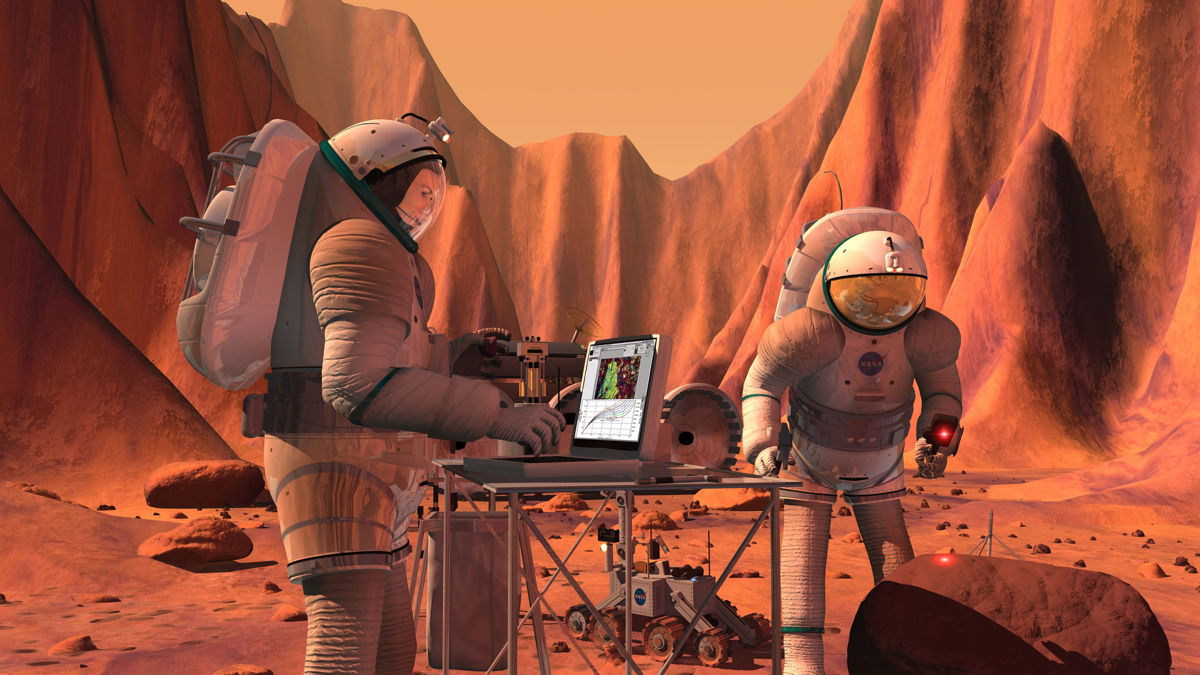
True independence on Mars hinges on the ability to live off the land, dramatically reducing reliance on Earth-based resupply. This requires revolutionary technologies for extracting, processing, and recycling Martian resources.
In-Situ Resource Utilization (ISRU) for Water and Fuel
The bedrock of Martian self-sufficiency is In-Situ Resource Utilization (ISRU). The primary target for ISRU is water, locked in polar ice caps and subsurface permafrost. Technologies for mining and extracting water ice, followed by its purification, are crucial. This water can then be electrolyzed to produce hydrogen and oxygen—essential for breathing, power generation via fuel cells, and most critically, rocket propellant for return journeys or further exploration. Technologies like the MOXIE instrument on the Perseverance rover are precursors, demonstrating the ability to generate oxygen from the Martian atmosphere’s carbon dioxide. Future iterations will scale these processes significantly, turning Mars itself into a refueling station.
Sustainable Food Production: Hydroponics and Aeroponics
Growing food in a Martian habitat demands highly efficient and controlled agricultural technologies. Hydroponics and aeroponics, which involve growing plants without soil using nutrient-rich water solutions or mist, respectively, are ideal candidates. These systems can be implemented in climate-controlled indoor farms, maximizing yield in minimal space with precise control over light, temperature, humidity, and nutrient delivery. Vertical farming techniques further enhance space utilization. Advanced LED lighting systems, tailored to specific plant growth cycles, and automated nutrient delivery systems managed by AI would ensure optimal crop health and continuous food supply. Bioregenerative systems might also incorporate algae or insect farms to diversify protein sources and contribute to waste recycling.
Waste Management and Recycling Innovations
A closed-loop society like a Martian colony cannot afford to generate significant waste. Advanced waste management and recycling technologies are therefore paramount. This includes systems for composting organic waste, processing human waste into fertilizer (for bioregenerative systems), and industrial recyclers for plastics, metals, and electronics. Technologies like pyrolysis or plasma gasification could break down complex waste materials into their basic elements, which can then be reused. The goal is to achieve near-total resource recovery, minimizing the need for new imports and ensuring environmental sustainability within the habitat. AI would play a crucial role in optimizing sorting, processing, and inventory management of recycled materials.
The Digital Ecosystem of a Martian Society
Beyond physical infrastructure, a sophisticated digital ecosystem will underpin every aspect of Martian life, from environmental control to social interaction and scientific discovery.
AI-Powered Environmental Control and Monitoring
The complexity of a fully closed-loop Martian habitat necessitates highly intelligent management. AI-powered environmental control systems would continuously monitor hundreds, if not thousands, of sensors tracking atmospheric composition, temperature, pressure, humidity, radiation levels, and resource consumption. These AI systems would predict potential system failures, optimize resource allocation (e.g., diverting power to critical systems during a dust storm), and autonomously make fine adjustments to maintain optimal living conditions. They would learn from data patterns, adapt to changing circumstances, and provide critical alerts or recommendations to human operators, ensuring the safety and efficiency of the entire habitat.
Virtual and Augmented Reality for Martian Living
While physically constrained within habitats, Martian residents could experience a broader “world” through Virtual Reality (VR) and Augmented Reality (AR). VR could offer immersive simulations of Earth environments, reducing feelings of isolation and providing recreational escapes. It could also serve as a powerful training tool for complex procedures or emergency drills. AR overlays could provide real-time information to engineers repairing equipment, scientists analyzing geological samples, or even during daily tasks, enhancing efficiency and safety. These technologies would also facilitate remote collaboration with Earth-based teams, making distances feel smaller and expertise more accessible.
Data Management and Digital Security in Space
The immense volume of data generated by a Martian colony—from scientific observations and engineering telemetry to personal health records and communication logs—requires robust data management systems. Secure, distributed ledger technologies and advanced encryption would be essential to protect sensitive information from cyber threats or solar flares. Edge computing would process critical data locally to minimize latency and reliance on Earth links. Furthermore, a resilient digital infrastructure capable of self-healing and redundancy would be critical to ensure continuous operation, even in the face of unexpected events or solar interference, safeguarding the colony’s information lifeline.
Future Technological Horizons and Ethical Considerations
Life on Mars will not remain static; it will evolve alongside technological advancements. Beyond mere survival, technology will drive expansion, greater self-sufficiency, and enhanced quality of life.
Beyond Basic Survival: Enhancing Quality of Life
As initial survival challenges are met, technology will shift towards improving the quality of Martian life. This includes advanced hydroponics for greater food diversity, perhaps even laboratory-grown meats to supplement diets. Robotics will become more integrated into personal life, serving as companions, educators, or even artists. The development of terraforming technologies, while long-term and highly speculative, represents the ultimate technological ambition: altering Mars’s environment to make it more Earth-like. This would involve massive-scale atmospheric processing, magnetic field generation, and potentially the introduction of extremophile microorganisms, pushing the boundaries of geoengineering.

The Human Element: Training and Adaptation Technologies
Finally, the success of life on Mars fundamentally relies on the human element, trained and supported by technology. Advanced simulation and VR training programs will prepare astronauts for every conceivable Martian scenario, from habitat repairs to psychological challenges. Biomedical technologies will continue to evolve, offering potential genetic therapies or bio-enhancements to help humans better adapt to Martian gravity and radiation over generations. The intersection of human biology and cutting-edge technology will define the future of humanity’s expansion beyond Earth, making life possible, and eventually thriving, on the Red Planet.
In conclusion, “what would life on Mars be like” is a question whose answer is inextricably woven with technology. It would be a life of constant innovation, a grand experiment in human-machine partnership, and a testament to our species’ relentless drive to overcome seemingly insurmountable challenges through ingenuity and technological mastery. Every breath, every meal, every communication, and every step taken on the Martian surface will be a direct product of the technological marvels we create.
aViewFromTheCave is a participant in the Amazon Services LLC Associates Program, an affiliate advertising program designed to provide a means for sites to earn advertising fees by advertising and linking to Amazon.com. Amazon, the Amazon logo, AmazonSupply, and the AmazonSupply logo are trademarks of Amazon.com, Inc. or its affiliates. As an Amazon Associate we earn affiliate commissions from qualifying purchases.