
The moon has long been viewed as a celestial muse for poets and a guide for ancient navigators. However, in the modern era, the moon serves a far more pragmatic purpose: it is a foundational anchor for a vast array of global technologies. From the precision of our orbital mechanics to the burgeoning “blue tech” energy sectors, the presence of our natural satellite is a silent partner in the tech industry’s most ambitious projects.
If the moon were to suddenly vanish, the impact would not merely be a matter of darker nights and shifting tides. It would represent a catastrophic failure of technological systems that have been calibrated over decades to account for the moon’s gravitational pull, its reflective properties, and its role as a “stepping stone” for deep-tech exploration. This article explores the technological fallout of a moonless Earth, analyzing the collapse of satellite infrastructure, the death of tidal energy innovation, and the regression of the “moonshot” philosophy that drives the modern tech industry.
1. The Destabilization of Orbital Mechanics and Satellite Infrastructure
Modern technology is built on a framework of satellites that facilitate everything from high-frequency trading to global telecommunications. The moon plays a subtle yet critical role in stabilizing Earth’s axial tilt and, by extension, the orbital paths of the hardware we have placed in the thermosphere and exosphere.
The Failure of Geospatial Positioning and GPS Precision
Global Positioning Systems (GPS) rely on ultra-precise atomic clocks and stable orbital paths. While satellites are primarily influenced by Earth’s gravity, the moon acts as a secondary gravitational stabilizer. Without the moon’s presence, Earth’s wobble—or precession—would eventually become erratic. Over time, this instability would necessitate a massive technological overhaul of the algorithms that govern satellite positioning. The software used to calculate “orbital station-keeping” would require constant, energy-intensive recalibrations. Without these corrections, the precision of GPS would degrade, leading to the failure of autonomous vehicles, drone delivery systems, and precision-guided logistics.
The Rise of Space Debris and Orbital Congestion
The moon’s gravity assists in “clearing” certain types of space debris through complex gravitational resonances. Without the moon, the paths of defunct satellites and discarded rocket stages would become less predictable. This unpredictable movement increases the risk of the Kessler Syndrome—a scenario where a single collision triggers a cascade of debris that renders Low Earth Orbit (LEO) unusable. For companies like SpaceX and Amazon’s Project Kuiper, a moonless sky would mean navigating a chaotic environment where the lack of gravitational “shepherding” makes satellite maintenance a near-impossible engineering feat.
Impact on Night-Vision and Remote Sensing Technologies
Lunar illumination is a critical data point for remote sensing satellites and low-light imaging technology. Many agricultural tech (AgTech) sensors and environmental monitoring tools are calibrated to recognize the moon’s spectral signature to distinguish between natural and artificial light. Without this consistent light source, night-time Earth observation would lose a vital baseline, hindering our ability to monitor deforestation, illegal fishing, and urban expansion via satellite telemetry.
2. The Collapse of the “Blue Tech” Sector and Tidal Energy Innovation
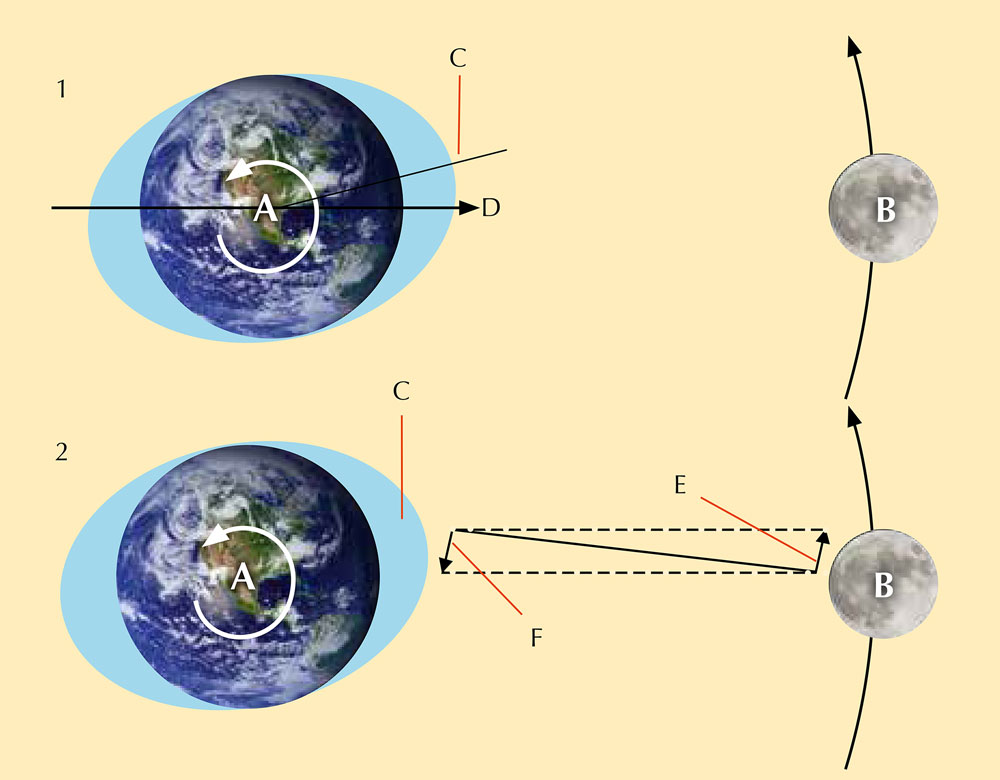
While solar and wind energy often dominate the headlines, tidal energy represents one of the most predictable and high-density forms of renewable technology. Because tides are primarily a result of the moon’s gravitational tug, its disappearance would effectively kill an entire sub-sector of the GreenTech industry.
The Stranding of Tidal Power Assets
Current investments in tidal stream generators and barrages—such as those in Scotland, South Korea, and Canada—would instantly become “stranded assets.” These multi-billion-dollar engineering projects are designed to harness the kinetic energy of moving water driven by lunar cycles. Without the moon, the tides would shrink to a fraction of their current size, powered only by the distant sun. The technological infrastructure of these plants would be rendered obsolete, leading to a massive loss of renewable energy output and a setback for the global goal of diversifying the energy grid.
Marine Navigation and Autonomous Maritime Hardware
Modern shipping relies on sophisticated sonar and tidal modeling software to navigate shallow straits and enter major ports. Autonomous shipping vessels, currently being pioneered by tech firms in Scandinavia and East Asia, use real-time tidal data to optimize fuel consumption and route planning. The loss of lunar tides would necessitate a complete rewrite of maritime navigation software. The hardware used to monitor tide levels would need to be replaced with more sensitive, solar-focused sensors, and the algorithms governing autonomous hull adjustments would require a total overhaul to account for a static sea level.
Disruption of Submarine Cable Maintenance
The backbone of the global internet consists of thousands of miles of undersea fiber-optic cables. The maintenance of these cables is often scheduled around tidal cycles to ensure the safety of ROVs (Remotely Operated Vehicles) and specialized cable-laying ships. Without the predictability of lunar tides, the “tech-stack” involved in deep-sea repairs would face unprecedented challenges. Increased turbulence from an unstabilized Earth could lead to more frequent cable breaks, while the lack of tidal patterns would make the deployment of repair hardware more dangerous and less efficient.
3. The End of the “Moonshot” Era: A Regression in R&D and Deep Tech
In the technology world, a “moonshot” refers to an ambitious, exploratory project with no guarantee of near-term profitability but the potential to change the world. This philosophy is literally and metaphorically rooted in our relationship with the moon.
The Loss of the Beta-Test Site for Extra-Planetary Tech
The moon is currently the primary “testbed” for the future of humanity’s off-world technology. From Lonestar’s plans to build lunar data centers to NASA’s Artemis program testing 4G/LTE networks on the lunar surface, the moon is the sandbox for deep-tech innovation. Without the moon, we lose the intermediate step between Earth and Mars. The technology required for long-term life support, radiation shielding, and extra-planetary resource mining (In-Situ Resource Utilization, or ISRU) would have no nearby proximity for testing. The “tech-debt” incurred by jumping straight to Mars missions would likely bankrupt even the most well-funded aerospace firms.
The Death of the Lunar Economy and Space-Based R&D
A burgeoning “Lunar Economy” is currently being built by startups focusing on lunar rovers, 3D printing with regolith, and helium-3 extraction. If the moon vanished, this entire vertical of the tech industry would evaporate overnight. This doesn’t just affect rocket scientists; it affects the material science industry that develops heat-resistant alloys, the AI firms training vision systems for low-gravity environments, and the cybersecurity companies developing encryption for space-to-ground communication. The moon provides the “demand signal” for these high-end technological breakthroughs.
Philosophical Stagnation and Innovation Risk Aversion
Beyond the hardware, the moon serves as a psychological anchor for technological risk-taking. The 1960s moon landing catalyzed the development of the integrated circuit, modern software engineering, and digital flight control systems. Without the literal “Moon” to aim for, the tech industry might suffer a crisis of imagination. The loss of a tangible goal in the night sky could lead to a focus on incremental software updates rather than the bold hardware engineering that defines the most impactful eras of technology.
4. Environmental Tech and the “Wobble” Crisis
Perhaps the most daunting technological challenge of a moonless Earth would be managing the rapid shift in our planet’s climate and the resulting demand on environmental tech.
The Demand for Advanced Climate Mitigation Hardware
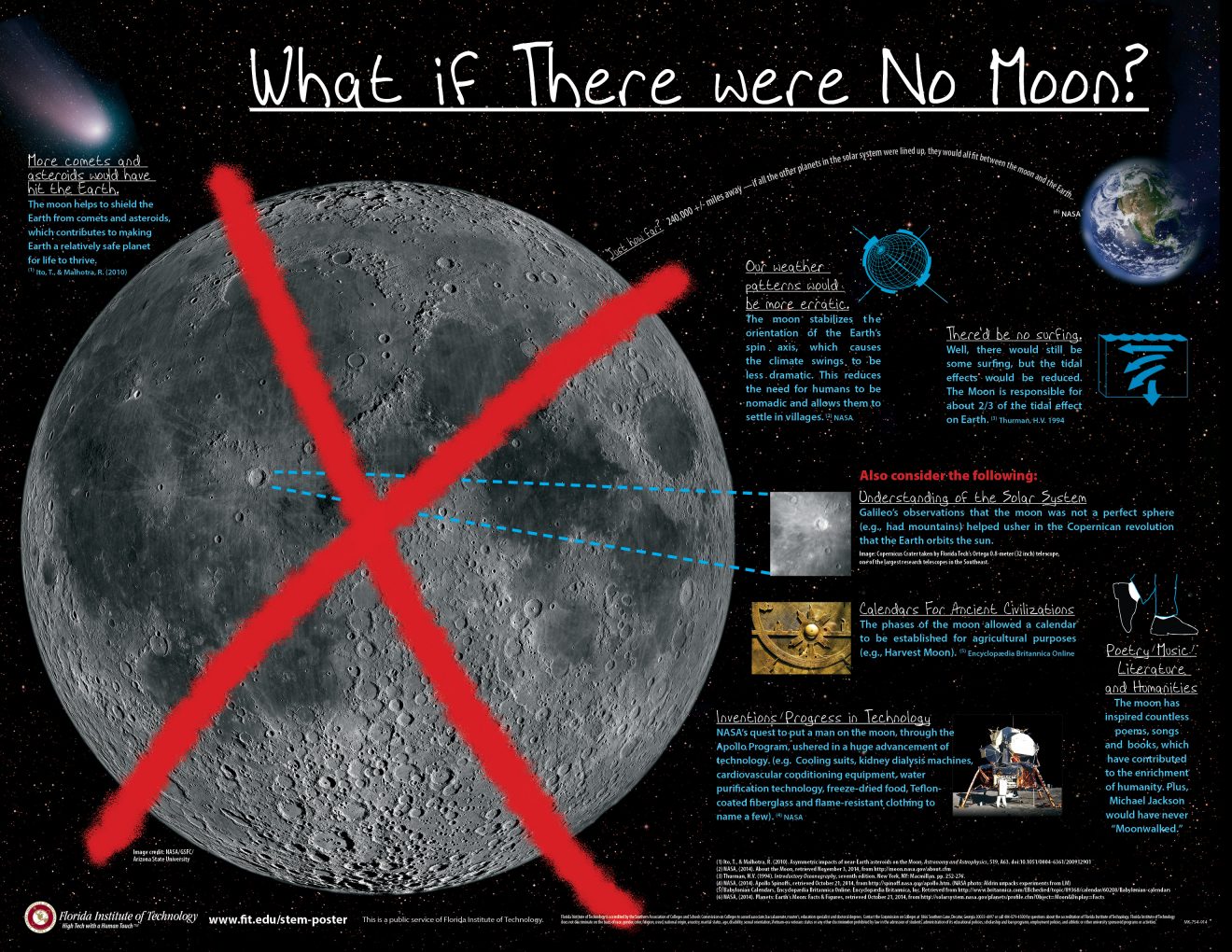
Without the moon’s stabilization, Earth would experience extreme axial tilts, leading to erratic and violent season changes. This would place an immense burden on AgTech. We would need to develop, at an accelerated pace, indoor vertical farming technologies and AI-driven climate-controlled environments to replace traditional agriculture. The sensors, LED arrays, and nutrient-delivery systems required to sustain global food supplies would become the most critical tech sector on the planet.
Data Security in a Volatile Environment
As Earth’s climate becomes more unpredictable, the physical security of data centers—the “brains” of our digital world—would be at risk. Data centers require immense cooling and geological stability. A moonless Earth, prone to extreme weather and shifting tectonic stresses due to an altered axial spin, would force a revolution in data center design. We would see a shift toward “hardened” infrastructure: deep-underground facilities or mobile, sea-based data centers designed to survive a world in constant flux.
Conclusion
The moon is far more than a decorative object in our sky; it is a critical component of Earth’s technological “operating system.” Its gravitational influence, its predictable cycles, and its physical proximity have shaped the development of everything from the GPS in our pockets to the tidal turbines in our oceans.
Without the moon, the tech industry would face a reckoning of unprecedented scale. We would be forced to re-engineer our satellite networks, abandon a major sector of renewable energy, and find a new “North Star” for our most ambitious R&D efforts. While human ingenuity is vast, the loss of the moon would serve as a stark reminder that even our most advanced technologies are ultimately dependent on the delicate celestial mechanics of the solar system. The moon is the “hardware” upon which much of our “software” runs; without it, the system simply cannot function as designed.
aViewFromTheCave is a participant in the Amazon Services LLC Associates Program, an affiliate advertising program designed to provide a means for sites to earn advertising fees by advertising and linking to Amazon.com. Amazon, the Amazon logo, AmazonSupply, and the AmazonSupply logo are trademarks of Amazon.com, Inc. or its affiliates. As an Amazon Associate we earn affiliate commissions from qualifying purchases.