
The moon is often perceived as a poetic celestial body, a silent neighbor that inspires art and mythology. However, from a purely technological and systems-engineering perspective, the moon is the Earth’s most critical piece of “external hardware.” It is a gravitational stabilizer, a biological pacer, and the primary stepping stone for the future of human expansion into the cosmos.
If the moon were to disappear, the resulting technological crisis would extend far beyond the loss of tides. It would represent a systemic failure of our current orbital infrastructure, the termination of multi-billion dollar energy projects, and the obsolescence of the next generation of deep-space exploration technology. To understand what would happen to Earth without the moon is to understand how deeply our modern tech stack is integrated with lunar physics.
1. The Disruption of Satellite Infrastructure and Global Positioning
The most immediate technological fallout of a moonless Earth would be felt in the aerospace and telecommunications sectors. Our current satellite architecture—comprising thousands of active units in Low Earth Orbit (LEO), Medium Earth Orbit (MEO), and Geostationary Orbit (GEO)—is designed around the Earth’s specific gravitational environment, which is moderated significantly by the moon.
Gravitational Stability and Orbital Decay
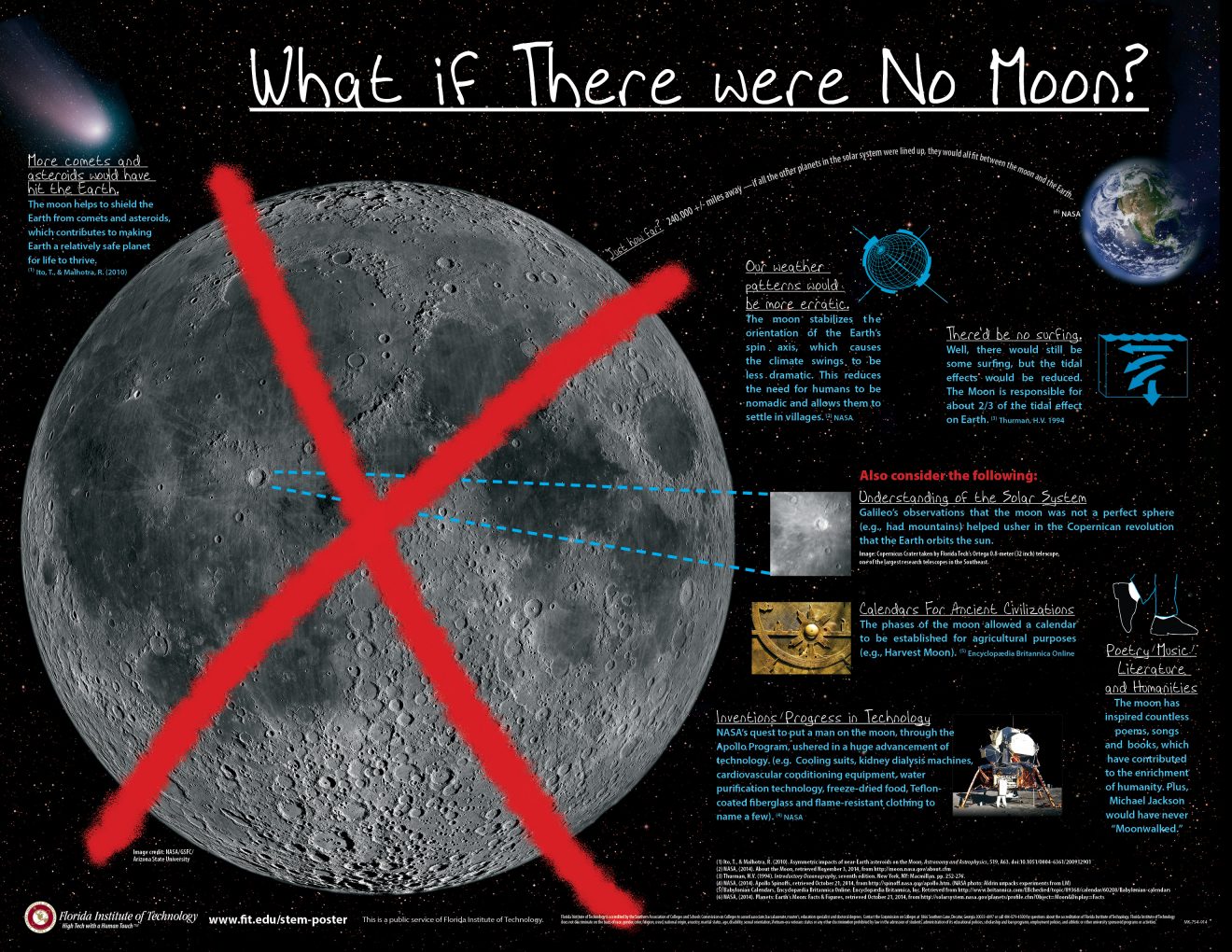
The moon acts as a gravitational dampener. It stabilizes the Earth’s axial tilt, keeping it relatively constant between 22.1 and 24.5 degrees. Without this stabilizing force, the Earth’s “wobble” would increase dramatically over time. For satellite technology, this is catastrophic. Orbital mechanics rely on precise calculations of gravitational pull. As the Earth’s tilt shifts unpredictably, the atmospheric drag on LEO satellites would fluctuate, leading to rapid orbital decay.
Tech giants like SpaceX and Amazon (Project Kuiper) would face a logistical nightmare. The software governing station-keeping maneuvers—the small thrusts satellites make to stay in position—would be unable to compensate for the shifting gravitational anomalies. This would lead to a “Kessler Syndrome” event, where colliding satellites create a cloud of debris, effectively rendering space technology unusable for generations.
The Failure of Global Positioning Systems (GPS)
The Global Positioning System (GPS) and its international counterparts (GLONASS, Galileo) rely on atomic-clock precision and stable orbital paths. GPS technology is the backbone of modern logistics, autonomous vehicles, and cellular synchronization. Without the moon’s gravitational consistency, the reference frames used by GPS ground stations would become unreliable.
The software algorithms that calculate “time of flight” for signals between satellites and handsets would require constant, massive recalibration to account for the Earth’s increased nutation (wobble). In a moonless scenario, the margin of error for GPS could expand from centimeters to kilometers, effectively breaking the tech stack for ride-sharing apps, precision agriculture, and automated supply chains.
2. The Lunar Economy and the End of Deep Space Exploration Tech
In the last decade, “Space Tech” has transitioned from a government-funded endeavor to a massive commercial market. The moon is the cornerstone of this “Lunar Economy.” Without it, the roadmap for human technological advancement in space would be erased.
Helium-3 and the Future of Clean Energy Tech
One of the most promising avenues in energy technology is the development of nuclear fusion. Specifically, Helium-3—an isotope rare on Earth but abundant on the lunar surface—is considered the “holy grail” of fusion fuel. Tech startups and national space agencies are currently developing autonomous mining robotics and lunar processing plants to harvest this resource.
If the moon disappeared, the technological trajectory for clean, limitless fusion energy would be set back by centuries. The specialized drills, regolith-processing software, and heavy-lift rockets (like the SLS and Starship) designed specifically for lunar gravity environments would become obsolete hardware. We would be forced to pivot our energy tech toward much more difficult and distant sources, such as the gas giants or asteroid belts, for which our current propulsion technology is woefully inadequate.
The Moon as a Tech Testbed for Mars Missions
NASA’s Artemis program and various private ventures use the moon as a “sandbox” for testing life-support systems, radiation shielding, and 3D-printing tech using in-situ resource utilization (ISRU). The technology required to survive on Mars is being built and refined on the moon because of its proximity.
Without the moon, the “fail-fast” iteration cycle of space tech would be broken. We would no longer have a location three days away to test how hardware holds up in a vacuum or how autonomous rovers navigate low-gravity terrain. The technological leap directly to Mars would be too high, likely stalling the expansion of the human species into the solar system indefinitely.
3. The Impact on Marine and Climate Technology
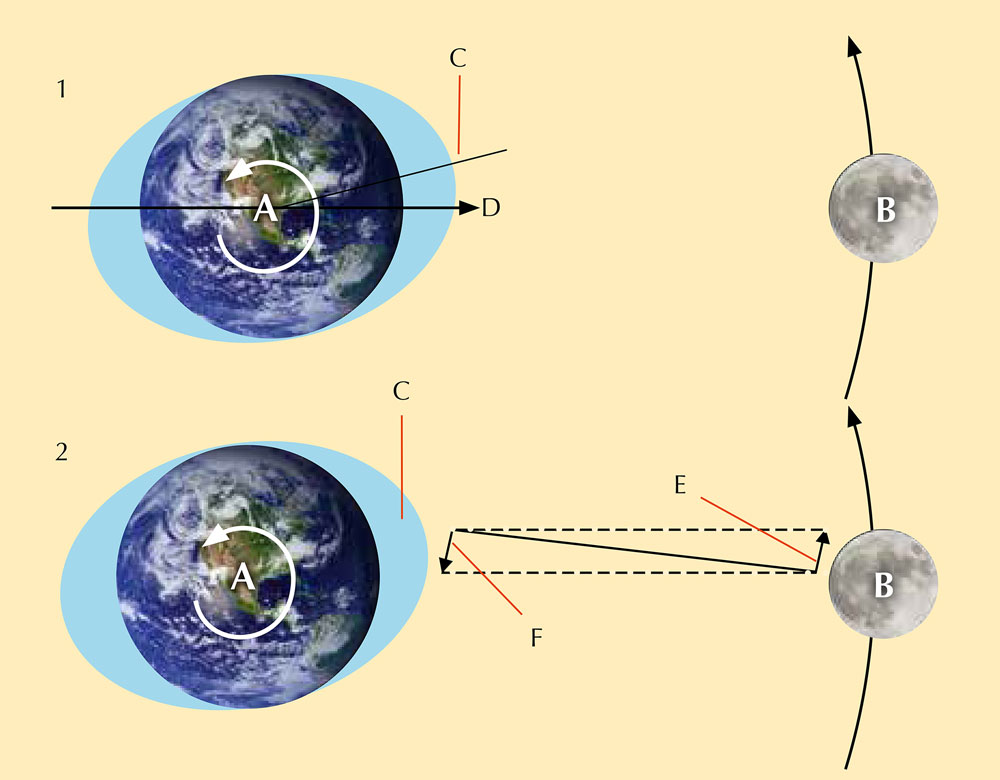
The moon’s most visible impact is on Earth’s oceans. While the loss of the tides would be a biological disaster, the technological implications for the “Blue Tech” sector and renewable energy grids would be equally severe.
Tidal Energy: The Death of a Renewable Tech Frontier
Tidal stream generators and barrage systems are sophisticated pieces of engineering designed to capture the kinetic energy of the moon’s gravitational pull on the oceans. Countries like the UK, France, and South Korea have invested billions in tidal turbine technology because it is more predictable than wind or solar.
Without the moon, tides would shrink by roughly 60-70% (leaving only the weaker solar tides). This would render existing tidal power plants non-functional. The specialized underwater turbines, anti-corrosion materials, and grid-integration software developed for high-flow tidal environments would become stranded assets. This would create a massive deficit in the renewable energy portfolio, forcing a desperate and costly technological pivot back to solar, wind, or fossil fuels to stabilize the power grid.
Autonomous Marine Navigation and Sensor Networks
Modern maritime technology relies on a complex web of sensors and AI to navigate the world’s oceans. Tidal currents are a primary variable in the algorithms used by autonomous cargo ships to optimize fuel efficiency and pathing.
If the moon disappeared, the global ocean current system (the “conveyor belt”) would be radically altered. The thermohaline circulation is driven in part by tidal mixing. A sudden change in these currents would baffle the machine learning models used in marine navigation. Furthermore, the global network of oceanographic sensors—deployed to monitor climate change and sea-level rise—would need to be entirely redesigned. The baseline data for every climate tech model in existence would be rendered irrelevant, requiring a total reboot of environmental monitoring software.
4. Computational Modeling: Simulating Planetary Instability
Perhaps the most fascinating technological aspect of a “moonless Earth” is how we would even attempt to manage the transition. This would be the ultimate challenge for High-Performance Computing (HPC) and Artificial Intelligence.
High-Performance Computing (HPC) and Orbital Mechanics
To survive on a moonless Earth, we would need to lean heavily on supercomputing. Without the moon’s stabilizing influence, Earth’s axial tilt could eventually swing wildly, from 0 to 85 degrees. This would result in extreme seasonal shifts.
The tech industry would need to develop planetary-scale “Climate Digital Twins”—massive AI simulations that could predict weather patterns 50 to 100 years out with extreme precision. These simulations would require exascale computing power to model the interaction between a wobbling crust, shifting atmospheric pressures, and the altered magnetism of the Earth’s core. The demand for compute power would skyrocket, driving advancements in quantum computing and specialized AI silicon.
AI-Driven Predictive Models for Tectonic Shift
The moon exerts a “tidal flexing” force on the Earth’s crust. Some geophysicists suggest this helps regulate tectonic activity. If the moon were removed, the sudden cessation of this stress could trigger a global technological emergency in seismic monitoring.
We would require a new generation of AI-driven early warning systems. These systems would need to process petabytes of data from IoT (Internet of Things) sensors embedded in the Earth’s crust to predict the “snap-back” effect of a crust suddenly freed from lunar gravity. The software architecture for disaster response—currently optimized for localized earthquakes—would have to be rebuilt to handle a planet-wide tectonic reconfiguration.
Conclusion
The disappearance of the moon would not just be a loss for the night sky; it would be a total “system failure” for the Earth’s technological ecosystem. From the collapse of the GPS and satellite networks that run our digital lives to the end of the burgeoning lunar economy and the death of tidal energy tech, the consequences would be all-encompassing.
This scenario highlights how much of our modern technology is “nature-dependent”—built to exploit the specific physical constants provided by our satellite. In the absence of the moon, the primary focus of human technology would shift from innovation and expansion to survival and stabilization. We would be forced to use every ounce of our computational power and engineering ingenuity just to recalibrate our world for a new, unstable reality. The moon, it turns out, is not just a light in the sky; it is the silent regulator of our global tech stack.
aViewFromTheCave is a participant in the Amazon Services LLC Associates Program, an affiliate advertising program designed to provide a means for sites to earn advertising fees by advertising and linking to Amazon.com. Amazon, the Amazon logo, AmazonSupply, and the AmazonSupply logo are trademarks of Amazon.com, Inc. or its affiliates. As an Amazon Associate we earn affiliate commissions from qualifying purchases.