
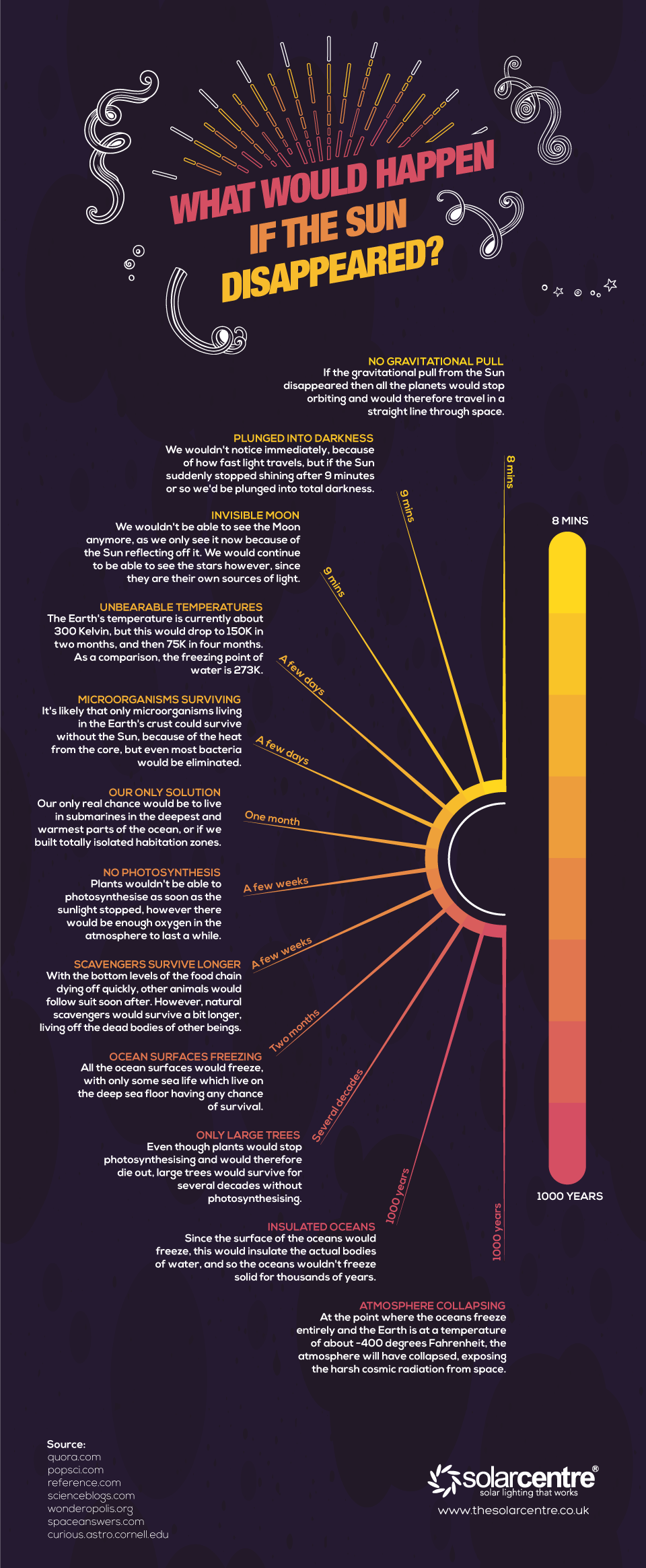
In the realm of theoretical physics, the sudden disappearance of the sun is a classic thought experiment used to explain gravity and light speed. However, when viewed through the lens of modern technology, the scenario shifts from a planetary catastrophe to a total systemic collapse of our digital and electrical infrastructure. We live in an era where our global tech stack—from the fiber-optic cables on the ocean floor to the satellites in geostationary orbit—is calibrated to the constant, predictable presence of the sun.
If the sun were to vanish for just five seconds, the immediate atmospheric changes would be negligible for human biology, but for our technology, it would be an extinction-level event. This article explores the technical ramifications of a five-second solar blackout, focusing on energy grids, satellite synchronization, and the digital security protocols that keep our modern world running.

The Instantaneous Collapse of Solar Energy Ecosystems and Grid Stability
The most obvious impact of the sun disappearing is the immediate cessation of solar power generation. While five seconds sounds brief, in the world of electrical engineering and “smart” grid management, five seconds is an eternity.
The Immediate Failure of Photovoltaic Arrays
Modern solar farms are integrated into national grids using sophisticated inverters that synchronize the DC power from panels into AC power for the grid. The moment the photons stop hitting the silicon wafers, the voltage output drops to zero. This isn’t a gradual decline; it is a hard stop. For regions heavily reliant on renewables, this sudden loss of several gigawatts of power would trigger a “frequency excursion.” Grid stabilizers are designed to handle fluctuations, but a total, instantaneous drop-off of the solar load would likely outpace the reaction time of traditional spinning reserves (like gas or hydro turbines), leading to widespread automated load shedding—essentially, massive blackouts to prevent the entire grid from melting down.
Cascading Grid Destabilization and Surge Protection
Tech infrastructure is built on the premise of “clean” power. When the sun reappears five seconds later, the sudden surge of energy back into the system could be even more damaging than the loss. The “re-engagement” of millions of residential and commercial solar inverters would create a massive voltage spike. Without advanced AI-driven grid management software capable of predicting and dampening such a surge, we would see the physical destruction of transformers and the tripping of high-voltage circuit breakers across entire continents. The tech required to manage such a “blink” currently exists only in localized experimental microgrids, not on a global scale.
Satellite Communications and the Loss of Global Positioning Systems (GPS)
Beyond the power grid, our global tech infrastructure relies on the sun for more than just energy; it relies on the sun for structural and environmental stability in the vacuum of space.
Signal Latency and Relativistic Shifts
The disappearance of the sun would mean the disappearance of its gravitational pull. For five seconds, the Earth and every satellite orbiting it would cease their elliptical path and travel in a straight line at approximately 30 kilometers per second. While the Earth and satellites would move together, the subtle shifts in orbital mechanics would play havoc with GPS constellations. GPS technology relies on nanosecond-level precision. A five-second “drift” in the gravitational constant would cause relativistic time-dilation shifts that could desynchronize the atomic clocks aboard the satellites.
The Impact on High-Frequency Trading and Synchronized Data
The tech sector that would feel this most acutely is High-Frequency Trading (HFT). These AI-driven financial systems rely on GPS-synced “Precision Time Protocol” (PTP) to execute millions of trades per second. If the synchronization between servers in London, New York, and Tokyo is disrupted by even a few microseconds due to a solar-induced orbital shift, the result would be a “flash crash.” Algorithms would receive conflicting time-stamps for trades, triggering automated “kill switches” that would freeze global markets. The tech infrastructure of the financial world is simply not built to handle a five-second suspension of the laws of physics.
Digital Security and the Panic in the Cloud
Modern digital security is increasingly reliant on environmental sensors and automated “If This Then That” (IFTTT) protocols. A five-second total darkness event would trigger a cascade of automated responses across the Internet of Things (IoT).
Autonomous Systems and Sensory Overload
Consider the millions of autonomous vehicles (AVs) currently on the road or in testing. These vehicles utilize LiDAR, radar, and cameras. A sudden transition to total darkness would instantly change the input data for these AI models. While infrared sensors would still function, the sudden “optical noise” of the sun vanishing and reappearing could trigger emergency braking protocols globally. From a software perspective, this represents a “black swan” edge case that most neural networks are not trained to handle. The simultaneous emergency-stop of millions of connected devices would create a data packet storm that could overwhelm cellular networks (5G/6G), leading to a secondary collapse of communication tech.
Edge Computing Resilience in Total Dark Scenarios
Our “Smart Cities” are managed by edge computing nodes that monitor light levels for street lighting, building climates, and security perimeters. A five-second blackout would be interpreted by these systems as a massive sensor failure or a coordinated cyber-physical attack. Digital security protocols would likely engage “Fail-Safe” modes, locking down smart buildings and potentially trapping people inside or out. The recovery process—rebooting millions of edge devices that have entered a locked-down state—would take days, if not weeks, of manual intervention by IT professionals.
Lessons for Future Tech: Building a ‘Sun-Independent’ Digital Architecture
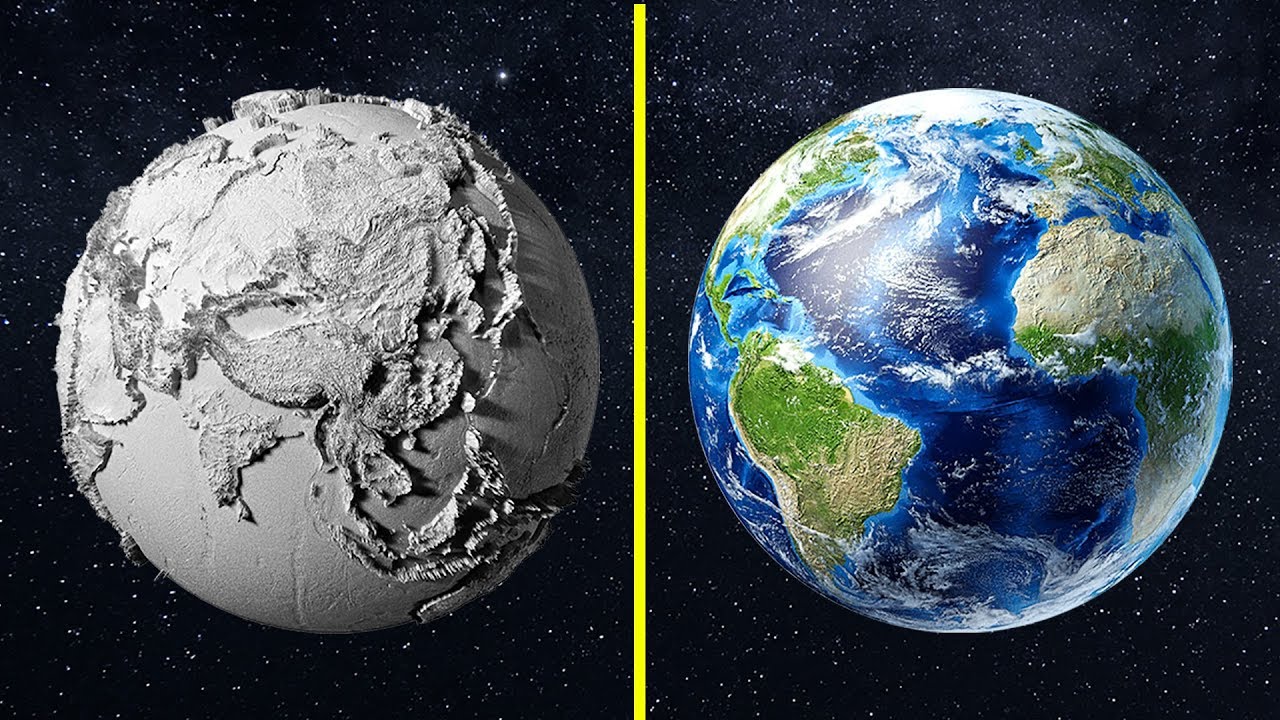
The hypothetical disappearance of the sun serves as a high-stakes stress test for our current technological trajectory. It highlights our extreme dependence on “just-in-time” energy and data synchronization.
Redundancy Beyond Battery Storage
Current tech trends focus on lithium-ion backup for solar energy. However, the “5-second sun disappearance” scenario proves that we need more than just storage; we need “grid-forming” inverters and solid-state transformers that can manage instantaneous transitions without mechanical lag. The future of tech resilience lies in developing hardware that can operate in a “disconnected” state—where the local system can maintain its own frequency and timing without needing a signal from a central grid or a satellite constellation.
The Role of AI in Predictive Disaster Mitigation
To survive such anomalies, we must integrate “Extreme Event AI” into our core infrastructure. This software would be tasked with recognizing non-linear anomalies—events that defy standard physics or historical data—and dampening the automated response to prevent cascading failures. Instead of the “panic” response currently hard-coded into most digital security systems, a more resilient AI would recognize the 5-second anomaly as a transient state and maintain system continuity through “synthetic” data generation, mimicking the expected solar input until the real signal returns.
In conclusion, while the physical world might survive five seconds of darkness with little more than a collective shiver, our technology would face a total systemic reset. The fragility of our high-tech world is linked to its precision; the more precise our tools become, the less tolerant they are of the unexpected. As we continue to build a world powered by the sun and synchronized by the stars, the “5-second disappearance” scenario remains the ultimate benchmark for true technological resilience.
aViewFromTheCave is a participant in the Amazon Services LLC Associates Program, an affiliate advertising program designed to provide a means for sites to earn advertising fees by advertising and linking to Amazon.com. Amazon, the Amazon logo, AmazonSupply, and the AmazonSupply logo are trademarks of Amazon.com, Inc. or its affiliates. As an Amazon Associate we earn affiliate commissions from qualifying purchases.