
The concept of a society where no one pays taxes is a thought experiment that ignites imaginations. It conjures images of unfettered freedom, a world liberated from the obligation to contribute to a collective fund. But beneath the surface of this seemingly idyllic notion lies a complex web of consequences that would fundamentally reshape our world, impacting everything from technological advancement and brand loyalty to personal finance and the very fabric of our societies.
The core function of taxes is to provide the financial backbone for public services and infrastructure. From roads and bridges to schools and hospitals, from national defense to scientific research and regulatory bodies, taxes are the engine that drives the machinery of a functioning state. If this engine were to grind to a halt, the ramifications would be far-reaching and catastrophic, touching upon the very domains that this website explores: Tech, Brand, and Money.
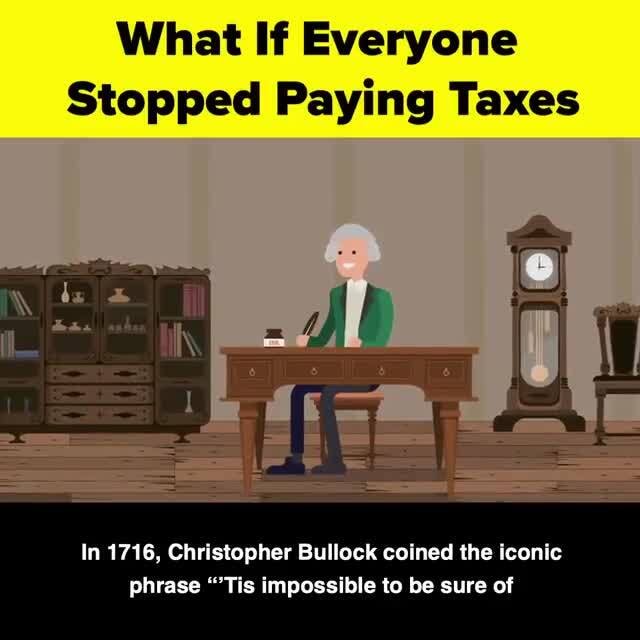
The Unraveling of Public Services and Infrastructure
The most immediate and undeniable consequence of a universal tax strike would be the complete collapse of public services. Without tax revenue, governments would be unable to fund essential functions.
The Crippling Impact on Technology and Innovation
While the private sector thrives on innovation, significant advancements in technology are often fueled or enabled by public investment. Consider the internet itself, which originated from a U.S. Department of Defense project. Similarly, public funding plays a crucial role in:
- Basic Research and Development: Universities and government-funded research institutions conduct foundational scientific work that often has no immediate commercial application but lays the groundwork for future breakthroughs in AI, biotechnology, and materials science. Without this funding, long-term, high-risk research would likely stagnate.
- Infrastructure for Innovation: The development of advanced technology often relies on robust digital infrastructure, including high-speed internet, secure data networks, and reliable power grids. If taxes disappear, the maintenance and expansion of these critical public utilities would cease, hindering the very digital ecosystem that tech companies depend on.
- Regulatory Oversight and Standards: Governments establish standards and regulations for technology, ensuring interoperability, safety, and ethical development. Without tax-funded agencies, the development of AI, for example, could occur in a chaotic, unregulated environment, leading to potential misuse, security breaches, and a lack of trust among consumers.
- Education and Skilled Workforce: A highly educated and skilled workforce is essential for technological advancement. Public education systems, from K-12 to higher education and vocational training, are funded by taxes. Their demise would lead to a severe shortage of qualified individuals to drive innovation in the tech sector.
- Space Exploration and Global Projects: Ambitious technological endeavors like space exploration, particle physics experiments, and global climate monitoring projects are often international collaborations funded by national governments. These would grind to a halt without tax revenue.
The absence of public investment would not only stifle groundbreaking research but also erode the very foundations upon which our current technological society is built. The digital security we take for granted, the apps we use daily, and the AI tools that promise to revolutionize our lives would all face an existential threat.
The Erosion of Brand Trust and Corporate Identity
Brands, whether personal or corporate, are built on trust, reliability, and a perception of value. A society without taxes would be a society in turmoil, and this instability would have profound implications for branding.
- Loss of Public Trust: Governments are the ultimate guarantors of law and order, property rights, and economic stability. If governments collapse due to lack of funding, public trust in institutions would evaporate. This erosion of trust would spill over into the corporate world. Consumers would question the stability and reliability of businesses operating in such a chaotic environment.
- Weakening of Brand Reputation: A strong brand reputation is often built on a foundation of social responsibility and ethical conduct, which includes paying taxes as a civic duty. Companies that were seen to benefit from public infrastructure and services without contributing would face severe backlash, damaging their brand image. Conversely, brands that could somehow maintain operations and offer essential services in a taxless world might gain a temporary advantage, but their long-term sustainability would be questionable.
- The Rise of Private, Exclusive Services: In the absence of public services, wealthy individuals and corporations might opt for private, exclusive alternatives. This could lead to a highly stratified society where essential services are only accessible to the elite, further exacerbating social inequalities and impacting the perceived value of brands that cater to different segments of the population.
- Challenges in Marketing and Brand Messaging: Effective marketing relies on a stable consumer base with disposable income and a belief in the future. In a taxless, potentially chaotic economy, consumer behavior would be unpredictable, making traditional marketing strategies ineffective. Brands would struggle to connect with an audience whose immediate focus would be on survival and self-preservation.
- The Disintegration of Shared Identity: Corporate identity often aligns with national or community values. If those shared values are undermined by the collapse of public institutions, brands would struggle to find a unifying narrative. Personal branding would become even more crucial, as individuals would need to project an image of resilience and resourcefulness in a fractured world.
The meticulous construction of brand identity, so vital in today’s marketplace, would be severely tested. The very notion of “corporate social responsibility” would be rendered meaningless if there were no functioning society to be responsible towards.
The Cataclysmic Impact on Personal Finance and Economic Systems
The economic implications of a world without taxes are nothing short of catastrophic. The financial system as we know it would crumble, leading to widespread personal financial ruin and a fundamental restructuring of economic activity.
- Collapse of Government Debt and Bonds: Governments finance their operations through borrowing, often issuing bonds. If taxpayers disappear, governments would default on their debts. This would trigger a global financial crisis, as banks and investors holding these bonds would suffer massive losses, leading to bank runs and the collapse of financial institutions.
- Hyperinflation and Currency Devaluation: With no tax revenue, governments might resort to printing money to fund any remaining operations. This would lead to hyperinflation, rendering national currencies virtually worthless. The value of savings, investments, and wages would evaporate overnight.
- Disruption of Public Services and Essential Goods: The collapse of public services would extend to essential goods and services. Healthcare systems, food distribution networks, and law enforcement would cease to function. This would create an environment of scarcity, price gouging, and widespread hardship.
- The Rise of Barter and Shadow Economies: In the absence of stable currency and functioning markets, societies would likely revert to barter systems for basic necessities. Informal, often illegal, shadow economies would emerge, driven by necessity and the pursuit of survival.
- End of Social Safety Nets: Pensions, unemployment benefits, disability support, and other social safety nets are funded through taxes. Their disappearance would leave millions vulnerable and destitute, with no recourse for financial assistance.
- Investment Landscape Devastation: The stock market, bond market, and other investment vehicles rely on a functioning regulatory framework and economic stability, both of which are taxpayer-funded. Without these, markets would become incredibly volatile and speculative, if they could function at all. Investments in traditional assets would likely become worthless.
- Challenges for Online Income and Side Hustles: While the digital economy offers new avenues for income, its infrastructure – secure payment gateways, reliable internet, and a functioning legal system – is ultimately supported by societal structures funded by taxes. Even the simplest online transaction relies on a chain of financial and legal institutions that would be severely compromised.
The very tools and strategies individuals and businesses use for personal finance, investing, and generating online income would become obsolete or dangerously unreliable. The dream of financial independence would be replaced by the desperate struggle for basic survival.
The Long Road to a New Order (If One Emerges)
If humanity managed to survive the initial shock and chaos of a taxless society, the world would be a vastly different place. Any semblance of order would likely emerge from the ashes of the old, driven by necessity and the re-establishment of some form of governance, however rudimentary.
- Emergence of Private Governance and Security: In the vacuum left by collapsed governments, powerful private entities, corporations, or even warlords might emerge to provide essential services and security in exchange for payment or allegiance. This would create a highly fragmented and potentially dystopian society.
- Voluntary Contributions and Patronage: Perhaps a new model of voluntary contributions or patronage would arise, where individuals or communities directly fund the services they deem essential, similar to historical models of philanthropy or patronage of the arts. This would be highly inefficient and prone to inequality.
- Decentralization and Localized Power: The extreme breakdown of centralized authority could lead to highly decentralized, self-sufficient communities. Technology, ironically, might play a role in facilitating these localized networks, but their ability to engage in large-scale projects or address global challenges would be severely limited.

Conclusion
The hypothetical scenario of everyone stopping the payment of taxes is not a path to utopia, but a swift and devastating descent into societal collapse. While the allure of no longer contributing financially might seem appealing, the reality is that taxes are the bedrock of our interconnected world. They fund the infrastructure, research, education, and regulatory bodies that underpin technological innovation, build and maintain brand trust, and provide the stability necessary for personal finance and economic prosperity. Without them, the intricate systems that allow us to connect, create, and thrive would unravel, leaving us in a world unrecognizable and profoundly diminished. The thought experiment, while intriguing, serves as a stark reminder of the vital, often unappreciated, role that taxation plays in shaping the very fabric of our modern lives.
aViewFromTheCave is a participant in the Amazon Services LLC Associates Program, an affiliate advertising program designed to provide a means for sites to earn advertising fees by advertising and linking to Amazon.com. Amazon, the Amazon logo, AmazonSupply, and the AmazonSupply logo are trademarks of Amazon.com, Inc. or its affiliates. As an Amazon Associate we earn affiliate commissions from qualifying purchases.