
The question of what business to start is rarely about finding a “secret” industry that no one else has discovered. Instead, it is about identifying the intersection of market demand, scalable financial models, and your own ability to execute. In the current economic landscape, the most successful new ventures are those that prioritize high margins, low overhead, and recurring revenue. Whether you are looking to replace a corporate salary or build a scalable enterprise from the ground up, the decision must be rooted in rigorous financial logic and market timing.
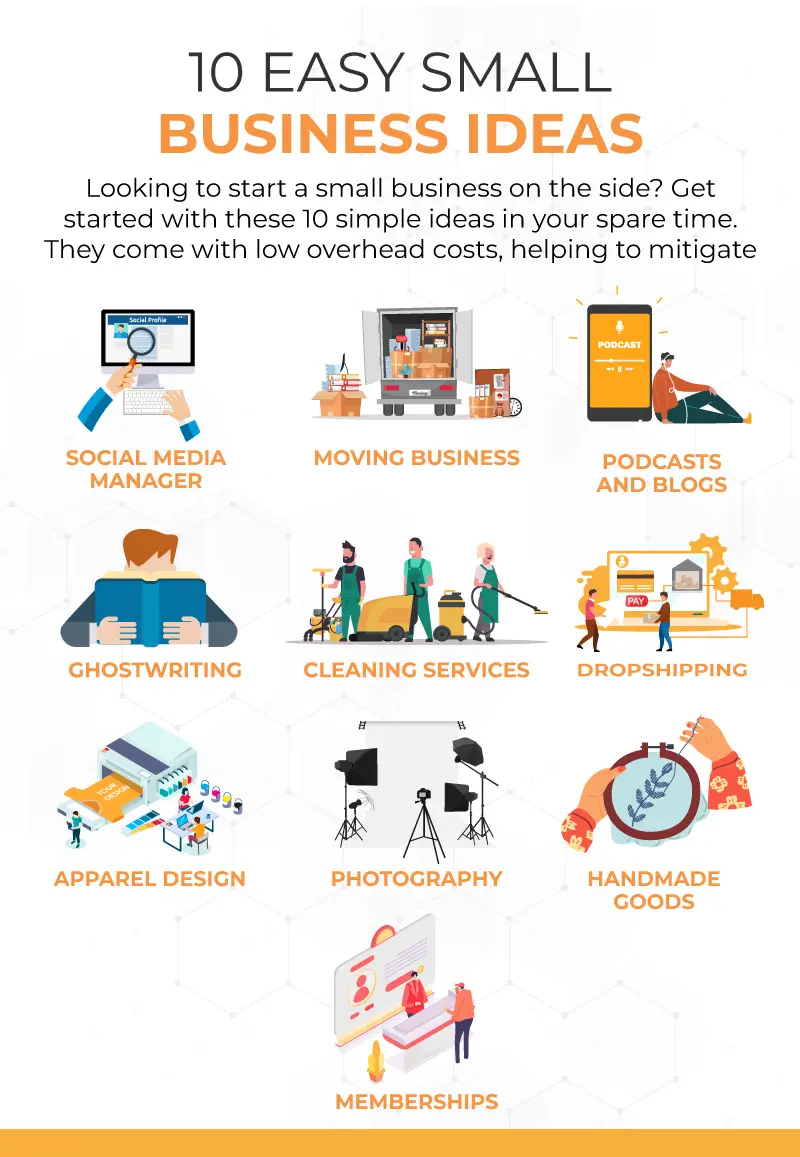
To determine which business is right for you, it is essential to look past temporary trends and focus on sustainable wealth-building models. From service-based agencies to high-ticket e-commerce and digital assets, the opportunities today are vast, provided you understand the financial mechanics behind them.
High-Margin Service Models: The Path to Immediate Cash Flow
For most first-time entrepreneurs, a service-based business is the most logical starting point. The primary reason is financial: the barrier to entry is low, and the profit margins are exceptionally high. Unlike retail or manufacturing, where you must invest in inventory or equipment before making a sale, a service business allows you to sell your expertise.
The Rise of Fractional Leadership and Specialized Consulting
One of the most profitable service models currently is “Fractional” leadership. Companies, particularly startups and mid-sized firms, are increasingly looking for Fractional CFOs, CMOs, or COOs. These businesses hire an expert for a few hours a week or month rather than paying a $200,000 annual salary for a full-time executive.
If you have a background in finance, operations, or marketing, starting a fractional consulting firm allows you to manage three to five clients simultaneously. Financially, this is a powerhouse model. With virtually zero cost of goods sold (COGS), your revenue is almost entirely profit, minus small software and administrative expenses.
Specialized Agency Services
The “generalist” agency is a dying breed. To start a successful service business today, you must specialize in a high-value niche. Instead of offering “Social Media Marketing,” a more profitable business would be “Short-Form Video Strategy for Real Estate Developers” or “Lead Generation for SaaS Companies.”
By narrowing your focus, you move from being a commodity to a specialized partner. This allows for “value-based pricing” rather than hourly billing. In the world of business finance, value-based pricing is the key to scaling income without linearly increasing your workload.
Digital Assets and the Knowledge Economy
The digital goods market has transformed from a niche hobbyist space into a multi-billion dollar industry. If you are looking for a business that offers scalability and the potential for passive income, digital products are the gold standard.
Online Courses and Membership Communities
The “Knowledge Economy” is built on the fact that people are willing to pay for curated, actionable information that saves them time. Starting a business that packages your professional skills into an online course or a paid membership community can yield profit margins exceeding 90%.
The financial beauty of this model lies in the “zero marginal cost of reproduction.” Once you create the asset—be it a video course, a proprietary dataset, or a suite of financial templates—it costs you nothing to sell it to the 1,000th customer compared to the first. This creates a powerful leverage effect that physical businesses simply cannot match.
Software-as-a-Service (SaaS) and “Micro-SaaS”
While building a giant tech company requires significant venture capital, the “Micro-SaaS” model is highly accessible. This involves creating a small, specialized software tool that solves a specific problem for a specific group of people.
The financial appeal of SaaS is recurring revenue. In the world of investing, a business with a high Monthly Recurring Revenue (MRR) and low churn rate is valued much higher than a business with sporadic sales. Starting a Micro-SaaS allows you to build a predictable financial engine that grows compounded over time.
High-Ticket E-commerce and Niche Physical Goods

Many people gravitate toward e-commerce, but they often make the mistake of competing on price in crowded markets. To start a “good” e-commerce business—one that is actually profitable after ad spend—you must focus on either high-ticket items or high-frequency consumable goods.
The High-Ticket Model
Low-priced items (under $50) are difficult to scale because the cost of customer acquisition (CAC) often eats up the entire profit margin. A better business to start is one that sells high-ticket items, such as luxury home office furniture, specialized outdoor equipment, or high-end kitchen appliances.
When your average order value (AOV) is $1,000 or more, you have more “meat on the bone” to cover marketing costs, shipping, and customer service while still retaining a healthy net profit. This model requires a higher level of trust and better branding, but the financial stability it offers is far superior to low-margin “dropshipping” fads.
Subscription-Based Physical Goods
If you choose to sell lower-priced items, they must be consumable. The most financially sound physical product businesses are those that move customers into a subscription loop. Think of specialty coffee, high-end pet food, or skincare. The goal is to maximize the Life Time Value (LTV) of a customer. If it costs you $20 to acquire a customer who buys a $30 bag of coffee, you lose money on the first sale after shipping and overhead. However, if that customer stays subscribed for 12 months, the ROI becomes significant.
Evaluating Business Viability: The Financial Framework
Regardless of the industry you choose, a “good” business is defined by its numbers. Before launching, you must put your idea through a financial stress test to ensure it is a viable vehicle for wealth.
Cash Flow vs. Profit
Many entrepreneurs go bankrupt while being “profitable” on paper. This happens because of poor cash flow management. A good business to start is one where the cash gap is minimized. In a service business, you can often collect a deposit upfront. In e-commerce, you might have to pay for inventory months before selling it. When evaluating a business idea, prioritize models where the “Cash Conversion Cycle” is as short as possible.
Scalability and Operating Leverage
Ask yourself: If my revenue doubles tomorrow, what happens to my expenses?
-
In a traditional restaurant, if revenue doubles, you likely need a larger space, twice the staff, and twice the food—your expenses grow almost as fast as your income.
-
In a digital product business, if revenue doubles, your expenses stay almost exactly the same.
This is called “Operating Leverage.” The higher the leverage, the better the business. When starting out, look for models where you can increase output without a proportional increase in input (labor or capital).
Building a “Lindy” Business: Stability Over Trends
In the world of finance, the “Lindy Effect” suggests that the future life expectancy of a non-perishable thing (like a business idea) is proportional to its current age. If you are looking for a good business to start, avoid “gold rush” industries that are based on temporary loopholes or hype.
Instead, look for “perennial” problems. People will always need help managing their money, improving their health, finding relationships, and increasing their productivity. A business built on these fundamental human needs is much more likely to survive an economic downturn than one built on a social media fad.
The Hybrid Model: The Ultimate Starting Point
For many, the best business to start is a hybrid model. This involves starting with a high-end service (to generate immediate cash and understand the customer’s pain points) and then “productizing” that service into a digital asset or software tool (to gain scalability).
For example:
-
Phase 1: Start a freelance bookkeeping service for e-commerce brands (High margin, immediate cash).
-
Phase 2: Create a proprietary financial dashboard or “Cash Flow Spreadsheet” that you use for your clients.
-
Phase 3: Sell that spreadsheet or dashboard as a standalone digital product to people who can’t afford your full service (Scalable, passive income).
By following this roadmap, you de-risk the venture. You use the service revenue to fund the product development, ensuring that you are never operating from a place of financial desperation.
In conclusion, the best business to start is one that respects the laws of economics. It should offer high margins, solve a verifiable problem for a specific audience, and provide a clear path to scalability. Whether you are selling your time as a fractional expert or selling digital products to a global audience, the key is to build on a foundation of sound financial strategy and long-term market demand.
aViewFromTheCave is a participant in the Amazon Services LLC Associates Program, an affiliate advertising program designed to provide a means for sites to earn advertising fees by advertising and linking to Amazon.com. Amazon, the Amazon logo, AmazonSupply, and the AmazonSupply logo are trademarks of Amazon.com, Inc. or its affiliates. As an Amazon Associate we earn affiliate commissions from qualifying purchases.