
In an era of unprecedented market saturation, the question “What will you bring to the table?” has shifted from a boardroom cliché to a survival imperative. Whether you are an individual professional building a personal brand or a CMO at a multi-national corporation, the “table” represents the competitive landscape where attention is the primary currency. To bring something to the table means more than just offering a functional product or service; it requires the articulation of a Unique Value Proposition (UVP) that resonates on an emotional, functional, and psychological level with your target audience.

Branding is no longer an exercise in aesthetic design or catchy slogans. It is a strategic discipline centered on differentiation and trust. When stakeholders ask what you bring to the table, they are looking for the intersection of your core competencies and their unmet needs. This article explores how to define, refine, and communicate that value to ensure your brand doesn’t just occupy space but commands the room.
The Anatomy of Value: Beyond Logos and Taglines
Many organizations mistake “branding” for “visual identity.” While a logo is a symbol of a brand, it is not the brand itself. The true value you bring to the table is the perceived benefit that a customer receives in exchange for their time, money, or loyalty. To understand your brand’s anatomy, you must look beneath the surface of your marketing materials.
The Emotional Connection
At the heart of every successful brand is an emotional hook. Human beings like to believe they make rational decisions, but neurobiological research suggests that the majority of our choices are driven by emotion and later justified with logic. When defining what you bring to the table, you must identify the primary emotion your brand evokes.
Are you bringing a sense of security? A feeling of belonging? Or perhaps the thrill of innovation? For example, a luxury brand doesn’t just bring high-quality leather to the table; it brings a sense of status and exclusivity. A discount retailer brings the peace of mind that comes with financial prudence. To identify your emotional value, ask yourself: How do I want my audience to feel after interacting with my brand? If you cannot answer this, your brand lacks a foundation.
Solving the Silent Pain Points
Innovation often focuses on solving obvious problems, but the most powerful brands address “silent pain points”—those frustrations that customers have grown so accustomed to that they no longer realize they exist. Bringing value to the table often involves observing these friction points and removing them.
When a brand identifies a silent pain point, it positions itself as an empathetic partner rather than a mere vendor. This requires deep market research and social listening. By addressing the nuances of the customer experience—such as the anxiety of waiting for a delivery or the confusion of a complex interface—you demonstrate that your brand brings a level of care and detail that competitors overlook.
Crafting Your Personal Brand: The Individual as the Asset
In the modern professional landscape, the line between corporate and personal branding has blurred. Executives, entrepreneurs, and creators are now expected to have a distinct “personal brand” that complements their organization. When you walk into a room, your personal brand is the pre-vetted reputation that precedes you.
Establishing Thought Leadership
Thought leadership is the ultimate way to demonstrate what you bring to the table in a professional context. It is the process of establishing yourself as an authority in your niche by sharing insights, challenging the status quo, and providing forward-thinking solutions.
Thought leadership is not about self-promotion; it is about education. By consistently providing value through white papers, articles, speaking engagements, and social media insights, you build “social capital.” When the time comes to negotiate a deal or apply for a role, your “table” is already set with a history of expertise. You are no longer asking for a seat; you are being invited because of the specialized knowledge you represent.
The Power of Narrative Consistency
A brand is a story told over time. For an individual, consistency is the key to reliability. If your LinkedIn profile says you are a “disruptive innovator” but your public appearances suggest a conservative, risk-averse approach, your brand suffers from cognitive dissonance.
What you bring to the table must be consistent across all touchpoints. This means your tone of voice, your professional values, and your visual presentation must align. Consistency builds trust, and trust is the most valuable asset in any brand’s portfolio. When your audience knows exactly what to expect from you, the “value” you bring becomes a dependable commodity.

Strategic Positioning in a Crowded Marketplace
Once you have identified your internal values, you must look outward. The “table” is crowded, and standing out requires more than just being “better.” In marketing, being “different” is almost always more effective than being “better.” To be better is to compete on the same playing field as everyone else; to be different is to create your own field.
Competitive Analysis and the Gap Strategy
To understand what you should bring to the table, you must first understand what everyone else is already bringing. A thorough competitive analysis involves mapping out the strengths and weaknesses of your rivals. However, the goal is not to mimic their strengths, but to find the “gaps” they have left behind.
The “Gap Strategy” involves identifying underserved segments of the market. Perhaps your competitors are focused on high-end enterprise clients, leaving small business owners ignored. Or maybe they are focused on technical specifications while ignoring user experience. By filling these gaps, your brand becomes the only logical choice for a specific subset of the market. You aren’t just another seat at the table; you are the missing piece of the puzzle.
Innovation as a Brand Pillar
In a rapidly changing world, what you bring to the table today may be obsolete tomorrow. Therefore, innovation must be a core pillar of your brand strategy. This does not always mean inventing a new technology; it can mean innovating in your business model, your customer service, or your delivery methods.
A brand that brings innovation to the table is one that is perceived as “future-proof.” This creates a sense of momentum that attracts early adopters and visionaries. By signaling that your brand is constantly evolving, you ensure that your seat at the table is permanent, rather than seasonal.
Communicating Your “Table” to the World
Identifying your value is a strategic internal exercise; communicating it is an external marketing challenge. You can have the most revolutionary value proposition in the world, but if no one knows about it, you are effectively bringing nothing to the table.
Digital Footprint and Content Strategy
Your digital footprint is the modern-day portfolio. A robust content strategy is the mechanism by which you broadcast your value proposition. This involves creating a mix of “hero” content (large-scale projects, videos, or research) and “hub” content (regularly updated blogs, newsletters, or social posts).
Each piece of content should reinforce the core message of what you bring to the table. If your brand is about “Efficiency,” every post should be concise, helpful, and time-saving. If your brand is about “Creativity,” your digital presence should be visually stunning and conceptually daring. The medium is the message, and your digital channels are the primary ways the world perceives your brand’s weight.
Building Community and Brand Loyalty
Finally, the ultimate goal of bringing value to the table is to move beyond transactions and into the realm of community. A brand that has a community doesn’t just have customers; it has advocates.
Advocacy is the highest form of branding. When your customers start telling others what you bring to the table, your brand grows exponentially. This is achieved through transparency, engagement, and rewarding loyalty. By fostering a two-way conversation with your audience, you turn your brand from a static entity into a living ecosystem. You are no longer just sitting at the table; you are hosting the party.
Conclusion
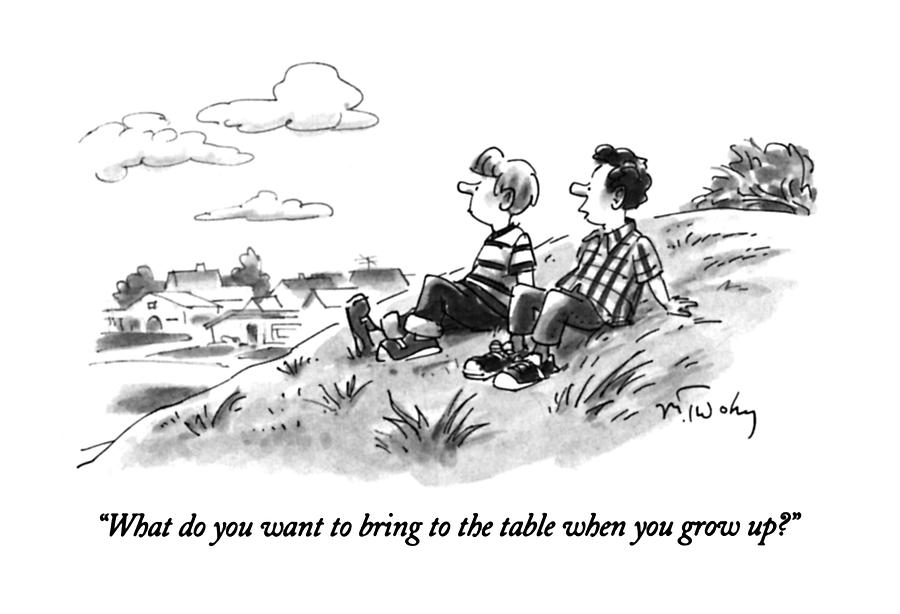
The question “What will you bring to the table?” is an invitation to define your legacy. In the world of branding, value is not inherent—it is constructed through intentional strategy, consistent messaging, and a deep understanding of human psychology. By focusing on emotional connection, solving silent pain points, establishing thought leadership, and finding market gaps, you can ensure that your brand stands out in a sea of noise.
Ultimately, your brand is the sum of the promises you keep. When you clearly articulate your value and deliver on it consistently, you do more than just join the conversation. You lead it. So, before you step into your next meeting or launch your next campaign, take a moment to look at your “table.” Is it laden with the same things everyone else is offering, or is it set with something unique, indispensable, and unforgettable? The answer will define your brand’s future.
aViewFromTheCave is a participant in the Amazon Services LLC Associates Program, an affiliate advertising program designed to provide a means for sites to earn advertising fees by advertising and linking to Amazon.com. Amazon, the Amazon logo, AmazonSupply, and the AmazonSupply logo are trademarks of Amazon.com, Inc. or its affiliates. As an Amazon Associate we earn affiliate commissions from qualifying purchases.