
Purchasing a vehicle is often the second-largest financial commitment a person makes, surpassed only by the purchase of a home. Yet, while most prospective buyers spend weeks researching horsepower, fuel efficiency, and safety ratings, the actual financial architecture of the transaction often remains a secondary consideration until they are sitting in the dealership’s “F&I” (Finance and Insurance) office. Understanding the answer to the question “What will my car payment be?” requires a deep dive into personal finance, credit dynamics, and the long-term impact of debt on your net worth.

When you ask what your payment will be, you are essentially asking how a large capital expenditure can be amortized over time. To navigate this, one must understand the levers that move the monthly needle: the principal, the interest rate, and the term length. By mastering these variables, you move from being a passive payer to an active strategist in your own financial life.
The Pillars of the Monthly Payment: Principal, Interest, and Time
The monthly car payment is not a random figure; it is a mathematical output derived from three primary inputs. Understanding how these pillars interact is the first step in determining what you can truly afford.
The Principal Amount and Net Purchase Price
The principal is the total amount of money you are borrowing from a lender. This is not simply the “sticker price” of the car. It is the negotiated price of the vehicle, plus sales tax, title and registration fees, and any “add-ons” (like extended warranties or gap insurance), minus your down payment and the value of any trade-in vehicle.
In the world of personal finance, the principal is the most dangerous variable because it is the foundation upon which interest is calculated. A $30,000 loan at 5% interest costs significantly more in total than a $25,000 loan at the same rate. Reducing the principal through aggressive negotiation or a larger down payment is the most effective way to lower a monthly payment without extending the life of the loan.
The Annual Percentage Rate (APR)
The APR is the cost you pay each year to borrow the money, expressed as a percentage. This rate is heavily influenced by your credit score, the current federal interest rates, and the age of the vehicle. For those in the “Money” niche, the APR is the “price of money.”
A common mistake is focusing solely on the monthly payment while ignoring a high APR. A low monthly payment achieved through a high-interest, long-term loan is a financial trap. For example, a 7% interest rate on a 72-month loan can add thousands of dollars to the total cost of the car compared to a 3% rate. Your creditworthiness is your greatest tool here; the difference between a “prime” and “subprime” rate can result in a monthly payment difference of over $100 for the exact same vehicle.
The Loan Term: The Double-Edged Sword
The term is the duration of the loan, typically ranging from 36 to 84 months. While extending the term from 60 to 72 or 84 months will lower the monthly payment, it increases the total interest paid over the life of the loan. Furthermore, long terms increase the risk of “negative equity”—a situation where you owe more on the car than it is worth, also known as being “underwater.” From a personal finance perspective, the shortest term you can comfortably afford is always the optimal choice.
Calculating the True Cost: Beyond the Monthly Check
A car payment is only one part of the total cost of ownership (TCO). To truly understand what your car “payment” will be, you must account for the peripheral expenses that fluctuate based on the vehicle you choose.
Insurance Premiums and Their Impact
Lenders require you to carry full coverage insurance (collision and comprehensive) as long as you have an active loan. The cost of this insurance is effectively an extension of your car payment. A luxury sedan or a high-performance sports car may have a manageable loan payment but an astronomical insurance premium. Before signing a loan agreement, it is vital to get an insurance quote for the specific VIN. If your loan payment is $400 but your insurance jumps by $200, your monthly mobility cost is actually $600.
The “20/4/10” Rule of Thumb
Financial experts often recommend the 20/4/10 rule to determine a healthy car payment. This rule suggests:
- 20% Down: Put at least 20% down to avoid immediate negative equity.
- 4-Year Term: Finance the car for no more than four years (48 months).
- 10% of Income: Ensure your total transportation costs (payment, insurance, fuel, and maintenance) do not exceed 10% of your gross monthly income.
Adhering to this framework ensures that your car payment does not “crowd out” other financial goals, such as retirement contributions or emergency savings.
Maintenance and Depreciation Reserves
While not a literal payment to a bank, savvy financial planners treat maintenance as a monthly “payment” to themselves. New cars eventually become old cars, and tires, brakes, and oil changes are inevitable. If you are stretching your budget to meet a monthly loan payment, a $600 repair bill could lead to a financial crisis. Factoring in a “sinking fund” of $50–$100 per month for future repairs is essential for a holistic view of your car-related outflows.
Strategic Financing: Lease vs. Buy
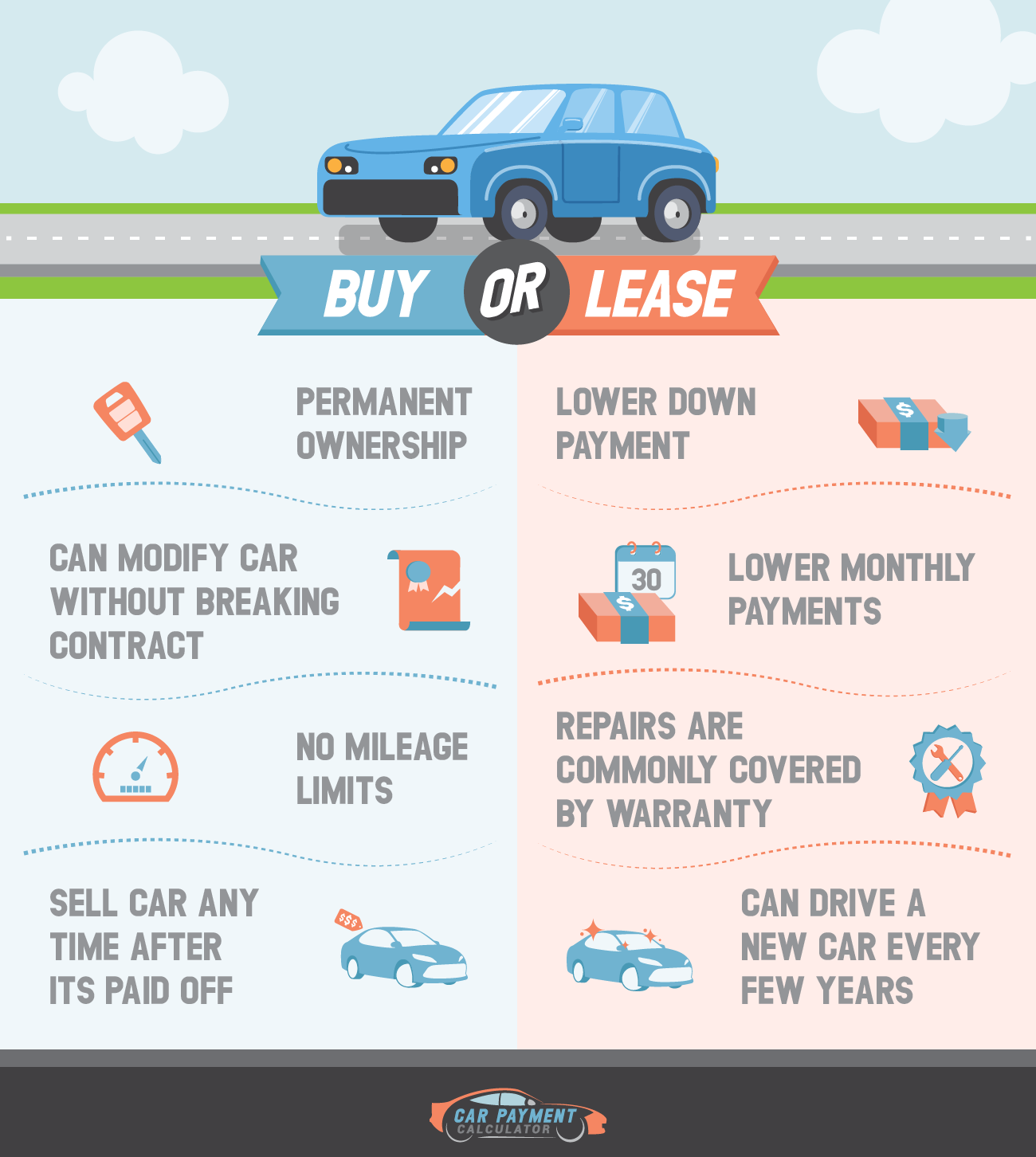
The answer to “What will my car payment be?” changes drastically depending on whether you are financing to own or leasing to use. Each path serves a different financial strategy.
The Mechanics of a Lease Payment
A lease payment is calculated based on the vehicle’s depreciation during the time you drive it, rather than the total value of the car. The formula involves the “Capitalized Cost” (the price), the “Residual Value” (the predicted value at the end of the lease), and the “Money Factor” (the interest rate).
Lease payments are almost always lower than loan payments for the same vehicle because you are only paying for the “portion” of the car you use. However, from a wealth-building perspective, leasing is often more expensive in the long run because you never build equity and are caught in a cycle of perpetual payments.
The Long-Term Value of Ownership
Buying a car involves a higher initial monthly payment but leads to a period of “payment-free” ownership once the loan is satisfied. In the Money niche, this is known as the “break-even point.” Once the loan is paid off, the “payment” you were making can be redirected into investments or savings. Ownership allows the vehicle to transition from a liability (a monthly drain) to an asset (though a depreciating one), providing you with trade-in value for your next purchase.
How to Lower Your Monthly Car Payment
If the calculated payment is too high for your current budget, there are several financial levers you can pull to bring it down without compromising your financial stability.
Improving Your Credit Score Before Applying
Your credit score is the single most important factor in determining your APR. A score increase of 50 points can sometimes drop your interest rate by 2% or 3%. Before shopping for a car, check your credit report for errors and pay down high-interest credit card debt. A few months of credit repair can result in a car payment that is $50–$75 lower per month.
The Power of the Down Payment
The down payment is your primary defense against high monthly costs. For every $1,000 you put down, your monthly payment typically drops by about $15 to $20. By saving aggressively before purchasing, you reduce the principal and the total interest paid. More importantly, a large down payment protects you from “gap” risk—the financial disaster that occurs if the car is totaled and the insurance payout is less than what you owe the bank.
Exploring Refinancing Options
If you already have a car loan with a high payment, you are not necessarily stuck. If interest rates have dropped or your credit score has improved since you took out the loan, you can refinance. Refinancing involves taking out a new loan to pay off the old one, ideally at a lower APR. This can significantly reduce your monthly obligation, provided you don’t extend the term so far that you end up paying more in total interest.

Conclusion: Balancing Lifestyle and Ledger
Ultimately, determining what your car payment will be is a foundational exercise in budgeting and cash flow management. It is easy to be swayed by the aesthetic appeal of a new vehicle or the persuasive tactics of a salesperson focused on “monthly affordability.” However, a professional approach to personal finance requires looking past the monthly check to the total cost of the debt.
A car is a tool for mobility, but a car payment is a commitment of your future labor. By calculating the principal, optimizing your APR, and adhering to conservative guidelines like the 20/4/10 rule, you ensure that your vehicle remains a convenience rather than a financial burden. Whether you choose to lease for lower short-term costs or buy for long-term equity, the goal remains the same: a car payment that fits seamlessly into a broader strategy of wealth accumulation and financial freedom.
aViewFromTheCave is a participant in the Amazon Services LLC Associates Program, an affiliate advertising program designed to provide a means for sites to earn advertising fees by advertising and linking to Amazon.com. Amazon, the Amazon logo, AmazonSupply, and the AmazonSupply logo are trademarks of Amazon.com, Inc. or its affiliates. As an Amazon Associate we earn affiliate commissions from qualifying purchases.