
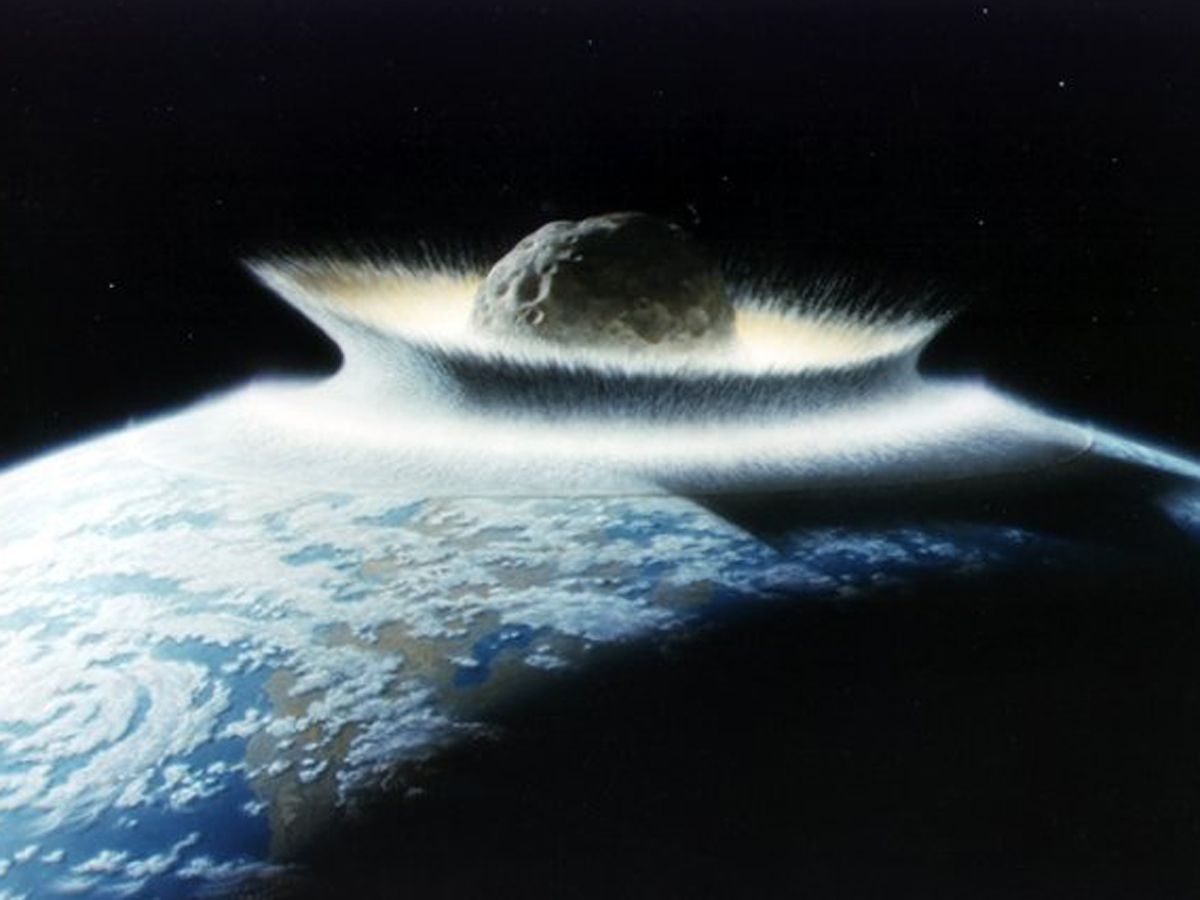
The vastness of space, while a source of wonder and scientific curiosity, also harbors potential threats. Among these, the impact of an asteroid on Earth stands as one of the most profound and potentially catastrophic events humanity could face. While the likelihood of a civilization-ending impact in any given year is exceedingly low, the sheer scale of devastation such an event could unleash necessitates a proactive and technologically driven approach to understanding, monitoring, and mitigating this cosmic risk. This exploration delves into the technological facets of asteroid impacts, focusing on detection, tracking, and the innovative solutions being developed to safeguard our planet.
The Technological Arsenal: Detecting and Tracking Near-Earth Objects
The first and most critical line of defense against an asteroid impact is our ability to see it coming. This requires a sophisticated and ever-evolving array of technological tools and strategies dedicated to the detection and tracking of Near-Earth Objects (NEOs). The sheer number of celestial bodies in our solar system makes comprehensive monitoring a monumental, yet achievable, technological challenge.
Ground-Based Observatories and Telescopes
The foundation of our asteroid detection network lies in ground-based observatories equipped with powerful telescopes. These facilities, strategically located in areas with minimal light pollution and clear skies, are designed to scan the heavens for faint, moving objects against the backdrop of stars. Specialized survey telescopes, such as the Pan-STARRS (Panoramic Survey Telescope and Rapid Response System) and the Catalina Sky Survey, are specifically engineered for wide-field imaging and rapid follow-up observations. They systematically sweep vast swathes of the sky, capturing images at regular intervals. By comparing these images, astronomers can identify objects that have shifted their positions relative to the stars, indicating an orbit within our solar system.
The data generated by these observatories is immense, requiring sophisticated software and algorithms to process and analyze. These systems are designed to sift through millions of data points, flagging potential NEO candidates for further investigation. The accuracy of these initial observations is paramount, as even slight errors in position or velocity can lead to miscalculations of an object’s trajectory and potential Earth-crossing path.
Space-Based Telescopes and Infrared Detection
While ground-based telescopes are indispensable, they are limited by Earth’s atmosphere, which can distort light and obscure faint objects. To overcome these limitations, space-based telescopes play a crucial role. The Spitzer Space Telescope, for instance, has contributed significantly to NEO research by observing in infrared wavelengths. Asteroids, even those that are not highly reflective in visible light, emit infrared radiation due to their temperature. Detecting this infrared signature allows astronomers to identify darker or less reflective asteroids that might otherwise be missed.
The upcoming Nancy Grace Roman Space Telescope, with its Wide Field Instrument, is poised to revolutionize NEO detection. Its vast field of view will enable it to survey the sky much more efficiently, significantly increasing the number of discovered NEOs, particularly those in orbits that are difficult to observe from Earth. These space-based assets provide an unobstructed view of the cosmos, enhancing the precision and completeness of our NEO catalog.
The Role of AI and Machine Learning in Data Analysis
The sheer volume of data produced by both ground and space-based observatories presents a significant analytical challenge. This is where Artificial Intelligence (AI) and Machine Learning (ML) are becoming increasingly vital. AI algorithms are being developed to automate the process of identifying potential NEOs from raw image data. These systems can learn to distinguish between known celestial objects, cosmic rays, and genuine asteroid candidates with remarkable speed and accuracy, far surpassing human capabilities in terms of sheer processing power.
Furthermore, ML is instrumental in predicting asteroid trajectories and assessing impact probabilities. By analyzing historical observational data and applying complex orbital mechanics models, ML algorithms can refine impact predictions, identifying objects that pose a credible threat and assigning them a risk score. This not only helps prioritize follow-up observations but also informs the development of potential mitigation strategies. The continuous learning capability of AI means these systems become more adept at identification and prediction over time, as they are fed more observational data.
From Threat Assessment to Mitigation: Engineering a Planetary Defense
Once a potentially hazardous asteroid is detected and its trajectory confirmed, the focus shifts from observation to mitigation. This is where cutting-edge engineering and technological innovation are paramount, aiming to prevent an impact rather than simply reacting to it. The development of effective planetary defense strategies is a complex undertaking, requiring a multi-faceted approach.
Kinetic Impactors: The “Billiard Ball” Approach
One of the most actively researched and developed mitigation techniques is the kinetic impactor. This method involves sending a spacecraft at high speed to collide with the asteroid. The objective is not to shatter the asteroid, which could create multiple smaller, equally dangerous fragments, but rather to impart enough momentum to slightly alter its trajectory. Even a minuscule change in velocity, applied years or decades before a potential impact, can cause the asteroid to miss Earth entirely.
The Double Asteroid Redirection Test (DART) mission, conducted by NASA and the Johns Hopkins Applied Physics Laboratory, was a groundbreaking demonstration of this technology. DART successfully impacted the asteroid Dimorphos, a moonlet of the larger asteroid Didymos, and measurably altered its orbital period around Didymos. This mission proved the viability of the kinetic impactor as a planetary defense tool, providing invaluable data for future missions. The success of DART has paved the way for further refinements and larger-scale applications of this technique.
Gravity Tractors: A Gentle Nudge

Another promising technological approach is the “gravity tractor.” This concept involves parking a heavy spacecraft near the asteroid and using its gravitational pull to slowly tug the asteroid off its collision course. Unlike kinetic impactors, which rely on a sudden jolt, gravity tractors offer a more controlled and precise method of deflection. This approach is particularly well-suited for larger asteroids or for situations where a more gradual alteration of trajectory is desired.
The spacecraft would orbit the asteroid at a close proximity for an extended period. Its mass, though insignificant compared to the asteroid, would exert a continuous gravitational force, gradually altering the asteroid’s path. The effectiveness of a gravity tractor depends on the mass of the spacecraft and the duration of its proximity to the asteroid. While less immediately dramatic than a kinetic impactor, it offers a robust and potentially more versatile solution for certain asteroid deflection scenarios.
Nuclear Options: A Last Resort and Technological Debate
In scenarios involving very large asteroids with short warning times, the use of nuclear explosives has been considered as a potential mitigation strategy. The idea is to detonate a nuclear device in the vicinity of the asteroid, either to vaporize a portion of its surface, creating a thrust that pushes it off course, or in some scenarios, to break it apart into smaller, less dangerous pieces.
However, the application of nuclear technology for asteroid deflection is fraught with significant challenges and debates. The primary concern is the risk of fragmentation, which could result in a shower of radioactive debris, potentially causing widespread damage. Furthermore, the precise trajectory and effectiveness of such a detonation would be difficult to control, and the political and ethical implications of using nuclear weapons in space are substantial. While nuclear options remain a theoretical consideration for extreme circumstances, the scientific and engineering communities largely favor less destructive and more predictable methods.
Advanced Propulsion and Navigation Systems for Interception
The successful execution of any asteroid mitigation mission relies heavily on advanced propulsion systems and highly precise navigation. Spacecraft destined for asteroid interception need to be capable of rapid acceleration and deceleration, as well as the ability to make precise course corrections over vast distances. Technologies such as ion propulsion, which offers high efficiency and extended operational life, are crucial for long-duration missions.
Furthermore, sophisticated rendezvous and docking technologies, along with advanced guidance, navigation, and control (GNC) systems, are essential for safely approaching and interacting with an asteroid. These systems often incorporate real-time optical tracking, lidar, and radar to map the asteroid’s surface and adjust the spacecraft’s trajectory accordingly. The development of autonomous systems that can make critical decisions in dynamic space environments is also a key area of research, ensuring that interception missions can proceed even in the event of communication delays.
The Future of Planetary Defense: Innovation and International Collaboration
The threat of an asteroid impact, however remote, serves as a powerful catalyst for technological innovation and global cooperation. The continuous advancement of our detection capabilities, coupled with the development of increasingly sophisticated mitigation strategies, is shaping a robust framework for planetary defense.
Enhanced Detection Networks and Data Sharing
The future of asteroid detection hinges on expanding and refining our existing networks. This includes deploying more ground-based telescopes, launching dedicated NEO survey missions into space, and leveraging the capabilities of emerging observatories. Crucially, it also involves establishing seamless data-sharing protocols among all space-faring nations and astronomical organizations. A global, interconnected network allows for rapid dissemination of critical information, ensuring that potential threats are identified and tracked by the widest possible array of sensors.
The creation of centralized databases and open-source platforms for NEO data is also vital. This facilitates collaborative research and allows scientists worldwide to contribute to the analysis and understanding of asteroid orbits and compositions. The sharing of data not only accelerates the discovery process but also enhances the accuracy of impact probability calculations.
Towards Autonomous Planetary Defense Systems
Looking ahead, the development of autonomous planetary defense systems represents a significant leap forward. These systems would be capable of independently detecting, tracking, and even initiating mitigation procedures for hazardous asteroids with minimal human intervention. This would be particularly crucial for scenarios involving asteroids with very short warning times, where rapid decision-making is paramount.
Such systems would likely involve a network of interconnected satellites and ground-based assets, all communicating with each other and employing advanced AI to assess threats and execute pre-programmed or dynamically generated response protocols. This proactive approach minimizes the risk of human error or delays in critical response times, ensuring a swift and effective planetary defense.

The Importance of International Collaboration and Policy
Planetary defense is inherently a global challenge that requires a unified, international response. No single nation can effectively address the threat of an asteroid impact alone. Therefore, fostering robust international collaboration is not just desirable but essential. This involves joint funding of research and development, coordinated observation campaigns, and the establishment of clear protocols for responding to a credible impact threat.
International bodies like the United Nations Office for Outer Space Affairs (UNOOSA) and the International Asteroid Warning Network (IAWN) play a crucial role in facilitating this cooperation. Establishing a global consensus on response strategies, risk assessment methodologies, and the ethical considerations of planetary defense technologies is vital for a coordinated and effective approach to safeguarding Earth. The ongoing development of technologies and strategies to deflect asteroids is a testament to humanity’s ingenuity and its commitment to ensuring the long-term survival of our species.
aViewFromTheCave is a participant in the Amazon Services LLC Associates Program, an affiliate advertising program designed to provide a means for sites to earn advertising fees by advertising and linking to Amazon.com. Amazon, the Amazon logo, AmazonSupply, and the AmazonSupply logo are trademarks of Amazon.com, Inc. or its affiliates. As an Amazon Associate we earn affiliate commissions from qualifying purchases.