
Imperialism, a phenomenon that dramatically reshaped the global landscape for centuries, was driven by a complex interplay of intertwined motives. While often presented through a singular lens of economic exploitation or political dominance, a deeper examination reveals a multifaceted agenda where ambition, ideology, and perceived necessity converged. Understanding these underlying drivers is crucial not only for comprehending historical events but also for recognizing the enduring legacies of imperialistic practices that continue to influence global dynamics today. This exploration delves into the core motivations that propelled nations to expand their influence and control over vast territories and diverse populations.
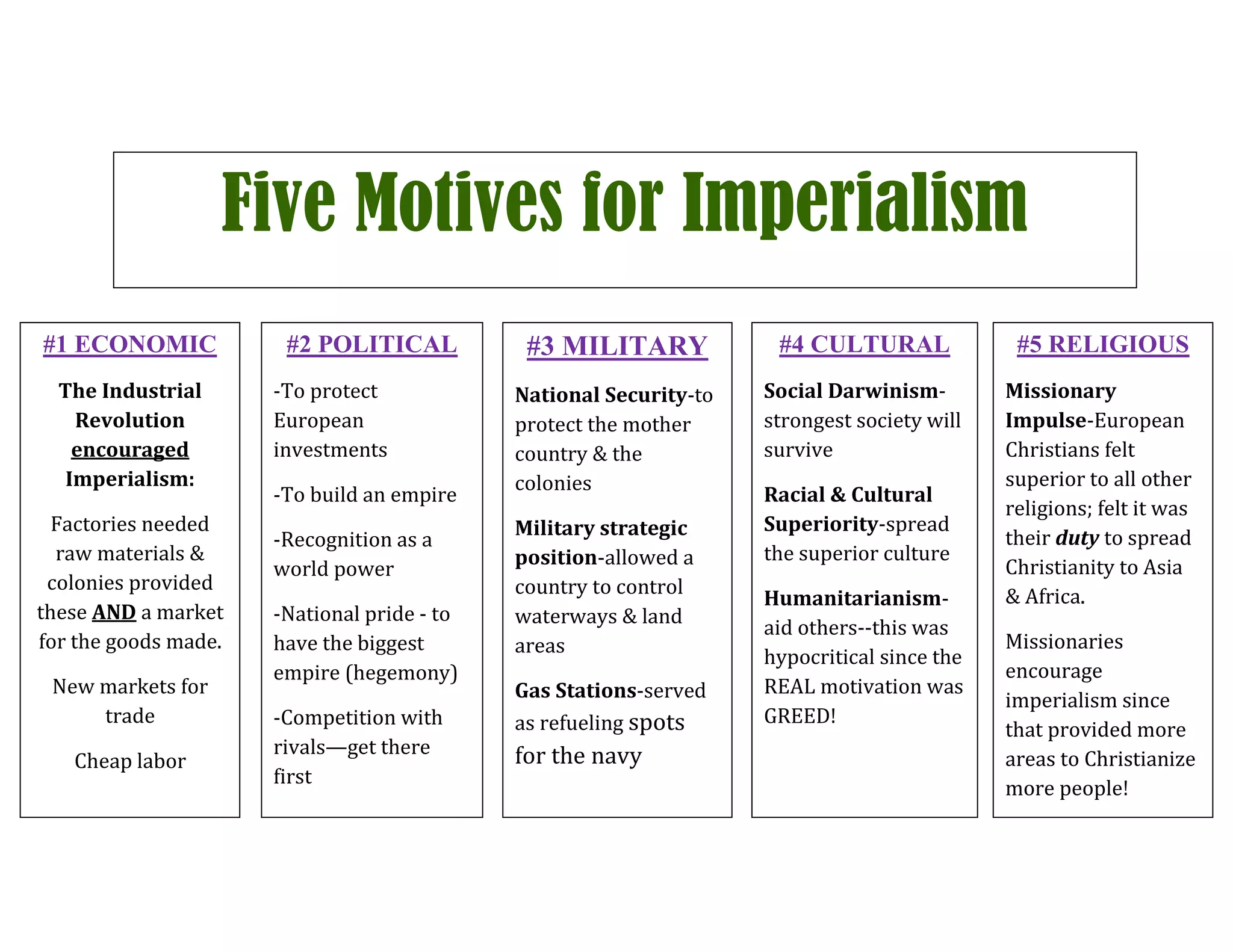
The Economic Engine: Resource Acquisition and Market Expansion
At the heart of many imperialistic endeavors lay a potent economic imperative. Industrializing nations, particularly in Europe, experienced unprecedented growth in manufacturing and consumption, creating an insatiable demand for raw materials and new markets to absorb their surplus goods. This economic hunger was a primary catalyst for imperial expansion, transforming perceived needs into justifications for conquest.
Securing Vital Raw Materials
The Industrial Revolution fundamentally altered the material requirements of nations. Factories churned out goods at an astonishing rate, demanding a consistent and substantial supply of raw materials. Cotton for textiles, rubber for industrial processes, minerals like copper, tin, and diamonds for machinery and luxury goods, and timber for construction and fuel were all crucial. Colonies became convenient and often cheaply acquired sources for these essential commodities.
- Access to Natural Resources: Imperial powers sought to directly control territories rich in natural resources that were scarce or expensive to procure domestically. This allowed them to bypass international markets, reduce production costs, and gain a significant competitive advantage. For instance, the British Empire’s vast reach ensured a steady flow of cotton from India and Egypt, fueling its booming textile industry.
- Exploitation of Labor: Beyond raw materials, colonies provided a captive labor force. Indigenous populations were often coerced or compelled into working in mines, plantations, and infrastructure projects, further reducing the cost of production for the imperial power. This exploitation, though morally reprehensible, was a significant economic benefit for the colonizing nations.
- Strategic Resource Control: Beyond immediate needs, imperial powers aimed to deny these vital resources to their rivals. Controlling key resource-rich regions served as a strategic advantage in international power dynamics, limiting the economic and military capabilities of potential adversaries.
Establishing New Markets for Manufactured Goods
The same industrial prowess that fueled the demand for raw materials also led to an overproduction of manufactured goods. Domestic markets, while growing, often became saturated. Imperialism offered a solution by opening up vast colonial territories as captive markets, free from the competition of other industrial powers.
- Monopolistic Markets: Colonies were often forced to purchase manufactured goods exclusively from their imperial overlords. This created a monopolistic environment where the colonizing nation could dictate prices and terms, ensuring substantial profits. Tariffs were often imposed on goods from competing nations, further solidifying the imperial power’s market dominance.
- Investment Opportunities: The economic surplus generated by industrialization also sought new avenues for investment. Colonies offered opportunities for building infrastructure like railways, ports, and telegraph lines, which not only facilitated the extraction of resources and distribution of goods but also generated further returns on investment for companies and individuals in the imperial homeland.
- Economic Interdependence (Forced): Imperialism created a system of forced economic interdependence, where colonial economies became subservient to the needs of the imperial center. This specialization, while sometimes leading to increased efficiency in resource extraction, often stifled the development of diverse local industries and created long-term economic dependencies.
The Political and Strategic Imperative: Power, Prestige, and Geopolitical Advantage
Beyond the tangible economic benefits, imperialism was also driven by a powerful desire for political dominance, national prestige, and strategic advantage on the global stage. The acquisition of colonies was often seen as a direct measure of a nation’s power and standing among its peers.
The Pursuit of Global Power and Prestige
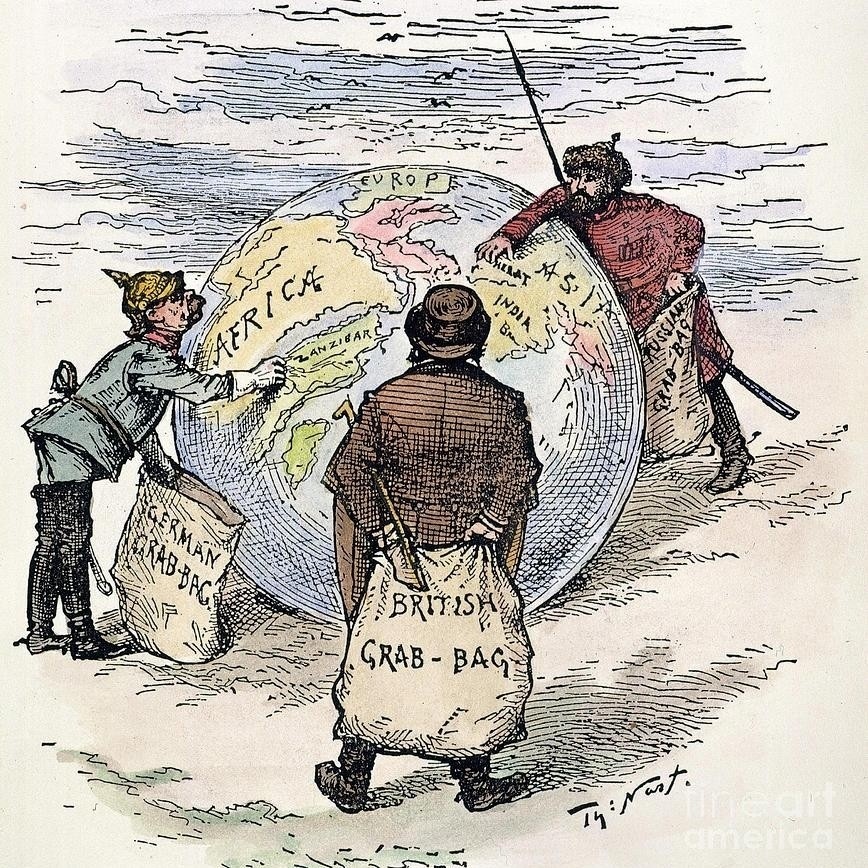
In the 19th century, the world was a stage for great power competition. Owning colonies was a visible symbol of a nation’s strength and its ability to project power beyond its borders. This desire for prestige was deeply ingrained in national pride and influenced foreign policy decisions.
- National Honor and Competition: Imperial expansion became a race. If one nation acquired colonies, others felt compelled to do the same to avoid being outmaneuvered or appearing weaker. This competitive dynamic, akin to a geopolitical arms race, fueled the scramble for territories across Africa, Asia, and the Pacific.
- Symbol of Greatness: The possession of a vast empire conferred immense prestige. It signified a nation’s ability to administer, govern, and exploit diverse lands and peoples. This perception of greatness was a significant factor in maintaining national morale and projecting an image of invincibility.
- Influence in International Affairs: Colonies provided leverage in international diplomacy. A nation with extensive overseas possessions had more influence in global councils and could command greater respect in its dealings with other powers. This strategic advantage was often a primary motivation for acquiring territories that might not have had immediate economic value.
Strategic Location and Military Advantage
The acquisition of colonies was not solely about economic exploitation or abstract prestige; it was also deeply intertwined with strategic military considerations. Colonies offered crucial bases, coaling stations, and defensive outposts that enhanced a nation’s military reach and security.
- Naval Bases and Coaling Stations: In an era of growing naval power, controlling strategic islands and coastal territories was essential for maintaining a global presence. These locations served as vital coaling stations for steam-powered warships, allowing them to refuel and extend their range, and as naval bases for repairs and resupply.
- Control of Trade Routes: Imperial powers sought to control key maritime trade routes to ensure the safe passage of their own ships and to disrupt the trade of rivals. This often involved acquiring territories at strategic choke points like straits and canals.
- Defensive Perimeter and Buffer Zones: Colonies could serve as buffer zones, protecting the imperial homeland from potential invaders or providing early warning systems. They also extended the defensive perimeter of a nation, making it more difficult for enemies to launch direct attacks.
The Ideological Justification: “Civilizing Mission” and Social Darwinism
While economic and political motives were undeniably potent, imperialism was also legitimized through powerful, albeit often self-serving, ideologies. The belief in the superiority of Western civilization and the perceived duty to “civilize” other peoples provided a moral and intellectual framework for imperial conquest.
The “Civilizing Mission” and White Man’s Burden
A prevalent ideology was the notion of the “civilizing mission,” which posited that European nations had a moral obligation to bring their advanced culture, religion, and institutions to what they deemed “backward” societies. This paternalistic view, encapsulated in Rudyard Kipling’s poem “The White Man’s Burden,” framed imperialism not as an act of exploitation, but as a benevolent undertaking.
- Religious Conversion: Missionaries played a significant role in imperial expansion, often accompanying or preceding colonial administrators. The desire to spread Christianity and Western religious values was a genuine, though often intertwined with other motives, driving force for many individuals and institutions.
- Spread of Western Education and Institutions: Imperial powers introduced Western systems of education, law, and governance to their colonies. While often designed to serve the interests of the colonizer, proponents argued that these institutions would ultimately uplift and modernize indigenous societies.
- Paternalistic Benevolence: The “civilizing mission” fostered a paternalistic attitude, viewing indigenous populations as children in need of guidance and discipline from their more “mature” European counterparts. This mindset justified the imposition of foreign rule and the suppression of local customs and traditions deemed “uncivilized.”

Social Darwinism and Racial Superiority
The advent of Darwin’s theory of evolution was, unfortunately, misappropriated and distorted to justify racial hierarchies and imperial dominance. Social Darwinism, the application of evolutionary principles to human societies, argued that certain races and cultures were inherently superior and destined to rule over others.
- Racial Hierarchies: Social Darwinist thought posited a natural order where the “fittest” – interpreted as the most technologically advanced and militarily powerful, i.e., Europeans – would inevitably dominate the “less fit.” This provided a pseudo-scientific justification for racial discrimination and subjugation.
- Justification for Conquest: If certain races were naturally superior, then their conquest and subjugation of others were seen as a natural, even inevitable, outcome of historical progress. This ideology absolved imperial powers of moral responsibility for the suffering and exploitation inflicted upon colonized populations.
- Belief in Inevitable Progress: Imperialists often believed they were agents of progress, bringing about a higher stage of development for humanity. This conviction, fueled by Social Darwinism, made it easier to overlook or dismiss the human cost of their endeavors, viewing it as a necessary sacrifice for a greater, albeit self-defined, good.
In conclusion, the motives for imperialism were a complex tapestry woven from economic ambition, the pursuit of political power, and the influence of prevailing ideologies. While the economic imperatives of resource acquisition and market expansion often provided the initial impetus, they were frequently amplified and legitimized by the quest for global prestige, strategic advantage, and the deeply ingrained belief in the superiority of Western civilization. Understanding these interwoven motivations offers a crucial lens through which to analyze the historical forces that shaped the modern world and to critically examine the enduring legacies of imperialistic practices.
aViewFromTheCave is a participant in the Amazon Services LLC Associates Program, an affiliate advertising program designed to provide a means for sites to earn advertising fees by advertising and linking to Amazon.com. Amazon, the Amazon logo, AmazonSupply, and the AmazonSupply logo are trademarks of Amazon.com, Inc. or its affiliates. As an Amazon Associate we earn affiliate commissions from qualifying purchases.