
The year 2020 will forever be etched in the annals of financial history as a period of unprecedented volatility and radical shifts in the global economy. While the year was defined by a global health crisis that disrupted supply chains and altered the nature of work, it also created a unique set of circumstances that led to some of the lowest mortgage rates ever recorded in the United States. For prospective homebuyers and existing homeowners looking to refinance, 2020 represented a “perfect storm” of low borrowing costs that fundamentally reshaped the real estate landscape.

To understand what the mortgage rates were in 2020, one must look beyond the raw numbers and examine the macroeconomic forces that drove them. It was a year where the traditional rules of finance were temporarily suspended, and the intervention of the Federal Reserve played a central role in creating a low-interest-rate environment that fueled a massive surge in housing demand.
The Journey to Record Lows: A Chronological Overview
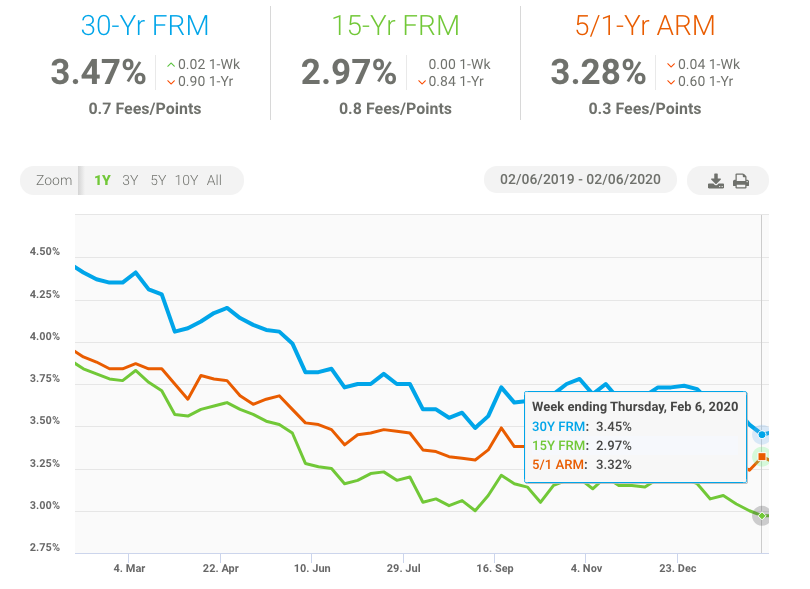
At the beginning of 2020, mortgage rates were already relatively low by historical standards. In January, the average interest rate for a 30-year fixed-rate mortgage hovered around 3.72%. At the time, economists predicted a stable year for the housing market, with modest fluctuations expected based on standard inflation metrics and employment data. However, the emergence of the COVID-19 pandemic in late February and early March discarded all previous forecasts.
As the economy began to shutter and uncertainty gripped the financial markets, investors fled “risky” assets like stocks and poured money into the safety of U.S. Treasuries. Because mortgage rates are closely tied to the yield on the 10-year Treasury note, this flight to safety caused rates to plummet. By early March, the average 30-year fixed rate had dropped to 3.29%, a new record low at the time.
The volatility continued throughout the spring. While rates spiked briefly in late March due to liquidity issues in the secondary mortgage market, the intervention of the Federal Reserve stabilized the environment. By July 2020, the 30-year fixed-rate mortgage fell below 3% for the first time in the nearly 50-year history of Freddie Mac’s Primary Mortgage Market Survey. The year ended with rates reaching an all-time low of 2.67% in December, marking a staggering 16 record lows within a single calendar year.
The Seasonal Shift and Market Sentiment
The typical seasonality of the housing market—where activity peaks in the spring and cools in the winter—was completely upended in 2020. Usually, higher demand in the spring can lead to slight upward pressure on rates or at least a plateau. In 2020, the delayed “spring” market occurred in the summer and fall, coinciding with the steepest declines in interest rates. This created a frenzy of activity as buyers realized that their purchasing power was increasing even as home prices began to climb.
Comparing 30-Year and 15-Year Fixed Rates
While the 30-year fixed-rate mortgage is the benchmark for the American housing market, the 15-year fixed-rate mortgage also saw historic declines. In January 2020, 15-year rates averaged around 3.16%. By the end of the year, they had dropped to approximately 2.21%. This narrow spread between long-term and short-term debt encouraged many homeowners to refinance into shorter terms, allowing them to build equity at an accelerated pace while keeping their monthly payments manageable.
The Mechanics of the Drop: The Role of the Federal Reserve
The primary catalyst for the record-low rates of 2020 was the aggressive intervention of the Federal Reserve. Recognizing the potential for a total economic collapse as lockdowns commenced, the Fed took two major actions that directly influenced the mortgage market.
First, the Federal Open Market Committee (FOMC) slashed the federal funds rate—the rate at which banks lend to one another overnight—to a range of 0% to 0.25%. While the federal funds rate does not directly set mortgage rates, it influences the broader interest rate environment. When it is at “zero-bound,” the cost of capital for banks decreases, which eventually trickles down to consumer lending products.
Second, and perhaps more importantly, the Federal Reserve engaged in massive “Quantitative Easing” (QE). This involved the large-scale purchase of Government-backed Treasury securities and Mortgage-Backed Securities (MBS). By purchasing billions of dollars in MBS, the Fed created artificial demand in the secondary market. High demand for these bonds keeps their prices high and their yields low. Since mortgage rates are essentially the “yield” that investors receive for lending money to homebuyers, the Fed’s actions effectively forced mortgage rates downward to prevent the housing market from seizing up.

Mortgage-Backed Securities and Yield Spreads
In a standard market, there is a “spread” or a gap between the 10-year Treasury yield and the 30-year mortgage rate, typically around 1.7 to 2.0 percentage points. In the early days of the pandemic, this spread widened significantly due to market panic. The Fed’s intervention was designed to compress this spread, ensuring that the low yields on government debt actually translated into lower costs for the average borrower. Without this specific focus on the MBS market, mortgage rates likely would have remained higher despite the zero-interest-rate policy.
The Impact of the “Refinance Fee”
It is also worth noting that in late 2020, the Federal Housing Finance Agency (FHFA) introduced a 0.5% “Adverse Market Refinance Fee” for mortgages sold to Fannie Mae and Freddie Mac. This fee was intended to help the agencies manage the risks associated with the pandemic. While this added a slight cost to some refinances, the base interest rates were so low that the fee did little to dampen the overall momentum of the market.
The Economic Impact: A Refinancing Boom and “The Great Reshuffle”
The collapse of mortgage rates in 2020 triggered one of the largest refinancing booms in American history. According to data from the Mortgage Bankers Association (MBA), refinance applications in 2020 were consistently 100% to 200% higher than they were in 2019.
The Financial Windfall for Homeowners
For millions of American households, the ability to refinance a mortgage from 4.5% or 5% down to 2.75% resulted in hundreds of dollars in monthly savings. This “found money” acted as a form of private-sector stimulus. Instead of the government sending a check, the market allowed homeowners to lower their fixed costs, which in turn supported consumer spending during a period of economic uncertainty. Many homeowners also opted for “cash-out” refinances, using their home equity to fund renovations, pay off high-interest credit card debt, or establish emergency savings funds.
The Rise of the First-Time Homebuyer
The low rates of 2020 also lowered the barrier to entry for first-time homebuyers, at least initially. A lower interest rate meant that a buyer could afford a more expensive home with the same monthly budget. For example, a $1,500 monthly principal and interest payment could support a much larger loan amount at 2.8% than it could at 4.0%. This increased purchasing power was a lifeline for Millennials, many of whom were reaching peak homebuying age during the pandemic.
The Supply-Demand Imbalance
However, the surge in demand caused by low rates quickly ran into a wall of limited supply. The “Great Reshuffle”—driven by remote work and a desire for more space—caused home prices to skyrocket. By the end of 2020, the advantage of lower interest rates was being partially offset by the rapid appreciation of home values. Competition became fierce, with bidding wars and offers significantly over the asking price becoming the new norm in suburban and rural markets.
Lessons for Modern Borrowers: The 2020 Anomaly in Hindsight
Looking back at 2020 from a modern perspective, it is clear that the mortgage rates of that era were a historical anomaly rather than a sustainable trend. For today’s investors and homebuyers, the 2020 market offers several key insights into how personal finance intersects with global economics.
The Importance of Market Timing vs. Financial Readiness
Many who waited for “even lower” rates in 2020 missed the window, while those who were financially prepared—with high credit scores and down payments ready—were able to lock in generational wealth. The lesson here is that while market timing is important, financial readiness is the only factor a borrower can truly control. Those who had their “financial house” in order were the ones who successfully captured the 2.6% to 2.8% rates.
The Long-Term “Lock-in” Effect
The low rates of 2020 created what economists now call the “lock-in effect.” Because so many homeowners secured rates below 3%, they are now hesitant to sell their homes and move, as doing so would mean trading a 2.7% mortgage for a much higher one in the current environment. This has contributed to a continued shortage of housing inventory. For the individual, however, that 2020 mortgage remains a powerful hedge against inflation, as their housing costs remain fixed while the value of the dollar fluctuates.
The Role of Credit Scores in Accessing Low Rates
Even in 2020, the “headline” rates of 2.6% or 2.7% were not available to everyone. Lenders tightened their standards during the pandemic to mitigate risk. Borrowers with credit scores below 700 or those in industries heavily impacted by lockdowns (like hospitality or travel) often faced higher rates or stricter documentation requirements. This underscores the permanent truth in personal finance: your individual “financial health” determines your ability to access the best market rates, regardless of how low the national average might be.
In conclusion, the mortgage rates of 2020 were a byproduct of a global crisis and a massive government response. They represented a unique moment where the cost of borrowing for a home fell to levels previously thought impossible. While we may not see those specific numbers again for a long time, the impact of 2020 continues to resonate through the personal balance sheets of millions of homeowners and the broader structure of the American economy.
aViewFromTheCave is a participant in the Amazon Services LLC Associates Program, an affiliate advertising program designed to provide a means for sites to earn advertising fees by advertising and linking to Amazon.com. Amazon, the Amazon logo, AmazonSupply, and the AmazonSupply logo are trademarks of Amazon.com, Inc. or its affiliates. As an Amazon Associate we earn affiliate commissions from qualifying purchases.