
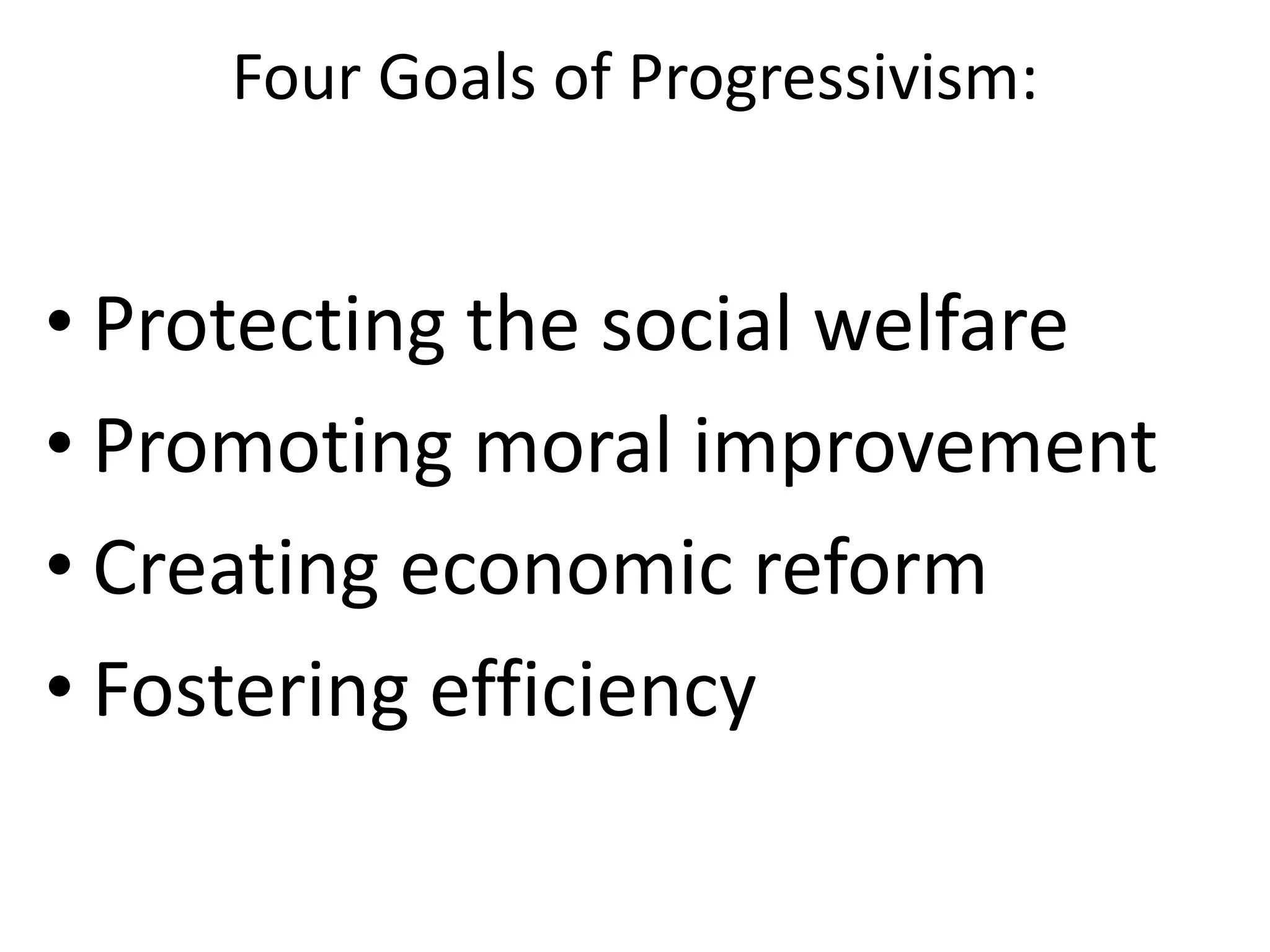
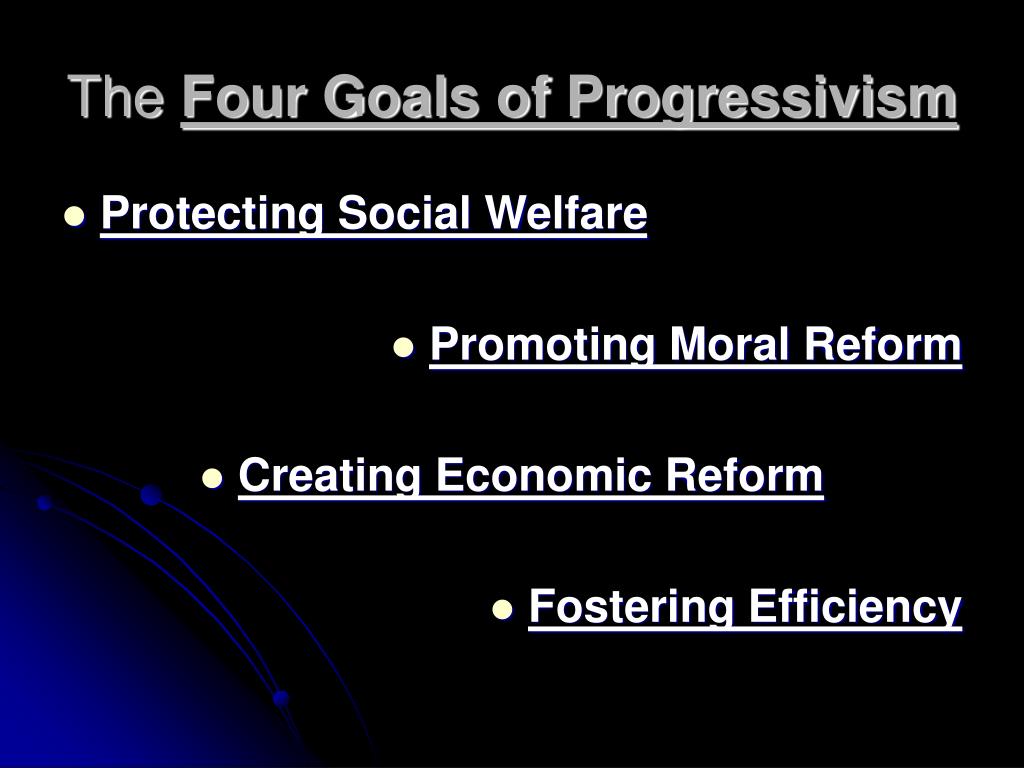
The Progressive Era, spanning roughly from the 1890s to the 1920s, was a period of intense social and political reform in the United States. Driven by widespread concerns over industrialization, urbanization, and unchecked corporate power, its reformers aimed to address systemic issues that threatened the nation’s economic stability and social fabric. While multifaceted, the era’s core objectives fundamentally reshaped the landscape of American finance, business, and economic governance. These four primary goals, viewed through the lens of economic and financial impact, laid the groundwork for many of the regulatory and fiscal structures we recognize today.
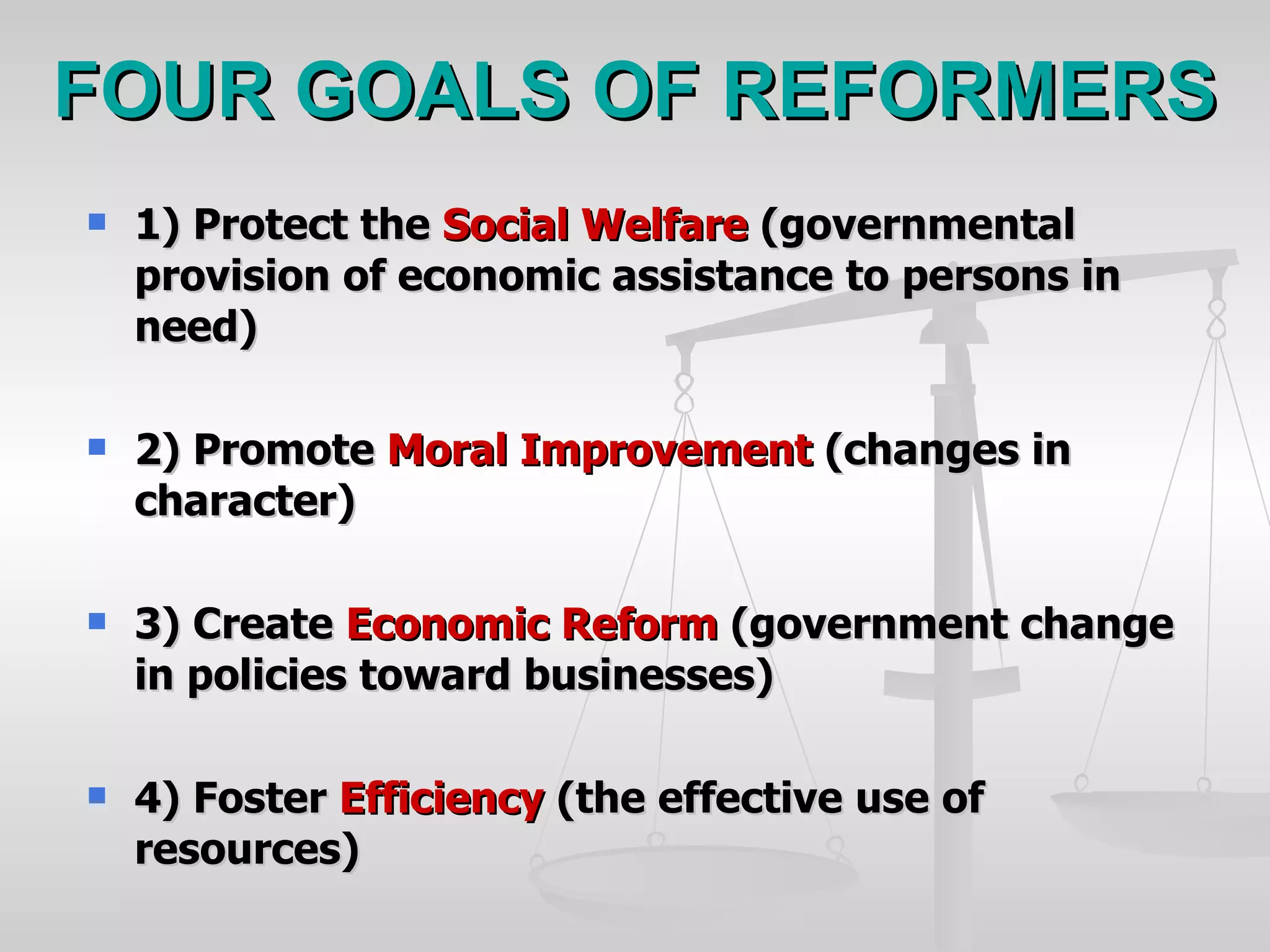
Restructuring the Economic Landscape: Taming Industrial Goliaths
At the core of the Progressive agenda was a profound concern about the unchecked power of large corporations and trusts, which had amassed enormous wealth and influence during the Gilded Age. The goal was to dismantle monopolies, promote fair competition, and ensure that the benefits of industrial growth were more equitably distributed. This was not merely an ethical stance but a critical economic one, as monopolies stifled innovation, exploited consumers through exorbitant prices, and manipulated markets to their exclusive advantage, ultimately distorting the free market ideal.
The Perils of Monopoly Power
By the late 19th century, industries such as oil, steel, and railroads were dominated by powerful trusts that controlled vast segments of the economy. These trusts often engaged in predatory pricing, bullied smaller competitors, and exerted undue influence over political processes, effectively creating private empires that dictated economic terms. From a financial perspective, this meant that capital flowed disproportionately to a few powerful entities, stifling new investment in competitive ventures and making it difficult for small businesses to thrive. Consumers faced limited choices and inflated prices, eroding their purchasing power and hindering overall economic welfare. The financial stability of entire sectors could be jeopardized by the whims of a few industrial titans, creating systemic risk in an unregulated economy.
Landmark Antitrust Legislation and Regulation
Progressives responded with a series of legislative actions designed to curb these economic excesses. The Sherman Antitrust Act of 1890, though initially weak, was later vigorously enforced, notably during Theodore Roosevelt’s presidency. Subsequent legislation, like the Clayton Antitrust Act of 1914, strengthened these measures by specifically outlawing certain anti-competitive practices, such as price discrimination and interlocking directorates, which allowed individuals to serve on the boards of competing companies. The creation of the Federal Trade Commission (FTC) in 1914 further provided a permanent mechanism for policing unfair business practices and investigating corporate behavior. These reforms aimed to level the playing field, fostering a more competitive market environment where business finance could thrive through innovation rather than monopolistic control. By breaking up or regulating trusts, the government sought to protect the economic interests of smaller businesses and consumers, ensuring a more dynamic and less exploitative capitalist system.
Architecting Financial Stability: Building a Modern Monetary System
Prior to the Progressive Era, the United States operated with a fragmented and often unstable financial system. A series of financial panics, particularly the Panic of 1907, exposed critical weaknesses in the nation’s banking and monetary structures. A central goal of the Progressives, therefore, was to create a more resilient and responsive financial system capable of supporting industrial growth and mitigating economic crises. This involved establishing a more centralized control over the money supply and finding new, more equitable ways to fund government operations.
The Need for Centralized Banking
The absence of a central bank meant that individual banks held their own reserves, leading to a fragmented and inelastic currency supply. During times of economic stress, local banks would hoard reserves, exacerbating liquidity crises and often leading to widespread bank failures and panics. Businesses struggled to secure credit, and the economy experienced boom-and-bust cycles that devastated personal finances and investments. Progressives recognized that a modern, industrial economy required a sophisticated financial infrastructure to manage currency, regulate credit, and act as a lender of last resort. The landmark Federal Reserve Act of 1913 created the Federal Reserve System, establishing 12 regional Federal Reserve Banks overseen by a Board of Governors. This system introduced a centralized, yet somewhat decentralized, mechanism for controlling the nation’s money supply, regulating member banks, and providing financial stability, fundamentally transforming American finance by offering a measure of security against economic shocks.
The Income Tax Revolution
Another significant financial reform was the introduction of a federal income tax. Before the 16th Amendment (ratified in 1913), the U.S. government primarily funded itself through tariffs and excise taxes, which disproportionately burdened lower and middle-income citizens. Progressives argued that this system was regressive and unfair, especially given the vast fortunes accumulated by industrialists. They championed a graduated income tax as a means to redistribute wealth more equitably and provide the federal government with a stable and flexible source of revenue. The 16th Amendment empowered Congress to “lay and collect taxes on incomes, from whatever source derived,” without apportionment among the states. This was a revolutionary shift in public finance, allowing the government to fund ambitious public projects, manage debt more effectively, and address social welfare needs. It also marked a move towards a more progressive tax system, where individuals and corporations with higher incomes contributed a larger share, impacting personal finance, corporate tax planning, and the overall distribution of national wealth for generations.
Elevating Labor and Consumer Standards: A Foundation for Economic Justice
The rapid industrialization of the late 19th century came at a significant human cost, with rampant exploitation of workers, dangerous working conditions, and the widespread sale of unsafe products. Progressive reformers saw these issues as not only moral failures but also as economically unsustainable practices that undermined public trust and long-term prosperity. Their goal was to establish a baseline of economic justice by protecting the rights and welfare of both labor and consumers.
Protecting the Workforce and Empowering Labor
Factory workers, including women and children, often toiled for long hours in hazardous environments for meager wages, with no safety nets like workers’ compensation or unemployment insurance. Child labor was pervasive, stifling educational opportunities and perpetuating cycles of poverty. From a financial perspective, these conditions created an underclass whose limited purchasing power constrained aggregate demand, while the human cost translated into substantial public health expenditures and reduced national productivity in the long run. Progressives pushed for legislation that limited working hours, mandated safer working conditions, and banned child labor. While many of these reforms faced fierce opposition from businesses concerned about increased labor costs, their eventual implementation led to a healthier, more productive workforce. Efforts to strengthen labor unions, though often contentious, also aimed to give workers greater collective bargaining power, leading to higher wages and better benefits, thereby boosting personal finance and contributing to a more stable consumer base.
Safeguarding Consumers and Market Integrity
The lack of regulation in manufacturing and food processing also posed severe risks to public health and economic integrity. Unsanitary conditions in meatpacking plants, adulterated foods, and misleading advertising were common, leading to illnesses and financial fraud. Consumers had little recourse against unscrupulous businesses, eroding trust in the marketplace. The Progressive goal was to ensure product safety and honest business practices, which in turn would create a more reliable and trustworthy market for goods and services. Landmark legislation like the Pure Food and Drug Act and the Meat Inspection Act, both passed in 1906, established federal standards for sanitation and labeling, compelling businesses to adopt more responsible production methods. While initially imposing compliance costs on industries, these regulations ultimately bolstered consumer confidence, expanded markets for reputable products, and prevented significant economic losses from widespread illness or product recalls. This set a precedent for future consumer protection laws, vital for maintaining trust and stability in a complex economy.
Enhancing Fiscal Governance and Transparency: Curtailing Corruption and Inefficiency
The Gilded Age was notorious for political corruption, with powerful “political machines” often controlling municipal and state governments. This corruption extended into the economic sphere, where public funds were mismanaged, contracts were awarded based on cronyism rather than merit, and corporations influenced legislation through illicit means. A critical Progressive goal was to reform government at all levels, making it more efficient, accountable, and transparent, thereby ensuring that public resources were managed for the common good and that the economic playing field was level.
Reforming Political Machines and Public Spending
Political machines, funded by patronage and graft, diverted public money away from essential services and into the pockets of corrupt officials and their allies. This meant that infrastructure projects were often overpriced or poorly executed, essential public services were neglected, and fair taxation was undermined by special exemptions for favored businesses. From an economic standpoint, this represented a massive inefficiency in the allocation of public capital and resources, distorting markets and increasing the cost of doing business for honest entrepreneurs. Progressives advocated for reforms such as civil service reform (merit-based appointments instead of political patronage), direct primaries, and direct election of senators (17th Amendment) to reduce the power of political bosses and special interests. These reforms aimed to professionalize public administration and ensure that government financial decisions were based on public welfare rather than private gain, leading to more efficient public spending and a fairer tax burden.
The Long-Term Impact on Business Ethics and Regulation
The drive for greater government accountability also had a direct impact on business ethics and the regulatory environment. By reducing corruption, Progressives aimed to create an environment where businesses competed on merit and innovation, rather than through bribery or political favors. The establishment of independent regulatory agencies, beyond the FTC, like state public utility commissions, was also part of this goal. These agencies were tasked with overseeing industries deemed essential for public welfare but prone to monopolistic tendencies (e.g., electricity, water, gas). Their purpose was to ensure fair pricing, reliable service, and prevent exploitation, providing a layer of oversight that balanced private profit motives with public economic interest. The overall effect was to foster a more predictable and ethical business environment, attracting long-term capital investment by reducing systemic risks associated with corruption and political instability. The legacy of these reforms is evident in today’s extensive regulatory framework, designed to ensure fairness, efficiency, and transparency in both public and private financial sectors.
aViewFromTheCave is a participant in the Amazon Services LLC Associates Program, an affiliate advertising program designed to provide a means for sites to earn advertising fees by advertising and linking to Amazon.com. Amazon, the Amazon logo, AmazonSupply, and the AmazonSupply logo are trademarks of Amazon.com, Inc. or its affiliates. As an Amazon Associate we earn affiliate commissions from qualifying purchases.