
The year 2022 stands as one of the most volatile and significant periods in the history of modern finance. For over a decade, investors, homeowners, and businesses had grown accustomed to a “lower-for-longer” interest rate environment, characterized by cheap credit and abundant liquidity. However, 2022 shattered that paradigm. As inflation surged to levels not seen in forty years, central banks—led by the U.S. Federal Reserve—embarked on an aggressive campaign of monetary tightening that fundamentally reshaped the global economic landscape.
To understand what interest rates were in 2022 is to understand a year of rapid transition. It was the year the “Easy Money” era ended, replaced by a climate where capital finally had a significant cost. For the average consumer, this meant the sudden disappearance of 3% mortgages; for the investor, it meant a brutal revaluation of assets; and for the saver, it finally offered a glimmer of hope after years of negligible returns.
The End of the “Easy Money” Era: A Timeline of Federal Reserve Hikes
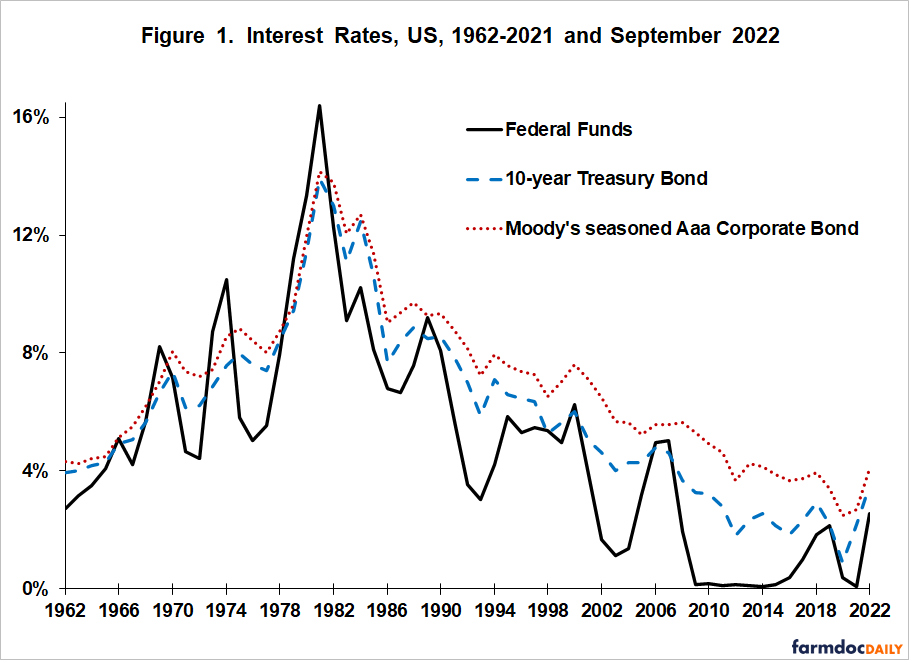
At the start of 2022, the federal funds rate—the benchmark interest rate that influences nearly all other borrowing costs in the United States—was sitting at a target range of 0.00% to 0.25%. The economy was still operating under the emergency measures implemented during the COVID-19 pandemic. However, by December 2022, that range had skyrocketed to 4.25% to 4.50%. This represented the fastest pace of interest rate increases since the early 1980s.
From Zero to Forty-Year Highs
The catalyst for this aggressive shift was inflation. Throughout 2021, the Federal Reserve had maintained that rising prices were “transitory,” a byproduct of temporary supply chain disruptions. By early 2022, it became clear that inflation was becoming entrenched. In June 2022, the Consumer Price Index (CPI) hit a staggering 9.1%, a 40-year peak. The Fed was forced to pivot from supporting economic growth to aggressively combatting price increases, leading to a series of historic moves.
The Seven Strategic Hikes of 2022
The Federal Open Market Committee (FOMC) met eight times in 2022, raising rates at seven of those meetings. The progression was a masterclass in escalating urgency:
-
March: A modest 25-basis-point (0.25%) increase, signaling the start of the tightening cycle.
-
May: A 50-basis-point increase, as the Fed realized inflation was not cooling.
-
June: The first of four consecutive “jumbo” 75-basis-point hikes—a move rarely seen in modern central banking.
-
July: Another 75-basis-point hike to maintain pressure on the economy.
-
September: A third 75-basis-point increase, as labor markets remained unexpectedly tight.
-
November: A fourth 75-basis-point hike, pushing the federal funds rate into territory not seen since 2008.
-
December: A 50-basis-point hike to close the year, signaling a slight deceleration in the pace of hikes but a commitment to keeping rates high.
This rapid ascent created a “rate shock” across all financial sectors, as markets had to price in a new reality where the cost of borrowing was essentially doubling every few months.
The Housing Market Shock: How Mortgage Rates Redefined Affordability
Perhaps no sector felt the impact of 2022 more acutely than the real estate market. Interest rates are the primary engine behind housing affordability, and as the Fed pushed the benchmark rate higher, mortgage lenders followed suit with unprecedented speed.
The Ascent to 7%
In January 2022, the average 30-year fixed-rate mortgage sat at approximately 3.22%. At this rate, a $400,000 mortgage resulted in a monthly principal and interest payment of roughly $1,735. By October 2022, those same mortgage rates breached 7.00% for the first time in two decades.
This surge effectively crippled the purchasing power of the average buyer. At a 7.08% interest rate, that same $400,000 loan required a monthly payment of approximately $2,680—a nearly 55% increase in the cost of the monthly mortgage payment for the exact same house. This rapid escalation led to a significant cooling in home sales as “priced-out” buyers were forced to the sidelines.
The “Lock-in Effect” and the Inventory Crisis
Beyond the immediate impact on buyers, the interest rate environment of 2022 created a secondary phenomenon known as the “lock-in effect.” Millions of homeowners had refinanced or purchased homes in 2020 and 2021 when rates were at historic lows (frequently below 3%).
As rates climbed toward 7% in 2022, these homeowners became extremely reluctant to sell. Moving to a new home meant trading a 3% mortgage for a 7% mortgage, which would drastically increase their costs even if they moved to a similarly priced property. This effectively froze the housing inventory, as the supply of existing homes for sale plummeted, keeping home prices higher than many economists expected despite the drop in demand.
Consumer Credit and Personal Debt: The Cost of Borrowing
While mortgages dominate the conversation about interest rates, the 2022 hikes also seeped into every other corner of personal finance, from credit cards to auto loans. For the average American household, 2022 was the year that carrying a balance became significantly more expensive.
Credit Card APRs and Variable Interest
Most credit cards carry variable interest rates that are directly tied to the “prime rate,” which moves in lockstep with the Federal Reserve’s funds rate. As the Fed hiked rates by 4.25% throughout the year, credit card Annual Percentage Rates (APRs) rose accordingly.
At the start of 2022, the average credit card APR was around 16.3%. By the end of the year, it had climbed toward 20%. For individuals carrying significant credit card debt, this meant that a larger portion of their monthly payment was being diverted to interest rather than paying down the principal, creating a debt trap that became harder to escape as the year progressed.
Auto Loans and Personal Lines of Credit
The automotive industry, already struggling with supply chain issues and high vehicle prices, faced a new headwind in 2022: the rising cost of financing. The average interest rate for a new car loan rose from roughly 4% in early 2022 to over 6% by year-end. For used cars, which typically carry higher rates, many consumers were seeing double-digit interest rates for the first time in years.
Similarly, Home Equity Lines of Credit (HELOCs), which are almost always variable, saw their rates spike. Homeowners who had used HELOCs for renovations or debt consolidation suddenly found their minimum payments doubling, putting further strain on discretionary income.
The Investor’s Dilemma: Navigating a Shifting Yield Landscape
The financial markets in 2022 were characterized by a rare and painful occurrence: the simultaneous sell-off of both stocks and bonds. Traditionally, bonds act as a hedge against stock market volatility. However, because interest rates rose so sharply and so quickly, that relationship broke down.
The Rare Double Sell-Off in Stocks and Bonds
Bond prices have an inverse relationship with interest rates; when rates go up, the price of existing bonds goes down. Because rates rose from near-zero to over 4% in a single year, bond portfolios suffered their worst performance in modern history. The “60/40” portfolio (60% stocks, 40% bonds), long considered the gold standard for balanced investing, saw one of its worst years on record.
On the equity side, high interest rates reduced the present value of future earnings. This hit the technology and “growth” sectors particularly hard. Companies that were valued on their potential for future profits rather than current cash flow saw their valuations slashed as the “discount rate” applied to those future profits increased.
The Rebirth of the High-Yield Savings Account
It wasn’t all bad news for investors, however. The rising rate environment finally ended the “search for yield” that had forced conservative savers into risky assets. For the first time in a decade, High-Yield Savings Accounts (HYSAs), Certificates of Deposit (CDs), and Treasury Bills began offering meaningful returns.
In early 2022, a “high-yield” savings account might have offered a paltry 0.50% APY. By the end of the year, many online banks were offering 3.50% to 4.00%. Risk-free assets like the 1-Year Treasury bill, which started the year yielding less than 0.40%, ended the year yielding over 4.70%. This shift allowed conservative investors to earn a return on their cash without exposure to the volatile stock market.

Lessons Learned: Managing Wealth in a High-Rate Environment
The interest rate environment of 2022 served as a stark reminder of the cyclical nature of the economy. It forced a generation of consumers and investors to relearn the fundamentals of personal finance that had been ignored during the era of zero-percent interest.
One of the primary lessons of 2022 was the importance of debt structure. Those with fixed-rate debt (like a 30-year mortgage) were protected from the rising rates, while those with variable-rate debt saw their financial stability threatened. It also highlighted the value of liquidity; having cash on hand to take advantage of rising yields in CDs and Treasuries became a winning strategy for the first time in years.
As we look back at the rates of 2022, they represent more than just a series of numbers on a spreadsheet. They represent a fundamental shift in how money is valued. The transition from the 0.25% rates of January to the 4.50% rates of December marked the end of an era of speculation and the beginning of a new period focused on fundamental value, cash flow, and the reality that capital is a finite—and now expensive—resource. For anyone involved in the world of money, 2022 remains the definitive case study in how quickly the financial weather can change and why staying adaptable is the only true way to preserve and grow wealth.
aViewFromTheCave is a participant in the Amazon Services LLC Associates Program, an affiliate advertising program designed to provide a means for sites to earn advertising fees by advertising and linking to Amazon.com. Amazon, the Amazon logo, AmazonSupply, and the AmazonSupply logo are trademarks of Amazon.com, Inc. or its affiliates. As an Amazon Associate we earn affiliate commissions from qualifying purchases.