
For the modern investor, the rhythm of the stock market often dictates the rhythm of the day. From the opening bell at 9:30 AM Eastern Time to the closing flurry at 4:00 PM, the movement of tickers and the flow of capital represent the heartbeat of the global economy. However, there are specific days and instances when that heartbeat pauses. If you found yourself asking “what was the stock market closed today,” you are likely encountering one of the scheduled federal holidays, a weekend, or a rare emergency halt.

Understanding the calendar of the New York Stock Exchange (NYSE) and the Nasdaq is more than just a matter of scheduling; it is a fundamental aspect of liquidity management and strategic planning. Trading when the market is closed—or attempting to do so—requires navigating the “after-hours” ecosystem, which carries different risks and rewards. This guide explores why the markets close, when they close, and what investors should do when the trading floor goes dark.
The Standard NYSE and NASDAQ Holiday Calendar
The U.S. stock markets do not follow a 365-day trading cycle. Instead, they observe a specific set of holidays that largely align with federal holidays, with a few notable exceptions and nuances. For an investor, knowing these dates in advance is crucial for avoiding the frustration of “dead air” when trying to execute a trade.
Major Annual Market Holidays
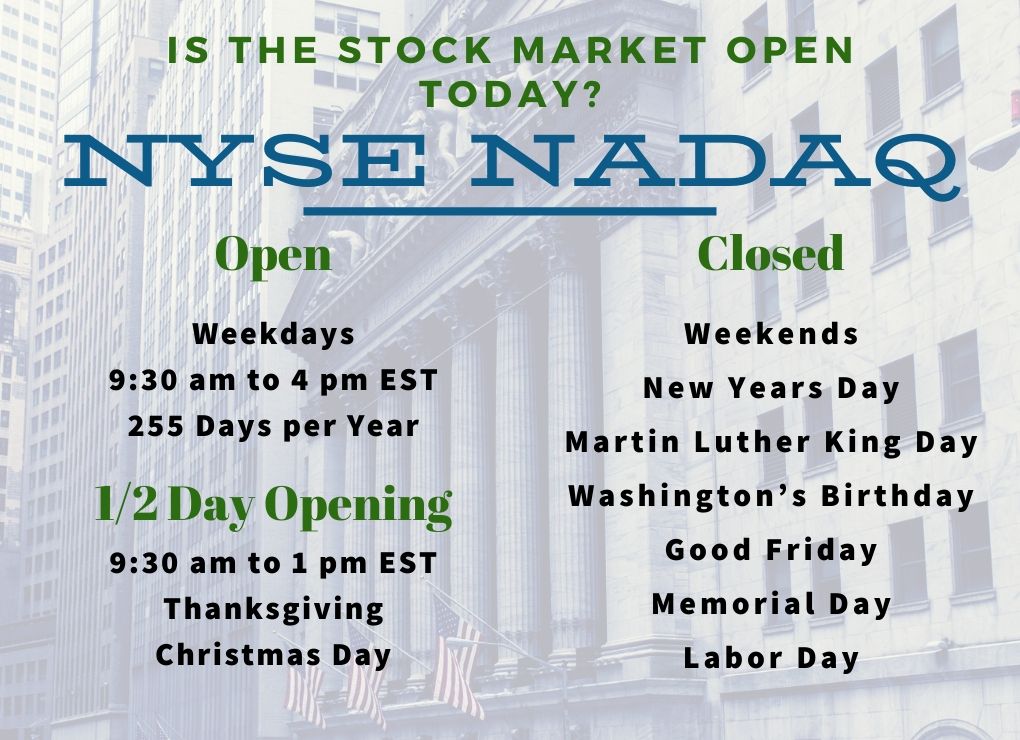
The NYSE and Nasdaq typically observe nine to ten full closing days per year. These include:
-
New Year’s Day: Observed on January 1st. If the holiday falls on a Saturday, the market is usually closed on the preceding Friday. If it falls on a Sunday, the market closes the following Monday.
-
Martin Luther King, Jr. Day: Observed on the third Monday in January.
-
Washington’s Birthday (Presidents’ Day): Observed on the third Monday in February.
-
Good Friday: This is a unique market holiday because it is not a federal holiday in the United States, yet the stock markets consistently close on the Friday before Easter Sunday.
-
Memorial Day: Observed on the last Monday in May.
-
Juneteenth National Independence Day: A recent addition to the calendar, observed on June 19th.
-
Independence Day: Observed on July 4th.
-
Labor Day: Observed on the first Monday in September.
-
Thanksgiving Day: Observed on the fourth Thursday in November.
-
Christmas Day: Observed on December 25th.
Early Closures and Modified Hours
Beyond full closures, the market also observes “early-close” days. The most common occurrence is the day after Thanksgiving (Black Friday) and Christmas Eve (December 24th), provided it falls on a weekday. On these days, the regular trading session typically ends at 1:00 PM Eastern Time. These shortened sessions often see lower trading volume, which can lead to increased volatility as smaller trades have a disproportionately large impact on price movement.
The Mechanics of Market Hours: Why 9:30 AM to 4:00 PM Matters
While the digital age allows for the theoretical possibility of 24/7 trading, the major U.S. exchanges maintain strict “core” hours. This structure exists to concentrate liquidity. When everyone trades at the same time, the “bid-ask spread”—the difference between what a buyer is willing to pay and what a seller is willing to accept—narrows, making it cheaper and more efficient to trade.
Pre-Market and After-Hours Trading
Just because the “market is closed” in the traditional sense doesn’t mean all trading has ceased. Electronic Communication Networks (ECNs) allow for extended-hours trading.
-
Pre-Market Session: Usually runs from 4:00 AM to 9:30 AM ET.
-
After-Hours Session: Usually runs from 4:00 PM to 8:00 PM ET.
While these sessions offer the opportunity to react to breaking news—such as an earnings report released at 4:01 PM—they are fraught with risk. Volume is thin, meaning you might not find a buyer for your shares at a fair price. Furthermore, the volatility in these sessions is often extreme, and the price action during after-hours may not necessarily reflect where the stock will open the following morning.
The Role of Weekends
The stock market is closed on Saturdays and Sundays. This weekend pause serves as a vital cooling-off period for the financial system. It allows brokerage firms to settle accounts, clearinghouses to finalize transactions, and investors to digest the week’s news without the pressure of real-time price fluctuations. For many, the weekend is a time for deep-dive fundamental analysis that is often difficult to perform during the chaotic “noise” of a live trading day.
Emergency Halts and Circuit Breakers: When the Market Closes Unexpectedly
Sometimes, the answer to “why is the market closed” isn’t a holiday, but a systemic safeguard. The U.S. markets employ “circuit breakers,” which are temporary halts in trading designed to curb panic selling and ensure orderly market behavior during periods of extreme volatility.
Market-Wide Circuit Breakers
Based on the S&P 500 Index, there are three levels of circuit breakers:
-
Level 1 (7% Drop): If the S&P 500 drops 7% from the previous day’s close, trading is halted for 15 minutes.
-
Level 2 (13% Drop): If the decline reaches 13%, another 15-minute halt occurs.
-
Level 3 (20% Drop): If the market drops 20%, trading is suspended for the remainder of the day.
These mechanisms were famously triggered multiple times during the onset of the COVID-19 pandemic in March 2020. They are designed to give investors a chance to breathe, evaluate the situation, and prevent a “flash crash” driven by algorithmic trading.
Regulatory and Technical Halts
Individual stocks can also be “closed” or halted while the rest of the market remains open. This usually happens for two reasons:
-
Pending News: A company may request a halt if they are about to release “material” information (like a merger or a major regulatory ruling) to ensure all investors receive the news simultaneously.
-
Volatility (LULD): The “Limit Up-Limit Down” rule halts an individual stock if its price moves outside of a specific percentage band within a five-minute period.
Global Interdependence: How International Closures Impact Your Portfolio
In our interconnected global economy, the closure of a foreign market can have a “butterfly effect” on U.S. investors. Even if the NYSE is open, a holiday in London, Tokyo, or Hong Kong can alter market dynamics.
The Impact of the LSE and Asian Markets
The London Stock Exchange (LSE) is a major hub for global finance. When the LSE is closed for a Bank Holiday, U.S. markets often see reduced volume in the morning hours, particularly in the forex and commodities sectors. Similarly, if the Nikkei in Japan is closed, the “overnight” sentiment that often dictates the U.S. market’s opening direction is missing, leading to a more tentative start for American traders.
Futures and Global Sentiment
Even when U.S. exchanges are closed for a holiday, “futures” markets—such as those for the S&P 500, Gold, or Oil—often continue to trade on global platforms like the CME Globex. If a major geopolitical event occurs on a Sunday night or a Monday holiday, you can look to these futures markets to see how the stock market is likely to react when it finally reopens.
The Investor’s Strategy During Market Downtime
When the market is closed, the most successful investors don’t simply walk away; they use the silence to their advantage. Market closures provide a unique opportunity to step back from the “ticker tape” and focus on the bigger picture.
Portfolio Rebalancing and Review
The frantic pace of a live market can lead to emotional decision-making. When the market is closed, you can objectively review your asset allocation. Are you over-leveraged in tech? Is your dividend-growth strategy still on track? Use this time to set “limit orders” that will execute once the market reopens, ensuring you buy or sell at your desired price rather than chasing a moving target.
Education and Fundamental Research
Active trading is only one part of investing. The other part is education. Market holidays are the perfect time to read through 10-K filings, listen to recorded earnings calls, or study technical chart patterns. By the time the opening bell rings on the next business day, the prepared investor has a clear plan of action, whereas the unprepared investor is merely reacting to the crowd.
The Psychology of Stepping Away
Perhaps the most overlooked benefit of a market closure is the mental health break it provides. The constant dopamine hits of price movements can lead to “investor fatigue.” Periodic closures—whether scheduled holidays or weekends—allow for a “reset” that can prevent burnout and lead to more rational, long-term wealth accumulation.
In conclusion, if you find the stock market closed today, see it not as an inconvenience, but as a structural component of a healthy financial system. Whether it is a scheduled holiday intended to honor a national event, a weekend designed for settlement and rest, or an emergency circuit breaker meant to protect against chaos, these pauses are essential. They provide the necessary friction that keeps the wheels of global finance turning smoothly, allowing you the time to plan your next move with clarity and precision.
aViewFromTheCave is a participant in the Amazon Services LLC Associates Program, an affiliate advertising program designed to provide a means for sites to earn advertising fees by advertising and linking to Amazon.com. Amazon, the Amazon logo, AmazonSupply, and the AmazonSupply logo are trademarks of Amazon.com, Inc. or its affiliates. As an Amazon Associate we earn affiliate commissions from qualifying purchases.