
In the realm of emergency management and systems architecture, the Standardized Emergency Management System (SEMS) stands as a foundational framework that redefined how large-scale disasters are managed. While today we view it as a sophisticated organizational protocol integrated with high-end digital tools and real-time data analytics, its origins are rooted in a specific, catastrophic failure of coordination. The primary reason SEMS was established in California was the disastrous outcome of the 1991 East Bay Hills Fire (often referred to as the Oakland Hills Fire), which exposed critical systemic weaknesses in how various agencies communicated, shared resources, and managed command structures during multi-jurisdictional incidents.
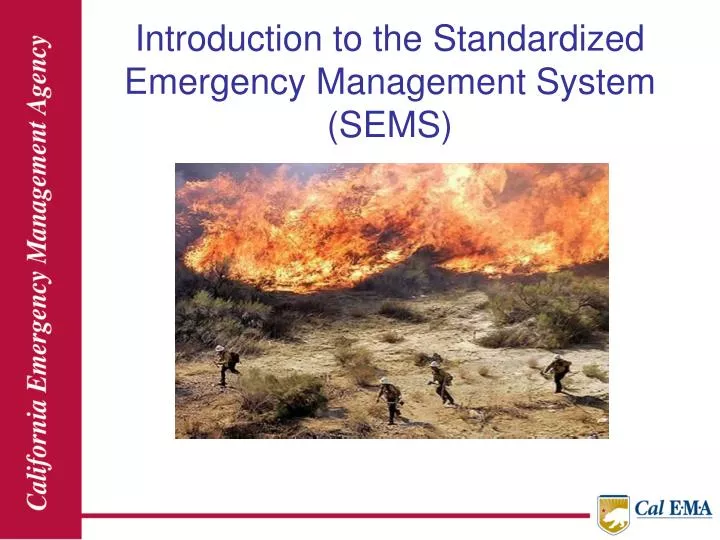
Before SEMS, emergency response was often siloed, with agencies operating on disparate platforms and following conflicting protocols. The 1991 fire served as the ultimate stress test for these fragmented systems, and the result was a tragic loss of life and property that forced a complete technological and organizational overhaul of California’s emergency response infrastructure.
The 1991 East Bay Hills Fire: The Systemic Failure that Demanded Innovation
To understand why SEMS became a legal mandate in California, one must first look at the technical and operational chaos that unfolded in October 1991. The Oakland Hills fire was not the largest in California’s history in terms of acreage, but it was one of the most destructive urban-wildland interface fires ever recorded. In a matter of hours, it claimed 25 lives and destroyed nearly 3,000 structures.
A Breakdown in Communication Protocols
The primary failure during the fire was a lack of “interoperability”—a term that is now a cornerstone of modern tech strategy but was a fatal gap in 1991. When fire departments from neighboring cities arrived to assist Oakland, they discovered that their radio systems operated on different frequencies. Battalion chiefs could not talk to one another directly. This lack of a unified communication layer meant that critical information regarding the fire’s path and the location of trapped residents could not be transmitted across agency lines in real-time.
From a systems perspective, the “network” was fragmented. There was no common language, no common hardware standard, and no centralized data hub. This forced responders to rely on manual messengers or face-to-face updates, which were impossible to maintain as the fire moved at an exponential rate.
The Resource Coordination Deficit
Beyond radio frequencies, there was a glaring lack of standardization in equipment and terminology. In some instances, fire hoses from one jurisdiction could not connect to the hydrants of another because the threading standards were different. This physical incompatibility mirrored the organizational incompatibility. Without a standardized system to track which resources were deployed where, the “system architecture” of the response collapsed under the weight of the complexity.
The post-incident analysis made it clear: the tragedy wasn’t just a result of the weather or the terrain; it was a failure of the management system. The California Legislature responded by passing Senate Bill 1841, which mandated the creation of SEMS to ensure that all government levels—from local to state—used the same playbook.
The Technological Architecture of the Standardized Emergency Management System
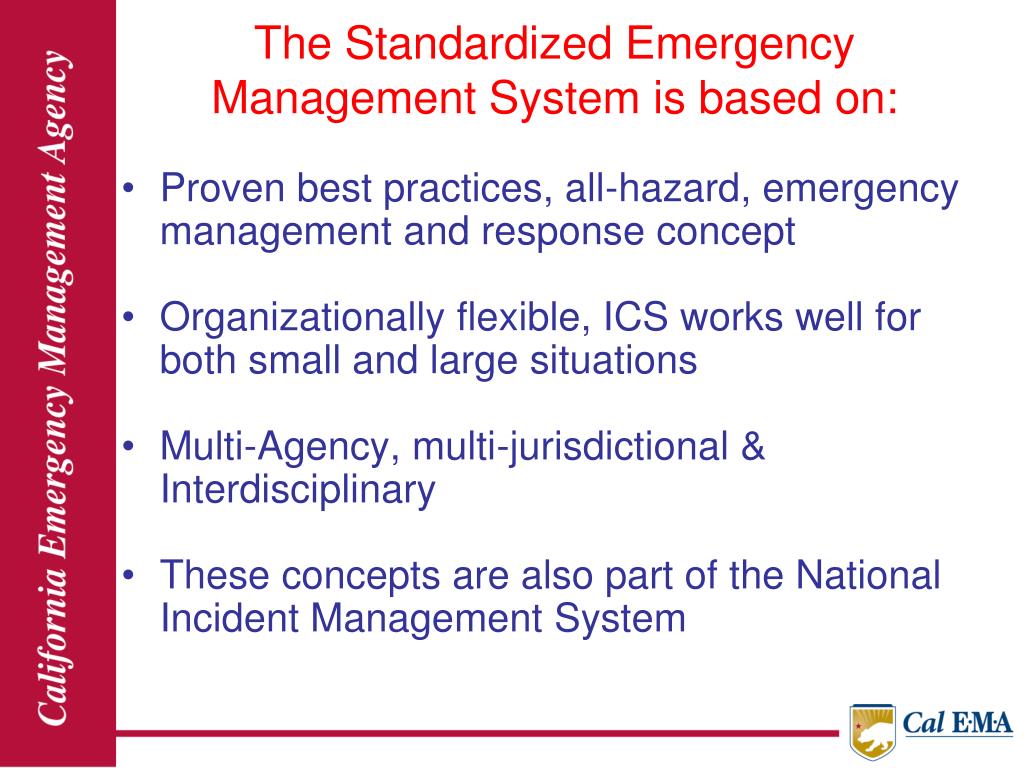
The establishment of SEMS wasn’t just a policy shift; it was the implementation of a “standardized operating system” for human and technical assets. By creating a modular, scalable framework, California ensured that any responding agency could “plug and play” into an incident regardless of its size or location.
Standardization as a Core System Requirement
The “S” in SEMS is the most important letter. By standardizing the organizational structure, SEMS allows for a seamless integration of diverse entities. In technical terms, this is akin to using standardized APIs (Application Programming Interfaces) in software development. Just as an API allows different software programs to talk to each other through a set of defined rules, SEMS provides a set of defined roles and responsibilities that allow a fire department in San Diego to work perfectly alongside a police department in Sacramento.
The Five Essential Pillars of SEMS
The architecture of SEMS is built on five functional sections that remain the gold standard for emergency management software and protocols today:
- Command: Providing a single point of authority to prevent conflicting orders.
- Operations: The tactical component that executes the response.
- Planning/Intelligence: The “data layer” where information is gathered, analyzed, and used to predict future needs.
- Logistics: The supply chain management of the system, ensuring that personnel and equipment are available.
- Finance/Administration: The tracking of costs and administrative data, critical for post-disaster recovery and funding.
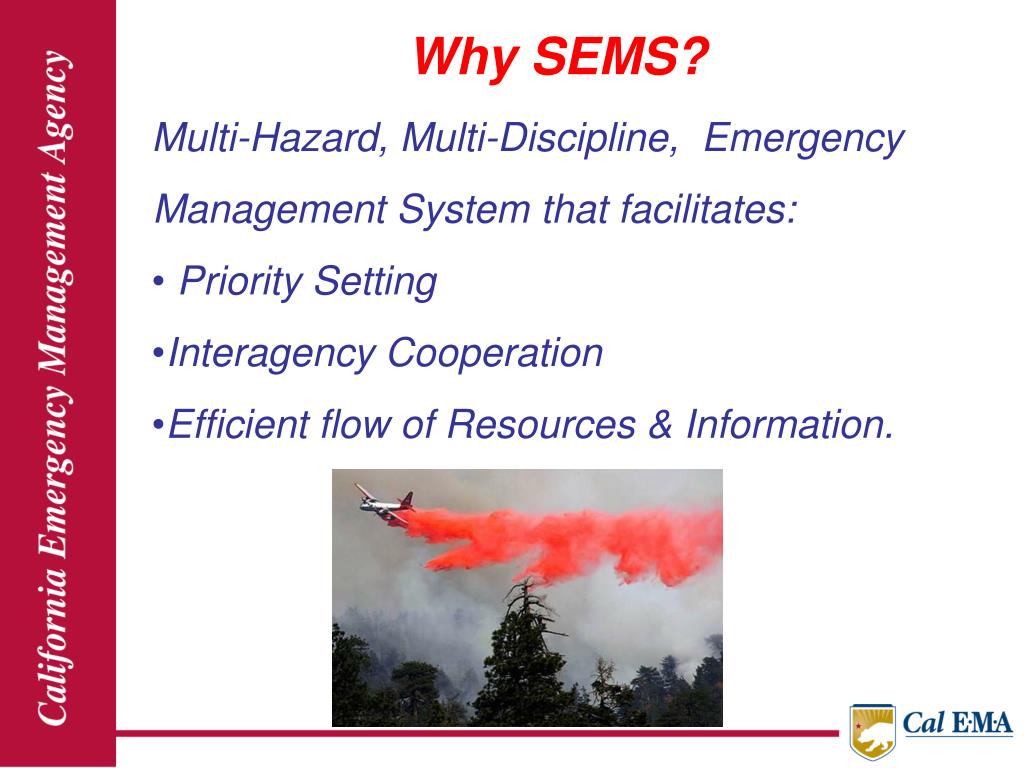
By codifying these five pillars, SEMS transformed emergency response from an ad-hoc reaction into a structured, data-driven operation.
From Radio Gaps to Real-Time Data: The Evolution of Emergency Tech
Since the establishment of SEMS, the technology supporting it has evolved from basic radio protocols to sophisticated digital ecosystems. The primary goal remains the same—eliminating silos—but the tools have become infinitely more powerful.
Overcoming Interoperability Challenges
The communications gap that defined the 1991 fire has been largely addressed through digital trunking systems and P25 (Project 25) standards. Modern emergency management now utilizes “interoperability gateways” that allow different radio bands and digital signals to be bridged into a single unified stream. This technical solution directly addresses the primary reason SEMS was created: the need for a unified voice during a crisis.
Digital Integration and GIS Mapping
One of the most significant tech trends within the SEMS framework is the integration of Geographic Information Systems (GIS). In 1991, incident commanders used paper maps and grease pencils. Today, SEMS-compliant operations utilize real-time GIS layers that track fire perimeters via satellite, monitor the GPS location of every fire truck, and overlay demographic data to prioritize evacuations. This “Common Operating Picture” (COP) ensures that everyone, from the governor’s office to the boots on the ground, is looking at the same data in real-time.
How SEMS Influenced Modern Public Safety Software and AI
The logic of SEMS was so successful that it served as the blueprint for the National Incident Management System (NIMS) in the United States. Furthermore, it has heavily influenced the development of the “GovTech” sector, specifically in the creation of Emergency Management Information Systems (EMIS).
The Rise of Emergency Management Information Systems (EMIS)
Today, software platforms like WebEOC or Juvare are built specifically to mirror the SEMS structure. These platforms provide digital “dashboards” for each of the five SEMS pillars. In the Finance/Administration section, for example, the software automatically tracks man-hours and equipment usage, ensuring that local governments can provide the precise data required for federal reimbursement. This automation reduces the administrative burden and allows commanders to focus on the tactical “Operations” section.
Predictive Analytics and Incident Simulation
The current trend in emergency tech involves moving from reactive systems to predictive ones. Using the standardized data collected through SEMS protocols over the last few decades, AI models can now simulate fire behavior or flood patterns with high degrees of accuracy. These tools allow incident commanders to “get ahead” of the disaster. Because SEMS provides a consistent data structure, machine learning algorithms can ingest data from thousands of past incidents to provide real-time recommendations on resource allocation—a technological leap that was unimaginable in the aftermath of the 1991 fire.
The Future of SEMS in a Hyper-Connected Digital Landscape
As California faces increasingly complex threats—from climate-driven mega-fires to the potential for large-scale cyber-attacks on critical infrastructure—the principles of SEMS are being extended into the digital security realm. The primary reason for its establishment—coordination failure—remains the greatest threat to modern society, whether the disaster is physical or digital.
The next generation of SEMS implementation will likely involve the “Internet of Life-Saving Things” (IoLST). This includes sensors in fire helmets that monitor vital signs, drones that use thermal imaging to find victims in smoke, and AI-driven mesh networks that maintain connectivity even when cellular towers are destroyed.
In conclusion, the primary reason SEMS was established in California was to solve the “chaos of the uncoordinated.” The 1991 East Bay Hills Fire proved that even the most heroic individual efforts are no match for a systemic failure in communication and command. By mandating a standardized, scalable, and modular system, California created a framework that has saved countless lives. In the decades since, that framework has moved from the page to the cloud, evolving into a sophisticated technological ecosystem that defines how the modern world responds to its most challenging moments. SEMS is more than just a set of rules; it is the fundamental operating system for public safety in the 21st century.
aViewFromTheCave is a participant in the Amazon Services LLC Associates Program, an affiliate advertising program designed to provide a means for sites to earn advertising fees by advertising and linking to Amazon.com. Amazon, the Amazon logo, AmazonSupply, and the AmazonSupply logo are trademarks of Amazon.com, Inc. or its affiliates. As an Amazon Associate we earn affiliate commissions from qualifying purchases.