
The late 19th century in the United States was a period of extreme economic volatility, characterized by the transition from an agrarian society to an industrial powerhouse. During this era, the “Gilded Age” masked deep systemic inequalities that pushed the American worker—specifically the farmer and the laborer—to the brink of financial ruin. Out of this desperation emerged the People’s Party, commonly known as the Populist Party.
The Populist Party platform, codified most famously in the 1892 Omaha Platform, was not merely a political manifesto; it was a radical blueprint for financial reform. It sought to dismantle the concentrated power of Wall Street and the “money power” of the East Coast, proposing a new economic order that favored the producer over the speculator. To understand the Populist Party platform is to understand the roots of modern American fiscal policy, central banking, and the ongoing tension between labor and capital.
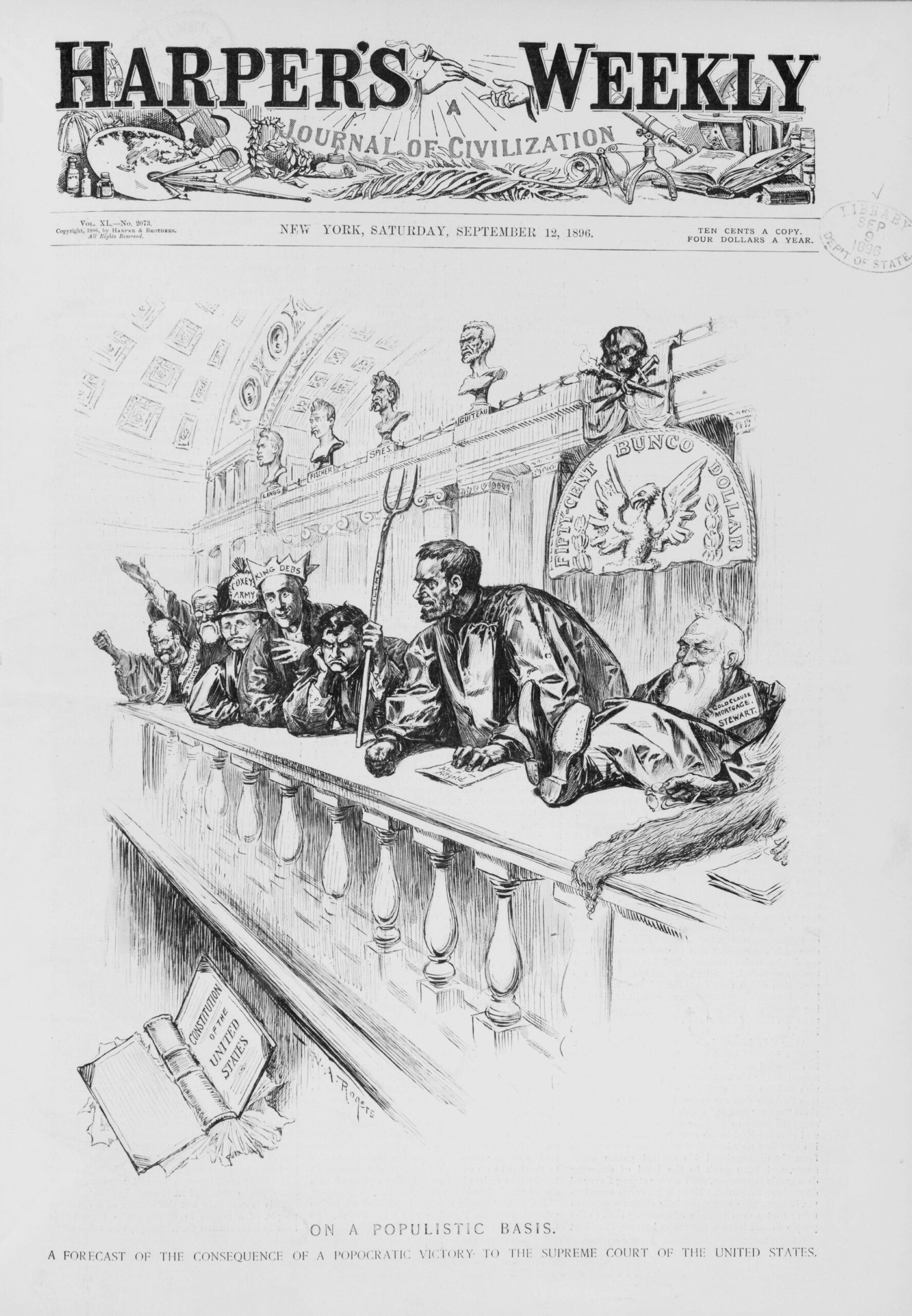
The Battle of the Standards: Bimetallism and Monetary Supply
At the heart of the Populist platform was a fierce critique of the U.S. monetary system. During the late 1800s, the United States operated on a strict gold standard. While this provided stability for international trade and benefitted lenders, it created a chronic shortage of currency in domestic markets. For the average farmer, this resulted in deflation—a scenario where the prices of crops fell while the real value of their debts remained stagnant or increased.
The Gold Standard vs. Free Silver
The Populists championed “Free Silver,” a policy demanding the unlimited coinage of silver at a ratio of 16 to 1 with gold. By moving to a bimetallic standard, the Populists aimed to increase the circulating money supply. They argued that the gold standard was a “monopoly of money” designed by British and New York bankers to keep interest rates high and currency scarce. By introducing silver, the party believed they could stimulate the economy and provide much-needed liquidity to the rural South and West, where cash was often non-existent.
Inflationary Policy as Debt Relief
From a modern financial perspective, the Populist demand for free silver was essentially a demand for managed inflation. In a deflationary environment, the “real” interest rate on a loan is higher than the nominal rate, making it nearly impossible for debtors to escape their obligations. The Populists understood that by expanding the money supply and inducing a controlled level of inflation, the nominal prices of agricultural goods would rise. This would allow farmers to pay off their fixed-rate mortgages and equipment loans with “cheaper” dollars, effectively transferring wealth from the creditor class back to the producing class.
Reforming the Financial Infrastructure: The Subtreasury Plan and Public Banking
The Populists were not content with just changing the currency; they wanted to overhaul the entire mechanism by which credit was distributed. In the 1890s, the banking system was localized and often predatory. Farmers were at the mercy of local “crop-lien” systems, where merchants and private banks charged exorbitant interest rates—sometimes exceeding 50%—to provide the capital necessary for the planting season.
Breaking the Power of Private Banks
The Populist platform called for a total divorce between the government and the private banking sector. They viewed the national banking system of the time as a parasitic entity that profited from the public’s need for currency. Their solution was the establishment of “postal savings banks.” These were intended to be government-run institutions located in post offices, providing safe, low-interest savings and loan options to the common citizen. This move was designed to bypass the volatility of private commercial banks and ensure that the “money of the people” was protected from speculative panics.
The Subtreasury System: A Precursor to Modern Commodity Finance
Perhaps the most innovative economic proposal of the Populist platform was the “Subtreasury Plan.” Under this system, the government would construct warehouses (subtreasuries) where farmers could store their non-perishable crops (like cotton, wheat, and corn) when market prices were low. In exchange, the government would issue legal tender notes to the farmer for up to 80% of the crop’s local market value.
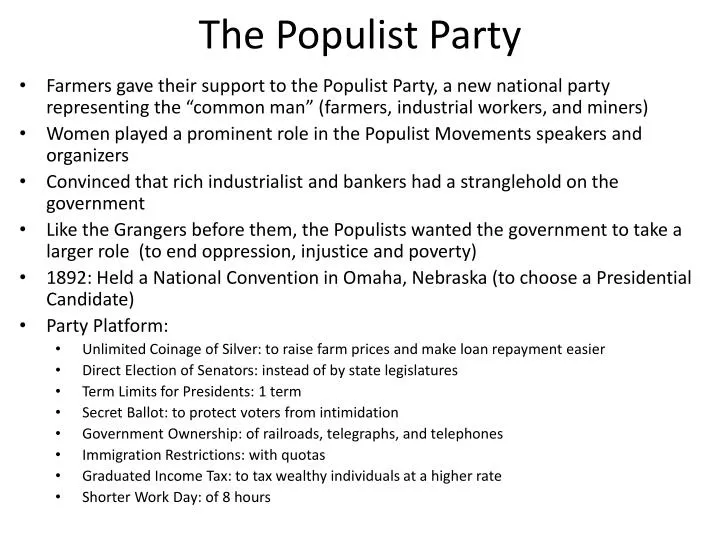
This plan addressed two critical financial hurdles: it provided immediate liquidity without forcing a fire sale of goods during harvest gluts, and it allowed farmers to wait for better market prices to sell their inventory. Today, this concept lives on in the form of government-backed agricultural subsidies and commodity credit corporations, proving that the Populists were decades ahead of their time in conceptualizing state-stabilized commodity markets.
Wealth Redistribution and the Progressive Income Tax
The Gilded Age saw the rise of the first American mega-fortunes, built by “Robber Barons” in the rail, oil, and steel industries. During this time, the federal government derived the vast majority of its revenue from consumption taxes—specifically tariffs on imported goods. These tariffs protected domestic industries (benefitting owners) but raised the cost of living for consumers and farmers.
Shifting the Tax Burden from Labor to Capital
The Omaha Platform explicitly demanded a “graduated income tax.” At the time, this was considered a radical socialist concept. The Populists argued that it was fundamentally unjust for a laborer to pay a higher percentage of their income (via consumption taxes) than a millionaire. They sought to flip the script, proposing that tax rates should increase as wealth increased. This was not just about revenue; it was a tool for social and economic engineering designed to curb the “unlimited accumulation of property” and ensure that the wealthiest citizens contributed proportionally to the infrastructure that enabled their success.
The Legacy of the 16th Amendment
While the Populist Party eventually faded as a distinct political entity, their demand for an income tax became one of the most significant shifts in American financial history. The pressure they applied to the political center eventually led to the ratification of the 16th Amendment in 1913. This shifted the American fiscal foundation away from regressive tariffs and toward a progressive system that, in theory, allowed for a more equitable distribution of the national tax burden. It fundamentally changed how the U.S. government funded its operations and provided the capital necessary for the expansion of the social safety net in later decades.
Corporate Regulation and the Struggle Against Monopolies
The Populists viewed certain industries not as private businesses, but as “natural monopolies” that were essential to the public welfare. The most prominent among these were the railroads and the telegraph lines. In the late 19th century, the railroads held an absolute monopoly over the transport of goods. They frequently engaged in discriminatory pricing, charging “short-haul” rates that were higher than “long-haul” rates, effectively taxing small farmers to subsidize large industrial shippers.
Nationalizing the Railroads and Telegraphs
The Populist platform took the extreme position that the government should own and operate the railroads, telegraphs, and telephones in the interest of the people. They argued that these industries were “public highways” of commerce and information. By removing the profit motive from transportation and communication, the Populists believed they could lower the cost of doing business for every small producer in the country. They viewed the exorbitant freight rates as a “private tax” levied by corporations on the labor of the masses.
Protecting the Small Business and Independent Producer
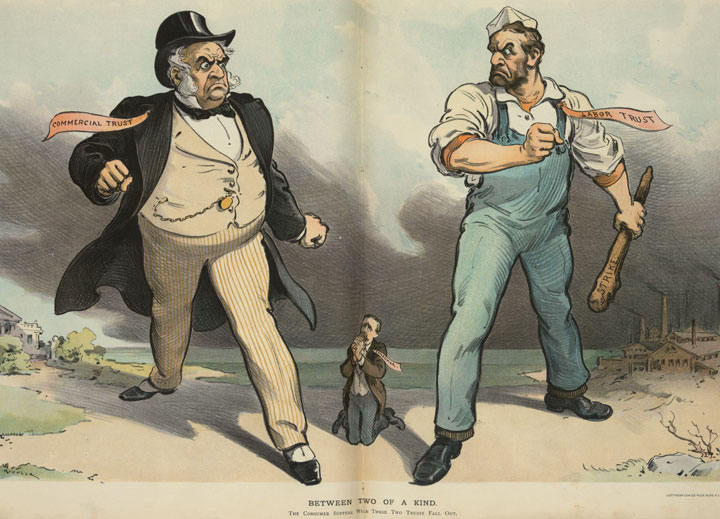
Beyond nationalization, the Populists were the early architects of anti-monopoly sentiment that would later define the Progressive Era. They recognized that when capital becomes too concentrated, it stifles competition and drives down wages. Their platform was a defense of the independent producer—the small farmer, the artisan, and the shopkeeper—against the encroaching power of the “trusts.” By advocating for strict corporate regulation and the abolition of land monopolies (where railroads held millions of acres of unused land), the Populists sought to preserve a version of American capitalism that was decentralized and accessible to the common man.
Conclusion: The Populist Blueprint in the Modern Financial Era
The Populist Party may have failed to win the presidency or maintain its status as a third-party powerhouse, but its platform won the long-term war of ideas. When we look at the modern financial landscape, we see the echoes of the Omaha Platform everywhere. The Federal Reserve System, though private-public in nature, fulfills the Populist demand for a flexible currency. The 16th Amendment realized their dream of a progressive income tax. Modern anti-trust laws and the regulation of public utilities mirror their concerns about corporate overreach.
The “Populist Party platform” was ultimately a sophisticated response to the financialization of the economy. It was an attempt to ensure that the tools of money, credit, and transportation served the many rather than the few. In an age of renewed debates over wealth inequality, the role of central banks, and the power of “Big Tech” monopolies, the economic insights of the 1892 Populists remain as relevant today as they were over a century ago. They taught us that the structure of a nation’s financial system is not a neutral law of nature, but a series of political choices that determine who prospers and who is left behind.
aViewFromTheCave is a participant in the Amazon Services LLC Associates Program, an affiliate advertising program designed to provide a means for sites to earn advertising fees by advertising and linking to Amazon.com. Amazon, the Amazon logo, AmazonSupply, and the AmazonSupply logo are trademarks of Amazon.com, Inc. or its affiliates. As an Amazon Associate we earn affiliate commissions from qualifying purchases.