
The tragic incident involving the submersible Titan has brought to the forefront a complex interplay of technological ambition, corporate risk assessment, and the inherent dangers of exploring the extreme depths of the ocean. While the immediate question revolves around identifying the vessel, a deeper examination reveals a narrative woven through the fabric of cutting-edge technology, ambitious engineering, and the sometimes-unforeseen consequences of pushing technological boundaries. This article will delve into the technological aspects surrounding the Titan submersible, exploring the innovations, the challenges, and the critical questions that arise when advanced technology ventures into environments where safety is paramount.

The Titan: A Deep-Sea Exploration Technology Case Study
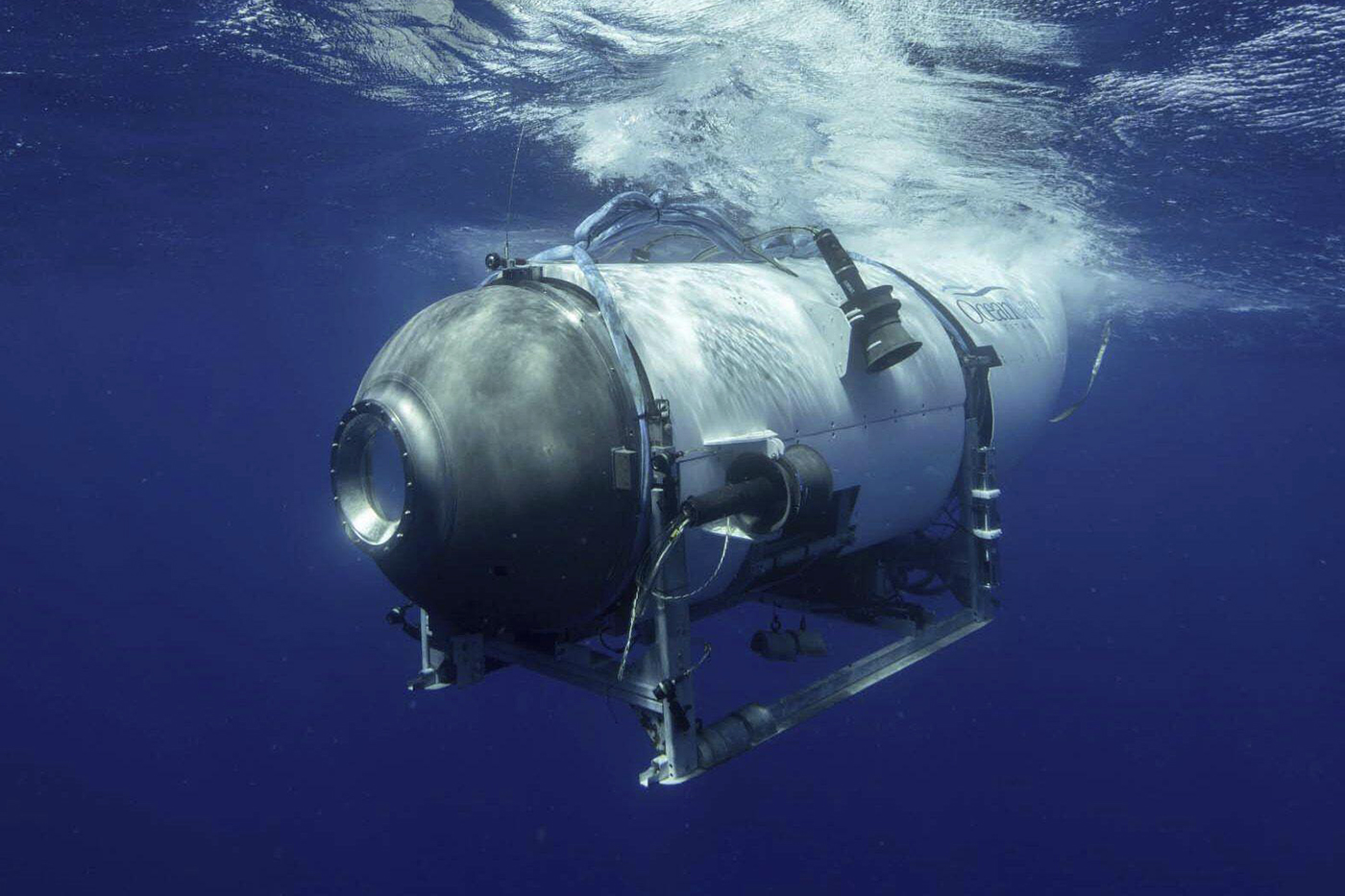
The Titan submersible, operated by OceanGate Expeditions, was designed to offer commercial expeditions to the wreck of the Titanic, a testament to human ingenuity in creating vessels capable of withstanding immense pressures. Its construction and operational design represented a significant departure from traditional, more robust deep-sea submersibles. The intention was to democratize deep-sea exploration, making it accessible to a wider audience, but this ambition was intrinsically tied to the technology employed and its ability to perform reliably under duress.
Innovative Materials and Design Philosophy
A key technological aspect of the Titan was its hull. Unlike many deep-sea vehicles that utilize thick, forged steel or titanium, the Titan employed a novel approach, primarily utilizing carbon fiber for its pressure hull, complemented by titanium end caps. This choice was driven by a desire to reduce weight and potentially lower construction costs, enabling a more agile and cost-effective submersible. Carbon fiber composites offer exceptional strength-to-weight ratios, a desirable characteristic for aerospace applications, but their performance under the cyclical, extreme hydrostatic pressures encountered in deep-sea environments presents unique engineering challenges.
The design philosophy behind the Titan also leaned towards simplification and innovation in control systems. It famously utilized a modified video game controller for navigation and propulsion. While this suggested a modern, user-friendly interface, it also raised questions about the robustness and redundancy of such systems when operating in an environment where mechanical and electronic failures can have catastrophic consequences. The integration of these commercially available components into a life-critical system demanded rigorous testing and validation, the efficacy of which became a central point of inquiry following the incident.
Propulsion and Life Support Systems
The submersible was equipped with an array of thrusters that provided maneuverability in the challenging underwater environment. The design aimed for precise control, allowing the Titan to navigate the complex terrain around the Titanic wreck. The power source for these systems, along with the submersible’s life support, was also a critical technological consideration. Information suggested the use of an advanced battery system to power the various onboard components, including lighting, life support, and propulsion. The reliability and capacity of these systems are fundamental to the safety of any deep-sea submersible, ensuring occupants have breathable air and essential functions are maintained for the duration of the dive.
Furthermore, the acoustic communication system was a vital piece of technology for maintaining contact with the surface support vessel. In the deep ocean, radio waves do not propagate effectively, necessitating acoustic modems that transmit data through sound waves. The range, clarity, and reliability of these systems are paramount for situational awareness, emergency communication, and the overall coordination of submersible operations. The limitations and potential failure points of such systems in extreme environments are always a critical design consideration.
Technological Risks and the Limits of Innovation
The incident with the Titan serves as a stark reminder that technological advancement, particularly in frontier environments, is inherently linked to risk. The pursuit of innovation must be balanced with a profound understanding of the fundamental physics and engineering principles that govern these extreme conditions. The challenges of deep-sea exploration are immense, with hydrostatic pressure being the most formidable obstacle.
Understanding Hydrostatic Pressure and Material Fatigue
The immense pressure at the depths the Titan aimed to reach is almost unimaginable. For every 10 meters of depth, the pressure increases by approximately one atmosphere. At the depth of the Titanic wreck (around 3,800 meters), the pressure exceeds 380 atmospheres, equivalent to the weight of 50 Jumbo Jets pressing down on every square meter. Materials used in submersible construction must be able to withstand this relentless force without deforming or failing.
Carbon fiber composites, while strong in tension, behave differently under extreme compression. Unlike homogenous metals, composite materials are made up of fibers embedded in a resin matrix. The interface between these components, the layup of the fibers, and the quality of the resin all play critical roles in the material’s structural integrity. Under immense, cyclical pressure, micro-fractures can form, or delamination can occur, weakening the hull over time. The long-term effects of such pressures on carbon fiber, especially in the context of repeated dives, were a subject of considerable debate and concern within the engineering community. The Titan‘s design, with its relatively large cylindrical hull and unique material choices, presented a novel engineering problem that required extensive, validated testing to confirm its safety margins.
Redundancy and Failure Analysis in Extreme Environments
A cornerstone of safety in any complex technological system, especially those operating in high-risk environments, is redundancy. This involves having multiple backup systems for critical functions, so that if one component fails, another can take over. In the case of a submersible, critical redundant systems would include propulsion, navigation, life support, and emergency ascent mechanisms.
The failure analysis of deep-sea vehicles is a rigorous process that anticipates potential failure modes and designs systems to mitigate them. This involves understanding how each component might fail, what the consequences would be, and implementing measures to prevent or manage such failures. The incident with the Titan has led to extensive discussions about the extent of the failure analysis conducted, particularly concerning the novel aspects of its design and the materials used. The absence of certain certifications, often sought by traditional deep-sea vehicles, also became a point of scrutiny, raising questions about the due diligence performed in validating the safety of the Titan‘s technological architecture.
The Role of Certification and Regulatory Oversight
The question of certification for deep-sea submersibles is intrinsically linked to the technology they employ and the safety standards they are expected to meet. In industries where human lives are at stake and the operating environment is inherently dangerous, rigorous third-party verification of design and construction is standard practice.
Industry Standards and Independent Verification
Various classification societies, such as DNV, ABS, and Lloyd’s Register, exist to set and enforce standards for marine vessels, including submersibles. These organizations provide independent verification of a vessel’s design, construction, and operational readiness. Their certification processes involve detailed reviews of engineering plans, material testing, hull integrity assessments, and inspections during construction and operation. This oversight ensures that vessels meet established safety benchmarks and that potential risks have been thoroughly evaluated and mitigated.
For the Titan, the absence of certification from major classification societies was a notable aspect that attracted significant attention. While OceanGate argued that their innovative approach necessitated a different path and that their internal safety protocols were robust, the lack of external validation raised concerns about whether the submersible had undergone the same level of scrutiny as conventionally certified deep-sea vehicles. The argument often made by proponents of certification is that it provides an objective, expert assessment of a vessel’s technological soundness, offering a crucial layer of assurance for passengers and operators alike.

The Debate Around Innovation vs. Traditional Safety Protocols
The Titan incident has ignited a broader debate about the balance between fostering innovation in deep-sea technology and adhering to established safety protocols. Proponents of OceanGate’s approach might argue that stringent, traditional certification processes can stifle innovation and slow down the development of new, potentially more efficient or cost-effective technologies. They might posit that a forward-thinking company should be allowed to explore new materials and design paradigms, provided they conduct thorough internal testing and risk assessments.
However, critics and many in the engineering and maritime safety communities emphasize that the extreme environment of the deep ocean demands a higher degree of caution and a proven track record of safety. They argue that historical data and established best practices, often codified in certification standards, exist for a reason – to prevent catastrophic failures that have occurred in the past. The debate centers on whether the innovative technological choices made in the Titan‘s design adequately compensated for the lack of external, standardized validation, especially when the consequences of failure are so profound. The tragedy has undeniably amplified the importance of understanding the technological choices made, the inherent risks they carried, and the critical role of rigorous, independent oversight in ensuring the safety of human-occupied deep-sea exploration.
aViewFromTheCave is a participant in the Amazon Services LLC Associates Program, an affiliate advertising program designed to provide a means for sites to earn advertising fees by advertising and linking to Amazon.com. Amazon, the Amazon logo, AmazonSupply, and the AmazonSupply logo are trademarks of Amazon.com, Inc. or its affiliates. As an Amazon Associate we earn affiliate commissions from qualifying purchases.