
The American Civil War, a monumental conflict that tore the nation asunder from 1861 to 1865, continues to be a subject of intense historical scrutiny. While textbooks often present a simplified narrative, understanding the “main cause” requires a nuanced exploration of interwoven factors. From a modern perspective, particularly through the lenses of technology, branding, and economic drivers that shape our current world, we can gain a fresh appreciation for the deep-seated issues that ultimately led to this devastating war.
The Entrenched Divide: Slavery as the Economic and Social Engine
At its heart, the conflict was a clash over the institution of slavery. However, to truly grasp its pervasive influence, we must recognize it not just as a moral abomination, but as the bedrock of the Southern economy and a defining aspect of its social structure. The economic viability of the Southern states was inextricably linked to enslaved labor, particularly in the cultivation of lucrative crops like cotton. This economic dependency created a powerful vested interest in maintaining and expanding slavery, a stark contrast to the increasingly industrialized and free-labor-based economy of the North.

The Economic Imperative of Enslaved Labor
The Southern economy was, in many ways, a pre-industrial powerhouse built on the exploitation of human beings. The cotton gin, a technological innovation of its time, had dramatically increased the profitability of cotton production, making enslaved labor even more essential. This reliance created a feedback loop: more profitable crops meant a greater demand for enslaved individuals, solidifying the institution and its economic power. This economic engine was not a minor consideration; it was the lifeblood of the South.
From a modern economic perspective, we can analogize this to a sector heavily reliant on a specific, albeit ethically abhorrent, input. Imagine a cutting-edge tech industry today that, due to a revolutionary breakthrough, became entirely dependent on a unique but exploitative resource. The resistance to changing such a foundational element, even in the face of ethical concerns, would be immense due to the sheer economic disruption it would cause. The South’s argument for states’ rights, while couched in political rhetoric, was fundamentally an economic defense of their established order.
The Social Fabric Woven with Enslavement
Beyond the balance sheets, slavery was deeply embedded in the social hierarchy and identity of the Southern elite. The ownership of enslaved people was a marker of status, wealth, and power. This created a deeply entrenched social order where racial ideology was used to justify the subjugation of millions and to maintain a sense of superiority for white Southerners. This was not just about economic output; it was about a way of life, a perceived natural order that had been in place for generations.
Considering this through a “brand” lens, the Southern identity was, to a significant degree, branded by its association with slavery. This was their perceived legacy, their economic model, and their social structure. The attacks on slavery by abolitionists were, in essence, attacks on the very brand of the South. This made compromise incredibly difficult, as it challenged not just their economic interests but their fundamental sense of self and societal structure. The North, conversely, was developing a brand around progress, innovation, and a nascent ideal of free labor.
The North’s Evolving Economic Landscape
In contrast, the Northern economy was undergoing rapid industrialization. Factories churned out manufactured goods, powered by new technologies and a growing immigrant workforce. While Northern industrialists certainly benefited from the exploitation of labor in their own ways (low wages, poor working conditions), the fundamental difference was the absence of chattel slavery as a cornerstone of their economic system. This created divergent economic interests and, consequently, divergent political priorities. The growing wealth and influence of the North, fueled by industrialization and trade, further amplified this divide.
The Political Battleground: States’ Rights and Federal Power
The debate over slavery was inextricably linked to the broader question of states’ rights versus federal power. Southern states argued for the autonomy to decide their own internal affairs, including the legality of slavery, free from federal interference. The North, while not always unified in its anti-slavery stance, increasingly favored a stronger federal government capable of regulating national issues, including, eventually, the prohibition of slavery.
The “States’ Rights” Argument: A Shield for Slavery
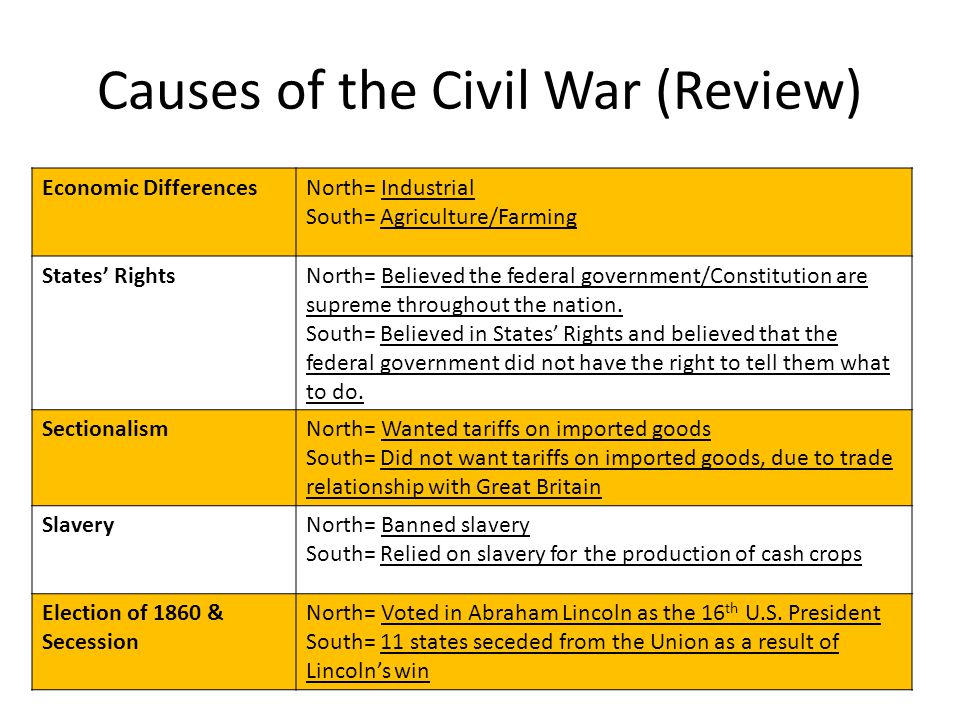
The concept of states’ rights, while a legitimate constitutional principle, was wielded by the South as a powerful weapon to defend slavery. They argued that the federal government had no authority to dictate to individual states on matters such as property rights, which they considered enslaved people to be. This argument conveniently sidestepped the moral implications of slavery and focused on a perceived infringement of state sovereignty.
From a modern “brand” perspective, the Southern states were attempting to protect their brand by emphasizing their autonomy and unique identity, which they felt was threatened by federal overreach. They sought to control their narrative and their economic model, much like a company fiercely guards its intellectual property and unique selling proposition. This resistance to external control, fueled by economic self-interest, was a primary driver of the political friction.
The Growing Influence of Federal Power
Conversely, the North saw the expansion of federal power as necessary for national progress and the establishment of a more uniform legal and economic system. The Nullification Crisis of the 1830s, where South Carolina threatened to nullify federal tariffs, foreshadowed the larger conflict over federal authority. As the nation expanded westward, the question of whether new territories would be free or slave states became a flashpoint, directly challenging the balance of power between free and slave states in Congress.
The technological advancements of the era also played a role. Improved communication, like the telegraph, facilitated the rapid spread of information and galvanized public opinion on both sides. This allowed for the organization of political movements and the amplification of dissenting voices, contributing to the escalating tensions.
The Seeds of Secession: A Failure of Compromise and the Election of 1860
Ultimately, the inability to find a lasting compromise on the issue of slavery, coupled with escalating political polarization, led to the secession of Southern states. The election of Abraham Lincoln in 1860, a Republican whose platform opposed the expansion of slavery, served as the immediate catalyst for secession. Southern states viewed his election as a direct threat to their way of life and their economic interests.
The Erosion of Compromise
Throughout the antebellum period, numerous compromises were attempted, such as the Missouri Compromise and the Compromise of 1850. These were often fragile agreements designed to temporarily appease both sides but failed to address the fundamental moral and economic disparities. Each attempt at compromise ultimately served to highlight the irreconcilable differences.
Looking at this through a “money” lens, the repeated attempts at compromise can be seen as short-term financial maneuvers to avoid a catastrophic economic collapse. The South was unwilling to divest from its primary economic asset, and the North was increasingly unwilling to condone an institution that ran counter to its evolving economic and moral values. These were not merely political disagreements; they were deeply rooted economic conflicts that no amount of financial engineering could truly resolve.
Lincoln’s Election: The Tipping Point
The election of Abraham Lincoln was perceived by the South as the final nail in the coffin of their established order. While Lincoln himself stated he had no intention of interfering with slavery in states where it already existed, his party’s platform of preventing its expansion was seen as an existential threat. The political branding of the Republican Party as anti-slavery, regardless of the nuances of Lincoln’s initial stance, was enough to trigger a decisive reaction from the Southern states.
The widespread adoption of new communication technologies, like the printing press and increased newspaper circulation, allowed for the rapid dissemination of campaign messages and propaganda. This shaped public perception and hardened political stances on both sides, making a moderate path even more challenging. The “brand” of Lincoln and the Republican Party, for the South, became synonymous with impending doom for their economic and social system.

Conclusion: A Multifaceted Causation
While the phrase “main cause” implies a singular driver, the American Civil War was the product of a complex interplay of factors. Slavery stood as the undeniable, overarching issue, deeply embedded in the economic, social, and political fabric of the nation. However, its impact was amplified by the competing economic interests of the North and South, the contentious debate over states’ rights and federal power, and a series of failed compromises.
From a modern perspective, examining these historical events through the lenses of technology, branding, and economic principles offers valuable insights. The technological advancements of the time facilitated the spread of ideas and the organization of dissent. The competing “brands” of the North and South, shaped by their distinct economic models and social values, created an almost irreconcilable divide. And the fundamental economic reliance of the South on enslaved labor, combined with the North’s evolving free-labor economy, created a friction point that ultimately could not be overcome. Understanding these multifaceted causes allows for a more profound appreciation of the tragedy that was the American Civil War and its enduring legacy.
aViewFromTheCave is a participant in the Amazon Services LLC Associates Program, an affiliate advertising program designed to provide a means for sites to earn advertising fees by advertising and linking to Amazon.com. Amazon, the Amazon logo, AmazonSupply, and the AmazonSupply logo are trademarks of Amazon.com, Inc. or its affiliates. As an Amazon Associate we earn affiliate commissions from qualifying purchases.