
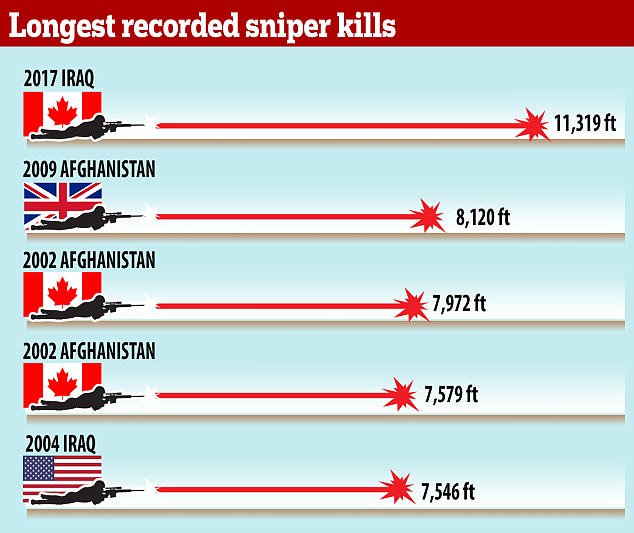
In the realm of modern ballistics, the question of “what was the longest sniper shot” is no longer just a matter of human skill or marksmanship; it is a profound testament to the evolution of military technology. As of late 2023, a Ukrainian sniper from the SBU (Security Service of Ukraine) reportedly shattered the world record with a confirmed hit at a staggering distance of 3,800 meters (approximately 2.36 miles). This feat surpassed the previous record held by a Canadian Special Forces operative in 2017, who achieved a kill at 3,540 meters.
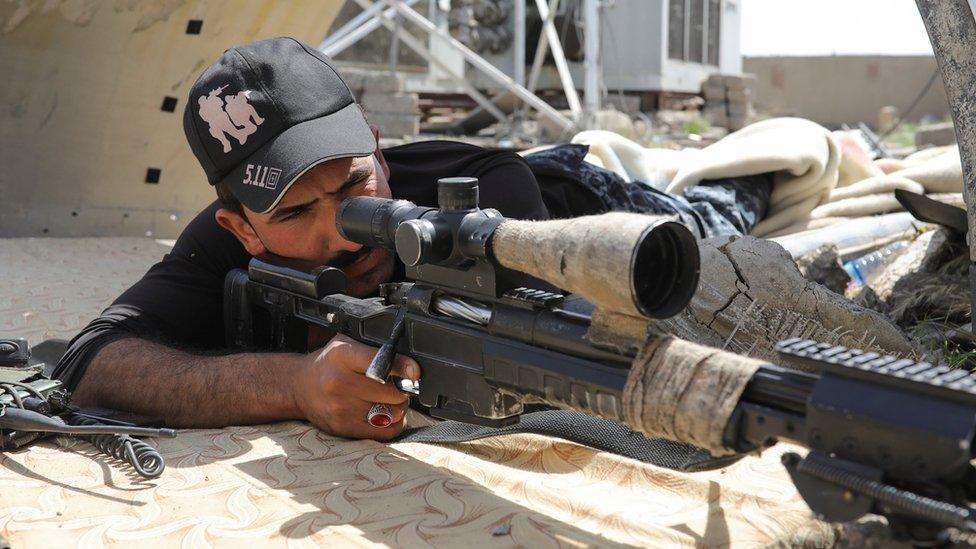
While the bravery and steady hand of the operator are essential, these distances are physically impossible without a sophisticated technological ecosystem. To understand how a projectile can travel nearly four kilometers and find its mark, we must analyze the precision engineering, advanced optics, and algorithmic software that define the modern “Smart Sniper” era.
The Evolution of Precision Ballistics: From Iron Sights to Digital Dominance
The trajectory from the World War II era to the present day represents a quantum leap in mechanical engineering. Historically, snipers relied on rugged, bolt-action rifles with fixed-magnification glass. Today, the hardware is a masterclass in material science and computer-aided manufacturing.
The Role of Computer-Aided Design in Modern Rifles
Modern long-range rifles, such as the Ukrainian “Horizon’s Lord” (Volodar Obriyu) or the McMillan TAC-50 used in previous records, are built using CAD (Computer-Aided Design) software that allows for tolerances measured in microns. The “Horizon’s Lord” is particularly notable for its multi-caliber versatility, designed specifically to handle the 12.7×114mm HL cartridge.
The tech behind the chassis of these rifles focuses on vibration dampening and thermal stability. When a shot is fired at extreme ranges, the slightest oscillation in the barrel—known as “barrel whip”—can cause the bullet to deviate by dozens of meters at the target. Engineers now use finite element analysis (FEA) to simulate these vibrations, ensuring that the barrel remains as rigid and consistent as possible under the extreme pressure of high-velocity rounds.
High-Performance Barrel Manufacturing
The “heart” of the sniper’s tech is the barrel. Modern record-breaking shots utilize “button-rifled” or “cut-rifled” barrels made from high-grade stainless steel alloys. The interior of the barrel is polished to a mirror finish to reduce friction. Furthermore, the twist rate—the distance it takes for the rifling to complete one full rotation—is calculated with extreme precision to stabilize the specific weight and length of the projectile being used. For the 3,800-meter shot, the barrel had to be engineered to provide the perfect spin to a heavy, high-BC (Ballistic Coefficient) bullet to ensure it didn’t “tumble” as it broke the sound barrier and transitioned to subsonic speeds.
Optics and Advanced Rangefinding: The Tech That Sees Beyond the Horizon
At nearly four kilometers, the human eye cannot even distinguish a human-sized target, let alone aim at one. The target appears smaller than the width of the front sight post on a standard rifle. The technology of “seeing” is where the most significant digital advancements have occurred.
Smart Scopes and Ballistic Calculation Units
Modern record-breaking shots utilize high-magnification optics from manufacturers like Nightforce or Schmidt & Bender. However, the glass is only half the story. The integration of ballistic computers is what makes a 3.8 km shot viable.
Devices like the Kestrel 5700 Elite with Applied Ballistics are essentially handheld supercomputers. These devices measure wind speed, wind direction, humidity, air density, and even the “Coriolis effect”—the drift caused by the Earth’s rotation while the bullet is in flight. For a shot of 3,800 meters, the bullet is in the air for approximately 9 to 10 seconds. During that time, the Earth literally rotates beneath the projectile, and the ballistic computer must calculate exactly how many centimeters to adjust the aim to compensate for the planet’s movement.
Laser Rangefinding and Atmospheric Integration
The margin of error for distance at 3,000+ meters is virtually zero. If a rangefinder is off by just 10 meters, the bullet will miss the target entirely due to the steep angle of its descent. Modern snipers use Terrapin X or military-grade LRF (Laser Range Finder) modules that use Class 1 eye-safe lasers to bounce light off a target and return a distance calculation within milliseconds. This tech is often integrated directly into the scope’s heads-up display (HUD), allowing the shooter to see real-time data overlays without moving their eye from the optic.

The Physics of Flight: Projectile Engineering and Aerodynamics
A common misconception is that a sniper shot is a straight line. In reality, a 3,800-meter shot is more akin to a mortar round; the bullet travels in a massive arc, rising hundreds of feet into the air before falling onto the target.
High Ballistic Coefficient (BC) Bullets
The projectile itself is a piece of high-tech hardware. For the longest shots, snipers don’t use standard lead-core bullets. Instead, they use “monolithic” bullets—solid brass or copper projectiles turned on a CNC lathe. These bullets are engineered with an extremely high Ballistic Coefficient (BC), which is a measure of an object’s ability to overcome air resistance in flight.
The design of the “boat tail” (the tapered rear of the bullet) and the “ogive” (the curved front) is optimized through computational fluid dynamics (CFD). This tech ensures that the bullet remains “aerodynamically slippery,” maintaining its velocity for as long as possible. The 12.7×114mm HL round used in the 2023 record was a custom-engineered solution designed to maintain supersonic flight further than standard .50 BMG or .408 CheyTac rounds.
Propellant Innovation and Velocity Consistency
In the tech world of precision shooting, “Extreme Spread” (ES) in muzzle velocity is the enemy. If one bullet leaves the barrel at 2,900 feet per second (fps) and the next at 2,910 fps, they will land in different spots at 3,800 meters.
To combat this, the “tech” of reloading has become a laboratory science. Snipers use temperature-stable powders that do not change their burn rate based on whether the weather is hot or cold. Digital scales that weigh powder to within 0.02 grains (a single kernel of powder) ensure that every shot is digitally identical to the last. This level of consistency is what allows the “Horizon’s Lord” rifle to achieve the repeatable accuracy required for a world-record hit.
The Future of Long-Range Engagement: AI and Guided Munitions
As we look beyond the 3,800-meter mark, the intersection of AI and ballistics suggests that the record for the longest sniper shot will continue to be broken. We are entering an era where the rifle is no longer a manual tool, but a networked sensor platform.
AI-Assisted Targeting Systems
Emerging technologies like the “TrackingPoint” system—often referred to as a “Precision Guided Firearm”—use Linux-powered scopes. The shooter “tags” the target on a digital screen, and the rifle’s internal computer won’t allow the trigger to break until the barrel is perfectly aligned with the calculated solution. While currently used more in civilian and experimental military applications, the integration of AI to predict wind gusts based on “mirage” (heat waves visible through the lens) is the next frontier. AI algorithms can analyze the shimmer of the air to determine wind speed at three different points along the bullet’s path, providing a level of data that no human spotter could achieve.
DARPA and Guided Projectiles
Perhaps the most disruptive technology in the pipeline is DARPA’s EXACTO (Extreme Accuracy Tasked Ordnance) program. This tech involves a .50 caliber bullet that can actually change its path in mid-air. Using optical sensors in the nose of the bullet and small fins to steer, the projectile can compensate for target movement or sudden wind shifts.
While the “longest sniper shot” currently relies on the perfect marriage of a high-tech rifle and a highly-trained human, the future of the niche lies in “smart” munitions. When bullets can steer themselves, the concept of “distance” becomes a secondary concern to “battery life” and “signal processing.”
Conclusion: The Intersection of Skill and Science
The answer to “what was the longest sniper shot” is currently 3,800 meters, but that number is a moving target. It is a milestone made possible by the convergence of several tech sectors: high-end metallurgy, digital ballistic processing, and advanced optics.
As we move forward, the “Tech” niche within military hardware will continue to push the boundaries of physics. The record-breaking shot in Ukraine was not just a feat of marksmanship; it was a demonstration of how specialized software and precision engineering can turn a kinetic projectile into a surgical instrument at distances once thought impossible. In the world of long-range engagement, technology is the ultimate force multiplier, proving that in the modern age, the most powerful component of a weapon system is often the code and the calculations running behind the glass.
aViewFromTheCave is a participant in the Amazon Services LLC Associates Program, an affiliate advertising program designed to provide a means for sites to earn advertising fees by advertising and linking to Amazon.com. Amazon, the Amazon logo, AmazonSupply, and the AmazonSupply logo are trademarks of Amazon.com, Inc. or its affiliates. As an Amazon Associate we earn affiliate commissions from qualifying purchases.