
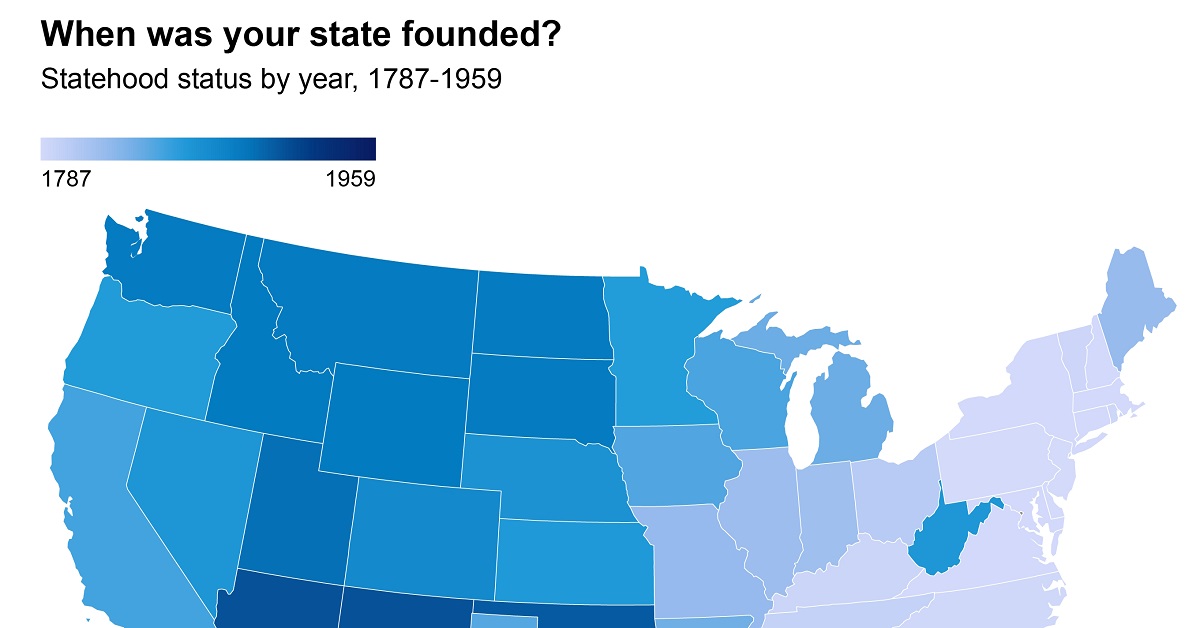
On August 21, 1959, the geopolitical landscape of the United States reached its current iteration when Hawaii was officially admitted as the 50th state. While many view this milestone through a historical or social lens, the transition of the “last state to join the union” represents one of the most significant economic transformations in American history. Moving from a territorial economy dominated by a handful of agricultural conglomerates to a modernized, tourism-driven, and federally integrated market, Hawaii’s journey offers a masterclass in regional economic development, investment strategy, and the complexities of isolated market finance.

Historical Fiscal Evolution: From Kingdom to the 50th State
The financial trajectory of Hawaii began long before its 1959 statehood, but the transition from a territory to the final star on the flag fundamentally altered its fiscal DNA. Before statehood, the economy was largely insular, governed by a small group of corporations known as the “Big Five.” These entities controlled the sugar and pineapple industries, which were the primary drivers of wealth. However, the move to statehood introduced a new era of federal oversight, standardized banking regulations, and open-market competition.
The Shift from Agrarian Exports to a Tourism-Driven Economy
The moment Hawaii became the last state to join the union, it signaled to the global investment community that the islands were open for a new type of business. The mid-20th century saw the rapid decline of the labor-intensive sugar industry as global competition rose. In its place, the “statehood boom” catalyzed a massive shift toward tourism.
From a money perspective, this was a pivot from a commodity-based economy to a service-based economy. Investors poured capital into the development of Waikiki and other coastal regions, recognizing that statehood provided a layer of political stability and legal uniformity that attracted mainland American dollars. This transition required significant infrastructure investment, leading to a surge in construction financing and the birth of Hawaii’s modern hospitality sector.
Federal Integration and the Impact on State Revenue
Becoming the 50th state meant Hawaii was no longer just a strategic military outpost; it was a full participant in the U.S. federal tax and benefit system. For the first time, the state had full representation in Congress, allowing it to lobby for federal funding for highways, airports, and harbor improvements.
This integration had a profound effect on state revenue. The ability to levy state-level taxes while receiving federal matching funds allowed Hawaii to build a robust public sector. For investors, this meant that the “last state” was now backed by the full faith and credit of the United States, reducing the “sovereign risk” associated with territorial investments and lowering the cost of capital for local infrastructure bonds.
Investing in the Aloha State: Opportunities and Risk Management
For modern investors, the “last state” presents a unique set of financial parameters. Hawaii is not just a vacation destination; it is a high-barrier-to-entry market with limited land and a unique regulatory environment. Understanding the financial mechanics of this 50th state is crucial for anyone looking to diversify their portfolio into mid-Pacific assets.
Real Estate Dynamics: High Barriers and Long-Term Yields
Hawaii real estate is frequently cited as some of the most expensive in the nation. The logic behind this is simple supply and demand: there is a finite amount of land, and much of it is protected or zoned for conservation. From an investment standpoint, this creates a “scarcity premium.”
While the initial capital outlay for Hawaii real estate is high, the long-term appreciation rates have historically outperformed many mainland markets. Residential and commercial properties in Honolulu serve as a “safe haven” for international capital, particularly from Asia. However, savvy investors must account for the high cost of maintenance in a tropical environment and the stringent land-use laws that can delay development projects for years.
The Role of ESG and Sustainable Investing in a Limited Ecosystem
As the last state to join the union, Hawaii has often been the “canary in the coal mine” for environmental and economic sustainability. In recent years, the state has become a focal point for Environmental, Social, and Governance (ESG) investing. Because Hawaii imports the vast majority of its energy and food, there is a massive financial incentive to invest in local sustainability.

The state’s commitment to 100% renewable energy by 2045 has created a niche market for green bonds and renewable energy project financing. For the money-conscious observer, Hawaii represents a living laboratory for how isolated economies can transition away from fossil fuel dependence, providing a roadmap for sustainable business finance that can be applied to island nations globally.
Navigating the High Cost of Living: A Microeconomic Case Study
One cannot discuss the finances of the 50th state without addressing the “Paradise Tax.” Being the last state to join the union, and the only one located in the tropics, comes with a unique set of microeconomic challenges that affect both residents and business owners.
The Jones Act and Its Influence on Consumer Prices
A critical factor in Hawaii’s financial landscape is the Merchant Marine Act of 1920, commonly known as the Jones Act. This federal law requires that all goods transported between U.S. ports be carried on ships that are U.S.-flagged, U.S.-built, and U.S.-crewed.
For the 50th state, which is 2,400 miles from the mainland, the Jones Act adds a significant layer of cost to every gallon of milk and every ton of construction material. From a business finance perspective, this necessitates highly efficient supply chain management and contributes to a higher-than-average cost of living. For entrepreneurs, this means that margins are often tighter than on the mainland, requiring more sophisticated financial planning and lean operational strategies.
Strategies for Wealth Preservation in an Isolated Market
Given the high costs, residents of the last state have developed specific financial habits to preserve wealth. High housing costs often lead to multi-generational living arrangements, which consolidate household expenses and preserve family equity.
Additionally, the reliance on a few key industries—tourism and the military—means that diversification is the name of the game for local investors. Many Hawaii-based portfolios include significant allocations to mainland equities or international markets to hedge against the localized risks of a downturn in the travel sector. For those looking to build wealth in Hawaii, understanding the interplay between local property value and global economic health is essential.
Tax Implications and Business Finance in the Last State
Hawaii’s tax structure is notably different from many other U.S. states, a legacy of its unique path to statehood and its need to generate revenue from a mobile tourist population.
Understanding Hawaii’s General Excise Tax (GET)
One of the most misunderstood aspects of Hawaii’s finances is the General Excise Tax (GET). Unlike a traditional sales tax, which is levied on the consumer at the point of sale, the GET is a tax on the privilege of doing business in Hawaii. It is assessed on all business activities, including the sale of goods, services, and even rental income.
For a business owner, the GET is essentially a gross receipts tax. Because it is often passed on to the consumer, it functions similarly to a sales tax, but its “cascading” nature—where tax is applied at every level of a transaction (wholesaler to retailer to consumer)—can significantly impact the final price of goods. Understanding the GET is fundamental for any business entity operating within the 50th state, as improper filing can lead to substantial financial penalties.
Incentives for Local Business Development and Diversification
Recognizing the risks of over-reliance on tourism, the state government offers various financial incentives to diversify the economy. These include tax credits for high-technology research and development, film production, and enterprise zones that offer tax breaks for businesses that create jobs in economically disadvantaged areas.
For venture capitalists and startup founders, these incentives make the “last state” an attractive location for specific niches, such as marine biotech, aerospace (due to the proximity to satellite launch facilities), and ag-tech. The goal is to move the state’s financial foundation toward a “knowledge-based economy,” leveraging its unique geographic position to attract high-value, low-impact industries.
In conclusion, Hawaii’s status as the last state to join the union is more than a trivia fact; it is the cornerstone of a complex and evolving economic narrative. From the early days of territorial agricultural dominance to its current position as a hub for sustainable investment and international real estate, the 50th state offers a unique laboratory for financial study. By navigating its high barriers to entry, understanding its specific tax burdens, and capitalizing on its scarcity, investors and businesses can find significant value in the mid-Pacific frontier.
aViewFromTheCave is a participant in the Amazon Services LLC Associates Program, an affiliate advertising program designed to provide a means for sites to earn advertising fees by advertising and linking to Amazon.com. Amazon, the Amazon logo, AmazonSupply, and the AmazonSupply logo are trademarks of Amazon.com, Inc. or its affiliates. As an Amazon Associate we earn affiliate commissions from qualifying purchases.