
In the late 1990s, the video game industry was undergoing a seismic shift. Sony’s PlayStation had successfully disrupted the long-standing dominance of Nintendo and Sega, proving that gaming was no longer just a hobby for children but a massive pillar of mainstream entertainment. At the same time, Microsoft, a titan of the personal computing era, watched from the sidelines as the “living room” became the next major frontier for digital engagement. To capture this space, Microsoft needed more than just a PC operating system; it needed a dedicated machine.

The answer was a device simply known as the Xbox. While modern gamers refer to it retrospectively as the “Original Xbox” or the “Xbox 1” to distinguish it from its successors, its official name at launch was the Xbox. However, the story behind that name and the technology that powered it is a fascinating case study in how PC architecture collided with consumer electronics to change the trajectory of gaming forever.
The DirectX Box: From Prototype to Brand Identity
The name “Xbox” was not the result of a long, calculated branding exercise by a marketing firm. Instead, it was a shorthand term used by the internal engineering team that built the first prototype. At its core, the console was designed to be a “DirectX Box.”
The DirectX Foundation
In the 1990s, DirectX was Microsoft’s secret weapon in the PC gaming space. It was a collection of application programming interfaces (APIs) that allowed software to communicate directly with hardware components, such as graphics cards and sound cards. This standardized the development process for Windows games, making it easier for developers to create visually stunning titles across varying hardware configurations.
Four engineers from the DirectX team—Kevin Bachus, Seamus Blackley, Ted Hase, and Otto Berkes—conceived the idea of a gaming console that used this same technology. They essentially wanted to put the power of a high-end Windows gaming PC into a box that could sit under a television. When they pitched the idea to Bill Gates, they referred to the project as the “DirectX Box.” Over time, this was shortened to “Xbox.”
The Battle for the Name
Interestingly, Microsoft’s internal marketing department was not initially fond of the name. They felt it was too cold and technical. During the development phase, dozens of alternative names were suggested and tested with focus groups. Names like “eleven,” “M-Pack,” and “Windows Entertainment Project” were tossed around. However, in every focus group, “Xbox” consistently outperformed the others. Despite the marketing team’s reservations, the engineers won the battle, and a new brand was born.
Revolutionary Hardware: A PC in Console Clothing
When the Xbox launched on November 15, 2001, in North America, it was the most powerful gaming console ever created. Unlike its competitors, the Sony PlayStation 2 and the Nintendo GameCube, the Xbox was built using architecture that was strikingly similar to a traditional PC. This was a strategic move that allowed developers to port PC games to the console with unprecedented ease.
The Internal Powerhouse
The heart of the original Xbox was a custom 733 MHz Intel Pentium III processor. At a time when other consoles were using specialized, often proprietary chips, the inclusion of an Intel CPU was a bold statement. It provided a level of raw processing power that allowed for complex physics and advanced artificial intelligence that rivaled high-end PCs of the era.
Complementing the CPU was a custom-designed NVIDIA NV20-based graphics processing unit (GPU), known as the XGP. This chip was capable of rendering 125 million polygons per second, supporting advanced lighting effects like programmable shaders. This technical edge was immediately visible in launch titles like Halo: Combat Evolved, which featured expansive outdoor environments and reflections that were simply not possible on competing hardware.
The Hard Drive Innovation
Perhaps the most significant technological leap the original Xbox introduced was the inclusion of a built-in 8GB internal hard drive. Before the Xbox, console gamers relied on expensive, low-capacity memory cards to save their progress. If a memory card was full or lost, so was the player’s data.

The Xbox hard drive eliminated this friction. It provided ample space for save files, but more importantly, it allowed for “caching.” The console could copy data from the game disc to the hard drive during play, significantly reducing load times and allowing for more seamless transitions between levels. It also enabled a unique feature for the time: custom soundtracks. Players could rip their favorite CDs to the Xbox hard drive and listen to their own music while playing games like Project Gotham Racing.
The Controller Evolution: From “The Duke” to the Controller S
The physical interface of the original Xbox is remembered just as much for its controversy as its innovation. When the console launched in the United States, it came bundled with a massive controller that fans quickly nicknamed “The Duke.”
The Challenge of Ergonomics
The Duke was polarizing. For users with large hands, it was a revelation—solid, sturdy, and comfortable. For everyone else, it was an oversized behemoth that felt clumsy. It featured two analog sticks, a directional pad, six primary face buttons, and two expansion slots for memory units or peripherals. Despite its size, it introduced the world to the “Offset Analog Stick” layout, which has since become the industry standard for Western gaming controllers.
The Shift to the Controller S
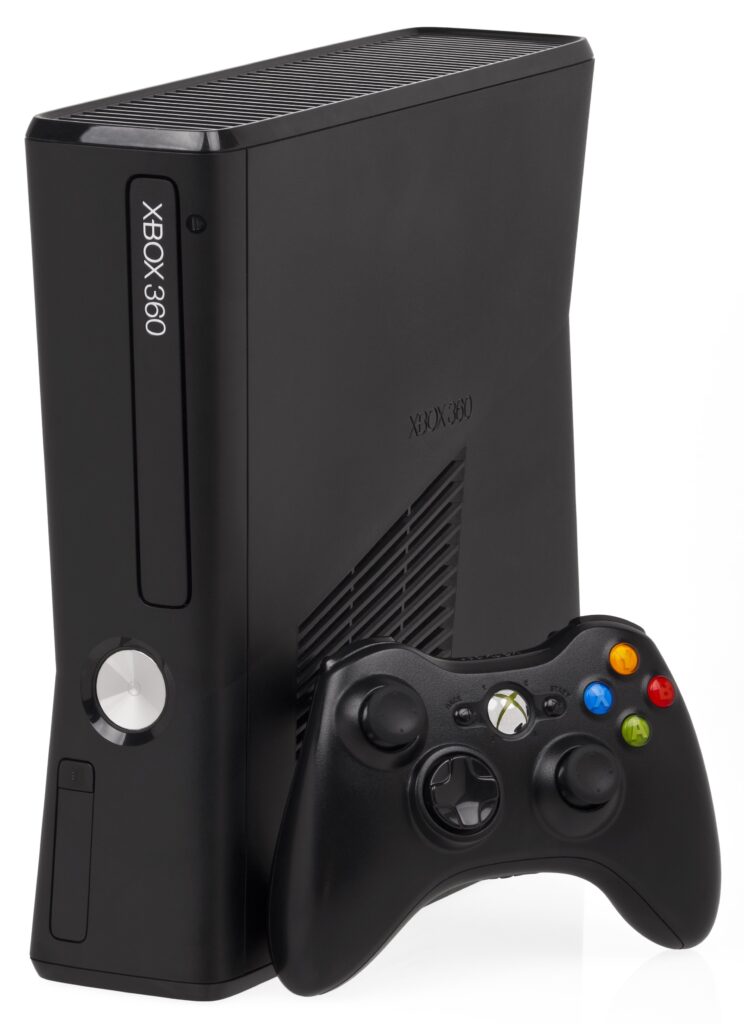
Microsoft quickly realized that the Duke was not universally loved, especially in the Japanese market where users generally preferred smaller peripherals. In response, they developed the “Controller S,” a much more compact and ergonomic version. While initially exclusive to Japan, the Controller S proved so popular that Microsoft eventually made it the standard controller for the Xbox worldwide. This design laid the foundation for the Xbox 360 controller, which many still consider one of the best gamepads ever designed.
Xbox Live: The Dawn of Digital Sovereignty
While the hardware specs were impressive, the original Xbox’s most enduring legacy is the creation of Xbox Live. Launched a year after the console in November 2002, Xbox Live was the first truly successful, unified online gaming service for a console.
Building a Centralized Ecosystem
Before Xbox Live, online gaming on consoles was a fragmented and frustrating experience. If a game had online play, it usually required a separate setup process or a specialized adapter. Microsoft integrated an Ethernet port directly into the back of every Xbox, signaling their commitment to a broadband-only future.
Xbox Live introduced concepts that are now taken for granted:
- The Gamertag: A single identity that followed a player across all games.
- The Friends List: The ability to see who was online and what they were playing.
- Unified Voice Chat: The inclusion of a headset with the Xbox Live Starter Kit meant that communication was a core part of the experience.
The Security and Stability Advantage
By controlling the servers and the subscription model, Microsoft was able to offer a level of digital security and matchmaking stability that was unheard of in 2002. It transformed gaming from a solitary or local-multiplayer activity into a global social network. The success of Halo 2 on Xbox Live became the blueprint for the modern “games as a service” model, proving that players were willing to pay for a premium, reliable online experience.
The Cultural and Technical Legacy
The original Xbox was more than just a piece of hardware; it was a Trojan horse that brought PC-level sophistication into the living room. It proved that Microsoft could compete in a high-stakes hardware market and that there was a massive audience for mature, technically demanding games.
Setting the Stage for the Future
The Xbox’s reliance on PC architecture allowed Microsoft to iterate quickly. The lessons learned from the first console—such as the importance of ergonomics, the necessity of integrated storage, and the power of a centralized online service—were perfected in the Xbox 360. Furthermore, the “Xbox” brand became synonymous with power and performance, a reputation the company continues to leverage with the Xbox Series X.
Conclusion
What was the first Xbox called? It was simply the Xbox, but it represented the “DirectX Box” vision of a few rebellious engineers who believed the living room deserved the power of a PC. By integrating a hard drive, a high-performance Intel CPU, and the groundbreaking Xbox Live service, Microsoft didn’t just release a console; they redefined the technological standards of the entire industry. Today, every time we download a patch, join a party chat, or save a game to an internal SSD, we are experiencing the ripples of the revolution that started with that heavy, black, X-shaped box in 2001.
aViewFromTheCave is a participant in the Amazon Services LLC Associates Program, an affiliate advertising program designed to provide a means for sites to earn advertising fees by advertising and linking to Amazon.com. Amazon, the Amazon logo, AmazonSupply, and the AmazonSupply logo are trademarks of Amazon.com, Inc. or its affiliates. As an Amazon Associate we earn affiliate commissions from qualifying purchases.