
The quest to cultivate life beyond Earth is a testament to humanity’s ingenuity, pushing the boundaries of biotechnology, engineering, and space science. For decades, scientists and engineers have grappled with the profound challenges of growing food in microgravity, an endeavor critical for long-duration space missions and eventual human settlement on other planets. This ambitious pursuit began not with grand Martian greenhouses, but with a humble leaf, marking a pivotal moment in the history of space exploration and agricultural technology. The answer to “What was the first vegetable to be grown in space?” is a story of meticulous scientific experimentation, technological innovation, and a vision for a self-sustaining future among the stars. While early experiments by the Soviets and Americans saw various plants germinate and grow to some extent, the widely recognized first edible vegetable intentionally grown, harvested, and consumed by astronauts in space was ‘Outredgeous’ red romaine lettuce, cultivated aboard the International Space Station (ISS) as part of NASA’s Veg-01 experiment in 2015.

The Dawn of Space Agriculture: A Scientific Milestone
The journey to growing vegetables in space is a long one, rooted in the understanding that fresh food would be invaluable for astronauts far from Earth. Early space missions were short, relying entirely on pre-packaged, often freeze-dried, meals. However, as ambitions grew to include months-long stays on orbital laboratories and eventual voyages to Mars, the limitations of resupply missions became starkly clear.
From Terrestrial Farms to Orbital Greenhouses
For millennia, human civilization has been inextricably linked to agriculture. The ability to cultivate crops transformed nomadic hunter-gatherer societies into settled communities, laying the foundation for modern civilization. Bringing this fundamental practice into the vacuum of space, however, introduced unprecedented challenges. Gravity, essential for water flow, nutrient delivery, and plant structure on Earth, is largely absent. The unique radiation environment, the lack of a natural day-night cycle, and the enclosed, sterile atmosphere of a spacecraft all demanded entirely new approaches to farming. Scientists began to envision compact, self-contained “orbital greenhouses” where plants could thrive under carefully controlled artificial conditions.
The Pioneer Experiment: Unveiling the First Space Veggie
The true breakthrough in cultivating an edible vegetable in space came with NASA’s Veggie (Vegetable Production System) experiment on the ISS. The Veggie system is a deployable plant growth chamber designed to grow fresh produce for astronauts. Its maiden crop, ‘Outredgeous’ red romaine lettuce, was planted in July 2014 and harvested in August of the same year. While the first batch was sent back to Earth for safety analysis, a second batch was planted in July 2015. On August 10, 2015, astronauts Scott Kelly, Kjell Lindgren, and Kimiya Yui became the first humans to taste space-grown food, consuming half of the harvest, while the other half was preserved for scientific study. This moment was not just about a salad; it was a profound demonstration of humanity’s capacity to extend life support systems far beyond the confines of Earth.
Early Soviet and US Efforts
While the red romaine lettuce holds the distinction for human consumption, it’s crucial to acknowledge the foundational work that preceded it. Both the Soviet Union and the United States conducted numerous pioneering experiments with plants in space. As early as the 1970s, Soviet Salyut space stations hosted experiments involving Arabidopsis thaliana (a small flowering plant often used in plant biology research), wheat, and peas. These early efforts focused on understanding basic plant growth, seed germination, and the physiological responses of plants to microgravity. Similarly, NASA’s Space Shuttle missions carried various plant experiments, including growing potatoes and soybeans, to study photosynthesis and tropisms in space. These initial steps, though not yielding a direct human meal, provided invaluable data on nutrient delivery, lighting requirements, and structural adaptations needed for plant life in an extraterrestrial environment, paving the way for the Veggie project.
The Technological Innovations Behind Space Cultivation
Growing a plant in space is a monumental technological feat, requiring sophisticated engineering and biological understanding. The success of the Veggie system and subsequent plant growth units hinges on overcoming the fundamental challenges posed by the microgravity environment.
Hydroponics and Aeroponics in Microgravity
Traditional soil-based agriculture is impractical in microgravity due to soil particulate dispersion and inefficient water/nutrient delivery. Consequently, space agriculture relies heavily on hydroponic and aeroponic systems. Hydroponics involves growing plants in nutrient-rich water solutions without soil. The Veggie system uses “plant pillows,” which are bags containing calcined clay (a porous, inert medium) and slow-release fertilizer. Water is wicked into the root zone from a reservoir. Aeroponics, which sprays a nutrient mist directly onto roots suspended in air, is another highly efficient method being explored for future systems due to its minimal water usage and high oxygenation. The precise control over nutrient delivery and aeration in these systems is crucial for healthy root development in the absence of gravity.
Advanced Lighting and Environmental Control
Sunlight, the primary energy source for photosynthesis on Earth, is problematic in space due to the need for protection from radiation and the logistical challenges of directing natural light. Space plant growth systems, therefore, rely on Light Emitting Diodes (LEDs). LEDs offer several advantages: they are energy-efficient, have a long lifespan, and their light spectrum can be precisely tuned to optimize plant growth (e.g., specific ratios of red and blue light for photosynthesis, with green light often added for observation). Beyond lighting, maintaining an optimal atmosphere within the growth chamber is critical. This includes regulating carbon dioxide levels (plants consume CO2 and release oxygen), humidity, and temperature. Sophisticated sensors and closed-loop environmental control systems ensure these parameters remain within narrow, ideal ranges.
Overcoming Microgravity Challenges
Microgravity presents unique hurdles. On Earth, gravity helps roots grow downwards and shoots upwards, and aids in water and nutrient distribution. In space, without gravity, water tends to form spherical blobs, making it difficult for roots to absorb it uniformly. Capillary action is heavily leveraged to wick water and nutrients directly to the plant roots. Air circulation is also vital to prevent stagnant air pockets around leaves, which can hinder gas exchange and promote fungal growth. Engineering solutions for these issues include specialized wick-based watering systems, fan arrays for air circulation, and even subtle airflows designed to encourage proper plant orientation.
Sensor Networks and Automation
To ensure plant health and optimize growth, space agriculture systems incorporate extensive sensor networks. These sensors monitor everything from temperature, humidity, and CO2 concentration to nutrient levels, water content, and even light intensity and spectrum. Data from these sensors is continuously relayed to ground control and onboard computers. This allows for automated adjustments to environmental parameters, and in more advanced systems, can even facilitate robotic intervention for tasks like pruning or harvesting. The goal is to minimize astronaut involvement, freeing up their time for other critical mission objectives, while ensuring a healthy, productive crop.
Why Growing Food in Space Matters: More Than Just a Salad
The ability to grow food in space is far more significant than merely adding fresh greens to an astronaut’s plate. It represents a fundamental shift in how humanity approaches long-duration space travel and settlement, touching upon nutritional, psychological, and technological imperatives.
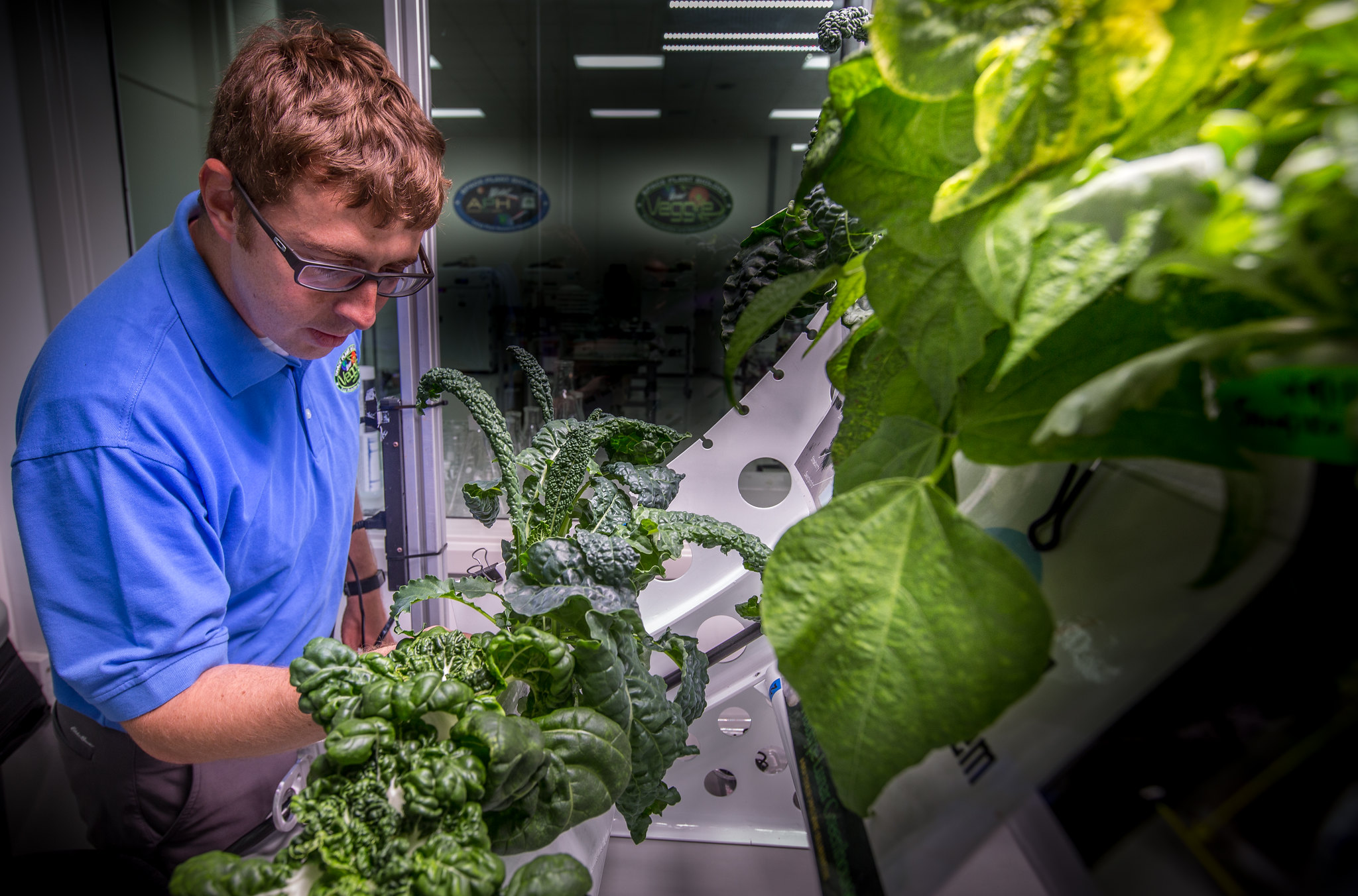
Nutritional and Psychological Benefits for Astronauts
The diet of astronauts primarily consists of pre-packaged, shelf-stable foods, which, while nutritionally balanced, lack the variety, texture, and freshness of Earth-grown produce. Fresh vegetables provide vital micronutrients, antioxidants, and fiber that can degrade in stored foods over time. Beyond the physiological benefits, the psychological impact of gardening in space is profound. The act of tending to living plants, seeing growth, and consuming fresh, vibrant food can combat the monotony of space life, reduce stress, and provide a much-needed psychological connection to Earth and its natural cycles. It’s a sensory experience that reintroduces colors, smells, and textures often absent in the sterile environment of a spacecraft.
Sustaining Long-Duration Missions
For missions extending months or years – particularly hypothetical journeys to Mars or future lunar bases – resupplying food from Earth becomes economically prohibitive and logistically complex. Growing food in situ drastically reduces the mass of provisions that need to be launched from Earth, thereby cutting costs and mission complexity. A self-sustaining food system is a cornerstone of deep-space exploration, enabling humanity to truly venture beyond Earth’s immediate vicinity without constant reliance on terrestrial supply lines. This also provides redundancy and resilience in case of unexpected delays or emergencies during long-haul missions.
Closed-Loop Life Support Systems
Plants play a critical role in Earth’s ecosystem, producing oxygen and absorbing carbon dioxide. In a closed-loop life support system envisioned for future spacecraft and habitats, plants can contribute significantly to environmental regeneration. They can absorb CO2 exhaled by astronauts, convert it into breathable oxygen through photosynthesis, and even help purify wastewater through transpiration. While currently space plant systems don’t fully close the loop, they are a vital step towards developing bioregenerative life support systems that could sustain human colonies independently for extended periods. This integrated approach minimizes waste and maximizes resource utilization, a critical component of sustainable off-world living.
Terrestrial Spinoffs and Agricultural Innovation
The technologies developed for space agriculture have significant applications here on Earth. The need for efficient, resource-conserving growing methods in space has spurred innovations in controlled environment agriculture (CEA), vertical farming, and urban farming. LED lighting optimized for plant growth, advanced hydroponic systems, precise nutrient delivery techniques, and automated environmental controls are all finding their way into terrestrial greenhouses and indoor farms. These technologies enable higher crop yields, reduced water usage, minimized pesticide reliance, and year-round food production in areas with limited arable land or harsh climates, contributing to global food security.
The Evolution of Space Farming: Beyond the First Leaf
The success with red romaine lettuce was just the beginning. Space agencies and private companies are continuously developing more advanced systems and experimenting with a wider variety of crops, pushing the boundaries of what can be grown and sustained off-Earth.
Expanding the Space Menu: From Lettuce to Peppers and Beyond
Since the initial lettuce harvest, astronauts on the ISS have successfully grown and consumed a range of other produce. These include ‘Tokyo Bekana’ Chinese cabbage, ‘Red Russian’ kale, dwarf ‘Zinnia’ flowers (to study pollination in space), and most notably, ‘New Mexico Chili’ peppers, which were harvested in 2021. Growing peppers was a significant step due to their longer growing cycle (around four months) and the challenge of managing their fruit development and pollination in microgravity. These varied crops not only provide nutritional diversity but also allow researchers to study different plant responses and growth requirements under space conditions. The continuous expansion of the space menu aims to provide astronauts with a more complete and satisfying diet.
Advanced Plant Habitats: Veggie, APH, and Future Systems
The Veggie system, while foundational, is relatively simple. NASA has since introduced the Advanced Plant Habitat (APH), a much more sophisticated, fully automated system that provides precise control over a wider range of environmental parameters, including temperature, humidity, light spectrum, CO2 concentration, and nutrient delivery. APH allows for deeper scientific inquiry into plant genetics and physiology in space. Other concepts and prototypes are also under development, including systems that incorporate artificial gravity centrifuges to study the effects of different gravity levels on plant growth, and even inflatable greenhouses for future lunar or Martian habitats. The trend is towards larger, more autonomous, and more environmentally controlled systems capable of sustaining complex crop cycles.
Genetic Engineering and Crop Optimization for Space
To truly thrive in space, plants may need to be specifically engineered for the challenges of an extraterrestrial environment. Researchers are exploring genetic modifications to develop crops that are more resilient to radiation, grow more efficiently under artificial light, produce higher yields in confined spaces, and require less water or nutrients. For example, some studies focus on enhancing a plant’s ability to absorb essential minerals or resist common plant pathogens that could devastate a closed-loop space farm. The intersection of biotechnology and space agriculture promises to create “super crops” uniquely suited for off-world cultivation.
The Role of AI and Robotics in Future Space Farms
As space farms become larger and more complex, and as human presence becomes less frequent on distant outposts, the role of Artificial Intelligence (AI) and robotics will become paramount. AI algorithms can analyze vast amounts of sensor data to predict plant health issues, optimize growth parameters, and even identify ripe produce for harvesting. Robotic systems equipped with manipulators and vision systems could perform routine tasks such as planting seeds, watering, monitoring for pests, pruning, and harvesting, all with minimal human intervention. This automation is crucial for establishing and maintaining sustainable agricultural systems on the Moon, Mars, or in deep-space habitats where direct human supervision might be intermittent or entirely absent.
The Future Harvest: Sustaining Humanity Among the Stars
The journey from a single head of red romaine lettuce to a diverse, self-sustaining space farm is long and complex, but the foundational steps have been taken. The future of humanity in space hinges significantly on our ability to grow our own food, transforming astronauts from mere visitors into permanent residents.
Lunar and Martian Agriculture
The ultimate goal of space agriculture is to support permanent human settlements on the Moon and Mars. This introduces an entirely new set of challenges: dust contamination, extreme temperature swings, significant radiation levels, and alien regolith (soil). Scientists are exploring methods to remediate lunar and Martian regolith to make it suitable for plant growth, perhaps by adding composted waste or specific nutrient supplements. Subsurface greenhouses, protected from radiation and temperature extremes, are a key design concept. The development of robust, energy-efficient plant growth systems capable of operating autonomously for extended periods will be critical for the success of these extraterrestrial outposts.
Commercial Space Agriculture and Private Ventures
The burgeoning commercial space industry is also looking at the potential of space agriculture. Private companies are investing in research and development, envisioning future space hotels or orbital manufacturing facilities that could benefit from fresh food production. Some ventures explore the possibility of specialized high-value crop production in space for unique scientific purposes or even terrestrial consumption (though the economics are currently challenging). The decentralization of space exploration, with more private actors, could accelerate innovation in this field, leading to diverse applications and technological breakthroughs.

Ethical Considerations and Resource Management
As humanity extends its presence into space, ethical considerations surrounding resource management become increasingly important. The energy, water, and nutrient cycles within space agriculture systems must be meticulously managed to ensure sustainability. Questions arise regarding the genetic integrity of plants grown in space, the potential for contamination of other celestial bodies, and the responsible use of extraterrestrial resources for agricultural purposes. Establishing robust international guidelines and best practices will be essential to ensure that our pursuit of sustenance among the stars is conducted responsibly and sustainably, preserving both terrestrial and extraterrestrial environments for future generations.
The first vegetable grown and eaten in space, that vibrant red romaine lettuce, was more than just a snack; it was a beacon, illuminating the path forward for sustainable human life beyond Earth. It proved that with enough ingenuity, technological prowess, and scientific rigor, we can indeed cultivate life in the most inhospitable environments, transforming science fiction into a tangible reality. The journey continues, with every new leaf grown in space bringing us closer to becoming an interplanetary species.
aViewFromTheCave is a participant in the Amazon Services LLC Associates Program, an affiliate advertising program designed to provide a means for sites to earn advertising fees by advertising and linking to Amazon.com. Amazon, the Amazon logo, AmazonSupply, and the AmazonSupply logo are trademarks of Amazon.com, Inc. or its affiliates. As an Amazon Associate we earn affiliate commissions from qualifying purchases.