
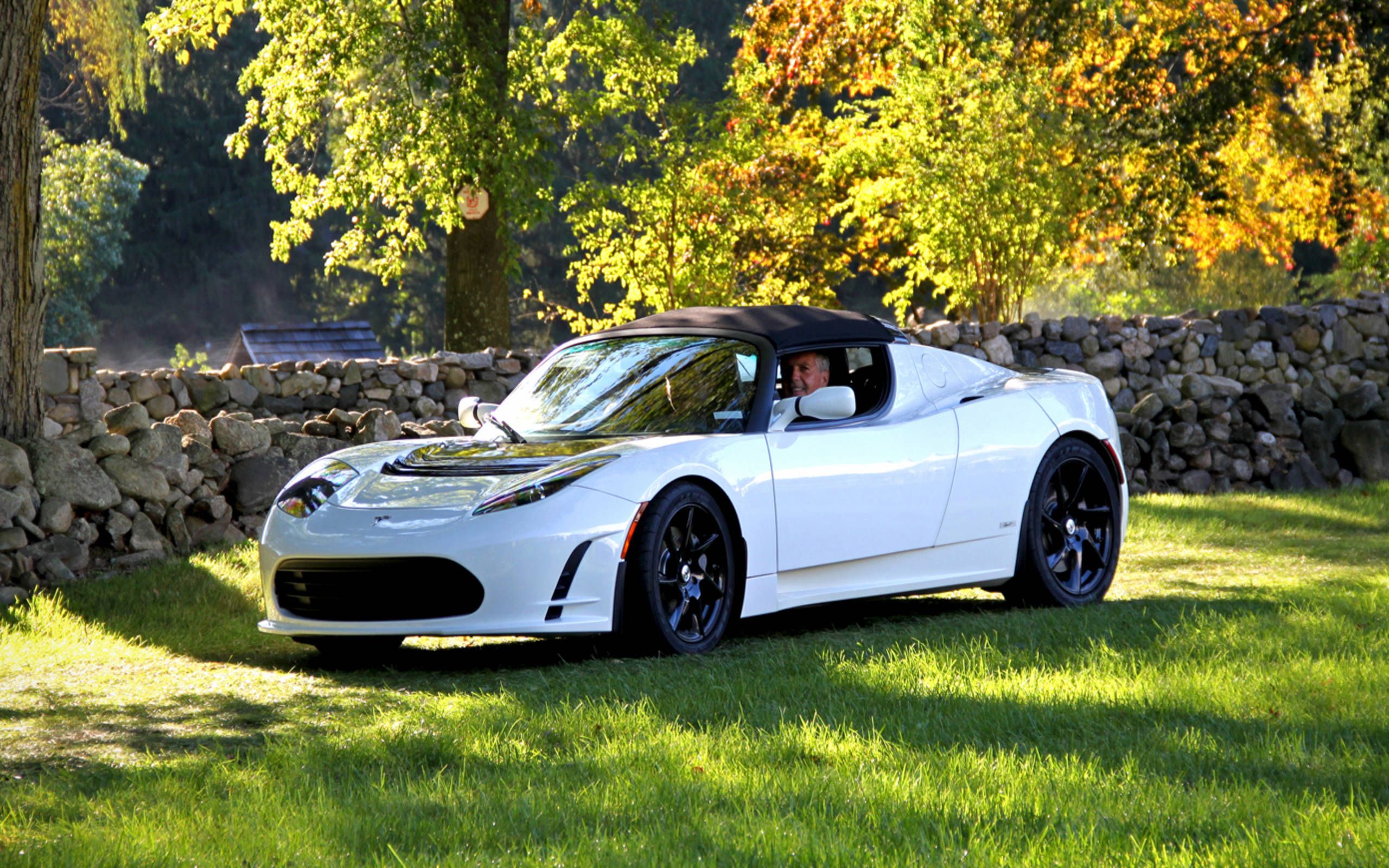
When the first Tesla Roadster rolled off the assembly line in 2008, it didn’t just represent a new vehicle; it signaled a fundamental shift in the world of technology. Before the Roadster, electric vehicles (EVs) were largely perceived as glorified golf carts—slow, aesthetically unpleasing, and limited by lead-acid battery technology that offered dismal range. Tesla Motors, a Silicon Valley startup at the time, approached the automotive industry not as a traditional manufacturer, but as a technology firm. By focusing on high-density energy storage, advanced power electronics, and integrated software, they produced a gadget on wheels that challenged every existing paradigm of what a car could be.

The Original Roadster: A Gadget That Redefined Automotive Engineering
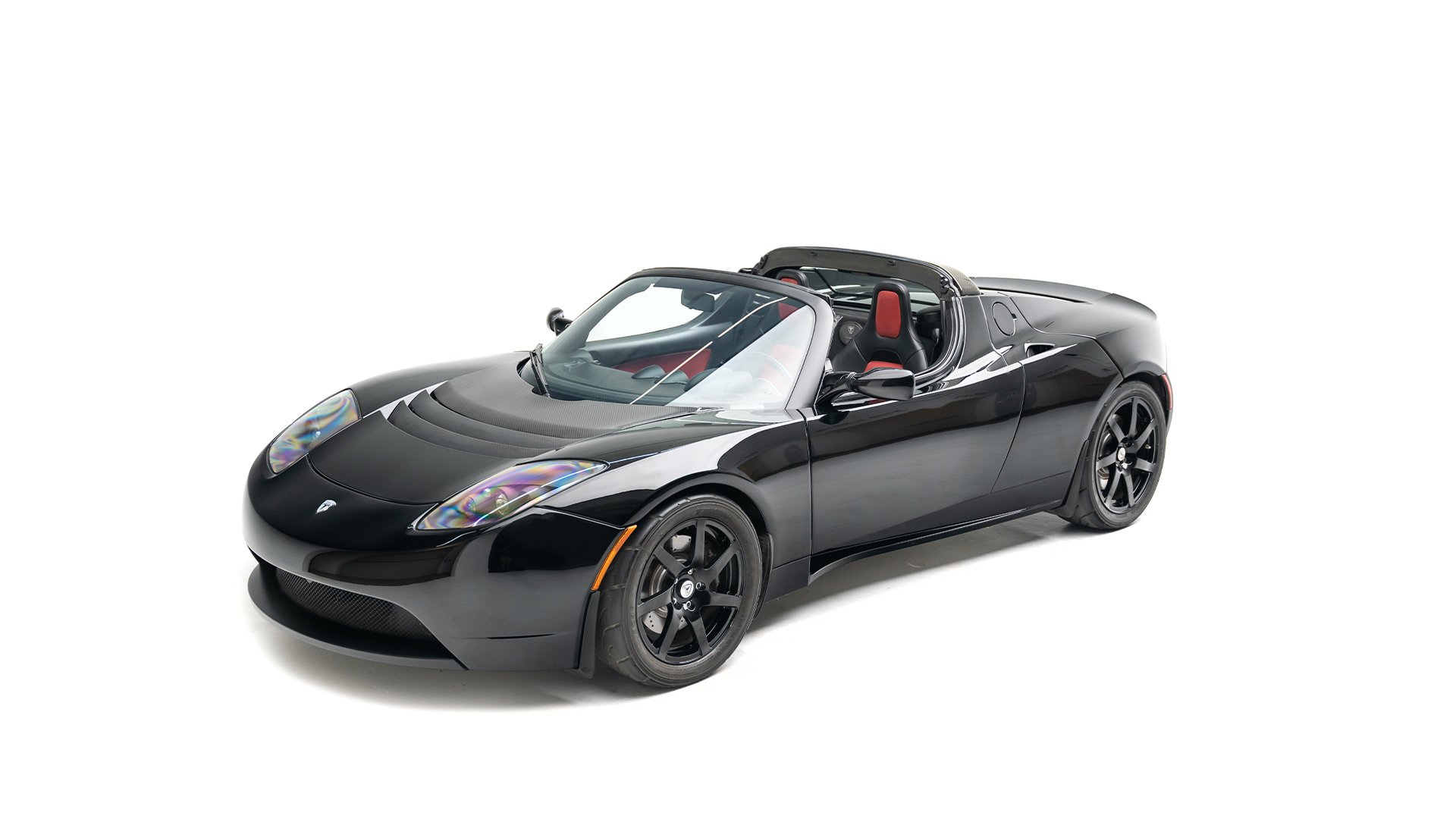
The Tesla Roadster (often referred to as the “Version 1.0”) was a bold technological experiment. It was designed to prove that electric propulsion could outperform internal combustion engines without sacrificing style or desirability. To achieve this, Tesla had to innovate in areas where legacy automakers had remained stagnant for decades.
The Lithium-Ion Breakthrough
The most significant technological leap in the first Tesla car was its battery pack. While previous EVs relied on heavy, inefficient lead-acid or nickel-metal hydride batteries, Tesla turned to the same technology powering laptops and cell phones: lithium-ion cells. The Roadster utilized a massive “Energy Storage System” (ESS) comprising 6,831 individual 18650-form-factor lithium-ion cells.
This was a radical engineering choice. Managing thousands of small cells required a sophisticated battery management system (BMS) to ensure uniform charging and discharging. This tech allowed the Roadster to achieve a range of 244 miles per charge—a figure that was unheard of in 2008. The energy density provided by this lithium-ion configuration became the blueprint for the entire modern EV industry.
From Lotus Glider to High-Performance Machine
To bring the Roadster to market quickly, Tesla entered into a technical partnership with Lotus Cars. The Roadster utilized a heavily modified chassis based on the Lotus Elise. However, the “tech” under the hood was entirely proprietary. While the Elise was known for being a lightweight, analog sports car, Tesla transformed it into a digitally controlled powerhouse.
Engineering the Roadster required reinforcing the chassis to handle the 900-pound battery pack while maintaining the car’s center of gravity. The result was a tech-heavy sports car that could achieve a 0-60 mph time of 3.7 seconds. For tech enthusiasts, the Roadster wasn’t just a car; it was the ultimate high-performance gadget, demonstrating that electrons were more efficient than gasoline at delivering instant torque.
The Propulsion System: AC Induction and Power Electronics
At the heart of the first Tesla car was an AC induction motor, a piece of technology that traces its conceptual roots back to Nikola Tesla himself. However, the 21st-century execution of this motor required cutting-edge power electronics to convert the DC power from the battery into the AC power needed by the motor.
The Mastery of the Electric Drivetrain
The Roadster’s motor was remarkably compact compared to an internal combustion engine, yet it produced significant power (around 248 to 288 horsepower depending on the model). The tech behind this involved high-efficiency copper rotors and advanced magnetism. Unlike a traditional engine with hundreds of moving parts, the Roadster’s drivetrain had only a handful of moving components.
The simplicity of this hardware meant that the “intelligence” of the vehicle moved from the mechanical realm to the electronic realm. The Power Electronics Module (PEM) acted as the brain of the drivetrain, managing the flow of electricity with millisecond precision. This allowed for incredibly smooth acceleration and precise traction control that mechanical systems simply couldn’t match.
Thermal Management Systems: Solving the Overheating Puzzle
One of the greatest technical hurdles in early EV development was heat. High-performance driving generates massive amounts of thermal energy in both the batteries and the motor. Tesla’s engineers developed a pioneering liquid cooling system for the Roadster’s battery pack.
By circulating a mixture of water and glycol through the pack, the car could maintain optimal operating temperatures even under stress. This thermal management tech was crucial for the longevity of the lithium-ion cells, preventing the degradation that had plagued earlier electric prototypes. It remains one of the most critical proprietary technologies that gives Tesla an edge in hardware reliability to this day.
Software-Defined Performance: The Digital Backbone of the Roadster
Perhaps the most disruptive aspect of the first Tesla car was the introduction of the “software-defined vehicle.” In 2008, most cars used rudimentary computers for basic engine timing and diagnostics. Tesla, however, built the Roadster with an integrated software architecture that allowed for a level of control and data logging that was closer to a server than a sedan.
Firmware and the Early User Interface
The Roadster featured a small, integrated touchscreen (by 2008 standards) that provided real-time data on energy consumption, range estimation, and battery health. The firmware controlling the vehicle was bespoke, written by Silicon Valley engineers who understood that software could optimize hardware performance.
This digital approach allowed Tesla to fine-tune the car’s behavior through software updates. While the first Roadster did not have the over-the-air (OTA) update capabilities that define modern Teslas, the architecture was already moving in that direction. The ability to monitor every cell in the battery pack via software meant that the car could protect itself from damage and provide the driver with high-fidelity technical data.
Regenerative Braking as a Tech Feature
While regenerative braking existed in hybrids like the Prius, the Roadster implemented it as a performance tech feature. By using the motor as a generator when the driver lifted off the accelerator, the Roadster could feed energy back into the battery.
The software calibration for this was critical. It needed to feel natural to a driver used to a traditional sports car while maximizing energy recovery. This “one-pedal driving” tech, refined in the original Roadster, has since become a standard feature in the EV tech stack, fundamentally changing the physics of how we slow down vehicles.
Legacy and Evolution: How the Roadster’s Tech Paved the Way
The first Tesla Roadster was produced in a limited run of approximately 2,500 units, but its technological impact was astronomical. It served as a proof-of-concept for every piece of hardware and software that would eventually find its way into the Model S, X, 3, and Y.
Scaling Technology: From 2,500 units to Millions
The tech developed for the Roadster faced a massive challenge: scalability. The hand-built battery packs and custom-machined parts of the original car were far too expensive for a mass-market vehicle. However, the data gathered from the Roadster fleet was invaluable.
Tesla used the “Roadster Lab” to refine their battery chemistry and motor designs. The shift from the 18650 cell used in the Roadster to the 2170 and eventually the 4680 cells used in modern Teslas is a direct line of technological evolution. The Roadster proved that the “tech-first” approach to automotive manufacturing was not only viable but superior in terms of performance and efficiency.
The Future of the Roadster 2.0 and Solid-State Horizons
The original Roadster’s tech journey hasn’t ended. As Tesla prepares the next-generation Roadster, the technology has moved from simple lithium-ion packs to talk of “cold-gas thrusters” and massive leaps in torque. The tech industry is also looking toward solid-state batteries and even more advanced AI-driven power management.
The first Tesla car was essentially a “Version 1.0” beta test for a sustainable future. It took the nascent technologies of the early 2000s—mobile computing, lithium batteries, and power electronics—and synthesized them into a singular, cohesive product. By treating the car as a piece of high-end technology rather than a mechanical commodity, Tesla didn’t just build a new car; they launched an entire tech sector that is currently rewriting the rules of global transportation.
In the final analysis, the first Tesla car was more than a vehicle; it was the world’s first successful implementation of a digital-first automotive platform. It proved that in the 21st century, the most important part of a car isn’t the cylinders in the engine, but the code in the computer and the chemistry in the cells.
aViewFromTheCave is a participant in the Amazon Services LLC Associates Program, an affiliate advertising program designed to provide a means for sites to earn advertising fees by advertising and linking to Amazon.com. Amazon, the Amazon logo, AmazonSupply, and the AmazonSupply logo are trademarks of Amazon.com, Inc. or its affiliates. As an Amazon Associate we earn affiliate commissions from qualifying purchases.