
The quest to understand our origins has shifted from the realm of speculative archaeology to the high-tech laboratories of paleogenomics. For decades, the question of “what was the first skin color of humans” was met with educated guesses based on climate models. Today, however, thanks to breakthroughs in Next-Generation Sequencing (NGS), AI-driven phenotypic reconstruction, and bioinformatics, we have a definitive, data-backed answer.
Technological advancements have confirmed that early Homo sapiens, emerging in the high-UV environment of sub-Saharan Africa, possessed dark, melanin-rich skin. But the “tech story” behind this discovery is as fascinating as the discovery itself. It involves the digital reconstruction of ancient genomes and the use of sophisticated software to map the evolutionary trajectory of human pigmentation.

1. The Genomic Revolution: Decoding Ancient DNA with Next-Generation Sequencing
The primary driver in uncovering the biological history of skin color is the evolution of DNA sequencing technology. Identifying the “first” skin color requires analyzing the genetic markers of ancestors who lived hundreds of thousands of years ago.
The Power of Next-Generation Sequencing (NGS)
Traditional DNA sequencing was slow and often required large samples of pristine biological material. However, the advent of Next-Generation Sequencing (NGS) has allowed scientists to process highly degraded DNA from ancient bone fragments. NGS technology works by “massively parallel” sequencing, allowing billions of DNA strands to be read simultaneously. This technology allows bioinformaticians to filter out “noise”—such as microbial contamination or DNA from modern handlers—to isolate the pure ancestral human code.
Identifying the MC1R and SLC24A5 Genes
By utilizing specialized software to compare ancient genomes with modern ones, researchers focused on specific “candidate genes” known to control pigmentation. The MC1R gene, which regulates the production of melanin, and the SLC24A5 gene, which plays a key role in skin lightness, became the focal points. Data processing tools showed that early humans lacked the mutations for light skin that characterize modern Northern Eurasian populations. Through computational biology, tech-driven research proved that the ancestral state of Homo sapiens was characterized by intense pigmentation as a biological defense mechanism against folate depletion caused by UV radiation.
Bioinformatics and Evolutionary Mapping
Bioinformatics platforms allow scientists to create “molecular clocks.” By inputting genomic data into these systems, researchers can estimate when certain traits emerged. The technology reveals that while early hominids likely had pale skin under dark fur (similar to chimpanzees), the transition to naked, dark-pigmented skin occurred roughly 1.2 to 2 million years ago. This transition was a “hardware upgrade” for the human body, allowing for better thermoregulation through sweating, facilitated by the loss of body hair.
2. AI and Machine Learning in Phenotypic Reconstruction
One of the most exciting trends in modern technology is the use of Artificial Intelligence (AI) to predict physical appearance from genetic data. This field, known as DNA phenotyping, has revolutionized our understanding of what our ancestors looked like.
Predictive Modeling and Deep Learning
AI algorithms are now trained on massive datasets of modern human genomes and their corresponding physical traits (phenotypes). These deep-learning models can identify subtle correlations between specific Single Nucleotide Polymorphisms (SNPs) and skin tone. When these models are applied to the “dark data” of ancient skeletal remains, the AI can generate a digital “heat map” of likely skin pigmentation.
For instance, when researchers analyzed the genome of “Cheddar Man,” a Mesolithic hunter-gatherer from Britain, AI models surprised the world by revealing that even 10,000 years ago, some European populations still possessed very dark skin combined with blue eyes. This highlighted that the “tech” of human evolution moves at different speeds across different geographic regions.
3D Digital Reconstruction and Rendering
Beyond raw data, software used in the film and gaming industries—such as Unreal Engine and specialized forensic reconstruction tools—is being used to visualize these findings. By integrating the AI’s phenotypic predictions with 3D scans of ancient skulls, technicians can create hyper-realistic digital avatars of early humans. These renderings provide a visual confirmation of the dark-skinned origins of our species, moving the evidence from a spreadsheet to a visual medium.

Overcoming Data Gaps with Algorithmic Inference
Ancient DNA is often like a puzzle with missing pieces. Machine learning algorithms can perform “imputation,” a process where the software predicts missing genetic sequences based on surrounding data and known patterns in human genetics. This technological “patching” has been crucial in confirming that the earliest members of the Homo genus were genetically predisposed to high melanin production.
3. CRISPR and the Validation of Evolutionary Traits
While sequencing and AI tell us what the genes looked like, the field of synthetic biology—specifically CRISPR-Cas9 gene editing—allows scientists to test the function of these ancient genes in a controlled environment.
Gene Editing as a Laboratory Time Machine
To understand why the first human skin color was dark, scientists use CRISPR to “knock in” ancient genetic variants into human cell lines or laboratory models. This allows researchers to observe how these ancient genes interact with UV light at a cellular level. It is a form of reverse-engineering that confirms the protective utility of the dark-skin “bio-tech” that our ancestors evolved.
Organoid Technology: Growing Ancient Skin in a Lab
One of the most cutting-edge applications of biotechnology is the development of skin organoids—miniature, lab-grown versions of human skin. By using the genetic instructions derived from ancient DNA, scientists can grow small patches of skin that mimic the physiological properties of early humans. This provides a tangible, biological proof of concept for the dark pigmentation of our ancestors, showing how it functioned as a sophisticated filter against the sun’s radiation.
Ethical Tech: The Governance of Genetic Research
As we develop the ability to reconstruct ancient human traits, the tech community is also developing frameworks for “Ethical AI” and “Bio-ethics.” Ensuring that the technology used to identify the first skin color is not misused for racial pseudoscience is a major focus for software developers and genomicists. Digital watermarking and secure, blockchain-based genetic databases are being explored to ensure that ancestral data remains protected and used only for scientific advancement.
4. The Digital Archive: Preserving the Human Biological History
The discovery of the first human skin color is not a static event; it is part of an ongoing effort to build a digital library of human life. This “biological internet” is where the future of anthropology lies.
Cloud Computing and Global Genomic Databases
The sheer volume of data produced by a single human genome is massive—roughly 200 gigabytes. To compare thousands of ancient and modern genomes, researchers rely on cloud computing infrastructure like AWS or Google Cloud. These platforms enable global collaboration, allowing a researcher in Kenya to compare local genomic findings with data stored in London or New York. This interconnectedness is what led to the consensus that dark skin was the “default” setting for early Homo sapiens.
Open-Source Science and the Democratization of History
Many of the tools used to identify ancient skin colors are open-source. Software like PLINK (for whole-genome association analysis) and various R-based packages allow independent researchers to verify findings. This transparency in technology ensures that our understanding of human origins is based on reproducible data rather than subjective interpretation.
Future Horizons: In-Field DNA Sequencing
The next frontier in this tech niche is the miniaturization of sequencing hardware. Devices like the Oxford Nanopore MinION—a portable DNA sequencer no larger than a smartphone—allow scientists to sequence samples directly at archaeological sites. This “real-time” discovery capability will likely accelerate our understanding of how skin color diversified as humans migrated out of Africa, providing a high-definition map of human adaptation through the ages.
Conclusion: The Silicon Mirror of Human Origins
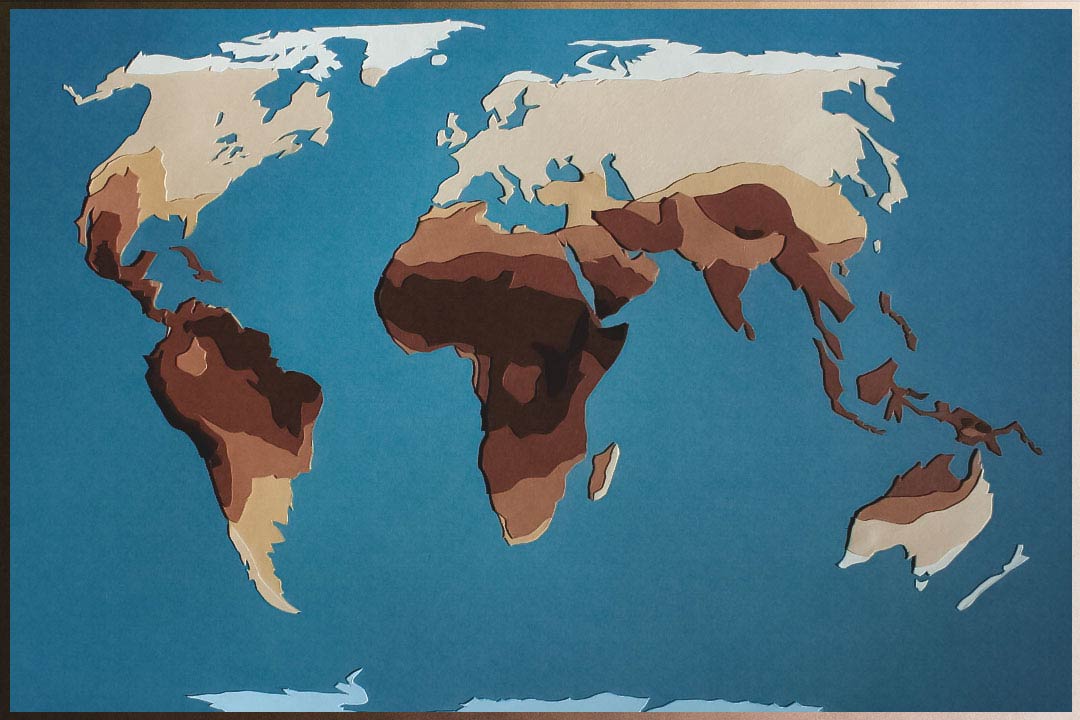
Technology has provided the definitive answer to the question of our original skin color: it was a deep, protective dark brown, an elegant biological solution to the challenges of an equatorial environment. However, the discovery is about more than just a shade of skin; it represents the triumph of modern tech tools—NGS, AI, CRISPR, and cloud computing—in decoding the most complex machine in existence: the human body.
As we continue to refine these technologies, we aren’t just looking back at our past; we are building the tools to understand our future. The same genomic tech that tells us what our ancestors looked like is today being used to cure genetic diseases and predict how humans might adapt to changing climates in the centuries to come. The story of our first skin color is, ultimately, a story of how technology allows us to look into a “silicon mirror” and see the shared heritage of all humanity.
aViewFromTheCave is a participant in the Amazon Services LLC Associates Program, an affiliate advertising program designed to provide a means for sites to earn advertising fees by advertising and linking to Amazon.com. Amazon, the Amazon logo, AmazonSupply, and the AmazonSupply logo are trademarks of Amazon.com, Inc. or its affiliates. As an Amazon Associate we earn affiliate commissions from qualifying purchases.