
The transition from propeller-driven flight to jet propulsion represents perhaps the most significant technological leap in the history of aerospace engineering. While the concept of jet propulsion had been theorized for centuries—dating back to Hero of Alexandria’s aeolipile—it wasn’t until the late 1930s that material science, thermodynamics, and mechanical engineering converged to create a functional jet aircraft. The story of the first jet aircraft is not merely a historical footnote; it is a masterclass in disruptive technology that fundamentally altered how humans interact with the physical world.
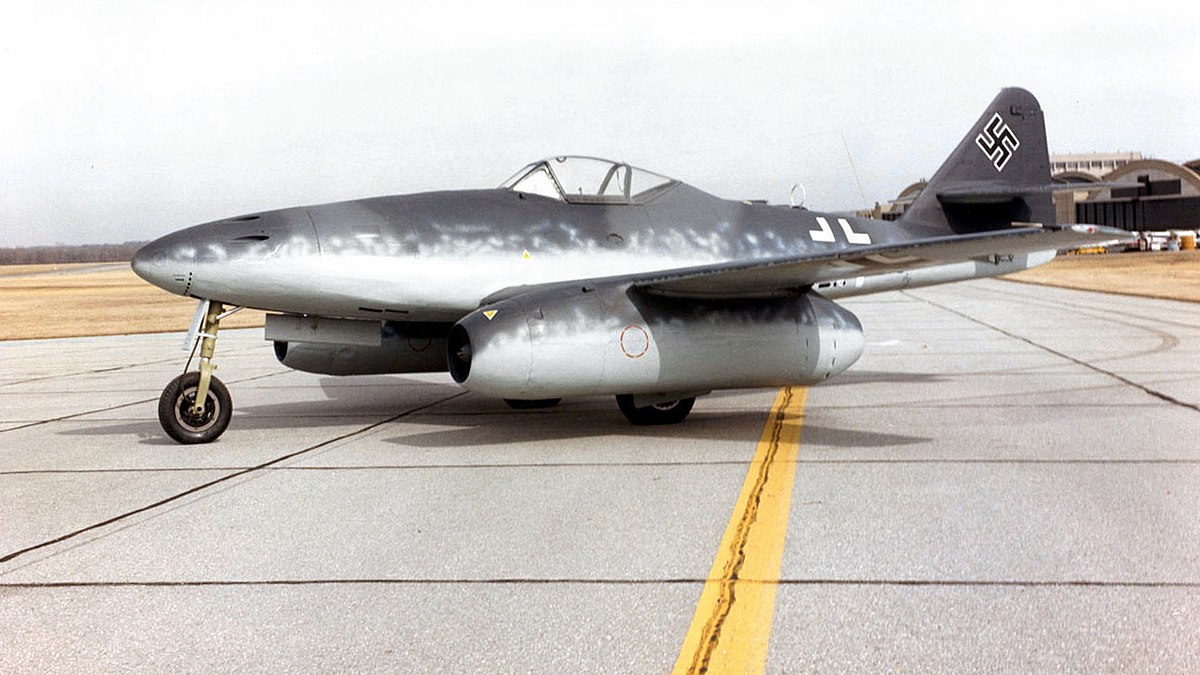
The Heinkel He 178: A Milestone in Propulsion Technology
On August 27, 1939, a small, unassuming aircraft took to the skies over Rostock, Germany, and changed the course of engineering forever. The Heinkel He 178 was the world’s first aircraft to fly under the power of a turbojet engine. This was the HeS 3 engine, designed by Hans von Ohain, a brilliant physicist who sought a cleaner, more efficient method of propulsion than the reciprocating internal combustion engines of the era.
The Shift from Piston to Turbine
Until the late 1930s, aviation relied exclusively on piston engines. These engines utilized heavy moving parts—pistons, crankshafts, and valves—to turn a propeller. However, piston engines faced a technological “ceiling.” As aircraft attempted to go faster, the tips of the propellers would approach the speed of sound, creating massive drag and losing efficiency. The turbojet solved this by internalizing the combustion process. By compressing air, mixing it with fuel, and igniting it, the resulting high-speed exhaust provided thrust directly. This transition from rotational mechanical energy to pure kinetic thrust was the ultimate “software update” for the physics of flight.
The Architecture of the HeS 3 Engine
The HeS 3 engine was a marvel of early 20th-century tech. It utilized a centrifugal flow compressor, which sucked air in and flung it outward into combustion chambers. While modern jets use axial flow (where air moves straight through), the HeS 3 proved that a self-contained gas turbine could produce enough thrust to overcome the weight of an airframe. The engineering challenge was immense: the engine had to be light enough to fly but strong enough to withstand temperatures that would melt standard steel.
Hans von Ohain vs. Frank Whittle: A Parallel Tech Race
In a scenario often seen in the modern tech world—much like the simultaneous development of the GUI or the internet—two inventors were working on jet technology independently. While von Ohain achieved the first flight, Sir Frank Whittle in the UK was developing the Power Jets W.1. Whittle’s designs were arguably more robust and eventually formed the basis for the first Allied jet, the Gloster E.28/39. This “tech race” accelerated the development of heat-resistant alloys and aerodynamic modeling, setting the stage for the Cold War’s rapid aerospace advancements.
From Analog Mechanics to Digital Precision: The Evolution of Jet Systems
The leap from the Heinkel He 178 to the sophisticated machines of today involved more than just bigger engines; it required a total overhaul of aircraft systems. As speeds increased, the “analog” pilot could no longer rely solely on physical strength to move control surfaces against the massive air pressure of high-velocity flight.
The Rise of Hydraulic and Fly-By-Wire Systems
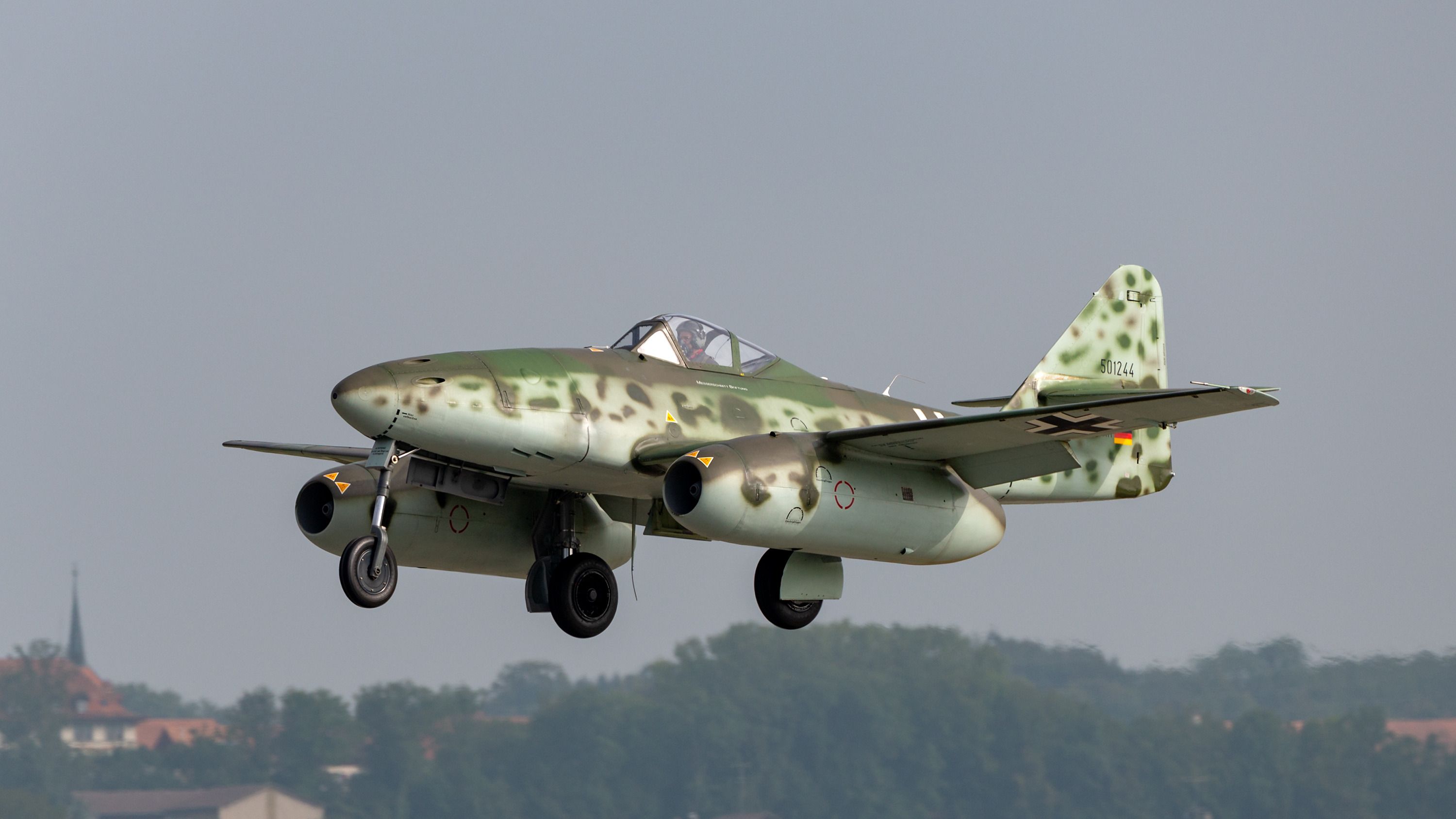
Early jets like the Me 262 and the F-86 Sabre began incorporating advanced hydraulic boosters. This was the precursor to modern “Fly-By-Wire” (FBW) technology. In FBW systems, the physical connection between the cockpit and the wings is replaced by a digital interface. The pilot’s inputs are processed by a computer, which then sends signals to actuators. This technological shift allowed for the design of inherently unstable aircraft (like the F-117 Nighthawk) that are more maneuverable but require a computer to stay in the air—a perfect synergy of hardware and software.
Afterburners and Variable Geometry
To push past the sound barrier, engineers developed the afterburner—a tech solution that injects fuel directly into the exhaust stream for a massive burst of thrust. Additionally, “swing-wing” or variable-geometry technology (as seen on the F-14 Tomcat) allowed aircraft to optimize their shape for both low-speed stability and supersonic efficiency. These innovations were the “hardware hacks” of the mid-20th century, allowing a single platform to perform multiple, conflicting roles.
Sensors and Avionics Integration
Modern jet technology is as much about data as it is about thrust. The integration of AESA (Active Electronically Scanned Array) radar and IRST (Infrared Search and Track) systems has turned the jet aircraft into a flying data center. Today’s pilots don’t just fly; they manage a complex ecosystem of sensors that provide 360-degree situational awareness, often projected directly onto a digital helmet-mounted display (HMD).
Materials Science: The Silicon Valley of the 1950s
The biggest bottleneck in jet development wasn’t the theory of propulsion, but the limitations of materials. The “Tech” behind the first jet aircraft was largely a search for substances that wouldn’t disintegrate under extreme thermal stress.
The Metallurgy of Heat Resistance
The turbine blades in a jet engine operate in an environment hotter than their own melting point. To solve this, engineers developed “superalloys”—combinations of nickel, cobalt, and chromium. Later, they pioneered “single-crystal” casting, where an entire turbine blade is grown as one single crystal of metal to eliminate grain boundaries where cracks might start. This is a level of precision manufacturing that rivals the creation of silicon wafers in the semiconductor industry.
Thermal Barrier Coatings (TBCs)
Beyond the metal itself, modern jets use ceramic coatings only a few microns thick to insulate engine components. These coatings represent a peak in chemical engineering, allowing engines to run at higher temperatures, which directly correlates to higher fuel efficiency and more power. The same logic applies to the heat shields on spacecraft and the thermal management in high-performance computing hardware.
Carbon Fiber and Composite Structures
In the quest for a better thrust-to-weight ratio, the industry moved from aluminum to composites. Modern aircraft like the F-35 or the Boeing 787 use carbon-fiber-reinforced polymers. These materials are lighter than aluminum and stronger than steel, allowing for complex aerodynamic shapes that were previously impossible to manufacture. This “material tech” has since trickled down into consumer gadgets, high-end laptops, and professional-grade bicycles.
The Future of Jet Tech: AI, Stealth, and Sustainable Propulsion
As we look beyond the era of the first jet, the technology is pivoting toward three distinct pillars: stealth (low observability), autonomous systems (AI), and green energy.
Stealth and Computational Fluid Dynamics
The “invisible” aircraft, such as the B-21 Raider, are designed using massive computational power to simulate how radar waves bounce off surfaces. This is a purely digital achievement. Every curve and angle of a modern stealth jet is calculated by AI-driven design tools to minimize the Radar Cross Section (RCS). The technology that began with the He 178’s simple fuselage has evolved into complex, mathematically optimized geometries that defy traditional radar detection.
Unmanned Systems and AI Wingmen
We are entering the era of the “Loyal Wingman.” In this tech trend, manned jets are paired with autonomous, AI-driven drones. These drones use machine learning algorithms to scout ahead, jam enemy signals, or even engage targets. The “software” is becoming more important than the “airframe.” The focus is shifting from how fast a jet can fly to how quickly its onboard AI can process combat data and make decisions.
The Push for Electric and Hydrogen Jets
Just as Hans von Ohain sought a better alternative to the piston engine, today’s engineers are looking for alternatives to fossil fuels. The next “first” in aviation tech will be the first commercially viable hydrogen or fully electric jet. While battery energy density remains a hurdle for long-haul flight, the development of superconducting motors and cryogenic fuel storage is the current “frontier” of propulsion technology.

Conclusion: The Legacy of the First Leap
The Heinkel He 178 was more than a plane; it was a proof of concept that redefined the limits of human engineering. It proved that we could harness the power of a miniature hurricane inside a metal tube to propel ourselves across the globe at speeds once thought impossible.
From the centrifugal compressors of 1939 to the AI-driven, composite-bodied stealth fighters of the 2020s, the trajectory of jet technology has been one of constant refinement and radical innovation. The same spirit of technological daring that drove von Ohain and Whittle now drives the engineers working on hypersonic travel and orbital tourism. As we move into an era defined by digital transformation and sustainable energy, the jet aircraft remains the ultimate symbol of what happens when advanced technology meets the human desire to explore. The “jet age” hasn’t ended; it has simply evolved into a sophisticated digital frontier.
aViewFromTheCave is a participant in the Amazon Services LLC Associates Program, an affiliate advertising program designed to provide a means for sites to earn advertising fees by advertising and linking to Amazon.com. Amazon, the Amazon logo, AmazonSupply, and the AmazonSupply logo are trademarks of Amazon.com, Inc. or its affiliates. As an Amazon Associate we earn affiliate commissions from qualifying purchases.