
The quest to identify the first musical instrument is no longer a matter of mere speculation or campfire storytelling. In the modern era, this search has transitioned from the realm of humanities into the high-tech corridors of carbon dating, 3D acoustic modeling, and digital archeology. While the human voice is technically our first biological apparatus for melody, the “first instrument” as a technological artifact—a tool specifically engineered to produce sound—marks a pivotal moment in human cognitive evolution. By leveraging advanced software and hardware, researchers are finally decoding the 40,000-year-old startup sequence of human creativity.

The Digital Archeology of Bone and Stone: Dating the First Tech
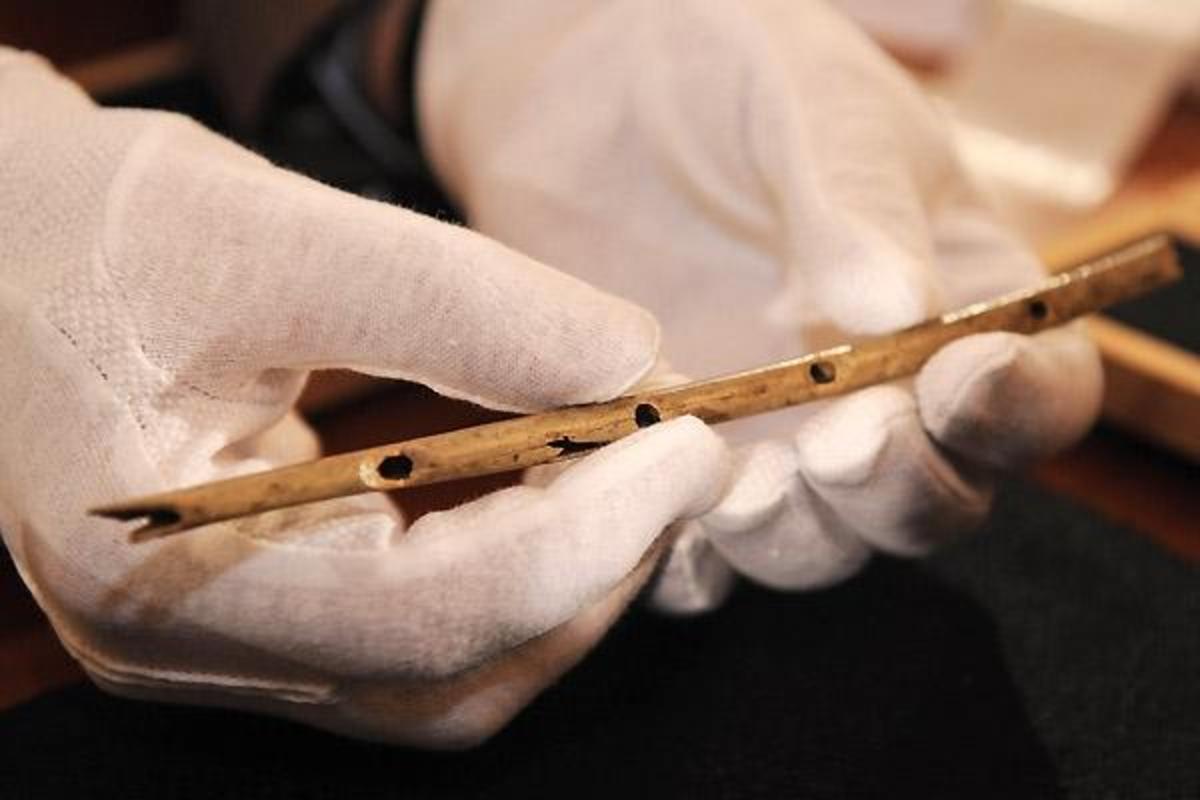
For decades, the debate over the world’s first instrument centered on fragments of bone found in European caves. However, it was not until the advent of high-precision Accelerator Mass Spectrometry (AMS) that we could pinpoint the exact “release date” of these ancient tools. The current record-holder for the first engineered instrument is the Hohle Fels flute, discovered in southwestern Germany.
Radiocarbon Analysis and the 40,000-Year Timeline
Modern AMS technology allows scientists to date organic materials with unprecedented accuracy by measuring the decay of Carbon-14 atoms. When applied to the griffon vulture bone flute found in the Ach Valley, the tech confirmed an age of approximately 35,000 to 40,000 years. This isn’t just a date; it is data that proves early humans (Homo sapiens) possessed the sophisticated technical knowledge to calculate air-column vibrations long before the advent of agriculture or writing.
3D Scanning and Non-Invasive Documentation
To study these fragile artifacts without risking physical degradation, archeologists use high-resolution micro-CT scanning. This technology creates a “digital twin” of the instrument. Researchers can analyze the interior bore of a bone flute, identifying the precise tool marks left by prehistoric “engineers.” These scans reveal that the placement of finger holes wasn’t accidental; they were strategically positioned to produce specific intervals, indicating an early grasp of acoustic physics.
Photogrammetry in Subterranean Labs
In deep cave systems like Chauvet or Lascaux, portable photogrammetry rigs allow researchers to map the environment where these instruments were played. By stitching together thousands of high-resolution images, software creates 3D environments that help us understand the context of the “hardware.” We can see how the instruments were stored and where they were positioned relative to cave paintings, suggesting a multi-sensory “user experience” that integrated visual and auditory tech.
Archeoacoustics: Reconstructing the Sound of Prehistory
Identifying the first instrument is only half the battle; the more complex technological challenge is hearing it. Most ancient instruments are found in fragments, making them unplayable in their physical form. This is where modern audio engineering and digital signal processing (DSP) step in.
Virtual Acoustic Modeling and Re-Synthesis
Using the “digital twins” generated by 3D scans, acoustic engineers employ Finite Element Method (FEM) software to simulate airflow through the ancient flutes. This software calculates how air molecules would have vibrated within the specific geometry of a vulture bone or a mammoth ivory tube. By applying fluid dynamics, tech experts can synthesize the exact tones these instruments produced tens of thousands of years ago, allowing us to hear a “reboot” of Paleolithic music in high fidelity.
Impulse Response and Cave Reverb
An instrument does not exist in a vacuum. To truly understand the “first instrument,” we must understand the “first concert hall.” Technologists use a method called Impulse Response (IR) recording to capture the acoustic fingerprint of the caves where these instruments were found. By playing a broad-frequency “sweep” in the cave and recording the reflections, they create a digital filter. When the synthesized sound of the bone flute is processed through this IR filter, we hear the instrument exactly as it would have echoed off the limestone walls in 35,000 BCE.
Material Science and 3D Printing Replicas
Beyond the digital realm, 3D printing (additive manufacturing) allows for the creation of exact physical replicas. Using materials that mimic the density and porosity of ancient bone or ivory, researchers can produce “test hardware.” These replicas allow modern musicians to experiment with fingerings and embouchure, providing a hands-on feedback loop that validates the digital models. It is a bridge between the oldest tech and the newest.

The Human Interface: Bio-Tech and the Origin of Rhythm
While bone flutes represent the first external hardware, technology also helps us explore the biological “first instrument”: the human vocal apparatus and the rhythmic use of the body. In this niche, “tech” refers to the physiological engineering of the human frame and the software of the brain.
AI Synthesis of Ancient Vocal Tracts
Machine learning algorithms are now being used to reconstruct the vocal capabilities of early hominids and Neanderthals. By analyzing the fossilized structures of hyoid bones and rib cages, AI can predict the resonant frequencies of the ancient throat. This bio-tech simulation suggests that while Neanderthals may have lacked the “software” for complex language, their “hardware” was fully capable of musical pitch, potentially making the melodic voice the true “Version 1.0” of musical technology.
Neural Mapping and the Rhythmic Brain
Functional MRI (fMRI) technology has revealed that playing an instrument—even a simple percussion tool—engages nearly every part of the brain simultaneously. Neuroscientists use this tech to study how “rhythmic entrainment” works. By mapping the brain’s response to ancient beat patterns, researchers have discovered that the first instruments were likely used as “bio-hacking” tools to synchronize the heart rates and brain waves of a group, fostering social cohesion through technological means.
Haptic Technology and the Evolution of Percussion
The first percussion instruments were likely modified stones or “lithophones.” Modern haptic sensors—the same tech found in smartphone vibrations and VR controllers—are used to measure the strike force and resonance of these stones. This data helps ethnomusicologists understand the “user interface” of early percussion, showing how humans optimized the transfer of kinetic energy into acoustic energy.
The Future of the Past: AI and the Preservation of Ancient Sound
As we look forward, the technology used to identify and recreate the first instrument is becoming increasingly automated. We are entering an era where AI doesn’t just analyze data; it predicts the existence of undiscovered history.
Machine Learning in Ethnomusicology
AI models are currently being trained on the tonal structures of all known ancient instruments. By processing these patterns, the software can predict where “missing link” instruments might be found based on geographical and migratory data. This “predictive archeology” is the next frontier, turning the search for the first instrument into a data-driven operation.
Blockchain and the Provenance of Digital Artifacts
As we create digital reconstructions of the world’s first instruments, the question of ownership and authenticity arises. Blockchain technology is being utilized to secure the provenance of these digital files. By minting “Acoustic NFTs” of ancient sounds, research institutions can ensure that the digital heritage of humanity is preserved, authenticated, and protected from unauthorized alteration, creating a permanent ledger of our sonic origins.
The Global Sound Database
Cloud computing has enabled the creation of global repositories where 3D scans, acoustic models, and synthesized recordings of ancient instruments are stored. This “Open Source Prehistory” allows a researcher in Tokyo to virtually play a flute found in Germany. The democratization of this tech ensures that the mystery of the first instrument is a puzzle being solved by a global network of specialized AI and human experts.
Conclusion: The Symbiosis of Art and Apparatus
The story of the first instrument is ultimately a story of technology. From the first flint blade used to hollow out a bone to the latest AI used to simulate its resonance, music and tech have always been intertwined. By applying the tools of the digital age to the artifacts of the Stone Age, we are doing more than just identifying an object; we are recovering the lost frequency of human origin. As our technology continues to advance, our understanding of those first primitive notes becomes clearer, proving that while the hardware changes, the human drive to “program” sound remains the same.
aViewFromTheCave is a participant in the Amazon Services LLC Associates Program, an affiliate advertising program designed to provide a means for sites to earn advertising fees by advertising and linking to Amazon.com. Amazon, the Amazon logo, AmazonSupply, and the AmazonSupply logo are trademarks of Amazon.com, Inc. or its affiliates. As an Amazon Associate we earn affiliate commissions from qualifying purchases.