
For decades, the question of “what was the first dog in history” was a puzzle left to archaeologists wielding brushes and shovels. However, in the last ten years, the hunt for the origin of man’s best friend has migrated from the dusty pits of excavation sites to the high-powered servers of computational biology labs. The transition from physical archaeology to digital paleogenomics has transformed our understanding of domestication. By leveraging Artificial Intelligence (AI), Next-Generation Sequencing (NGS), and advanced bioinformatics, scientists have finally begun to identify not just a single “first dog,” but the complex technological footprint of how a predator was re-engineered by nature and necessity into a companion.

The Genomic Revolution: Sequencing the 30,000-Year-Old Code
The search for the first dog is no longer a matter of comparing the shape of jawbones. Instead, it has become one of the most significant Big Data challenges in the biological sciences. The primary obstacle in identifying the first dog is the degradation of organic material. Over tens of thousands of years, DNA breaks down into short, damaged fragments, often contaminated by the DNA of modern bacteria and humans.
Next-Generation Sequencing (NGS) and Ancient Proteomics
The breakthrough in identifying the first dog came with the advent of Next-Generation Sequencing (NGS). Unlike older methods that could only sequence small snippets of DNA, NGS allows for the parallel sequencing of millions of DNA fragments simultaneously. This high-throughput technology enables scientists to piece together the entire genome of a specimen from the Pleistocene epoch. By applying NGS to remains found in places like the Altai Mountains in Siberia or the Goyet Caves in Belgium, researchers have been able to extract “ghost” sequences—genetic information that has long been extinct in modern populations. This tech-driven approach revealed that the “first dog” was likely a divergence from a now-extinct lineage of Late Pleistocene wolves, rather than the modern gray wolves we see today.
Overcoming Data Decay with Bioinformatics
Raw genetic data is useless without the software to interpret it. Bioinformatics platforms now utilize sophisticated “damage-aware” algorithms designed specifically for ancient DNA (aDNA). These tools can distinguish between the natural chemical alterations that occur in DNA over 30,000 years (such as cytosine-to-thymine transitions) and actual genetic mutations. By “cleaning” the digital sequence through these software filters, researchers can reconstruct a high-fidelity digital map of the ancient canine genome. This allows for a precise comparison between the 33,000-year-old “Altai dog” and modern breeds, pinpointing exactly where the genetic “software” of a wolf began to rewrite itself into that of a dog.
AI and Predictive Modeling in Paleogenomics
While sequencing provides the map, Artificial Intelligence provides the navigator. The sheer volume of genetic data generated from ancient remains—often billions of base pairs—requires more than manual analysis. AI has become the cornerstone of “deep time” research, allowing scientists to model the transition from wild predator to domesticate with unprecedented accuracy.
Deep Learning Algorithms and Ancestral Reconstructions
Researchers are now using deep learning models to perform “ancestral state reconstruction.” By feeding an AI the genomes of thousands of modern dogs and wolves, along with the fragmentary data from ancient remains, the algorithm can “predict” what the intermediary species—the true first dog—must have looked like genetically. These neural networks can simulate thousands of evolutionary paths, identifying the most statistically probable point of divergence. This computational modeling has suggested a dual-origin theory: that dogs may have been “invented” twice, once in Western Eurasia and once in East Asia, a finding that would have been impossible to verify without the pattern-recognition capabilities of modern AI.

Digital Phenotyping: Recreating the Appearance of the First Dog
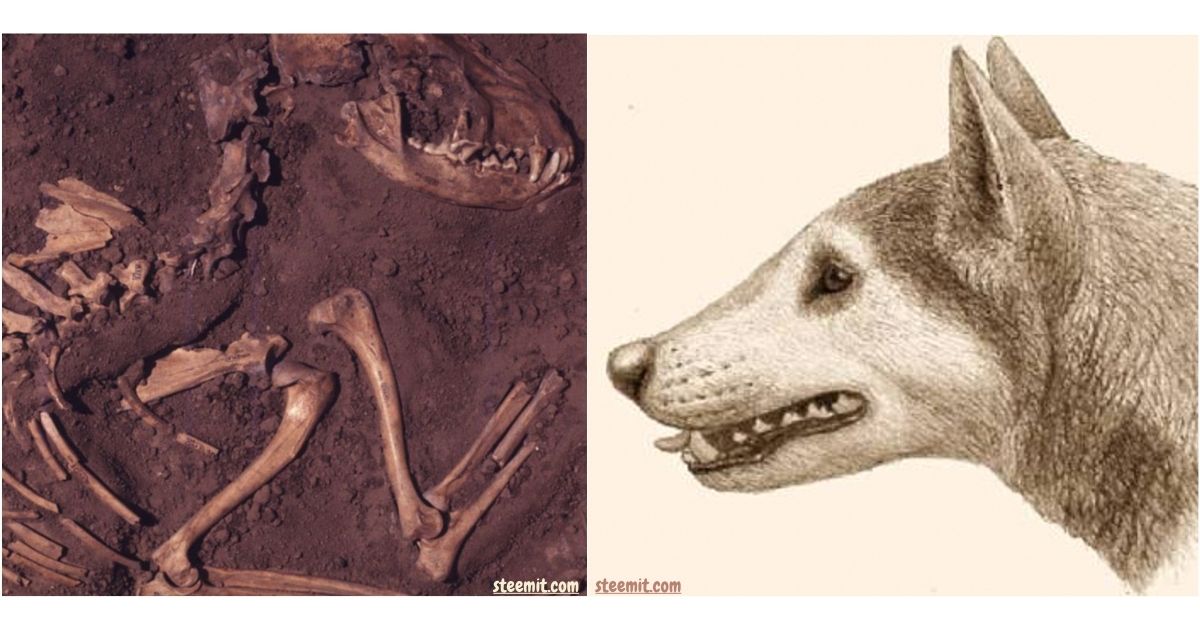
One of the most exciting applications of tech in this field is digital phenotyping. Once the genome of a 14,000-year-old specimen is sequenced, AI tools can predict physical traits based on genetic markers. Algorithms can determine coat color, ear shape, and even the metabolic capacity of the “first dog.” For instance, software analysis of the Bonn-Oberkassel dog (one of the oldest undisputed domestic dog remains) has allowed scientists to digitally render a 3D model of the animal, revealing a creature that possessed the structural framework of a wolf but the smaller teeth and braincase associated with early human-led selection. This blend of biology and CGI provides a window into the past that traditional fossils never could.
The Hardware of Discovery: Synchrotron Imaging and Carbon Dating 2.0
Beyond the code, the physical analysis of the “first dog” candidates has been revolutionized by high-end hardware. The technology used to examine these remains has moved from simple X-rays to particle accelerators, providing a level of detail that preserves the integrity of the precious, ancient samples.
3D Rendering and Structural Analysis of Fossil Remains
Micro-Computed Tomography (micro-CT) and Synchrotron imaging allow scientists to create 3D digital twins of ancient skulls. These scans are so high-resolution that they can reveal the internal structure of the inner ear or the density of the nasal cavity. By using Finite Element Analysis (FEA)—a software tool originally designed for engineering and aerospace—researchers can simulate the bite force and feeding mechanics of these “proto-dogs.” If the digital model shows a decreased bite force compared to a wolf, it serves as a “tech-verified” indicator that the animal had moved toward a diet provided by humans, marking its status as the first of its kind.
Accelerator Mass Spectrometry (AMS) and Precision Timeline Mapping
Determining which dog was “first” requires an incredibly precise clock. Traditional radiocarbon dating had a wide margin of error that often blurred the lines between different geological eras. Modern Accelerator Mass Spectrometry (AMS) has shrunk these error bars significantly. AMS tech counts the actual atoms of Carbon-14 in a sample, allowing for the dating of tiny fragments of bone or teeth with pinpoint accuracy. This hardware-driven precision has allowed scientists to place the “first dog” firmly in the period between 15,000 and 30,000 years ago, coinciding with the retreat of the glaciers and the technological advancement of human hunter-gatherer societies.
The Convergence of Tech and Biology: What the Data Tells Us
The synthesis of these technologies has led to a definitive conclusion: the “first dog” was not a single event, but a biological “re-branding” enabled by environmental pressures and human interaction. The data-driven narrative shows a transition that was as much about “behavioral tech” as it was about biology.
The Grey Wolf Divergence and the ‘Ghost’ Lineage
The most significant tech-enabled discovery in this field is the identification of a “ghost lineage.” Through statistical modeling of DNA, bioinformaticians discovered that the wolves that became the first dogs are now extinct. They were a specialized type of “megafauna wolf” that followed human populations to scavenge. The tech allows us to see that these animals underwent a “genetic bottleneck.” The data indicates a sharp decrease in genetic diversity as a small group of wolves became isolated from the wild population, eventually evolving into the domestic dog. This “bottleneck” is visible in the digital sequences as a series of homozygous regions, a clear sign of the controlled breeding (intentional or accidental) that defines domestication.
Ethical Implications and the Future of Synthetic Biology
As we perfect the technology to sequence and understand the first dog, we are entering the realm of “de-extinction” and synthetic biology. Using CRISPR-Cas9 gene-editing technology, some scientists suggest it may be possible to “reverse-engineer” a modern dog’s DNA to express the traits of the first proto-dogs. While currently confined to the realm of theoretical research and ethical debate, the tech that found the first dog is the same tech that could potentially recreate it. This intersection of ancient history and future biotechnology highlights the power of modern tools to not only explain our past but to potentially manipulate our biological future.
The journey to find the first dog has evolved from a hobby for naturalists into a high-stakes arena for data scientists and biotechnologists. By utilizing the full spectrum of modern technology—from the massive processing power required for genomic sequencing to the delicate algorithms of AI—we have finally begun to answer the ancient question of our origins. The first dog was more than just an animal; it was the first successful outcome of a long-term biological “merger” between two species, a process we can now witness through the lens of 21st-century tech.
aViewFromTheCave is a participant in the Amazon Services LLC Associates Program, an affiliate advertising program designed to provide a means for sites to earn advertising fees by advertising and linking to Amazon.com. Amazon, the Amazon logo, AmazonSupply, and the AmazonSupply logo are trademarks of Amazon.com, Inc. or its affiliates. As an Amazon Associate we earn affiliate commissions from qualifying purchases.