
The history of the Bible is often viewed through a theological or historical lens, yet at its core, it is a story of radical technological advancement. When we ask, “What was the first Bible version?” we are essentially asking about the first successful attempt to aggregate, standardize, and distribute a massive dataset across disparate geographic locations. From the transition of oral tradition to the invention of the codex, and from the mechanical revolution of the printing press to the era of Artificial Intelligence, the Bible has served as the primary catalyst for information technology for over two millennia.

In the modern tech landscape, we treat “versions” as software updates—iterations of a product designed for better performance or compatibility. The first Bible versions functioned in much the same way, pushing the boundaries of the “hardware” and “software” available at the time to ensure the survival and accessibility of the text.
The Hardware of Early Scripture: Before the Digital Cloud
Long before the cloud-based servers of YouVersion or the massive databases of the Vatican Library, the Bible faced a hardware problem. The first “versions” of biblical texts were not books in the sense we recognize today; they were scattered scrolls written on papyrus and animal skins.
The Transition from Scroll to Codex
The move from the scroll to the codex (the precursor to the modern book) was perhaps the most significant “hardware upgrade” in human history. Scrolls were linear access devices; to find a specific passage, a user had to unroll the entire document. This was time-consuming and inefficient for cross-referencing.
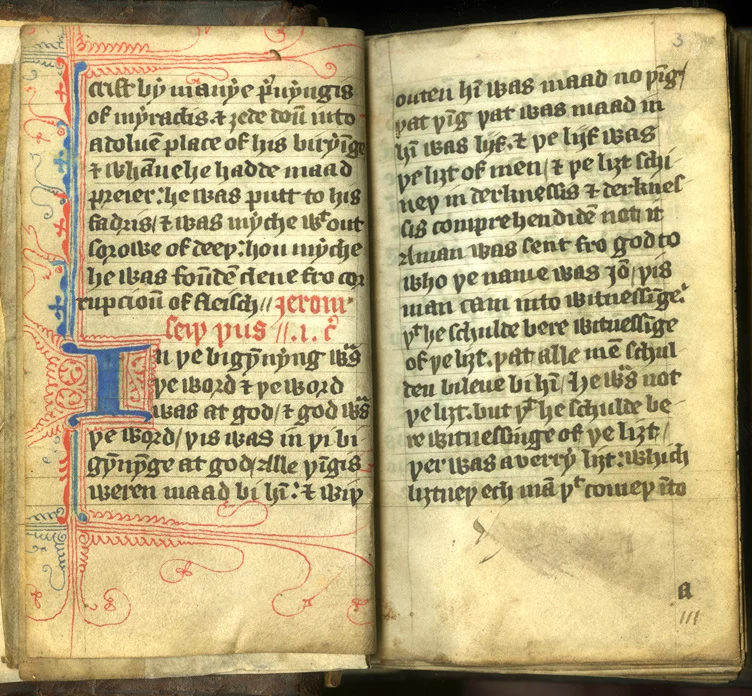
The codex, appearing around the 1st century, allowed for random access—the ability to flip directly to a specific page. This technological shift was championed by early Christians, who adopted the codex format far more rapidly than their secular counterparts. The first “Bible versions,” such as the Codex Sinaiticus and Codex Vaticanus (4th century), represent the “Alpha” versions of a consolidated data set, bound in a format that allowed for rapid search and retrieval.
Material Science: Vellum and the Preservation of Data
The durability of early Bible versions depended on the quality of the medium. Papyrus, while easy to produce, was fragile and susceptible to rot. The shift to vellum (specially treated animal skin) provided a more robust storage medium. This “hardware” was expensive—it is estimated that the Codex Sinaiticus required the skins of hundreds of animals—but the investment ensured that the data remained readable for over 1,600 years. In tech terms, this was the first high-durability “cold storage” for vital information.
The Gutenberg Revolution: The First Mass-Produced Operating System
If the codex was the hardware, the invention of the printing press in the 15th century was the introduction of the first mass-market operating system. Before Johannes Gutenberg, every version of the Bible was a “bespoke” product, hand-copied by scribes. This led to high costs and unavoidable human error (the “bugs” of the manuscript era).
The Impact of Moveable Type on Information Distribution
Gutenberg’s Bible, the first major book printed using mass-produced movable metal type in Europe, represented a paradigm shift in data distribution. For the first time, a “master version” could be replicated with 100% fidelity across thousands of copies. This was the birth of the standardized version. The tech behind Gutenberg’s press—combining ink, metallurgy, and the mechanics of a wine press—was the “disruptive technology” of the Renaissance, breaking the monopoly that elite institutions had over the flow of information.

Standardizing the Interface: The Latin Vulgate as a Global Protocol
The primary version Gutenberg printed was the Latin Vulgate. In the tech world, we use protocols (like HTTP or TCP/IP) to ensure different systems can talk to each other. The Latin Vulgate served a similar purpose for the Western world. It was the standardized language of scholars and the Church, a “Global Protocol” that ensured a priest in England and a scholar in Italy were working from the same dataset. However, as the user base expanded, there was a growing demand for “localization”—translating the interface into the “native code” of common languages like German, English, and French.
Digitizing the Sacred: Modern Tech and the Recovery of the First Versions
In the 21st century, the search for the “first version” of the Bible has moved from archaeological digs to high-tech laboratories. We are no longer limited to what the human eye can see on a faded piece of parchment.
Multi-Spectral Imaging and the Codex Sinaiticus
One of the most impressive feats of modern digital technology is the Codex Sinaiticus Project. Because the original leaves of this 4th-century Bible are scattered across four different countries, technology was required to “virtually” reunite them. Using multi-spectral imaging—a technology originally developed for satellite reconnaissance—researchers can capture images at different wavelengths of light. This allows them to see text that was erased or written over centuries ago (palimpsests), effectively “debugging” the manuscript to find the original layer of data.
Artificial Intelligence in Deciphering Fragmented Manuscripts
The Dead Sea Scrolls represent some of the oldest “Beta versions” of biblical texts, but they are often found in thousands of tiny, fragmented pieces. Manually piecing them together is a puzzle that would take lifetimes. Today, AI and machine learning algorithms are being used to analyze the handwriting, physical structure, and chemical composition of these fragments. These AI tools can suggest matches with a high degree of accuracy, accelerating the reconstruction of the earliest known versions of the Hebrew Bible.
The Mobile Era: Bible Apps and the New User Experience
The “versioning” of the Bible has now reached the software era. The Bible is no longer a static physical object but a dynamic, multi-platform application. This has changed how users interact with the text, introducing new considerations for UI (User Interface) and UX (User Experience).
From Print to Platform: The YouVersion Success Story
The YouVersion Bible app is a case study in digital scaling. With over 500 million downloads, it offers thousands of versions in over 1,500 languages. This is a massive leap from the Gutenberg era. The “appification” of the Bible allows for features that were once impossible: instant language switching, audio integration, and social sharing. In this context, the “first Bible version” is merely the foundation upon which an infinite number of personalized, localized skins can be built.
Data Security and the Ethics of Religious Personalization
As the Bible becomes a digital product, it also becomes subject to the challenges of the tech industry, including data privacy and algorithmic bias. Bible apps collect data on reading habits, highlighted verses, and search queries. For tech companies, this data is a goldmine for understanding user sentiment. However, it also raises questions about the “sanctity” of data. Is the version of the Bible you see being influenced by an algorithm designed to keep you engaged? As we move toward VR (Virtual Reality) and AR (Augmented Reality) versions of the Bible, the line between the ancient text and modern tech continues to blur.
Conclusion: The Infinite Versioning of the Word
When we trace the “first Bible version” from the ink-stained scrolls of the Levant to the high-resolution displays of our smartphones, we see a recurring theme: the medium defines the message’s reach. Each technological leap—the codex, the press, the internet, and AI—has served to make the text more accessible, more searchable, and more resilient.
The quest for the “first version” is no longer just a historical pursuit; it is a technological one. Through digital preservation and AI-driven reconstruction, we are arguably closer to seeing the “Original Source Code” of the Bible than readers were a thousand years ago. As we look to the future, the Bible will likely continue to be the primary test case for new information technologies, proving that while the “hardware” may change, the demand for high-quality, accessible data remains constant. In the world of tech, the Bible isn’t just a book—it is the world’s most successful, long-running legacy system, constantly updating for a new generation of users.
aViewFromTheCave is a participant in the Amazon Services LLC Associates Program, an affiliate advertising program designed to provide a means for sites to earn advertising fees by advertising and linking to Amazon.com. Amazon, the Amazon logo, AmazonSupply, and the AmazonSupply logo are trademarks of Amazon.com, Inc. or its affiliates. As an Amazon Associate we earn affiliate commissions from qualifying purchases.