
January 20, 2021, marked a significant juncture in American history, as President Joe Biden was inaugurated, ushering in a new political era. For investors and market watchers, this day was not just about political transition but also about its potential implications for the economy and financial markets. The Dow Jones Industrial Average (DJIA), often regarded as a barometer of the U.S. stock market and broader economic health, was under keen observation. On this pivotal day, the Dow not only avoided any inauguration-day jitters but actually demonstrated robust performance, closing higher as investors digested the change in leadership and looked ahead to a new set of policy priorities.
The market’s reaction on January 20, 2021, was a testament to a confluence of factors: the diminishing political uncertainty, the anticipation of further fiscal stimulus, and continued optimism regarding the global economic recovery propelled by vaccine rollouts. Far from a day of caution, it was a day where the market seemingly embraced the transition, setting a tone for what would be a record-breaking year for indices. Understanding the Dow’s performance on this specific date requires a deeper dive into the economic and political context that shaped investor sentiment.
A Day of Transition and Market Optimism
The inauguration of a new U.S. President is always a moment charged with anticipation, and January 20, 2021, was no exception. With a new administration taking the helm, markets tend to react to the perceived stability, policy direction, and the overall economic outlook projected by the incoming leadership. This particular inauguration followed a period of heightened political polarization and economic uncertainty due to the ongoing COVID-19 pandemic.
The Political Landscape on January 20, 2021
President Joe Biden’s inauguration signified a definitive shift from the Trump administration. The event itself, while steeped in tradition, carried immense weight for financial markets. Investors often prefer certainty, and the peaceful transfer of power, despite the turbulent preceding weeks, provided a sense of stability that could ease market anxieties. The incoming Biden administration had outlined an ambitious agenda focused on combating the pandemic, providing substantial economic relief, investing in infrastructure, and addressing climate change. These policy proposals were closely scrutinized for their potential impact on corporate earnings, consumer spending, and economic growth.
Many analysts anticipated that a more predictable and potentially more collaborative approach to governance could reduce some of the geopolitical and trade-related uncertainties that had occasionally roiled markets in previous years. Furthermore, the Democrats’ narrow control of both houses of Congress (though secured just weeks prior with the Georgia Senate runoffs) raised expectations for smoother passage of legislative initiatives, particularly concerning fiscal stimulus.
Initial Market Reaction and Sentiment
Leading up to inauguration day, markets had already been on an upward trajectory, fueled by expectations of robust fiscal support and accelerated vaccine distribution. On January 20th itself, the market opened cautiously but quickly found its footing. The absence of negative surprises and the smooth transition of power contributed to a positive sentiment. Investors were keen to gauge the tone of the new administration and any immediate policy signals. President Biden’s inaugural address, which emphasized unity and a commitment to tackling the nation’s challenges, was generally well-received.
The prevailing mood was one of cautious optimism, a belief that the new administration would prioritize economic recovery and stability. This sentiment translated into buying activity across various sectors, pushing the Dow and broader indices higher throughout the trading day. It underscored a fundamental characteristic of markets: their forward-looking nature, often pricing in anticipated events and policy outcomes long before they fully materialize.
Dissecting the Day’s Performance: Key Figures and Drivers
To truly understand what transpired with the Dow on January 20, 2021, it’s essential to look at the concrete numbers and the underlying factors that drove them. The day’s performance was not an isolated event but rather a reflection of broader economic trends and investor expectations.
The Closing Numbers
On January 20, 2021, the Dow Jones Industrial Average closed at 31,188.38, marking a gain of 257.86 points, or approximately 0.83%. This positive close was significant, representing a vote of confidence from investors in the midst of a historic political transition. It wasn’t merely a small uptick but a solid performance that solidified the market’s ongoing rally at the start of the year. This figure represented a new all-time high for the index at that point, signaling that the “January Effect” and broader market enthusiasm were firmly in play.
Factors Influencing the Market
Several key drivers contributed to the Dow’s strong showing on inauguration day:
- Stimulus Hopes: A primary catalyst was the heightened expectation for further fiscal stimulus under the Biden administration. President Biden had already outlined a comprehensive $1.9 trillion “American Rescue Plan” aimed at providing direct aid to households, bolstering unemployment benefits, and funding vaccine distribution. Investors largely viewed this as a significant injection into the economy, supporting consumer spending and corporate revenues, thereby mitigating the ongoing economic impact of the pandemic.
- Vaccine Rollout Optimism: The acceleration of COVID-19 vaccine distribution across the U.S. and globally continued to fuel hopes for an eventual return to normalcy. A successful vaccine rollout was seen as critical for reopening businesses, restoring travel, and revitalizing sectors hit hardest by the pandemic. This optimism translated into increased investor confidence in a robust economic recovery later in the year.
- Corporate Earnings Season: While January 20th wasn’t a heavy day for major earnings reports from Dow components, the broader Q4 2020 earnings season was just getting underway. Early reports and analyst expectations often set the tone. Generally, expectations were cautiously optimistic, with many companies demonstrating resilience despite the pandemic, particularly in tech and healthcare sectors. The anticipation of stronger forward guidance also played a role.
- Sectoral Performance: On this day, cyclical sectors, which tend to perform well during periods of economic expansion, generally saw positive movement. Industrials, financials, and materials, all well-represented within the Dow, benefited from the renewed optimism about economic growth and infrastructure spending. Technology stocks also continued their strong run, underpinned by robust demand for digital services and hardware.
Comparing to Broader Markets
The positive momentum wasn’t confined to just the Dow. Broader market indices also recorded gains on January 20, 2021:
- The S&P 500 rose by 52.94 points (1.39%) to close at 3,851.85.
- The Nasdaq Composite advanced by 239.95 points (1.97%) to reach 13,457.25.
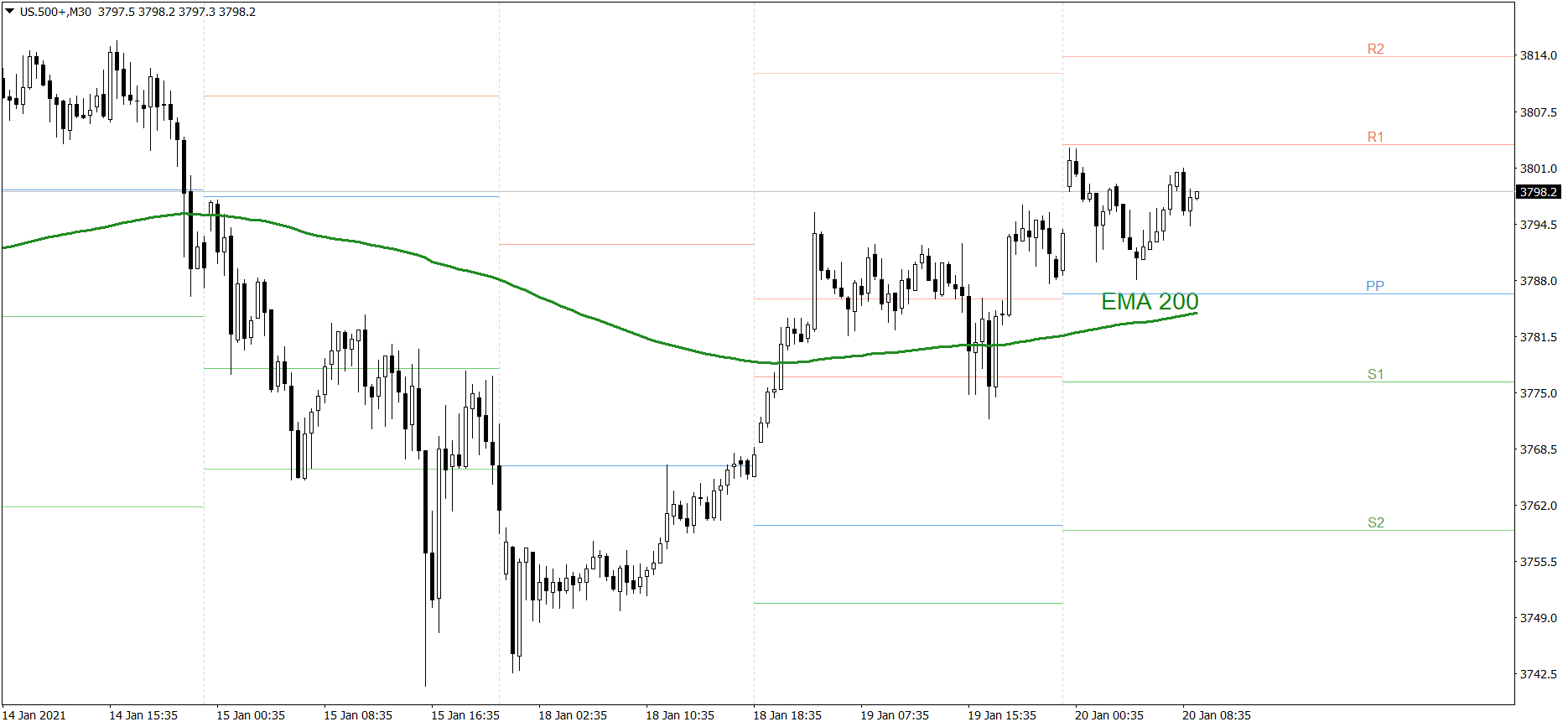
The outperformance of the S&P 500 and particularly the tech-heavy Nasdaq, compared to the Dow’s 0.83% gain, highlighted the ongoing strength of growth stocks and the broader market’s appetite for risk assets. All three major indices closing at record highs on inauguration day sent a clear message of market confidence in the face of political change.
Beyond the Numbers: Market Sentiment and Investor Psychology
The numerical performance of the Dow on January 20, 2021, tells only part of the story. Equally important is the underlying sentiment and investor psychology that shaped these movements. Markets are not just driven by data; they are also heavily influenced by perception, fear, greed, and the human interpretation of events.
The “Biden Bounce” Narrative
Following the market’s positive reaction, a narrative of a “Biden Bounce” began to emerge. This suggested that investors were either relieved by the end of the previous administration’s often unpredictable policy pronouncements or genuinely optimistic about the new administration’s approach to economic management. The anticipation of a more stable, predictable policy environment, coupled with the promise of significant fiscal spending, fostered a sense of enthusiasm. While some of the rally was a continuation of existing trends, the inauguration clearly did not trigger the kind of market anxiety that some had feared, instead providing an unexpected boost. This indicated that for many investors, the prospect of a more conventional and proactive government approach to economic challenges was a net positive.
Pre-Inauguration Volatility vs. Post-Inauguration Stability
The period leading up to January 20, 2021, had been marked by some volatility, particularly in the wake of the Capitol riot on January 6th, which raised concerns about political stability. However, as the inauguration approached and unfolded without incident, a sense of calm returned. The market’s ability to shake off these immediate concerns and focus on long-term prospects highlighted its resilience. The smooth transition, regardless of political leanings, often acts as a calming factor for investors, who prioritize order and predictability. The market’s performance on the 20th reflected a collective sigh of relief and a readiness to look forward.
Investor Expectations for the Future
Beyond immediate reactions, investors were setting their sights on the policy implications of the new administration for the months and years ahead. Expectations were high for:
- Infrastructure Spending: Significant investment in roads, bridges, and green energy infrastructure.
- Climate Initiatives: Policies aimed at transitioning to a clean energy economy, which could create opportunities for renewable energy companies.
- Healthcare Reforms: Potential changes to the Affordable Care Act and drug pricing.
- Corporate Tax Rates: One area of potential concern for some investors was the Biden administration’s stated intention to raise corporate tax rates. However, on January 20th, this concern was largely overshadowed by the immediate optimism surrounding stimulus and stability.
The overall sentiment was that the Biden administration would pursue policies that, while potentially having varying impacts on different sectors, would generally aim to stimulate economic growth and reduce inequality. This forward-looking perspective contributed significantly to the positive market action.
The Dow’s Trajectory in Early 2021 and its Significance
The performance of the Dow on January 20, 2021, was not an isolated incident but rather a crucial data point within a larger, upward trajectory that characterized the beginning of 2021. This day helped solidify the market’s momentum and offered insights into the prevailing economic forces at play.
A Record-Breaking Start to the Year
The Dow’s close at a new high on January 20th was emblematic of a record-breaking start to the year for U.S. equities. The index had already crossed the 31,000 mark for the first time just weeks prior. This strong performance in early 2021 was a continuation of the rally that had begun in late 2020, driven by vaccine news, robust corporate earnings, and expectations of ongoing monetary and fiscal support. The inauguration day simply added another layer of positive reinforcement to this ongoing trend, indicating that political transition was unlikely to derail the market’s enthusiasm.
The Dow as an Economic Barometer
The Dow Jones Industrial Average, comprising 30 large, publicly owned companies trading on the Nasdaq and the New York Stock Exchange, is often seen as a bellwether for the broader U.S. economy. Its strong performance on January 20th, a day of significant political change, conveyed a message of resilience and optimism about the country’s economic future. When the Dow rises, it often reflects investor confidence in the profitability of major American corporations and the overall health of the industrial and financial sectors. Its climb underscored the market’s belief that the U.S. economy, despite pandemic challenges, was on a path to recovery and growth.

Long-term Implications
The events of January 20, 2021, and the Dow’s positive reaction, set a tone for the market and economy for much of the subsequent year. It signaled that:
- Fiscal Policy Would Be Aggressive: The market was pricing in substantial government spending to support the economy.
- Vaccine Rollout Was Key: Economic reopening was contingent on successful vaccine deployment, which the market largely expected to happen.
- Political Uncertainty Diminished: The orderly transfer of power reduced a significant source of market apprehension.
This confluence of factors contributed to a sustained bull run through 2021, with the Dow, S&P 500, and Nasdaq all reaching multiple new record highs throughout the year. The inauguration day performance served as a strong indicator of the market’s forward momentum and its capacity to look past short-term uncertainties toward long-term growth prospects.
In conclusion, January 20, 2021, saw the Dow Jones Industrial Average close at 31,188.38, gaining 0.83%. This robust performance on Inauguration Day was driven by a combination of diminished political uncertainty, high expectations for a new round of fiscal stimulus from the Biden administration, and continued optimism regarding the global economic recovery fueled by successful vaccine rollouts. Far from a day of market trepidation, it was a testament to investor confidence and set a positive precedent for what would be a historically significant year for the stock market.
aViewFromTheCave is a participant in the Amazon Services LLC Associates Program, an affiliate advertising program designed to provide a means for sites to earn advertising fees by advertising and linking to Amazon.com. Amazon, the Amazon logo, AmazonSupply, and the AmazonSupply logo are trademarks of Amazon.com, Inc. or its affiliates. As an Amazon Associate we earn affiliate commissions from qualifying purchases.