
While the date of D-Day—June 6, 1944—is etched into the annals of global history as a pivotal moment of the Second World War, its significance extends far beyond the tactical maneuvers of infantry and paratroopers. From a technical and engineering perspective, D-Day represents one of the most ambitious “system integrations” in human history. Operation Overlord was not merely a military invasion; it was a massive technological undertaking that pushed the boundaries of 1940s innovation and laid the groundwork for modern computing, logistics software, and digital surveying.

Understanding D-Day today requires looking through the lens of technology. We must examine the hardware that facilitated the landings, the encryption breakthroughs that protected the secret of the date, and the modern digital tools currently used to preserve this historical site for future generations.
The Engineering Marvels of Operation Overlord
The success of June 6, 1944, was contingent upon solving unprecedented engineering challenges. The Allied forces faced a “cold start” problem: how to land hundreds of thousands of troops and heavy machinery on a fortified coastline without a functional port. This led to the development of several groundbreaking technological solutions that mirrored modern modular design and rapid prototyping.
Mulberry Harbors: The First Modular Infrastructure
One of the most significant engineering feats of D-Day was the creation of Mulberry Harbors. Since the Allies could not rely on capturing a deep-water port early in the invasion, they decided to bring their own. These were two massive artificial, prefabricated harbors towed across the English Channel in sections and assembled on the Normandy coast.
Technically, these harbors were a triumph of civil engineering. They consisted of “Phoenix” breakwaters (massive concrete caissons), “Whale” floating roadways, and “Spud” piers that could move up and down with the tide. This modular approach to infrastructure allowed for the offloading of thousands of vehicles per day. Today, we see the legacy of this design in modular data centers and rapid-deployment disaster relief structures.
PLUTO: The Pipe-Line Under the Ocean
Fuel is the lifeblood of any mechanized operation. To solve the logistical nightmare of transporting fuel across the sea, engineers developed PLUTO (Pipe-Line Under The Ocean). This was an underwater pipeline system designed to deliver fuel directly from the United Kingdom to the Normandy beachhead.
The technical challenge was creating a flexible yet durable pipe that could withstand the pressure of the English Channel. This resulted in two designs: the “HAIS” cable (resembling a submarine telegraph cable) and the “HAMEL” pipe (steel pipe wound onto giant floating drums). This precursor to modern undersea fiber-optic and oil pipelines demonstrated the feasibility of long-distance underwater resource transmission.
Specialized Hardware: Hobart’s Funnies
The invasion also saw the deployment of “Hobart’s Funnies”—a series of specialized tanks modified for specific technical tasks. These included the “Crocodile” (a flame-throwing tank), the “Crab” (a mine-clearing flail tank), and the “AVRE” (Armoured Vehicle Royal Engineers) designed to bridge gaps and destroy concrete fortifications. This era of specialized hardware development paved the way for modern robotics and autonomous vehicles used in hazardous environments.
Information Technology and the Battle of Wits
Long before the first boot hit the sand on June 6, a silent war was being fought in the realm of information technology. The “D-Day” of codebreaking occurred daily at Bletchley Park, where the precursors to modern computing were being developed to crack the German Enigma and Lorenz ciphers.
The Colossus and the Birth of Digital Computing
While the Enigma machine is more famous, it was the Lorenz cipher—used for high-level German strategic communications—that required a new leap in technology. To crack it, British engineers and mathematicians, including Tommy Flowers and Max Newman, developed the Colossus.
The Colossus is widely regarded as the world’s first programmable, electronic, digital computer. Using over 1,500 vacuum tubes, it allowed codebreakers to find the settings for the Lorenz machine in hours rather than weeks. The technical architecture of the Colossus—parallel processing and binary logic—is a direct ancestor to the silicon chips that power our world today. Without this technological edge, the Allies might never have been certain that their deception plans for June 6 were succeeding.
Operation Bodyguard: Data Deception at Scale
D-Day was as much a triumph of “spoofing” as it was of force. Operation Bodyguard was a massive deception campaign designed to mislead German intelligence about the date and location of the invasion. This involved the use of “Double Cross” agents, fake radio traffic (signals intelligence deception), and “Rupert” dummy paratroopers.
In modern cybersecurity terms, this was a massive social engineering and disinformation campaign. The Allies created a “virtual army” (the First U.S. Army Group) using inflatable tanks and decoy radio stations. This early form of signal spoofing highlights the importance of data integrity; the German high command made strategic decisions based on “noisy” and false data, a vulnerability that remains a central concern in modern digital defense.

Digital Archaeology: Preserving June 6 with Modern Tech
As the physical remains of D-Day—the bunkers, the shipwrecks, and the mulberry sections—succumb to time and erosion, technology has stepped in to preserve the site. Digital archaeology and high-tech surveying are now the primary tools for historians and researchers.
LIDAR and 3D Mapping of the Atlantic Wall
LIDAR (Light Detection and Ranging) has revolutionized how we view the Normandy landscape. By using laser pulses to create high-resolution maps, researchers can “see” through vegetation to identify forgotten trenches, bomb craters, and defensive positions. This technology creates a digital twin of the battlefield, allowing historians to analyze the terrain exactly as it was on June 6, 1944.
Furthermore, photogrammetry—the process of taking thousands of high-resolution photos to create a 3D model—is being used to document every crack and bolt of the remaining coastal batteries. These 3D assets are not only for archives; they are being integrated into educational platforms and digital museums worldwide.
Submarine Drones and Multibeam Sonar
The English Channel holds a graveyard of D-Day history, with hundreds of ships and tanks resting on the seabed. Modern underwater tech, including Autonomous Underwater Vehicles (AUVs) and multibeam sonar, has mapped the entire seafloor of the landing zones.
This technical survey has revealed the exact locations of sunken “DD” (Duplex Drive) tanks and landing craft that failed to reach the shore. The data collected provides a forensic look at the mechanical failures and logistical hurdles faced during the initial waves of the invasion, offering a data-driven narrative that complements veteran testimonies.
The “D-Day” Metaphor in Modern Tech Infrastructure
In the professional tech world, the term “D-Day” is often used to describe the launch date of a massive, business-critical project. Whether it is a global cloud migration, the release of a transformative AI model, or the deployment of a new operating system, the parallels to the June 6 operation are striking.
DevOps and Strategic Deployment
Modern DevOps practices mirror the logistical planning of Operation Overlord. A major software release requires “blue-green” deployment strategies, meticulous version control, and contingency planning. Just as the Allies had a “window” of favorable weather and tides on June 6, tech companies have “release windows” where traffic is low and stability is high.
The concept of “site reliability” and “fault tolerance” can be traced back to the redundancies built into the D-Day landings. If one beachhead failed, others were reinforced. If one mulberry harbor was destroyed by a storm (as happened to the American harbor at Omaha Beach), the other was adapted to handle the load. This resilient system architecture is a cornerstone of modern enterprise tech.
The Role of Real-Time Analytics
On the morning of June 6, commanders were forced to make decisions with delayed information. Today, “D-Day” scenarios in tech utilize real-time analytics and monitoring dashboards (like Grafana or Datadog) to observe system health as a product goes live. We have moved from the “fog of war” to the “clarity of data,” yet the pressure of a high-stakes launch remains functionally similar. The date of June 6 serves as a historical reminder of the importance of preparation, synchronization, and the ability to pivot when the “hardware” meets the “reality” of the environment.
The Future of Commemoration: VR and AI
As we move further away from 1944, the tech industry is developing new ways to keep the memory of D-Day alive. We are entering an era where the date of D-Day is not just a line in a textbook, but an immersive experience.
Virtual Reality (VR) and Historical Immersion
VR technology allows users to stand on the sands of Omaha Beach or jump from a C-47 transport plane. By combining historical data, 3D scans of the terrain, and spatial audio, VR creates an empathetic link to the past. These digital experiences are becoming essential tools for education, providing a sense of scale and intensity that traditional media cannot replicate.
AI-Driven Narrative Preservation
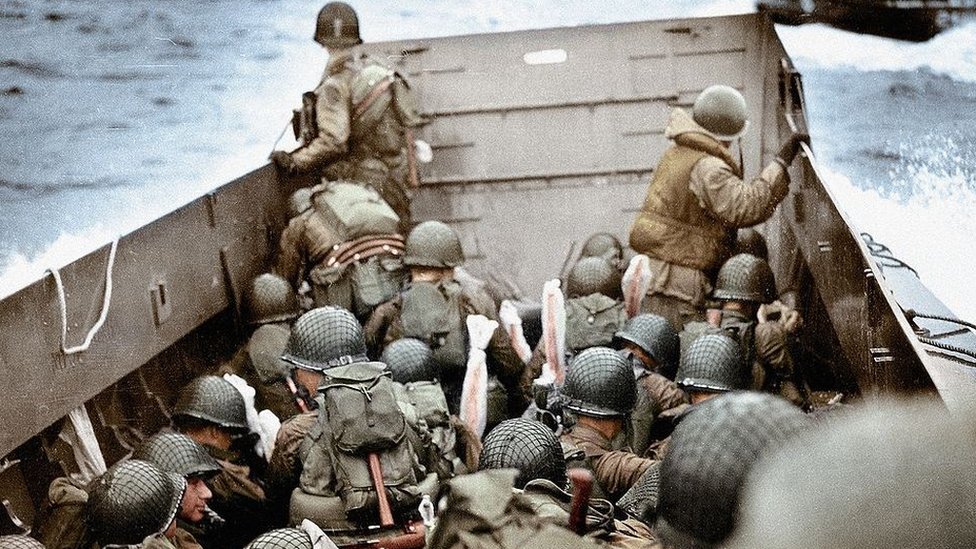
Artificial Intelligence is being used to restore and colorize archival footage from June 6, making the events feel more contemporary and relatable. More importantly, Natural Language Processing (NLP) is being used to index and search thousands of hours of oral histories from veterans. AI can identify patterns in these accounts, helping historians map specific events to geographical coordinates with high precision.
The date of D-Day—June 6, 1944—stands as a testament to what can be achieved when human ingenuity, industrial capacity, and technological innovation are aligned toward a singular goal. From the first digital computers at Bletchley Park to the LIDAR scans of today, technology remains the primary lens through which we understand, preserve, and honor the legacy of this momentous day. In the tech world, June 6 is more than a date; it is the ultimate case study in complex systems, high-stakes engineering, and the enduring power of information.
aViewFromTheCave is a participant in the Amazon Services LLC Associates Program, an affiliate advertising program designed to provide a means for sites to earn advertising fees by advertising and linking to Amazon.com. Amazon, the Amazon logo, AmazonSupply, and the AmazonSupply logo are trademarks of Amazon.com, Inc. or its affiliates. As an Amazon Associate we earn affiliate commissions from qualifying purchases.