
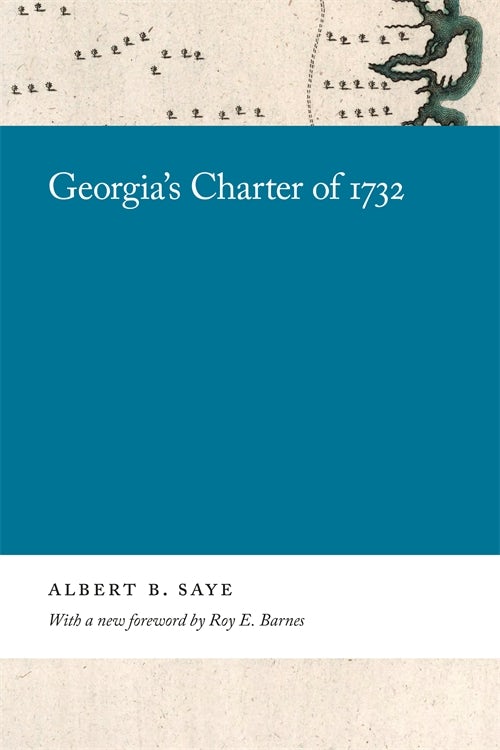
The Charter of 1732 is often remembered in history books as the founding legal document of the colony of Georgia. However, from the perspective of business finance and economic strategy, it represents one of the most sophisticated social enterprise models of the 18th century. Granted by King George II to a group of twenty-one “Trustees,” the charter was not merely a territorial grant; it was a complex financial instrument designed to solve a specific set of economic and social problems facing the British Empire.
By analyzing the Charter of 1732 through a financial lens, we can see how the British government and private philanthropists attempted to create a self-sustaining economic engine that balanced humanitarian goals with strict mercantilist ROI (Return on Investment).

The Venture Capital of the 18th Century: Funding a Social Enterprise
Unlike many previous colonial ventures, such as the Virginia Company or the Massachusetts Bay Company, the Georgia project under the Charter of 1732 was structured as a non-profit corporation. The Trustees, led by James Oglethorpe, were prohibited from owning land or making a personal profit from the colony. This unique corporate structure was an early precursor to modern social impact investing, where the “returns” are measured in social stability and systemic economic shifts rather than immediate dividends.
A Public-Private Partnership
The funding of the Georgia colony was a pioneering example of a public-private partnership. The Trustees actively lobbied the British Parliament for grants, marking the first time the British government directly subsidized the establishment of a colony. Between 1733 and 1752, Parliament contributed roughly £130,000 to the venture. This capital was supplemented by private donations from wealthy philanthropists who viewed the colony as a “charitable trust” designed to provide a “fresh start” for the “worthy poor” and debt-ridden citizens of London.
The Debt Relief Mechanism
From a personal finance perspective, the Charter of 1732 served as an experimental bankruptcy discharge mechanism. At the time, London’s debtors’ prisons were overflowing, creating a drain on the national economy and a waste of human capital. The Trustees proposed a system where this “idle” labor could be converted into productive “human capital” by relocating it to the American frontier. The Charter provided the legal framework to transform a liability (the incarcerated debtor) into an asset (a land-owning militiaman and farmer).
Risk Management and Defense
The financial logic of the Charter also extended to national security. Georgia was designed as a “buffer colony” to protect the valuable assets of South Carolina from Spanish Florida and French Louisiana. In financial terms, the cost of establishing Georgia was a premium paid on an insurance policy to protect the lucrative rice and indigo exports of the Carolinas. By investing in a defensive perimeter, the British Crown was practicing a form of geopolitical risk management.
Economic Objectives: Diversifying the British Imperial Portfolio
The Charter of 1732 was underpinned by the prevailing economic theory of the time: mercantilism. The goal was to make the British Empire a self-sufficient trade bloc, reducing the outflow of gold and silver to foreign rivals like France and Italy. The economic mandates written into the Trustees’ policies were specific, ambitious, and focused on high-value commodities.
The Silk and Wine Mandate
The Trustees envisioned Georgia as a producer of exotic goods that Britain currently had to import from the Mediterranean. Every land grant under the Charter came with a specific “performance clause”: settlers were required to plant a certain number of white mulberry trees for every ten acres of land. These trees were the primary food source for silkworms. The financial goal was to break the Italian monopoly on silk production. Similarly, the Trustees hoped the climate would support viticulture (wine production), another major import expense for the British treasury.
Strategic Resource Diversification
By incentivizing the production of silk, wine, and olive oil, the Charter sought to diversify the colonial portfolio. While the Northern colonies produced timber and fur, and the Southern colonies produced tobacco, Georgia was intended to be a specialized production zone for luxury goods. This specialization was a calculated move to increase the “Alpha” of the British trade balance—generating higher margins on domestic products that were currently commanding high prices on the global market.
Labor and Productivity
To ensure that the colony remained a “worker’s colony” rather than a “landlord’s colony,” the Trustees initially banned large-scale land accumulation. The goal was to maximize the number of independent, productive households. By limiting land grants (typically 50 acres for those on charity and up to 500 for those paying their own way), the Charter aimed to prevent the concentration of wealth and ensure a high density of able-bodied men available for defense and intensive farming.
Financial Governance and the Trustee System
The governance structure established by the Charter of 1732 was highly centralized and experimental. Because the colony was a “Trust,” the settlers had no legislative assembly and little control over their own financial laws for the first twenty years. This “top-down” management style was designed to protect the integrity of the economic experiment, but it created significant friction with the “human capital” on the ground.
Land Tenure and the “Tail-Male” System
One of the most controversial financial aspects of the Charter was the land tenure system. Land was granted in “tail-male,” meaning it could only be inherited by a male heir. If a family had no sons, the land reverted to the Trust. From a modern estate planning perspective, this was a nightmare for settlers. The Trustees implemented this to ensure that every plot of land supported a male soldier capable of defending the border. However, this restriction reduced the “collateral value” of the land; settlers could not sell or mortgage their property, which severely limited their access to credit and liquid capital.
The Prohibition of Slavery and Liquor
Unlike its neighbor South Carolina, the Georgia colony under the Trustees initially banned the importation of enslaved labor and “spirituous liquors.” While often viewed through a moral lens, these were primarily economic decisions. The Trustees believed that slavery would make the “worthy poor” lazy and unable to compete, effectively devaluing white labor. Furthermore, they feared that large plantations would lead to a sparse population, making the colony vulnerable to attack. The ban on rum was a productivity measure, intended to keep the labor force sober and focused on the grueling task of clearing the wilderness.
Regulatory Oversight and Reporting
The Trustees were required by the Charter to provide annual financial reports to the British government. This level of transparency was unusual for the era and reflected the colony’s status as a public investment. Every shilling spent on transport, tools, and provisions had to be accounted for. This rigorous accounting ensured that the Parliamentary grants were used specifically for the “improvement” of the colony, though it also created a bureaucratic bottleneck that often slowed down the colony’s response to market changes.
Legacy and Loss: The Fiscal Impact of the Charter’s Expiration
The Charter of 1732 was set to expire after 21 years, at which point the colony would revert to the Crown as a Royal Colony. However, the economic experiment met with significant challenges long before the two decades were up. The transition from a Managed Trust to a Royal Colony provides a fascinating case study in market forces vs. central planning.
The Failure of the Silk Experiment
Despite the mandates, Georgia never became the silk capital of the world. The climate was too volatile for the silkworms, and the labor-intensive nature of silk production could not compete with established Mediterranean markets. From a business perspective, the Trustees had failed to perform a proper “market feasibility study.” They invested heavily in a “product” that had no natural competitive advantage in the local environment.
The Rise of the “Malcontents”
A group of settlers known as the “Malcontents” began to lobby against the Charter’s restrictions. They argued that the ban on slavery and the limitations on land ownership made it impossible for Georgia to be profitable. They looked at the massive wealth being generated in South Carolina through rice plantations and realized that the Charter’s “social enterprise” model was putting them at a competitive disadvantage. This led to a “capital flight” of sorts, as many settlers moved across the border to more business-friendly jurisdictions.
Transition to a Royal Colony
In 1752, a year before the Charter was officially set to expire, the Trustees surrendered their control to the King. The financial structure of the colony shifted immediately. Slavery was legalized, land could be held in “fee simple” (allowing for sale and mortgage), and an assembly was formed to levy taxes. The “Social Trust” model was replaced by a traditional “Plantation Economy.” While Georgia finally became profitable in a traditional sense, the original vision of a colony for the “worthy poor” was liquidated in favor of high-yield agricultural exports.

Conclusion: Lessons from the 1732 Model
The Charter of 1732 remains a landmark document in the history of economic thought. It was a bold attempt to use corporate structure and government funding to solve complex socio-economic problems. While its specific industrial goals (silk and wine) failed and its restrictive land and labor laws were eventually overturned by market pressures, the Charter demonstrated the power—and the limitations—of using business frameworks to drive social change. For modern entrepreneurs and policymakers, the story of the Georgia Charter serves as a reminder that even the most well-funded and strategically planned ventures must eventually reconcile with the realities of the global marketplace.
aViewFromTheCave is a participant in the Amazon Services LLC Associates Program, an affiliate advertising program designed to provide a means for sites to earn advertising fees by advertising and linking to Amazon.com. Amazon, the Amazon logo, AmazonSupply, and the AmazonSupply logo are trademarks of Amazon.com, Inc. or its affiliates. As an Amazon Associate we earn affiliate commissions from qualifying purchases.