
For decades, the “Cash 4” has been a staple of state-run lotteries and local gaming cultures. While it may seem like a simple game of chance, it represents a significant intersection of mathematical probability, consumer psychology, and personal finance. At its core, Cash 4 is a daily draw game where players select a four-digit number ranging from 0000 to 9999. Despite its simplicity, the game has evolved through various technological eras and remains a primary driver of revenue for state gaming commissions and a point of fascination for those looking to turn a small sum into a significant windfall.

To understand what the Cash 4 was—and is—one must look beyond the colored balls and televised draws. It is a financial instrument of high risk and high reward, often serving as an entry point for individuals into the world of speculative gaming. In the context of personal finance, it occupies a unique space where “hope” is the primary commodity being sold.
The Evolution and Structure of Cash 4 Games
The Cash 4 format emerged as a progression from the traditional three-digit “Pick 3” games that gained popularity in the mid-20th century. By adding a fourth digit, gaming commissions were able to offer significantly higher top prizes, moving from the typical $500 payout of a Pick 3 game to the $5,000 standard of a Cash 4 “Straight” play.
How the Game Functions
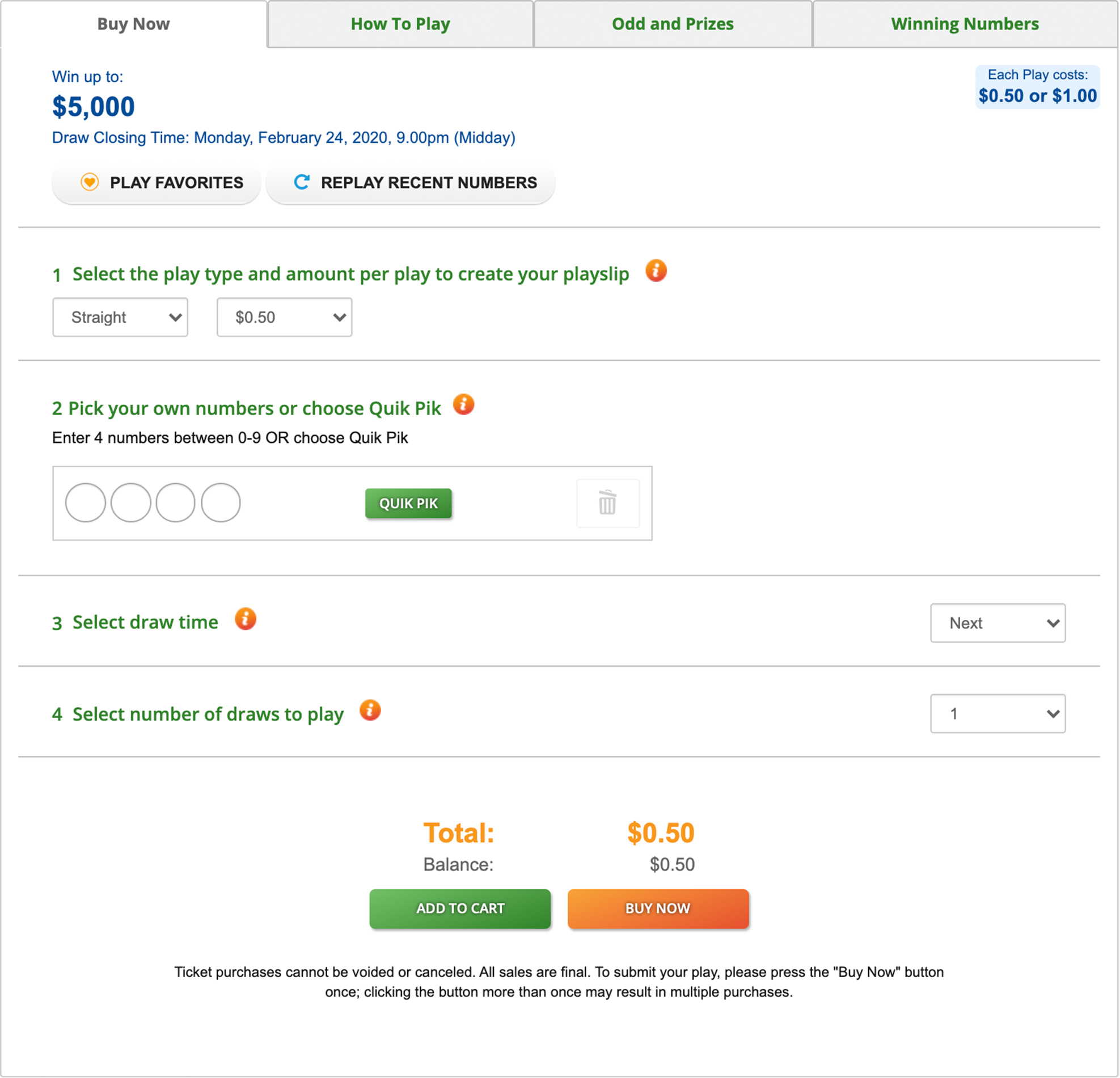
The mechanics of Cash 4 are deceptively straightforward. A player chooses four numbers, each from 0 to 9. These numbers are then drawn daily—sometimes twice daily—using either a mechanical ball machine or a computerized Random Number Generator (RNG). The player can choose various ways to bet on these numbers, which alters both the odds and the potential payout.
The most common play types include:
- Straight: The player must match the numbers in the exact order drawn.
- Box: The player wins if their numbers match the draw in any order.
- Straight/Box: A combination bet where the player splits their wager between the two formats.
- Combo: A play that covers every possible straight combination of the selected numbers.
The Digital Shift and Accessibility
Historically, Cash 4 was played exclusively at physical retail locations—convenience stores, gas stations, and dedicated kiosks. However, the modern financial landscape has shifted these games into the digital realm. Many states now allow players to purchase tickets via mobile apps, integrating the game into the broader “fintech” experience of the average consumer. This shift has increased the frequency of play and made it easier for individuals to track their spending and winnings, though it also lowers the barrier to entry for those who might otherwise avoid the hassle of a physical purchase.
The Mathematics of the Draw: Probability vs. Payout
From a financial perspective, the most critical aspect of Cash 4 is the discrepancy between the probability of winning and the actual payout. Understanding this “house edge” is essential for anyone analyzing the game through the lens of investment or personal finance.
Analyzing the Odds
In a standard Cash 4 game, there are exactly 10,000 possible combinations (from 0000 to 9999). Therefore, the mathematical probability of hitting a “Straight” win is exactly 1 in 10,000. If the game were “fair” in a strictly mathematical sense—meaning no house edge—a $1 bet should return $10,000.
However, the standard payout for a $1 Straight play in most jurisdictions is $5,000. This means the state retains 50% of the prize pool for administrative costs, education funding, and profit. This 50% “takeout rate” is significantly higher than the house edge found in casino games like blackjack or roulette, making Cash 4 one of the most expensive forms of speculative gaming available to the public.
The Box Play Variance
When a player chooses a “Box” play, the odds improve, but the payout decreases proportionally. For example, if a player chooses “1234,” there are 24 possible permutations of those four unique digits. The odds of winning a 24-way box are 24 in 10,000 (or 1 in 416.67). The payout for this is typically around $200 for a $1 bet. While the frequency of winning increases, the fundamental reality of the 50% house edge remains constant across all play types.
Financial Management of a Windfall
While the odds are statistically against the player, thousands of people do win the top prize every year. When a player wins $5,000 or $10,000 on a Cash 4 ticket, it presents a unique financial opportunity—and a set of risks. How this “found money” is handled can have a lasting impact on an individual’s financial health.
Immediate Steps and Tax Implications
The first reality of a Cash 4 win is that the nominal prize is rarely the amount that ends up in the winner’s bank account. In the United States, gambling winnings are considered taxable income. For prizes over a certain threshold (usually $600 or $5,000 depending on the state), the lottery commission may withhold federal and state taxes immediately. Even if they do not withhold the funds at the time of payout, the winner is responsible for reporting that income on their annual tax return. Failure to account for a 20% to 37% tax hit can lead to significant financial distress during tax season.
Debt Reduction and Asset Allocation
For many, a $5,000 win represents several months of income. From a wealth-management perspective, the most effective use of these funds is often the elimination of high-interest debt. Using a windfall to pay off credit card balances with 20%+ APR provides a guaranteed “return on investment” that far exceeds what one could earn in a savings account or the stock market.
If the winner is debt-free, the next logical step is the establishment of an emergency fund. Financial experts typically recommend having three to six months of living expenses in a liquid account. A Cash 4 win can serve as the “seed money” for this fund, providing a safety net that prevents future debt.
The Psychology of Small-Stakes Gaming
Why do people continue to play Cash 4 despite the high house edge? The answer lies in behavioral economics and the psychology of small-stakes gaming. For many, the $1 or $2 spent on a daily ticket is viewed not as an investment, but as an “entertainment expense” with a non-zero chance of a life-changing return.
The “Hope Factor” and Budgeting
In personal finance, it is often argued that every dollar should have a purpose. However, human beings are not always rational actors. The “hope factor” provided by a lottery ticket can offer a psychological boost during difficult economic times. The danger arises when this “entertainment” spending bleeds into essential categories like rent, utilities, or groceries.
A healthy approach to Cash 4, if one chooses to play, is to categorize it within a “discretionary spending” budget. If an individual has a set amount of money for coffee, movies, or hobbies, and chooses to use a portion of that for a daily draw, the financial impact is localized. The problem occurs when the “Sunk Cost Fallacy” takes over—the idea that because one has lost money in the past, a win must be “due.”
Avoiding the Sunk Cost Fallacy
The “gambler’s fallacy” is particularly prevalent in Cash 4. Players often track “cold numbers” (numbers that haven’t been drawn in a while) or “hot numbers” (numbers that appear frequently). From a mathematical standpoint, every draw is an independent event. The probability of the number “1111” being drawn today is exactly the same as it was yesterday, regardless of whether it appeared then. Recognizing this independence is a hallmark of financial literacy.
Integrating Windfalls into a Long-Term Strategy
The ultimate goal of any financial windfall, whether it comes from a lottery win, a bonus at work, or an inheritance, should be to move the individual closer to financial independence. Cash 4 winnings, while smaller than “Powerball” jackpots, are more common and thus more likely to be integrated into a household’s annual budget.
Turning Found Money into Compound Interest
The most powerful tool in personal finance is compound interest. If a $5,000 Cash 4 win is placed into a diversified index fund rather than spent on consumer goods, it has the potential to grow significantly over time. At an average annual return of 7%, that $5,000 would grow to nearly $20,000 in 20 years without any additional contributions. This perspective shifts the win from a “spending spree” to a “legacy builder.”
The Importance of Liquidity
Another vital lesson from the Cash 4 phenomenon is the value of liquidity. One of the reasons people play daily draws is the immediate need for cash. This highlights a broader issue in personal finance: the lack of accessible liquid assets for the average household. By treating winnings as a tool to build liquidity rather than a reason to increase lifestyle inflation, winners can protect themselves against the very volatility that leads people to play the lottery in the first place.
In conclusion, “What was the Cash 4?” is a question that can be answered through many lenses. To the state, it is a revenue stream. To the mathematician, it is a study in probability and house edges. To the player, it is a daily ritual of hope. But to the financially savvy individual, it is a reminder of the importance of disciplined budgeting, the power of compound interest, and the necessity of managing every dollar—whether earned or won—with a long-term vision for stability and growth.
aViewFromTheCave is a participant in the Amazon Services LLC Associates Program, an affiliate advertising program designed to provide a means for sites to earn advertising fees by advertising and linking to Amazon.com. Amazon, the Amazon logo, AmazonSupply, and the AmazonSupply logo are trademarks of Amazon.com, Inc. or its affiliates. As an Amazon Associate we earn affiliate commissions from qualifying purchases.