
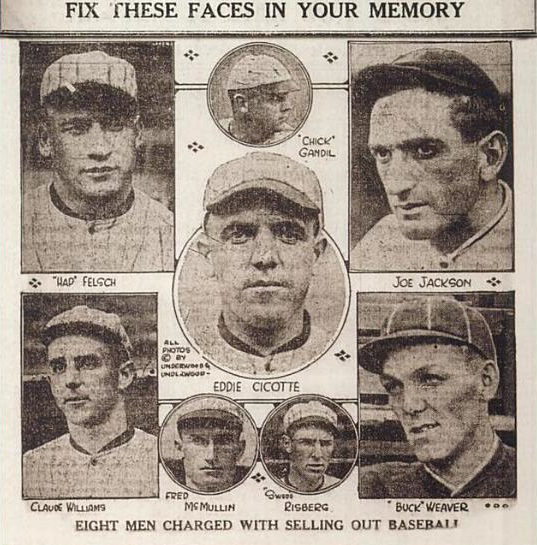
The 1919 World Series remains one of the most infamous moments in the history of professional sports. Known as the “Black Sox Scandal,” it involved eight members of the Chicago White Sox who were accused of throwing the World Series against the Cincinnati Reds in exchange for money from a gambling syndicate. While often viewed through a lens of sports history or moral failing, the Black Sox Scandal is, at its core, a fascinating case study in business finance, labor economics, and the catastrophic risks of mismanaged human capital.
By analyzing the financial motivations of the players, the “penny-pinching” corporate culture of the White Sox organization, and the massive gambling markets that incentivized corruption, we can derive critical lessons for modern business leaders and investors regarding the preservation of market integrity.
The Financial Landscape of 1919 Baseball
To understand why the Black Sox Scandal happened, one must first understand the economic environment of professional baseball in the early 20th century. Unlike the multi-million dollar contracts of today, players in 1919 were legally and financially tethered to their organizations through the “reserve clause.”
The Wage Gap: Underpaid Athletes in a High-Revenue Industry
The reserve clause essentially gave team owners a lifetime option on a player’s services. Players had no bargaining power; they could either play for the salary offered or not play at all. During this era, the Chicago White Sox were one of the most profitable teams in the league, yet their payroll did not reflect their success.
Star players like Shoeless Joe Jackson and pitcher Eddie Cicotte were paid significantly less than their peers on other teams. This created a profound sense of economic resentment. In the world of business finance, this is known as a failure to align employee compensation with the value generated. When the gap between the wealth produced by a worker and the compensation received becomes too wide, the worker becomes a “flight risk” or, in this case, susceptible to outside financial influence.
The Comiskey “Penny-Pinching” Business Model
Owner Charles Comiskey was a master of maximizing profit margins at the expense of infrastructure and morale. Legend has it that he even forced players to pay for the cleaning of their own uniforms, leading to the nickname “Black Sox” (due to the dirt accumulating on the unwashed jerseys).
From a corporate identity standpoint, Comiskey’s management style was a race to the bottom. By cutting costs on essential employee benefits and salaries, he inadvertently lowered the “cost of betrayal.” If a player feels they have no financial future within a company, the risk of losing that job becomes negligible compared to the potential of a massive, one-time “under-the-table” payout.
The Mechanics of the Fix: Risk vs. Reward
The decision to throw the World Series was a calculated, albeit illegal, financial transaction. The players involved were not just “fixing” a game; they were entering into a high-stakes contract with a criminal enterprise that offered a higher ROI (Return on Investment) than their legitimate careers.
The Gambling Syndicate: Arnold Rothstein’s Financial Empire
The primary financier behind the fix was Arnold Rothstein, a man often credited with transforming organized crime into a corporate business. Rothstein understood the principle of leverage. By providing the capital (reportedly $100,000, though much of it never reached the players) to bribe a handful of key players, he could influence the outcome of a massive betting market.
In modern financial terms, this was a form of insider trading. Rothstein and his associates moved large sums of money into the betting markets, knowing the outcome was predetermined. This distorted the “market price” of the bets, allowing the syndicate to reap massive profits while the general public—the “retail investors” of the betting world—lost everything.
Why Players Chose Short-Term Capital over Long-Term Career Equity
For the players, the math seemed simple. Eddie Cicotte, one of the primary conspirators, was nearing the end of his career. He had a mortgage and a family to support. He was allegedly promised a $10,000 bonus if he won 30 games, but Comiskey benched him toward the end of the season to avoid paying out.

When the gambling syndicate offered Cicotte $10,000 to throw the series, it represented more than his annual salary. This highlights a classic trap in personal finance: the temptation of “fast money” over long-term equity. The players failed to account for the “inflation” of risk. They risked their entire future earning potential—which was eventually stripped away by a lifetime ban—for a one-time cash infusion.
The Cost of Corruption: Long-term Economic Consequences
The fallout from the Black Sox Scandal was a financial disaster for Major League Baseball. When the public learned that the “product” was rigged, the value of the entire industry plummeted.
Market Collapse: Loss of Fan Confidence and Revenue
In any business, trust is the ultimate currency. If a customer believes a product is fraudulent, they will cease to invest their time and money. Following the revelations of the fix, game attendance and public interest were at risk of a total collapse. The league faced an existential crisis: how do you restore the value of a brand that has been fundamentally compromised?
The economic ripple effect extended to stadium owners, local vendors, and even the newspapers that relied on baseball coverage. The scandal proved that in an interconnected economy, the unethical actions of a few “executives” (or in this case, star players) can devalue the entire marketplace.
The Financial Birth of the Commissioner’s Office
To save the industry, the owners realized they needed a drastic corporate restructuring. They hired Judge Kenesaw Mountain Landis as the first Commissioner of Baseball, granting him absolute power to act in the “best interests of the game.”
This move was a form of extreme regulation. Landis immediately banned the eight players for life, despite their acquittal in a court of law. From a business perspective, this was a “write-off.” The league decided that the immediate loss of its most talented assets (including the legendary Joe Jackson) was a necessary cost to restore the long-term integrity of the brand. It was a move to protect the “market” by removing the “toxic assets.”
Modern Parallels in Financial Integrity and Sports Betting
The Black Sox Scandal is more relevant today than ever, particularly with the legalization of sports betting across many jurisdictions and the rise of high-frequency trading in financial markets.
Protecting the Integrity of the “Product”
Today, sports leagues are multi-billion dollar media conglomerates. They have learned from the 1919 scandal that their revenue is entirely dependent on the perception of a fair contest. As a result, they spend millions on digital security, monitoring services, and compliance officers to track betting patterns.
In the world of finance, this is mirrored by the SEC’s monitoring of unusual trading volumes. The lesson from 1919 is that transparency is the only way to maintain a high valuation. When data is hidden and transactions happen in the shadows, the risk of a market-devaluing scandal increases exponentially.
Lessons for Investors and Business Leaders Today
The Black Sox Scandal offers three primary takeaways for those focused on money and business:
- Incentive Structures Matter: If you underpay your top talent or create deceptive bonus structures (like Comiskey did), you create an environment where employees may seek alternative—and potentially damaging—income streams.
- Reputational Risk is Quantifiable: The “cost” of the scandal wasn’t just the $100,000 in bribe money; it was the millions in lost revenue and the decades it took to fully restore the game’s reputation. Investors should always factor ethical standing into their valuation of a company.
- The Danger of Asymmetric Information: The gamblers won because they knew something the public didn’t. In any investment, if the game feels “rigged,” it usually is. True market health requires a level playing field where information is accessible to all participants.
In conclusion, the Black Sox Scandal was not just a lapse in sportsmanship; it was a catastrophic failure of business management and financial ethics. It serves as a permanent reminder that in any market—whether it’s the stock exchange or the baseball diamond—integrity is the foundation of value. Without it, the entire economic structure is liable to collapse, leaving both the “players” and the “investors” in ruin.
aViewFromTheCave is a participant in the Amazon Services LLC Associates Program, an affiliate advertising program designed to provide a means for sites to earn advertising fees by advertising and linking to Amazon.com. Amazon, the Amazon logo, AmazonSupply, and the AmazonSupply logo are trademarks of Amazon.com, Inc. or its affiliates. As an Amazon Associate we earn affiliate commissions from qualifying purchases.