
While many historians view the Bill of Rights 1689 primarily as a cornerstone of constitutional law and civil liberties, its true impact resonates most profoundly in the world of finance, property rights, and the global economy. To understand the modern landscape of personal finance, sovereign credit, and corporate governance, one must look back to this pivotal moment in 17th-century England. The Bill of Rights did not just reorder the relationship between the Crown and Parliament; it fundamentally re-engineered the way wealth is protected, taxed, and invested.
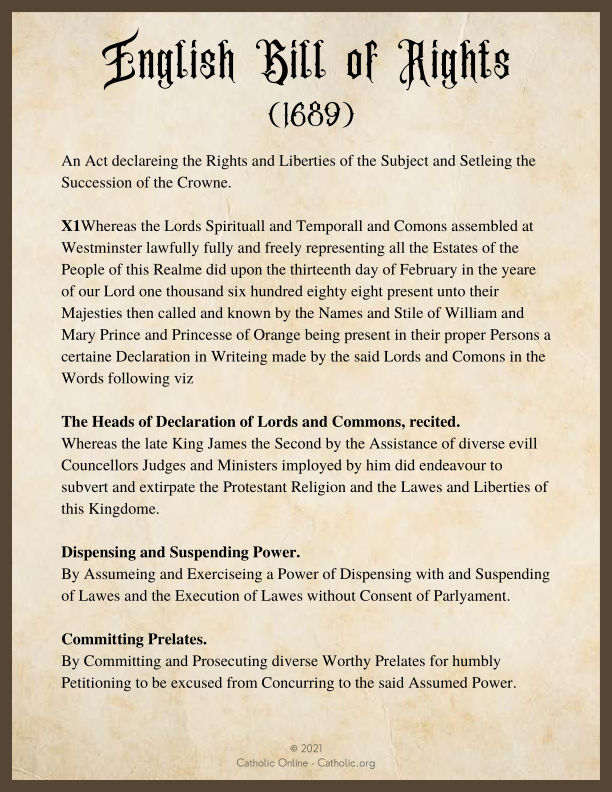
By stripping the monarchy of the power to levy taxes without legislative consent and establishing the supremacy of the rule of law, the 1689 Bill of Rights created the “credible commitment” necessary for the birth of modern capitalism. It transformed the state from a potential predator of private wealth into a protector of financial contracts.
Shifting the Purse Strings: How 1689 Birthed Parliamentary Fiscal Control
Before 1689, the financial landscape was volatile and unpredictable. Monarchs often viewed the wealth of their subjects as a reserve to be tapped for wars or personal whims. The Bill of Rights changed this by codifying that “levying money for or to the use of the Crown by pretence of prerogative, without grant of Parliament… is illegal.” This shift in the “power of the purse” is the ancestor of every modern budgetary process and tax code.
Ending Arbitrary Taxation and Financial Uncertainty
In the years leading up to the Glorious Revolution, King James II and his predecessors frequently resorted to “forced loans” and creative fees to bypass the need for parliamentary approval. For the merchant class and early entrepreneurs, this was a nightmare for financial planning. If a business owner could not predict their tax liability or feared that their profits might be seized by royal decree, there was little incentive to reinvest capital or expand operations.
The Bill of Rights introduced a level of fiscal transparency that had never existed before. By requiring that all taxation originate in Parliament, the document ensured that those who paid the taxes—the property-owning and mercantile classes—had a direct say in how much was collected and how it was spent. This established the principle of fiscal accountability, which remains the bedrock of modern business finance.
The Rise of the “Power of the Purse”
The transfer of fiscal control to Parliament allowed for a more rational approach to national spending. This was not merely a political win; it was a financial revolution. When the legislature controls the budget, government spending becomes more aligned with the economic interests of the nation rather than the personal ambitions of a single ruler. This transition allowed England (and later the UK and the global West) to develop a more sophisticated infrastructure for public works, trade protection, and economic development, funded by a predictable and legally sanctioned tax base.
The Birth of Sovereign Credit and the Financial Revolution
Perhaps the most significant financial outcome of the 1689 Bill of Rights was the creation of a stable market for government debt. Before 1689, lending money to the King was a high-risk gamble. If the King decided not to pay, the lender had no legal recourse. Consequently, interest rates were astronomical, and the “national debt” was essentially a series of unmanaged personal loans to the monarch.
Establishing Public Trust in National Debt
Because the Bill of Rights made Parliament responsible for the nation’s finances, it effectively guaranteed that the state would honor its debts. Investors realized that a debt backed by an act of Parliament was far more secure than a debt backed by a King’s word. This led to what economists call the “Financial Revolution.”
In 1694, just five years after the Bill of Rights, the Bank of England was founded to manage this new, secure sovereign debt. This was the birth of the modern bond market. For the first time, individuals could invest in government securities with a high degree of confidence. This “safe asset” provided a foundation for the entire financial system, allowing for the development of pension funds, insurance companies, and personal investment portfolios that are the staples of personal finance today.
From Royal Debts to National Investment

With the ability to borrow at low interest rates, the state could fund long-term projects that fueled economic growth. For the individual investor, the Bill of Rights turned the state into a reliable counterparty. This helped foster a culture of investment over hoarding. When people trust that their government will not default on its obligations, they are more likely to participate in broader financial markets, leading to increased liquidity and capital for private ventures.
Protecting Property Rights: The Cornerstone of Personal Finance
At its core, the Bill of Rights 1689 was about the security of the individual against the state. In a financial context, this translates directly to the protection of property rights. Without secure property rights, the concepts of “online income,” “side hustles,” or “long-term investing” are meaningless. You cannot build wealth if you do not have a legal guarantee that you can keep it.
Rule of Law as an Economic Incentive
The Bill of Rights reinforced the idea that the law applies to everyone, including the executive. This “Rule of Law” is the primary engine of economic prosperity. When a business owner enters into a contract today, they do so with the confidence that the legal system will enforce that contract. The 1689 document helped transition the English legal system toward this modern standard, ensuring that disputes over assets, land, and money were settled in independent courts rather than by royal whim.
For the modern entrepreneur, this means that the “intellectual property” of a software app or the “equity” in a startup is protected by a lineage of law that traces back to 1689. The assurance that “no man be deprived of his property” without due process is what allows the venture capital industry to function.
Safeguarding Wealth Against Seizure
The Bill of Rights also addressed the issue of “excessive fines” and “forfeitures.” In the modern era, we see the echo of these protections in our banking regulations and tax laws. It prevents the state from using the judicial system as a tool for revenue generation through the arbitrary seizure of assets. For anyone focused on wealth preservation and personal finance, these protections are the invisible walls that keep a portfolio safe from political volatility.
Global Impact: How 1689 Shaped Modern Business Finance and Markets
The influence of the 1689 Bill of Rights extends far beyond the borders of the United Kingdom. It served as a blueprint for the United States Constitution and its own Bill of Rights, which in turn shaped the world’s largest economy. The financial principles embedded in the 1689 document—accountability, transparency, and the protection of private assets—are now the global standards for “Brand England” and “Brand USA” in the international marketplace.
Influencing the American Financial System
When Alexander Hamilton was constructing the American financial system, he leaned heavily on the precedents set during the British Financial Revolution of the 1690s. The idea of a national bank, a funded public debt, and a legislature with sole authority over taxes are all direct descendants of the 1689 settlement. Today, when we look at the stability of the U.S. Dollar or the reliability of Treasury bonds, we are seeing the 1689 Bill of Rights in action. It established the “brand” of a stable, law-abiding democracy that attracts global capital.

The Blueprint for Corporate Governance
Finally, the Bill of Rights 1689 mirrors the evolution of corporate governance. Just as the Bill of Rights moved power from an absolute ruler to a representative body (Parliament), modern business finance moves power from “founders” to “boards of directors” and “shareholders.”
The principles are identical:
-
Transparency: Shareholders (like Parliament) must have access to the books.
-
Consent: Management cannot take major financial actions (like issuing new debt) without the consent of the owners (shareholders).
-
Accountability: Leaders are subject to the rules and can be removed if they violate the “constitution” of the company.
In conclusion, the Bill of Rights 1689 was the “Initial Public Offering” of the modern state. It invited the public to invest in the nation’s future by promising that their rights, their property, and their money would be protected by law rather than subject to the ego of a ruler. For anyone involved in money—whether you are a day trader, a corporate CFO, or someone managing a side hustle—the 1689 Bill of Rights is the silent partner that makes your financial life possible. It created the stable, predictable environment where capital can flow, businesses can grow, and individuals can build lasting wealth.
aViewFromTheCave is a participant in the Amazon Services LLC Associates Program, an affiliate advertising program designed to provide a means for sites to earn advertising fees by advertising and linking to Amazon.com. Amazon, the Amazon logo, AmazonSupply, and the AmazonSupply logo are trademarks of Amazon.com, Inc. or its affiliates. As an Amazon Associate we earn affiliate commissions from qualifying purchases.