
In the traditional sense, “Solidarity” was defined by the physical proximity of workers, the shared experience of the factory floor, and the collective bargaining power of labor unions. It was a socio-political force that reshaped the 20th century. However, as we navigate the third decade of the 21st century, the definition of solidarity has undergone a radical technological transformation. What was once a localized, human-centric bond has evolved into a global, digital-first phenomenon powered by open-source code, decentralized networks, and encrypted communication.
To understand what solidarity has become, we must look at how technology has replaced the picket line with the pull request and the town hall meeting with the decentralized autonomous organization (DAO). This article explores the technical foundations of modern solidarity and how the digital landscape has redefined how we organize, collaborate, and protect collective interests.
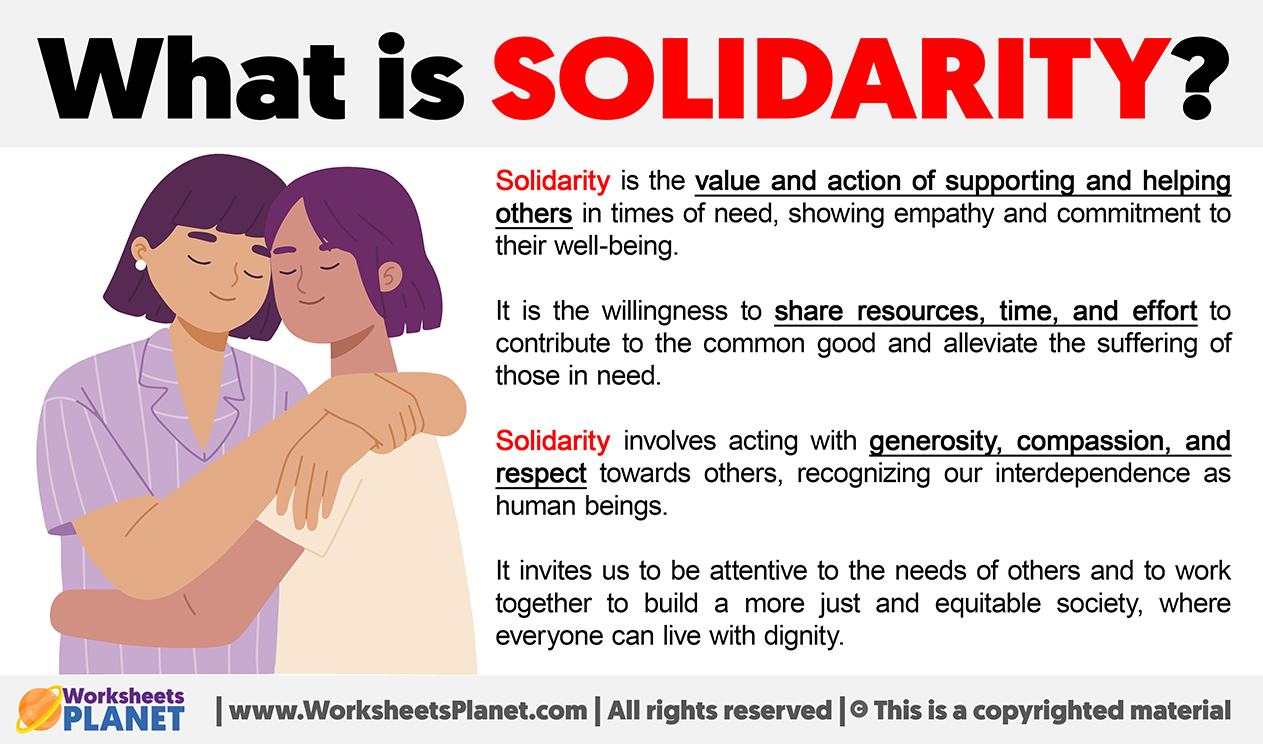
From Physical Fronts to Digital Code: The Rebirth of Solidarity
The transition from the industrial age to the information age did not kill the concept of solidarity; it simply migrated the concept to the cloud. In the past, solidarity required physical presence—people standing together to demonstrate power. In the tech-driven era, solidarity is expressed through data, shared infrastructure, and the democratization of information.
The Transition from Industrial Unionism to Open-Source Collaboration
The first major shift in the “tech version” of solidarity appeared with the rise of the Open Source movement. While industrial solidarity focused on the rights of the worker, digital solidarity focused on the rights of the user and the creator. The ethos of “free as in speech, not as in beer” became the new rallying cry. Developers across the globe realized that by contributing to a shared codebase, they could build tools that no single corporation could monopolize. This was solidarity in its purest technical form: collective labor for the benefit of the global commons.
Digital Interconnectivity as the New Foundation of Social Bonds
Today, the infrastructure of solidarity is built on high-speed internet and social platforms. However, the technology itself is more than just a medium; it is a catalyst. The ability to synchronize thousands of individuals across different time zones to achieve a single goal—whether that is a coordinated software patch, a massive digital protest, or a crowdsourced security audit—represents a leap in organizational efficiency that was impossible twenty years ago. The “solidarity” of the digital age is agile, non-linear, and largely decentralized.
The Open-Source Movement: Solidarity as a Technical Philosophy
If we ask what solidarity looks like in the tech world today, the most prominent answer is the open-source community. This ecosystem operates on the belief that software should be transparent, accessible, and community-driven. It is the rejection of the “black box” mentality that dominated the early software industry.
The Ethical Core of Shared Intelligence
At the heart of open-source solidarity is the concept of shared intelligence. When a developer identifies a vulnerability in a piece of software and submits a fix to a public repository like GitHub, they are performing an act of solidarity. They are contributing their private expertise to the public good, ensuring that everyone using that software—from individual students to massive NGOs—is protected. This culture of mutual aid is the bedrock of modern tech infrastructure, powering everything from the Linux kernel to the web servers that run the majority of the internet.
GitHub and the Democratization of Innovation
Platforms like GitHub and GitLab have become the cathedrals of digital solidarity. These platforms allow for a “permissionless” form of collaboration. Unlike traditional corporate structures, where hierarchy dictates who can contribute, the open-source model allows anyone with the skill and the will to participate. This has led to a radical democratization of innovation. Solidarity here means that a developer in Lagos can work synchronously with a developer in San Francisco on a tool that provides financial privacy to people in oppressive regimes. The technology facilitates a bond that is purely functional and ideological, transcending traditional barriers of nation and economy.
Decentralized Autonomous Organizations (DAOs) and the Future of Trust
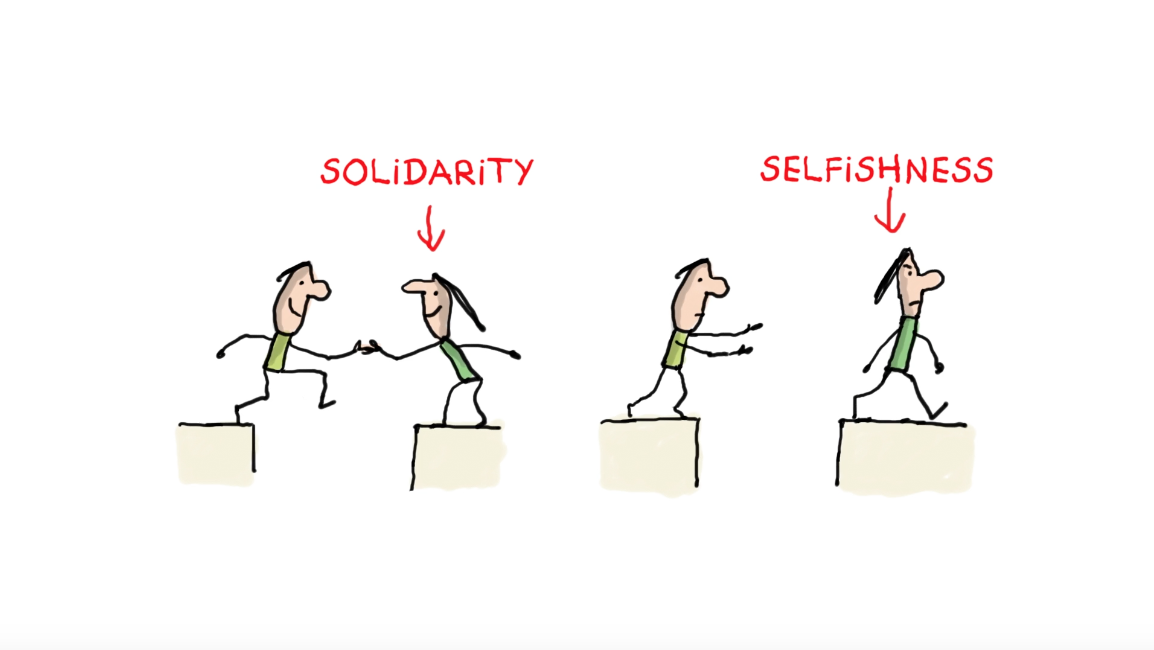
As we move deeper into the era of Web3 and blockchain technology, solidarity is being “hardcoded” into our financial and social systems. The Decentralized Autonomous Organization, or DAO, represents the next logical step in the evolution of collective action.
Replacing Institutional Mediation with Smart Contracts
Historically, solidarity required a “trusted third party”—a union leader, a non-profit board, or a government agency—to manage collective resources. Tech has now enabled us to replace that fallible human mediation with smart contracts. In a DAO, the rules of the organization are written in code on a blockchain. This ensures that the collective will is executed automatically and transparently. Solidarity is no longer a promise; it is a mathematical certainty. If the group votes to fund a project or change a protocol, the code executes that decision without the need for a central authority.
Financial Solidarity in Web3 Ecosystems
The financial aspect of tech-driven solidarity is perhaps its most disruptive feature. Through tokenization and decentralized finance (DeFi), communities can pool their capital to support projects that align with their values. This has led to the rise of “impact DAOs” that focus on everything from climate change to scientific research. By leveraging the power of the blockchain, these groups can practice a form of solidarity that is resistant to censorship and financial exclusion. It allows marginalized groups to create their own economic systems, providing a safety net that traditional institutions often fail to offer.
Digital Activism and the Infrastructure of Social Movements
The modern definition of solidarity cannot be separated from the tools used by activists to challenge the status quo. In this context, technology serves as both the shield and the sword.
Algorithms as Barriers and Bridges
One of the greatest challenges to digital solidarity is the role of algorithms. Social media platforms can both amplify collective voices and suppress them through shadowbanning or algorithmic manipulation. True technical solidarity involves understanding these systems and building alternative infrastructures. This has led to the rise of the “Fediverse”—a collection of federated servers (like Mastodon) that are not controlled by a single corporation. By moving to decentralized social networks, communities can exercise solidarity without the fear of being de-platformed by a centralized entity.
Cybersecurity and Protecting Collective Voices
In an era of state-sponsored surveillance and corporate data mining, solidarity also takes the form of cybersecurity. The development and promotion of end-to-end encryption (E2EE) tools like Signal and Tor are acts of technical solidarity. By building and maintaining these tools, the tech community provides a secure “black room” for organizers to plan and communicate. Protecting the privacy of the individual is a prerequisite for the safety of the collective. Thus, the cryptographer becomes a vital architect of modern solidarity, ensuring that the bonds of trust are not broken by external observation.
The Challenges of Sustaining Digital Solidarity
While technology has expanded the reach of solidarity, it has also introduced new vulnerabilities and complexities. The transition from physical to digital is not without its friction.
Overcoming Platform Centralization
The greatest threat to modern solidarity is the centralization of the internet. When the digital “town square” is owned by a handful of trillion-dollar companies, the power of collective action is always at the mercy of terms of service. Sustaining solidarity requires a constant push toward decentralization. We must move away from “walled gardens” and toward open protocols. The tech community is currently in a tug-of-war between the convenience of centralized platforms and the resilience of decentralized ones. The future of solidarity depends on which model wins out.
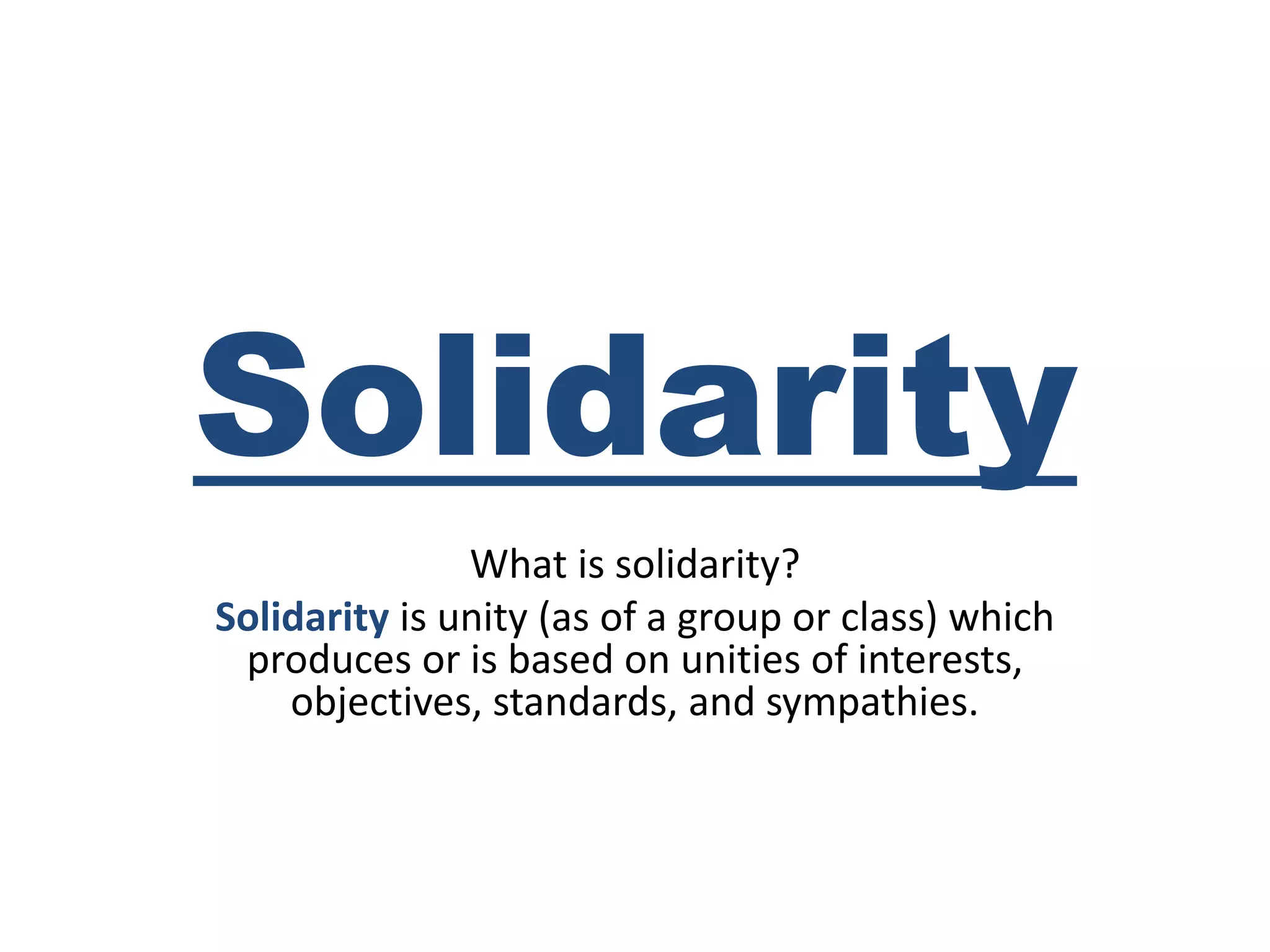
Ensuring Long-Term Scalability and Human Centricity
Finally, there is the risk that digital solidarity becomes too abstract. When solidarity is reduced to a “like,” a “retweet,” or a “token swap,” it can lose the human depth that makes it powerful. The challenge for the next generation of tech leaders is to design systems that are not just efficient, but also empathetic. We must ensure that our DAOs, our open-source projects, and our encrypted networks serve the human beings at the other end of the screen. Technical solidarity is a means to an end—the end being a more equitable and connected society.
In conclusion, what solidarity was was a localized, physical movement of the working class. What solidarity is today is a global, technical ecosystem built on transparency, decentralization, and shared code. By understanding these digital tools, we can harness the power of collective action more effectively than ever before, ensuring that the spirit of solidarity continues to evolve alongside the technology that sustains it.
aViewFromTheCave is a participant in the Amazon Services LLC Associates Program, an affiliate advertising program designed to provide a means for sites to earn advertising fees by advertising and linking to Amazon.com. Amazon, the Amazon logo, AmazonSupply, and the AmazonSupply logo are trademarks of Amazon.com, Inc. or its affiliates. As an Amazon Associate we earn affiliate commissions from qualifying purchases.