
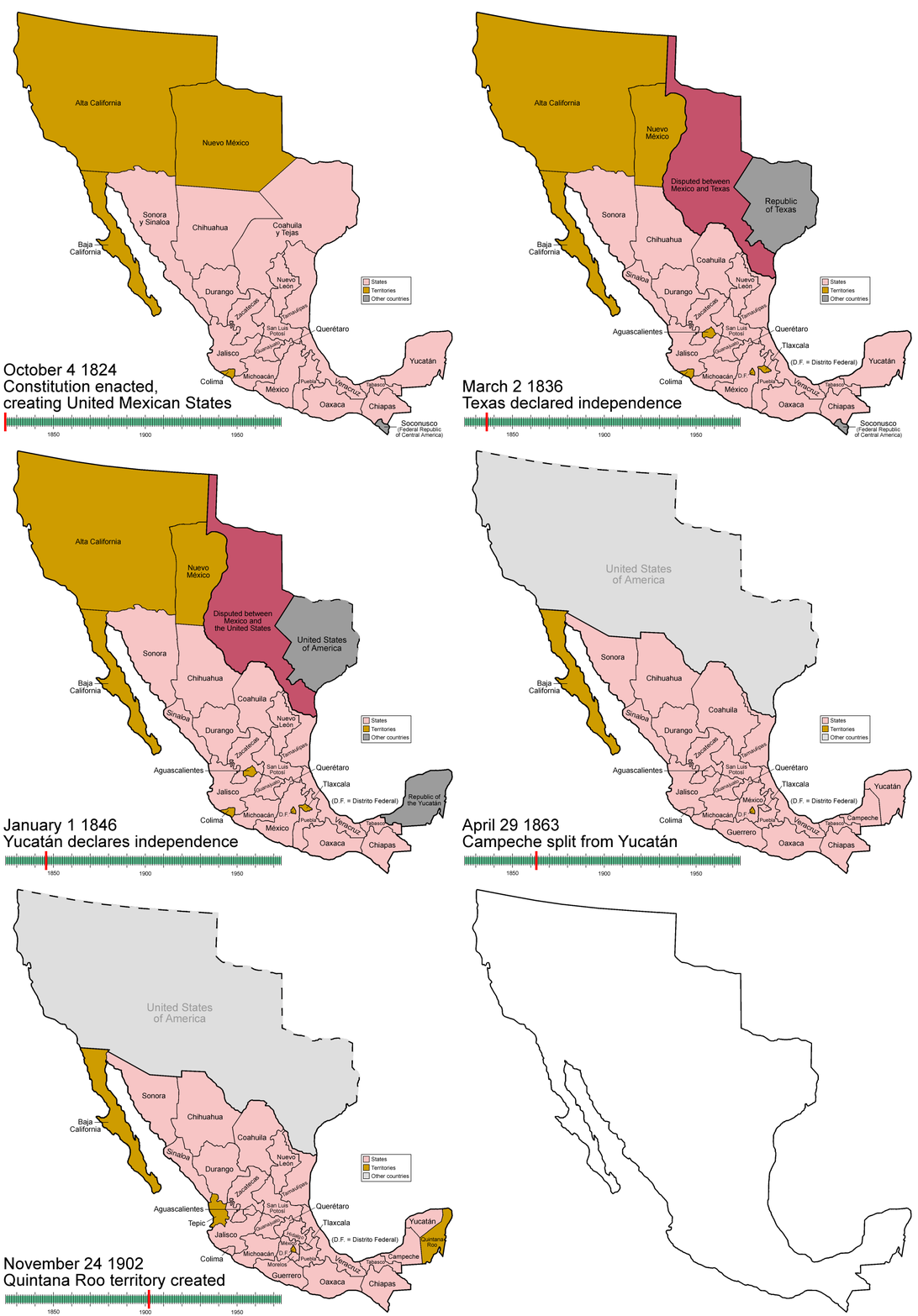
The modern nation of Mexico, a vibrant tapestry of culture, history, and innovation, didn’t spring into existence fully formed. Like any country, its story is one of evolution, transformation, and the convergence of countless influences. To truly understand “what was Mexico before it was Mexico,” we must delve into the layers of its past, examining the technological, economic, and societal foundations that predated the unified republic we recognize today. This exploration, viewed through the lens of technology, brand, and money, offers a unique perspective on how foundational elements shaped the land that would eventually become Mexico.
The Pre-Columbian Technological Crucible: Seeds of Innovation
Long before the Spanish conquest, the lands that comprise modern Mexico were home to sophisticated civilizations, each with their own distinct technological advancements. These weren’t the digital marvels of today, but they represented the pinnacle of human ingenuity in their time, laying the groundwork for future developments.
Mesoamerican Engineering and Infrastructure
The Maya, Aztec, Teotihuacan, and countless other cultures were master builders and engineers. Their cities, like Teotihuacan with its pyramids of the Sun and Moon, or Tenochtitlan, the island capital of the Aztec Empire, were testaments to advanced urban planning and construction techniques. The precision with which they quarried, transported, and assembled massive stone blocks without iron tools or the wheel for heavy labor remains a subject of awe and study.
- Water Management Systems: From intricate canal networks that nourished vast agricultural lands to sophisticated aqueducts that supplied burgeoning cities with fresh water, Mesoamerican civilizations demonstrated a profound understanding of hydraulic engineering. The Aztecs, in particular, engineered elaborate systems to manage the chinampas (floating gardens) of Lake Texcoco, a testament to their ability to reshape their environment for sustenance and urban development.
- Astronomical and Mathematical Prowess: Their advancements in mathematics and astronomy were deeply intertwined with their understanding of the cosmos and their agricultural cycles. The development of complex calendar systems, such as the Mayan Long Count, required sophisticated observational tools and a rigorous mathematical framework. This intellectual legacy, though not directly translatable to modern tech, highlights a foundational human drive for understanding and manipulating the world through systematic observation and logic.
- Agricultural Technologies: Beyond water management, these cultures developed sophisticated agricultural techniques, including terracing, crop rotation, and the domestication of key crops like maize, beans, and squash. These innovations were crucial for supporting large populations and formed the economic bedrock of these societies.
Tools and Craftsmanship
The technological prowess extended to the creation of tools and everyday objects. Obsidian, volcanic glass, was expertly flaked to create sharp blades for tools and weapons. Pottery was a highly developed art and science, with distinct regional styles and functional applications. Metallurgy, while less widespread than in other parts of the world at the time, was present, particularly in the development of gold and silver adornments, showcasing an early understanding of material science and craftsmanship.
The ingenuity of these pre-Columbian societies laid a crucial technological foundation. Their deep understanding of their environment, their capacity for large-scale engineering, and their systematic approaches to problem-solving are echoes of the same spirit that drives innovation today. While the tools and materials were different, the underlying principles of observation, adaptation, and application of knowledge are universal.
The Economic Tapestry: Pre-Columbian Commerce and Value
Understanding the economic landscape before the arrival of Europeans is vital to grasping the genesis of Mexico. These were not economies driven by digital currencies or stock markets, but rather by intricate systems of trade, resource management, and the establishment of value.
Barter, Tribute, and Early Forms of Currency
Trade was a cornerstone of Mesoamerican life. Extensive networks connected distant regions, facilitating the exchange of goods ranging from foodstuffs and textiles to luxury items like jade, feathers, and obsidian. While direct barter was common, certain commodities also served as de facto currencies, facilitating broader economic exchange.
- Cacao Beans: Perhaps the most famous example of a pre-Columbian currency substitute is the cacao bean. Highly prized for its use in beverages and its symbolic importance, cacao beans were widely used for smaller transactions across many Mesoamerican cultures. This highlights an early form of commodity-backed value, where a tangible and desirable good held recognized purchasing power.
- Textiles and Other Goods: Beyond cacao, intricately woven textiles, quills of gold, and even certain types of shells could also function as mediums of exchange, depending on the region and the scale of the transaction. The value placed on these items was not solely utilitarian but also tied to craftsmanship, rarity, and cultural significance.
- Tribute Systems: For empires like the Aztec, tribute played a significant role in their economic structure. Conquered territories were obligated to pay regular tributes in the form of goods, raw materials, and labor to the capital. This centralized system of wealth accumulation and redistribution was a defining characteristic of their economic model, demonstrating a sophisticated understanding of resource control and dependency.
Resource Management and Agricultural Economies
The economies of pre-Columbian Mexico were fundamentally agrarian. The sophisticated agricultural technologies discussed earlier were not just about sustenance; they were the engine of their economies. Surplus production allowed for specialization and trade, fostering the growth of larger settlements and specialized crafts.
- Obsidian Mines and Trade Routes: The control and distribution of valuable resources, like obsidian for tools and weapons, were central to economic power. Major obsidian sources became focal points of trade, with established routes radiating outwards, connecting producers with distant consumers. This demonstrates an early understanding of strategic resource management and the establishment of valuable supply chains.
- Craft Specialization: The economic surplus generated by agriculture allowed for the development of specialized crafts. Artisans dedicated themselves to pottery, weaving, stonework, featherwork, and metalworking, creating goods that were both functional and highly valued, further stimulating trade and economic complexity.
The pre-Columbian economic landscape was rich and diverse. It was an era where value was established through tangible goods, sophisticated trade networks, and the careful management of resources. These foundational economic principles, though vastly different from modern financial systems, demonstrate an innate human capacity for creating and exchanging value, a crucial precursor to any nation’s monetary evolution.
The Genesis of Identity: Proto-Mexican Brands and Collective Consciousness
The concept of “brand” as we understand it in the corporate and personal branding sense is a modern construct. However, the elements that contribute to brand identity – shared symbols, cultural narratives, collective aspirations, and recognition of distinct groups – were very much present in pre-Columbian societies. These can be seen as proto-brands, forging a sense of belonging and distinctiveness.
Civilizational Identity and Symbolism
Each major civilization possessed a powerful sense of identity, reinforced through unique symbols, deities, rituals, and architectural styles. These served to differentiate one group from another and foster a collective consciousness within their own borders.
- The Aztec Eagle and Serpent: The iconic imagery of the eagle devouring a serpent perched on a cactus became the paramount symbol of the Aztec Empire, representing their divine mandate and their prowess. This powerful visual identity was disseminated through their art, architecture, and religious practices, solidifying their collective brand.
- Mayan Glyphs and Cosmic Order: The Maya developed a complex writing system of glyphs that documented their history, their rulers, and their understanding of the cosmos. These glyphs, along with their distinct artistic styles and sophisticated astronomical calendars, created a recognizable brand for Mayan civilization, conveying a sense of intellectual and spiritual depth.
- Architectural Signatures: The monumental architecture of each civilization served as a powerful visual signature. The pyramids of Teotihuacan, the intricate carvings of Palenque, and the imposing temples of Tenochtitlan were not just structures; they were declarations of power, belief, and identity, recognizable to those within and outside their immediate influence.
Shared Narratives and Religious Frameworks
The religious beliefs and origin stories of these societies played a crucial role in forging a sense of shared identity. Creation myths, the stories of their gods, and their understanding of their place in the universe provided a common narrative that bound people together.
- The Wandering of the Aztecs: The Aztec migration story, culminating in their founding of Tenochtitlan, was a powerful unifying narrative that legitimized their rule and provided a shared historical consciousness. This narrative, reinforced through oral tradition and artistic depictions, acted as a foundational brand story.
- Cosmological Beliefs: The shared understanding of the cosmos, the cycles of life and death, and the pantheon of deities provided a unifying spiritual and philosophical framework. These beliefs informed daily life, art, and societal organization, creating a distinct cultural identity.

The Emergence of Regional Identities
Even within the broader Mesoamerican context, distinct regional identities existed. Oaxaca, for example, was known for its Zapotec and Mixtec cultures, each with their own artistic traditions, languages, and social structures. These regional “brands” were distinct from one another and from the dominant empires, contributing to the rich mosaic of identity that would eventually coalesce into a larger national consciousness.
The pre-Columbian era, therefore, was not a void before “Mexico.” It was a vibrant landscape populated by distinct cultures, each with its own sophisticated technologies, evolving economic systems, and nascent forms of collective identity that served as the foundational “brands” of their time. The convergence and interaction of these elements, followed by subsequent historical forces, laid the essential groundwork for the Mexico that would eventually emerge. Understanding this rich past allows us to appreciate the deep roots of Mexican innovation, commerce, and identity, demonstrating that the nation’s story is one of continuous evolution, building upon millennia of human endeavor.
aViewFromTheCave is a participant in the Amazon Services LLC Associates Program, an affiliate advertising program designed to provide a means for sites to earn advertising fees by advertising and linking to Amazon.com. Amazon, the Amazon logo, AmazonSupply, and the AmazonSupply logo are trademarks of Amazon.com, Inc. or its affiliates. As an Amazon Associate we earn affiliate commissions from qualifying purchases.