
In the landscape of American finance, few events have had as profound an impact as the Supreme Court case of McCulloch v. Maryland (1819). While often discussed in the context of constitutional law, the case is fundamentally a cornerstone of the American financial system, dictating how the federal government interacts with the economy, regulates banking, and manages the tension between state-level interests and national fiscal stability. For investors, business leaders, and students of personal finance, understanding McCulloch v. Maryland is essential to understanding the very foundations of the United States’ monetary policy and the centralized banking authority that we now take for granted in the form of the Federal Reserve.
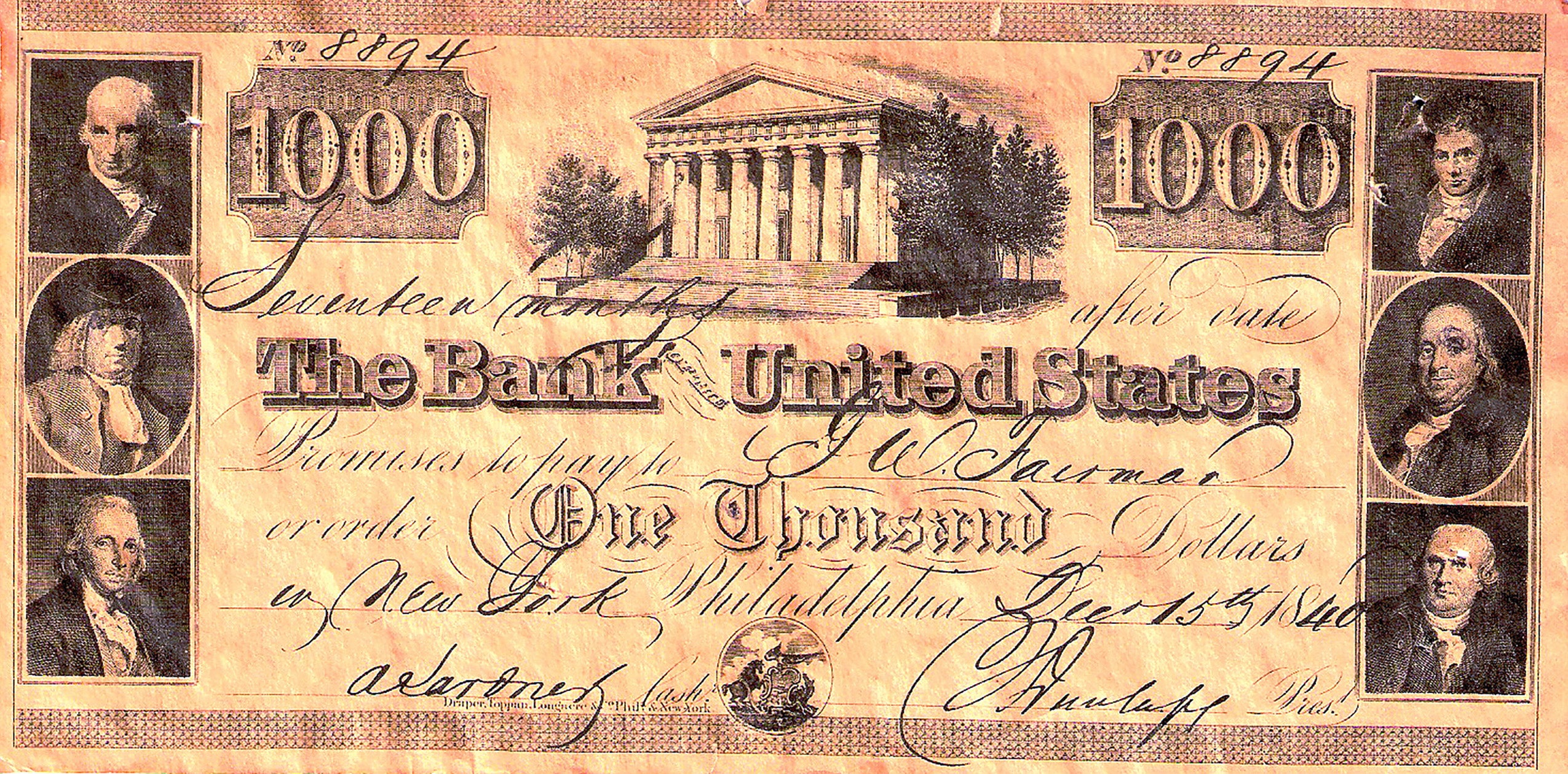
At its core, the case addressed a pivotal question: Does the federal government have the authority to establish a national bank, and can individual states tax that federal entity? The resolution of this conflict did more than just settle a legal dispute; it established the “implied powers” of the federal government, ensuring that the United States would have a unified, functional financial infrastructure rather than a fragmented collection of competing state economies.
The Birth of Federal Banking: The Second Bank of the United States
To understand the financial implications of McCulloch v. Maryland, one must first understand the economic chaos that preceded it. Following the War of 1812, the United States faced significant fiscal instability. The First Bank of the United States had been allowed to expire in 1811, leaving the nation’s finances in the hands of various state-chartered banks. These banks often lacked coordination, leading to inconsistent currency values, varying credit standards, and rampant inflation.
The Post-War Economic Landscape
The absence of a central clearinghouse meant that the federal government struggled to pay its debts and manage the costs of the war. In response to this volatility, Congress chartered the Second Bank of the United States in 1816. This was not merely a political move; it was a desperate financial strategy intended to stabilize the national currency and provide a reliable mechanism for federal fiscal operations.
Resistance from State Institutions
The Second Bank, however, was far from popular. Many state-chartered banks viewed it as a “monster” institution that threatened their local monopolies. In the eyes of state legislators and local bankers, a federal bank was an overreach that drained capital from local communities and imposed strict credit requirements that stifled the speculative lending common in the early 19th century. This tension set the stage for a direct confrontation between Maryland and the federal government.
The Conflict of 1819: A Duel over Taxation and Sovereignty
The specific conflict arose when the state of Maryland, seeking to protect its local financial interests, passed a law in 1818 that imposed a heavy tax on any bank operating in Maryland that was not chartered by the state. This tax was specifically targeted at the Baltimore branch of the Second Bank of the United States.
The Defiance of James McCulloch
James McCulloch, the cashier of the Baltimore branch of the Second Bank, refused to pay the tax. He argued that the state did not have the authority to tax an instrument of the federal government. Maryland sued, and the case eventually made its way to the Supreme Court. From a financial perspective, the stakes were incredibly high. If Maryland won, every state could theoretically tax federal institutions out of existence, effectively dismantling the national banking system and returning the country to a state of fiscal fragmentation.
The Economic Arguments
Maryland’s legal team argued that the Constitution did not explicitly grant Congress the power to create a bank. They maintained that the bank was an unconstitutional intrusion into the sovereign financial rights of the states. Conversely, the federal government’s advocates—including the legendary Daniel Webster—argued that a national bank was a “necessary and proper” tool for managing the country’s finances, collecting taxes, and regulating interstate commerce.
The Judicial Verdict: Expanding the Scope of Federal Financial Power
Chief Justice John Marshall’s opinion in McCulloch v. Maryland remains one of the most influential documents in American history. His ruling addressed two primary questions, both of which redefined the American economic framework.

The “Necessary and Proper” Clause
First, Marshall addressed whether Congress had the right to establish a bank. While the word “bank” does not appear in the Constitution, Marshall argued that the “Necessary and Proper” Clause (Article I, Section 8) gave Congress “implied powers.” He famously wrote, “Let the end be legitimate, let it be within the scope of the constitution, and all means which are appropriate… are constitutional.”
For the financial sector, this was a revolutionary declaration. It meant that the federal government was not limited to a rigid list of activities but could create the financial tools and institutions required to manage a growing national economy. This paved the way for future entities like the Federal Reserve, the SEC, and the FDIC.
The Power to Tax and the Power to Destroy
Second, Marshall addressed the state’s attempt to tax the bank. He delivered a line that has become a mantra for those studying fiscal policy: “The power to tax involves the power to destroy.” If Maryland were allowed to tax the federal bank, they could effectively regulate it or shut it down. Marshall concluded that states cannot interfere with the constitutional operations of the federal government. This established the principle of federal supremacy in matters of national finance, ensuring that the country’s monetary system could not be sabotaged by local or regional interests.
McCulloch’s Legacy in Modern Finance and Monetary Policy
The ripple effects of McCulloch v. Maryland are still felt by every participant in the modern financial system. The decision established the legal infrastructure that allows for a centralized monetary policy, which is the bedrock of contemporary investing and business finance.
The Foundation for the Federal Reserve
Without the precedent set in 1819, the creation of the Federal Reserve in 1913 would likely have faced insurmountable legal challenges. The Fed’s ability to regulate the money supply, set interest rates, and act as a lender of last resort depends on the broad interpretation of federal power established by Marshall. For the modern investor, this translates to a more stable and predictable economic environment, where federal authorities have the tools necessary to combat inflation and mitigate financial crises.
Stability in Interstate Commerce
Because the ruling prevented states from taxing or obstructing federal financial institutions, it fostered an environment where capital could move freely across state lines. This liquidity is essential for modern business finance. It allows a corporation headquartered in New York to operate seamlessly in California or Texas without facing a patchwork of conflicting state-level financial regulations that could stifle growth.
Strategic Implications for Business and Financial Institutions
For professionals in the financial sector, McCulloch v. Maryland offers several strategic lessons regarding the relationship between regulation, taxation, and institutional power.
Navigating Dual Regulatory Environments
The case established the “dual sovereignty” model of American governance, where businesses must navigate both state and federal regulations. While federal law is supreme, states still retain significant power over insurance, real estate, and consumer protection. Understanding the boundaries of federal supremacy helps financial institutions anticipate regulatory shifts and manage compliance risks more effectively.
The Centralization of Monetary Authority
From a business finance perspective, the centralization of monetary authority has been a double-edged sword. On one hand, it provides a unified currency and a “backstop” for the banking system, which reduces systemic risk. On the other hand, it means that businesses are highly sensitive to federal policy shifts. A change in federal interest rates or a shift in the Federal Reserve’s balance sheet has a much more profound impact on business valuations than any individual state-level policy.
The Resilience of Federal Financial Tools
Finally, McCulloch v. Maryland reinforces the idea that federal financial tools—once established as “necessary and proper”—are incredibly resilient. For those involved in long-term financial planning or investing, this provides a degree of certainty. While political tides may shift, the fundamental legality and power of the nation’s central financial institutions are anchored in over two centuries of judicial precedent.
In conclusion, What was McCulloch v. Maryland? It was the moment the United States decided to become a single, unified economic power rather than a loose confederation of state economies. By validating the concept of implied powers and protecting federal institutions from state-level interference, the Supreme Court created the legal space necessary for the modern American financial system to thrive. Whether you are managing a personal portfolio or overseeing a corporate budget, the stability of the dollar and the reach of federal financial regulation owe a direct debt to the cashier from Baltimore who refused to pay a state tax in 1818.
aViewFromTheCave is a participant in the Amazon Services LLC Associates Program, an affiliate advertising program designed to provide a means for sites to earn advertising fees by advertising and linking to Amazon.com. Amazon, the Amazon logo, AmazonSupply, and the AmazonSupply logo are trademarks of Amazon.com, Inc. or its affiliates. As an Amazon Associate we earn affiliate commissions from qualifying purchases.