
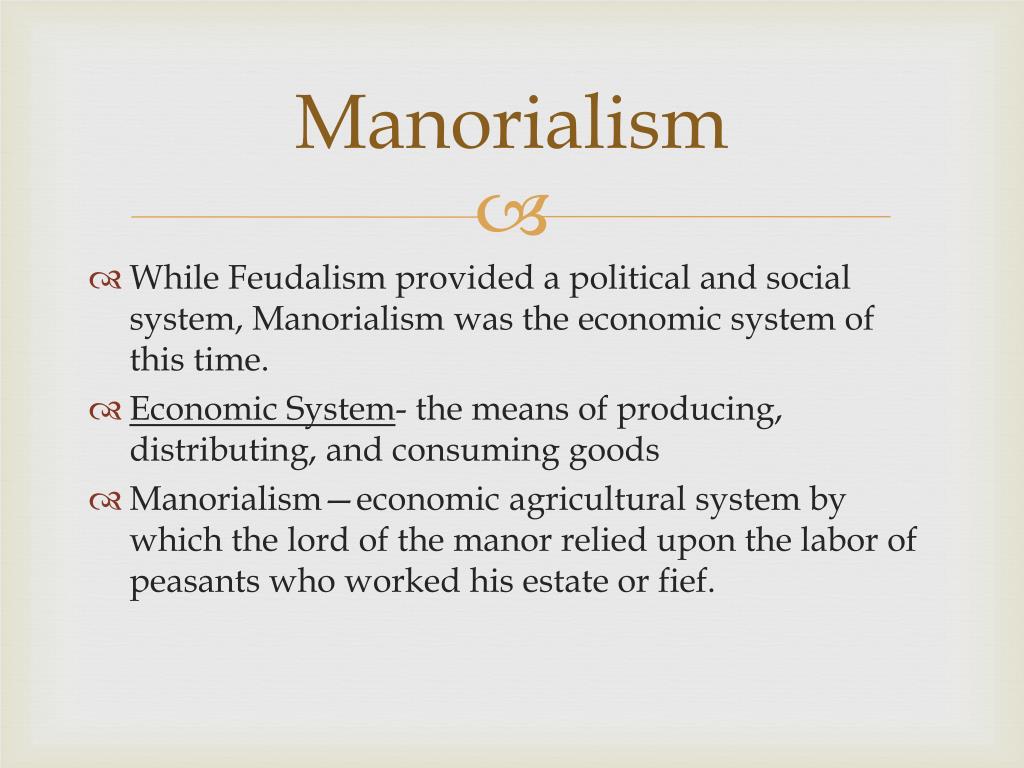
To understand the modern financial world—its property laws, its investment structures, and its concepts of “passive income”—one must look back at the most enduring economic system in Western history: Manorialism. Often conflated with Feudalism (which was a political and military arrangement), Manorialism was the strictly economic engine of the Middle Ages. It was a system of land management and labor organization that dictated how wealth was generated, distributed, and preserved for centuries.
In the context of modern money and business finance, Manorialism represents the ultimate “land-as-asset” model. It was a time when liquidity was non-existent, and wealth was measured entirely by the productivity of one’s acreage. Understanding what manorialism was allows us to see the evolution of capital from physical soil to digital assets, and provides a stark lesson in the mechanics of a closed-loop economy.

The Economic Mechanics of the Manor System
At its core, the manor was a self-sustaining economic unit. In a world where centralized government had collapsed and currency was scarce, the “manor” served as the primary venue for production and consumption. For a modern investor, the manor can be viewed as a private equity fund where the assets are land and the dividends are agricultural produce.
Land as the Primary Asset Class
In the medieval economy, there were no stock markets, high-yield savings accounts, or venture capital firms. There was only land. Land was the sole source of “real” wealth because it was the only asset capable of producing a return on investment (in the form of food, wool, and timber). Under Manorialism, the “Lord of the Manor” held the legal title to this asset, while the peasantry provided the “operating capital” through their labor.
This created a rigid financial structure. Unlike modern real estate where land can be flipped for profit, manorial land was rarely sold. It was an ancestral asset meant to provide a perpetual yield. The value of a manor was not determined by its “market price,” but by its “productive capacity”—how many bushels of grain it could produce or how many heads of cattle it could support.
The Labor-for-Protection Exchange
The financial “contract” of manorialism was a barter system based on security. Since there was no stable currency to pay wages, the Lord of the Manor provided land and physical protection to the peasants (serfs) in exchange for their labor. This was effectively a 100% tax on a portion of the worker’s time.
A serf might work three days a week on the “demesne” (the lord’s personal land) and the other three days on their own small plot. This was an early, albeit coercive, form of a “gig economy.” The peasant didn’t pay rent in cash; they paid in “corvée” (statute labor). From a business finance perspective, this was an incredibly efficient way for the lord to manage overhead. By removing the need for cash wages, the lord insulated himself from inflation and currency devaluation—two risks that continue to plague modern businesses today.
Wealth Distribution and the Closed-Loop Economy
One of the most fascinating aspects of Manorialism was its lack of external trade. Most manors were designed to be “autarkic,” meaning they produced everything they consumed. This created a unique economic environment where wealth didn’t “circulate” in the way we understand it today; instead, it accumulated at the top of a very narrow pyramid.
Self-Sufficiency and the Absence of Liquid Markets
In a modern economy, we rely on “specialization.” One person makes shoes, another grows wheat, and they trade using money as a medium. Manorialism, however, was a system of forced generalization. The manor had its own blacksmith, its own mill, and its own bakery. This lack of specialization was a massive drag on economic growth, but it provided extreme stability.
Because there were no liquid markets, there was very little “wealth mobility.” If you were born a serf, your “net worth” was effectively zero, and there were no financial instruments—like loans or investments—to help you change that. Wealth was “locked” in the land. This serves as a historical reminder of what happens to an economy when capital is illiquid. Without the ability to move wealth from one sector to another, innovation stagnates.
The Role of the Lord as an Economic Administrator
The Lord of the Manor was more than just a landlord; he was the CEO of a local monopoly. He owned the “infrastructure” of the economy—specifically the mill, the wine press, and the oven. Under a rule known as “banalities,” peasants were legally required to use the lord’s mill to grind their grain and pay a fee (usually a percentage of the grain) for the privilege.
This is a classic example of “rent-seeking” behavior. In modern finance, rent-seeking occurs when an entity seeks to gain wealth without any reciprocal contribution of productivity, often by manipulating the economic environment. By controlling the essential tools of production, the lord ensured a steady stream of “passive income” from every person living on his land. This reinforces the financial truth that whoever owns the infrastructure owns the profit.
From Manorialism to Modern Capital Markets
The transition away from Manorialism was not an overnight shift; it was a slow-motion financial revolution fueled by the return of currency and the emergence of a new asset class: movable wealth. As trade routes opened and cities grew, the rigid, land-based economy of the manor began to crack.
The Transition from Tenure to Ownership
The death knell for Manorialism was the Black Death in the 14th century. With the population decimated, labor became scarce. For the first time, serfs had “bargaining power.” They could demand cash wages instead of just protection. This forced lords to move from a “labor-rent” model to a “cash-rent” model.
As rents shifted to cash, the relationship between the owner and the worker became transactional rather than social. This gave rise to “copyhold tenure,” where the rights to the land were recorded in a ledger. This was the precursor to modern property deeds and titles. Once land could be rented for a fixed cash price, it became a tradable commodity, laying the groundwork for the modern real estate market.
The Rise of the Merchant Class and Liquid Wealth
As Manorialism faded, “Capitalism” began to take its place. The emergence of the merchant class introduced the concept of “liquid wealth”—wealth that could be moved, invested, and multiplied. Unlike the Lord of the Manor, whose wealth was tied to a specific patch of dirt, the merchant held wealth in the form of gold, credit, and inventory.
This shift changed the fundamental nature of “Money.” It moved from a system of “static extraction” (collecting grain from serfs) to “dynamic growth” (investing capital in trade ventures). The manor, once the center of the economic universe, became a relic as the center of gravity shifted to the city and the stock exchange.
Lessons from Manorialism for Modern Investors
While Manorialism ended centuries ago, its DNA remains in our financial systems. From the way we view “real property” to the power dynamics of modern platforms, the ghost of the manor still haunts our economic decisions.
Diversification and the Risks of Centralized Assets
The greatest weakness of the Manorial system was its lack of diversification. If a blight hit the wheat crop or a local war destroyed the manor house, the lord’s entire net worth disappeared. There were no “hedges” or “bonds” to offset the risk.
Modern investors can learn from this by recognizing the danger of “centralized asset risk.” Relying on a single source of income or a single asset class—even one as traditionally stable as land—is a recipe for disaster. The evolution from Manorialism to the modern era is, in many ways, the story of humanity learning to diversify risk through insurance, banking, and diversified portfolios.
Understanding Long-Term Value and Rent-Seeking Behavior
Finally, Manorialism teaches us to recognize the power of “essential infrastructure.” Today, we see a digital version of manorialism in the tech world, where large platforms own the “mills and ovens” (the servers and marketplaces) and charge a “banality” (transaction fees) to everyone who uses them.
For a business-minded individual, the takeaway is clear: owning the means of production is the most reliable way to generate long-term wealth. Whether it is owning physical real estate, intellectual property, or a platform, the goal is to move from being the “serf” who provides the labor to the “owner” who provides the infrastructure.
Conclusion
Manorialism was more than just a historical curiosity; it was a masterclass in the limitations of an illiquid, land-based economy. It defined the relationship between the owner and the worker for a millennium, creating a structure where wealth was extracted rather than created. By understanding what manorialism was, we can better appreciate the fluidity, opportunity, and complexity of our modern financial systems. We have moved from a world of “land and labor” to a world of “capital and code,” but the fundamental pursuit remains the same: the search for stable, productive assets that can stand the test of time.
aViewFromTheCave is a participant in the Amazon Services LLC Associates Program, an affiliate advertising program designed to provide a means for sites to earn advertising fees by advertising and linking to Amazon.com. Amazon, the Amazon logo, AmazonSupply, and the AmazonSupply logo are trademarks of Amazon.com, Inc. or its affiliates. As an Amazon Associate we earn affiliate commissions from qualifying purchases.