
While history books often condense the American Civil War into a narrative of social and political upheaval, a deep dive into the fiscal architecture of the mid-19th century reveals that the conflict was, at its core, a clash of two incompatible economic engines. From a financial perspective, the “Main Cause” of the Civil War was a systemic divergence in capital management, trade policy, and the valuation of labor. To understand the war through the lens of money is to understand a nation struggling to reconcile an agrarian, asset-heavy past with an industrial, liquid-capital future.

The Clash of Incompatible Economic Engines
By the mid-1800s, the United States was not one economy but two. The North and South were operating on fundamentally different business models, and the friction between these two systems created a volatile financial environment that ultimately became unsustainable.
Asset Classes and the Southern Capital Trap
In the South, wealth was overwhelmingly concentrated in “illiquid” assets—specifically land and enslaved labor. For the Southern planter class, human beings were not merely workers; they were a primary asset class that represented a significant portion of their total net worth. Estimates suggest that by 1860, the market value of enslaved people in the United States exceeded the total value of all the country’s railroads and factories combined.
This concentration of wealth created a “capital trap.” Because so much Southern capital was tied up in these assets, there was little incentive or available cash to invest in diversification. The South lacked the infrastructure, banking systems, and technological innovation seen in the North because its financial “portfolio” was heavily weighted toward a single, controversial, and increasingly threatened commodity: cotton. From a wealth management perspective, the South was over-leveraged in a system that the rest of the developed world was rapidly moving away from.
The Northern Industrial Revolution as a Market Disruptor
In contrast, the North was undergoing a radical transformation driven by the Industrial Revolution. This era saw the rise of a “liquid” economy, characterized by wage labor, manufacturing, and a sophisticated financial services sector. The North’s wealth was built on the velocity of money—the rapid exchange of goods, services, and capital.
Northern capitalists prioritized infrastructure, such as the massive expansion of the railroad network, which facilitated internal trade and reduced the cost of doing business. While the South’s wealth was static and tied to the soil, the North’s wealth was dynamic and tied to innovation. This divergence created a fundamental disagreement over national priorities. The North required a strong central government to fund internal improvements and stabilize the currency, while the South viewed such measures as a direct threat to their decentralized, agrarian wealth.
Trade Policy and the Fiscal Roots of Secession
If the divergence of economic models was the foundation of the conflict, trade policy—specifically the implementation of tariffs—was the spark that frequently ignited political firestorms. In the decades leading up to the war, the battle over “protectionism” versus “free trade” was as central to the national discourse as any social issue.
The Tariff of Abominations and Sovereign Debt
The most famous of these fiscal disputes was the “Tariff of Abominations” in 1828. This policy was designed to protect Northern manufacturers from foreign competition by placing high taxes on imported goods. However, for the South, this was a massive financial blow. The Southern economy was export-led; they sold their cotton to European markets and, in return, purchased manufactured goods from those same countries.
The tariff essentially forced Southerners to pay more for goods—either through the tax on imports or by forcing them to buy more expensive Northern-made products. In the eyes of Southern leaders, this was a redistribution of wealth from the South to the North. The resulting “Nullification Crisis” was not just a debate over states’ rights; it was a debate over whether one region of the country could be taxed to subsidize the industrial growth of another. This fiscal tension created a deep-seated resentment that defined Southern political strategy for thirty years.
Export-Led Growth vs. Domestic Protectionism
The South’s reliance on “King Cotton” meant that its economic health was tied to global market fluctuations. Southern planters were essentially international commodity traders who preferred a low-tax, free-trade environment. The North, meanwhile, was a burgeoning domestic market that wanted to insulate itself from the established industrial power of Great Britain.
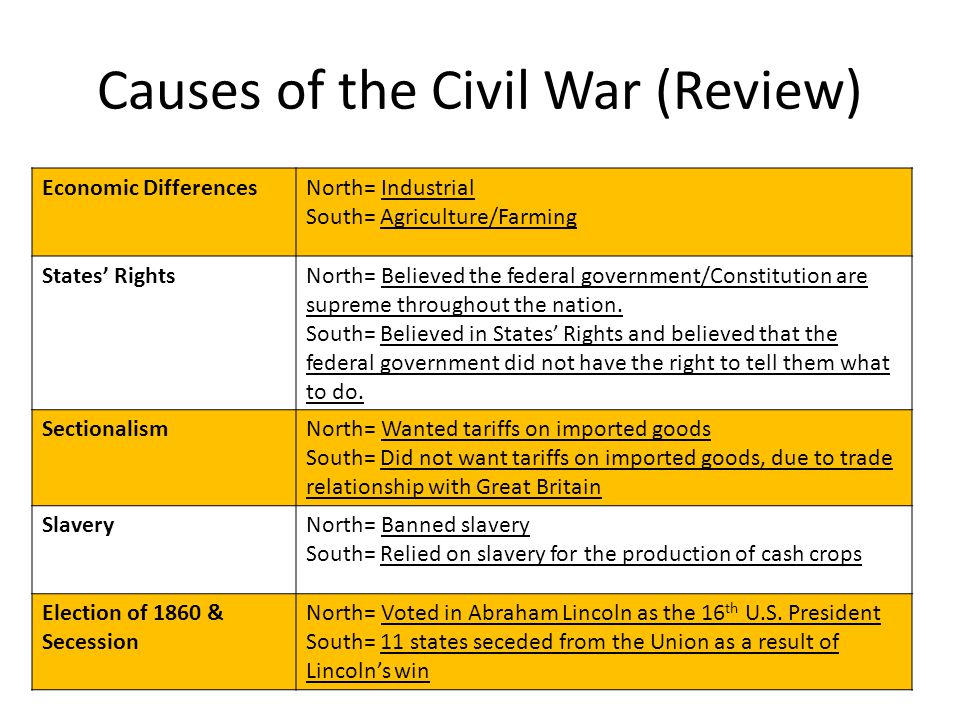
This created a zero-sum game in Washington. Every policy that helped a Northern factory owner—such as a tax on British steel—hurt a Southern plantation owner. The struggle for control of the federal government was, in many ways, a struggle for the power to set the nation’s fiscal agenda. Secession was viewed by many in the South as a “business divorce”—an attempt to escape a regulatory environment that they felt was designed to bankrupt their specific economic model.
The Financialization of the Conflict
When the war finally broke out, it was not just a test of military might but a test of financial endurance. The way both the North and the South funded the war effort forever changed the American financial landscape, introducing concepts that remain central to modern money management.
The Greenback and the Creation of National Banking
To fund the Union’s massive war expenditures, the Lincoln administration had to innovate. In 1862, the Legal Tender Act was passed, authorizing the creation of “Greenbacks”—paper currency not backed by gold or silver but by the “full faith and credit” of the government. This was a revolutionary shift toward modern fiat currency.
Furthermore, the National Banking Acts of 1863 and 1864 were passed to create a unified national currency and a more stable banking system. Before the war, thousands of different bank notes were in circulation, making commerce difficult and inefficient. By creating a national banking system, the North not only funded the war but also laid the groundwork for the modern American financial system. This centralization of financial power was exactly what the South had feared, but it proved to be a decisive advantage for the Union.
War Bonds and the Democratization of Investing
The North also pioneered the use of war bonds to tap into the savings of the general public. Through the efforts of financiers like Jay Cooke, the Union marketed government debt to ordinary citizens, not just wealthy elites. This was a landmark moment in the democratization of investing. By convincing people that buying a bond was both a patriotic duty and a sound financial investment, the North was able to raise billions of dollars.
The South, conversely, struggled to finance its rebellion. With its capital tied up in land and labor, the Confederacy lacked the liquidity to fund a long-term war. They attempted to issue their own currency, but without a strong central bank or the ability to tax effectively, the Confederate dollar suffered from hyperinflation. By the end of the war, the Southern economy had essentially collapsed, proving that in modern warfare, financial stability is as important as military strategy.
The Reconstruction of American Wealth
The conclusion of the Civil War did more than just end slavery and preserve the Union; it fundamentally reordered the American economy, shifting the seat of financial power definitively to the North and setting the stage for the United States to become a global economic superpower.
The Collapse of Southern Liquidity
The post-war period was a financial catastrophe for the South. The abolition of slavery represented the single largest liquidation of private property in history. Overnight, billions of dollars in “assets” vanished from the balance sheets of Southern landowners. Combined with the destruction of infrastructure and the worthlessness of Confederate currency, the South faced a liquidity crisis that would last for generations.
This economic vacuum led to the rise of sharecropping and tenant farming, systems that were designed to keep labor cheap and capital concentrated, but they lacked the scalability of the Northern industrial model. The South’s failure to diversify its “investment portfolio” before the war led to a century of economic stagnation.

The Emergence of the Modern Financial Superpower
While the South struggled to rebuild, the North entered a period of unprecedented economic expansion. The infrastructure built during the war—railroads, telegraph lines, and factories—fueled the Gilded Age. The centralized banking system and the national currency created during the conflict provided the stability necessary for the rise of massive corporations and the birth of modern Wall Street.
The “Main Cause” of the Civil War was the friction between an old-world wealth model and a new-world financial system. The Union’s victory ensured that the United States would move forward as a unified, industrial, and financially centralized nation. The war was the “great audit” of the American experiment, and the result was a shift from a collection of regional economies to a single, powerful, and global financial entity. In the end, the Civil War was as much about the future of the American dollar as it was about the soul of the American people.
aViewFromTheCave is a participant in the Amazon Services LLC Associates Program, an affiliate advertising program designed to provide a means for sites to earn advertising fees by advertising and linking to Amazon.com. Amazon, the Amazon logo, AmazonSupply, and the AmazonSupply logo are trademarks of Amazon.com, Inc. or its affiliates. As an Amazon Associate we earn affiliate commissions from qualifying purchases.