
The transition of the Soviet Union from a fragmented, agrarian society into a centralized industrial powerhouse remains one of the most radical economic transformations in modern history. At the heart of this shift was Joseph Stalin’s implementation of the command economy—a system where the state, rather than market forces, determined production, investment, prices, and incomes. To understand Stalin’s goals in creating this system, one must look past mere political ideology and examine the specific financial, geopolitical, and structural objectives he aimed to achieve. The command economy was not merely a social experiment; it was a high-stakes strategy for state survival and rapid capital accumulation.
Rapid Industrialization: The Quest for Economic Modernization
When Stalin rose to power in the mid-1920s, the Soviet Union was decades, if not centuries, behind the Western industrial powers. The New Economic Policy (NEP) of the early 1920s had allowed for a degree of private enterprise and market activity, but Stalin viewed this as too slow and inherently risky for the long-term survival of the Soviet state. His primary goal was to bridge the massive gap between the USSR and the West in a fraction of the time it had taken the United States or Great Britain to industrialize.
The Mechanism of the Five-Year Plans
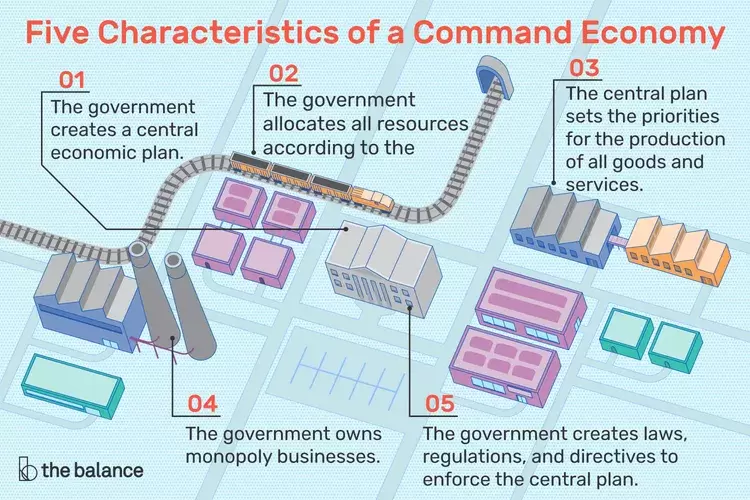
Stalin replaced the market-driven approach of the NEP with the First Five-Year Plan in 1928. The objective was clear: the state would take total control of all economic assets to funnel every available ruble and resource into heavy industry. By eliminating the “wasted” resources of consumer competition, Stalin believed the state could achieve 250% growth in industrial output and a 330% increase in heavy industry specifically.
This was a massive exercise in capital reallocation. Instead of capital flowing to where consumer demand was highest—such as textiles or luxury goods—the command economy forced capital into “Group A” industries: coal, iron, steel, and electricity. This forced industrialization was designed to build the “means of production” that would eventually allow the Soviet Union to become self-sufficient.
Shifting from Rural to Urban Economic Models
Stalin’s goal was to transform the very nature of the Soviet workforce. At the start of the command economy, the vast majority of the population consisted of peasant farmers. By centralizing the economy, Stalin aimed to forcibly move millions of people from the countryside into the cities to provide the labor for new factories. This urbanization was a financial necessity; industrial output offered higher profit margins for the state than traditional farming, and by controlling the labor market, the state could set wages low enough to maximize the surplus value used for further industrial reinvestment.
Totalitarian Control: The Financial Mechanics of Centralization
Beyond simple growth, Stalin’s goal was absolute control over the nation’s wealth. In a market economy, wealth is decentralized among private individuals, corporations, and banks. To Stalin, this decentralization was a threat to the state’s political monopoly. By creating a command economy, he effectively turned the entire nation into a single corporate entity, with the Communist Party acting as the board of directors.
The Role of Gosplan and Resource Allocation
The State Planning Committee, or Gosplan, became the nerve center of the Soviet economy. Stalin’s goal in empowering Gosplan was to eliminate the “anarchy of the market.” In his view, market fluctuations, inflation, and unemployment were systemic failures of capitalism that could be solved through scientific management.
Gosplan determined exactly how many tons of steel would be produced, where it would be shipped, and what the “price” would be. However, these prices were not reflective of value in a traditional sense; they were accounting tools used to move resources across the board. By controlling the supply chain from raw material to finished product, Stalin ensured that no private interest could ever challenge the state’s financial dominance.
Eradicating the “Scissors Crisis”
One of the major drivers for the command economy was the “Scissors Crisis” of the 1920s, where the price of industrial goods rose while the price of agricultural goods fell. This led to peasants withholding grain because they couldn’t afford to buy tools or clothes. Stalin’s goal in creating a command economy was to “close the scissors” by force. By setting prices administratively, the state could underpay farmers for their grain and overcharge for industrial goods, essentially taxing the peasantry to fund the building of factories. This was “primitive socialist accumulation”—the gathering of capital by any means necessary.
Geopolitical Survival: Defense and Autarky
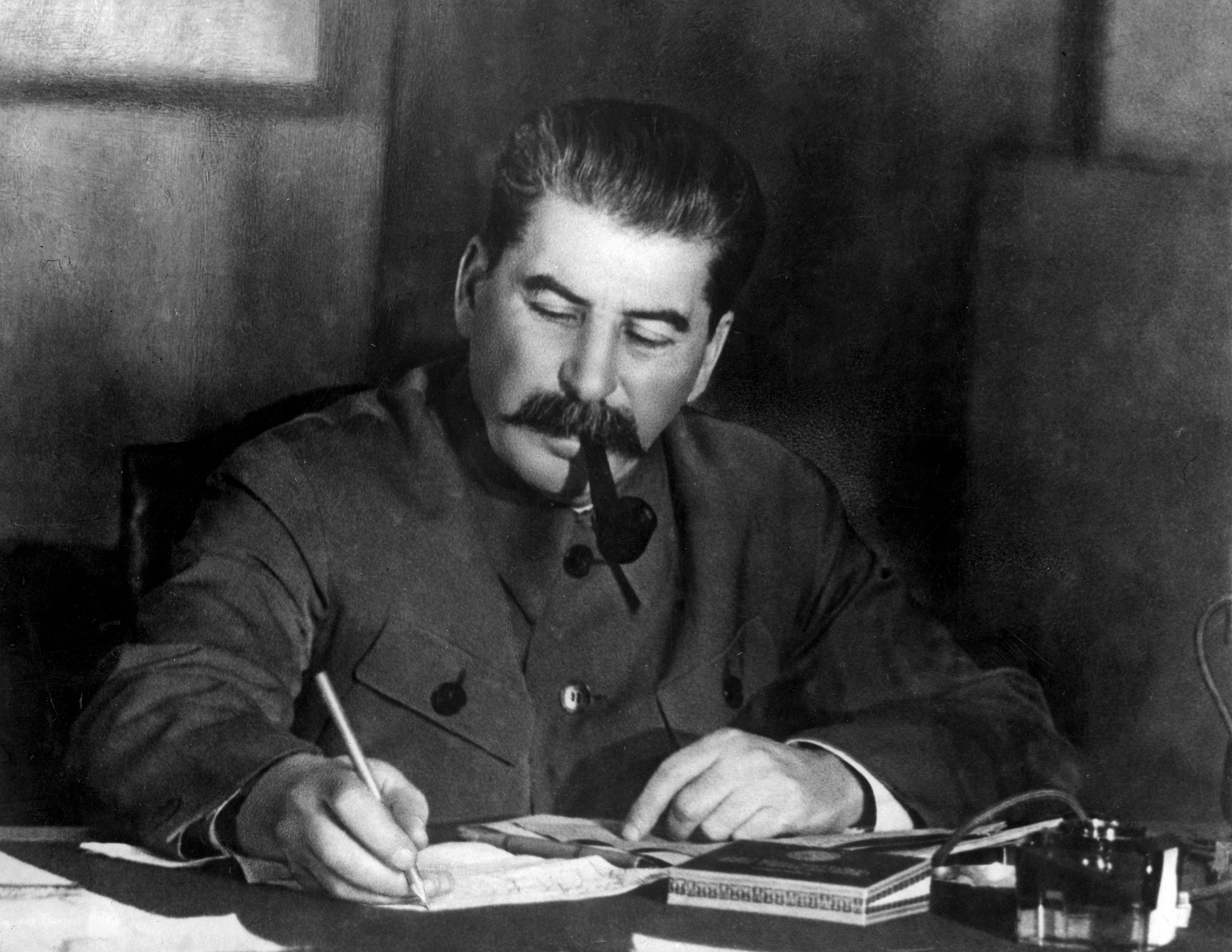
Stalin was notoriously paranoid about foreign intervention. He famously stated in 1931, “We are fifty or a hundred years behind the advanced countries. We must make good this distance in ten years. Either we do it, or they shall crush us.” The command economy was, therefore, a wartime economy established during a period of nominal peace.
Preparing for Impending Conflict
The goal of the command economy was to build a military-industrial complex that could rival any Western power. Under a market system, a country might rely on imports for certain technologies or materials. Stalin viewed this dependence as a fatal flaw. By controlling the economy, he could prioritize the production of tanks, aircraft, and artillery over the needs of the civilian population. The command economy allowed for the rapid construction of massive industrial centers deep in the Soviet interior, such as Magnitogorsk, which were intentionally placed far from potential invading armies.
Achieving Economic Autarky
Autarky, or total economic self-sufficiency, was a core pillar of Stalinist strategy. Stalin wanted to insulate the Soviet Union from the global capitalist markets, which he believed were prone to “contagious” depressions (such as the Great Depression of 1929). By creating an internal command system, the Soviet Union could ignore global price crashes and currency devaluations. This isolation was a strategic move to ensure that the Soviet Union’s financial stability was never tied to the health of its ideological enemies.
Collectivization and the Liquidation of Private Capital
The most brutal aspect of Stalin’s command economy was the forced collectivization of agriculture. This was not just an ideological move to eliminate private property; it was a calculated financial strategy to secure the state’s food supply and export revenue.
The War on the Kulaks
Stalin’s goal was to eliminate the “Kulaks”—the relatively wealthy peasants who had benefited from the NEP. These individuals held significant economic power because they controlled the grain supply. By forcing them into collective farms (Kolkhozy), Stalin effectively seized their capital (land, livestock, and machinery) and transferred it to the state. This allowed the state to collect grain directly, ensuring that the growing urban workforce was fed and that there was a surplus of grain to export on the international market.
Exporting Grain to Buy Technology
A key, often overlooked goal of the command economy was to generate hard currency. Despite the widespread famines caused by collectivization, the Soviet Union continued to export massive amounts of grain to Europe and the United States. Stalin used the proceeds from these sales to purchase sophisticated Western machinery and hire American and German engineers to build Soviet factories. In this sense, the command economy was a machine designed to extract wealth from the rural population to “buy” an industrial revolution from the West.
The Efficiency-Control Paradox: Lessons for Business and Finance
From a modern financial perspective, Stalin’s command economy provides a stark case study in the trade-off between centralized efficiency and systemic flexibility. While Stalin achieved his goal of rapid industrialization—turning the USSR into the world’s second-largest economy by the end of his reign—the costs were astronomical, not just in human lives, but in long-term economic health.
The Failure of Innovation and Pricing
One of Stalin’s goals was to eliminate waste, yet the command economy created a different kind of inefficiency. Without a price signal (the market’s way of communicating value), it was impossible for the central planners to know which products were actually needed. This led to massive surpluses of useless goods and chronic shortages of essentials. From a business finance standpoint, the command economy lacked a “feedback loop,” which eventually led to the stagnation of the Soviet system in the decades following Stalin’s death.

The Legacy of State-Directed Capital
Stalin’s model proved that a state could achieve incredible bursts of growth through the sheer force of capital misallocation—by starving one sector to engorge another. This “forced growth” model has been studied by various developing nations throughout the 20th and 21st centuries. However, the command economy also demonstrated that while you can command a factory to be built, you cannot command it to be innovative.
In conclusion, Joseph Stalin’s goal in creating a command economy was to forge a centralized, self-sufficient, and militarized superpower capable of surviving in a hostile global environment. He sought to replace the unpredictability of the market with the rigid certainty of the state, prioritizing heavy industry and military might over consumer welfare and market logic. While he succeeded in transforming the Soviet Union’s industrial profile, the methods used—forced collectivization, the eradication of private capital, and total bureaucratic control—created a rigid financial structure that would eventually struggle to compete in an increasingly interconnected and innovative global economy.
aViewFromTheCave is a participant in the Amazon Services LLC Associates Program, an affiliate advertising program designed to provide a means for sites to earn advertising fees by advertising and linking to Amazon.com. Amazon, the Amazon logo, AmazonSupply, and the AmazonSupply logo are trademarks of Amazon.com, Inc. or its affiliates. As an Amazon Associate we earn affiliate commissions from qualifying purchases.