
The Indus River, a lifeline for millions, flows through the heart of South Asia, its waters a source of sustenance and a canvas for geopolitical complexities. At the nexus of these vital flows lies the Indus Water Treaty (IWT), an agreement that has, for over six decades, governed the allocation and management of the Indus river system’s waters between India and Pakistan. Far more than just a water-sharing pact, the IWT stands as a testament to the power of diplomacy in navigating the turbulent waters of transboundary river disputes, particularly in a region often characterized by tension. Understanding the “what” of the Indus Water Treaty requires delving into its historical context, its core tenets, its impact on the nations involved, and its enduring relevance in the face of evolving challenges.

The Genesis of a Treaty: A Legacy of Colonial Division and Nascent Nationhood
The story of the Indus Water Treaty is inextricably linked to the partition of British India in 1947. The Indus River system, a vast network of rivers including the Indus, Jhelum, Chenab, Ravi, Beas, and Sutlej, was a single hydrological entity serving both the newly formed nations of India and Pakistan. However, the arbitrarily drawn Radcliffe Line, which delineated the border, placed the headwaters of most of these rivers within India, while the majority of the fertile plains they irrigated lay in Pakistan. This created an immediate and pressing concern for Pakistan, whose agricultural economy was heavily reliant on the waters flowing from India.
Prior to partition, the British colonial administration had established irrigation systems that spanned across the emerging border. The canals that flowed into what became West Pakistan originated in India, leading to a period of uncertainty and potential conflict immediately after independence. India, with its upstream position, held considerable leverage, and fears in Pakistan of India potentially diverting or damming these rivers were palpable. This fear was not unfounded; in the initial years, India did impose restrictions on water flow, exacerbating tensions.
The immediate aftermath of partition saw a period of ad-hoc arrangements and growing apprehension. The international community, particularly the United States and the World Bank, recognized the potential for this water dispute to escalate into a full-blown conflict, jeopardizing regional stability. The World Bank, in particular, played a pivotal role, stepping in as a mediator and facilitator. Their involvement was driven by a desire to prevent conflict, promote economic development in the region, and secure their own investments in the region.
The World Bank’s Crucial Role in Forging Consensus
The path to the IWT was arduous, marked by years of complex negotiations, technical deliberations, and diplomatic maneuvering. The World Bank’s engagement was multifaceted. They understood that a solution would require a pragmatic approach, one that acknowledged the legitimate needs of both nations while ensuring equitable distribution. This involved extensive technical studies on the hydrology of the Indus basin, assessing the water availability and the requirements of both countries.
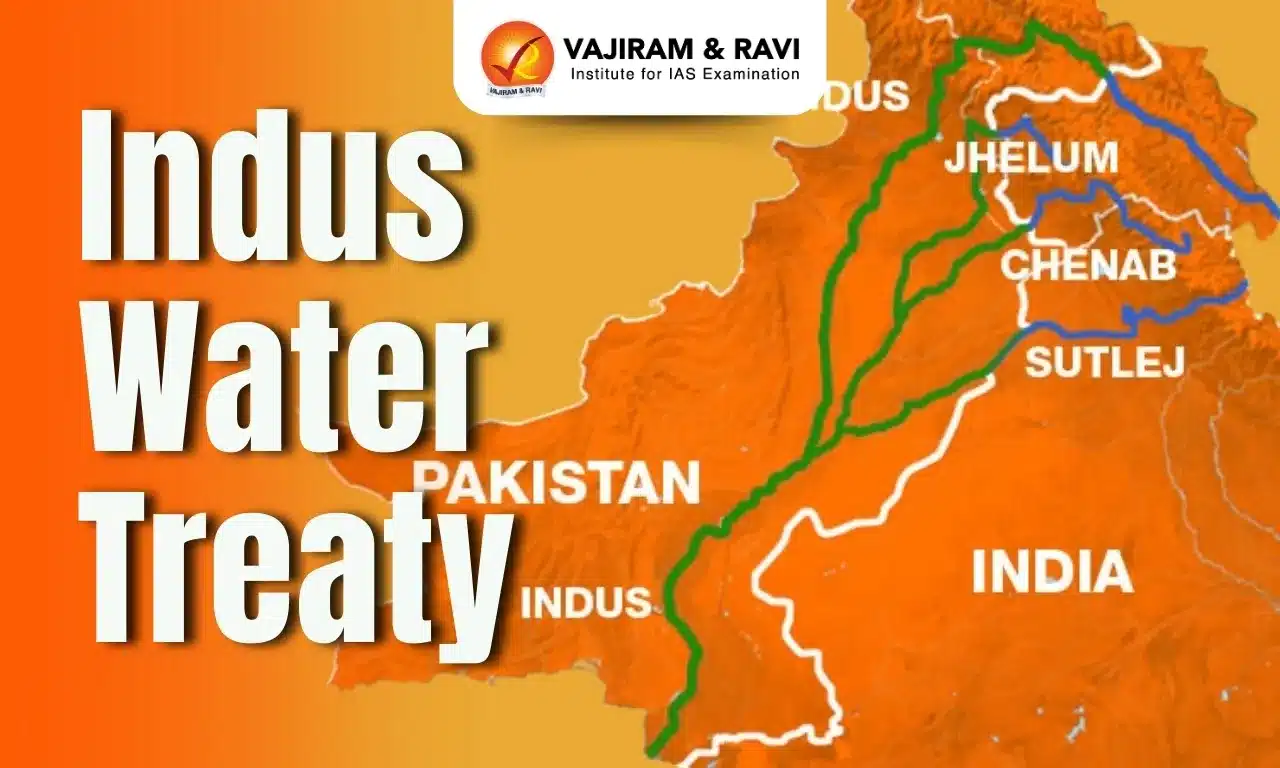
Crucially, the World Bank proposed a framework that moved beyond a simple equal division of waters. Their proposed solution, which formed the basis of the eventual treaty, recognized the natural flow of the rivers and allocated them based on the geographical realities of irrigation. This involved assigning the “western rivers” – the Indus, Jhelum, and Chenab – primarily to Pakistan, and the “eastern rivers” – the Ravi, Beas, and Sutlej – primarily to India. This allocation was a masterful stroke of diplomacy, acknowledging Pakistan’s vital dependence on the western rivers for its agricultural heartland, while also granting India control over the eastern rivers.
The negotiations were not without their challenges. Trust was a scarce commodity between the two nations, and the technical details were often a proxy for deeper political grievances. However, the persistent efforts of the World Bank, coupled with the growing realization on both sides that a peaceful resolution was in their best interests, eventually paved the way for the signing of the treaty.
The Indus Water Treaty: Key Provisions and Operational Framework
Signed on September 19, 1960, in Karachi, Pakistan, the Indus Water Treaty is a landmark agreement that meticulously outlines the rights and responsibilities of both India and Pakistan regarding the waters of the Indus River system. Its core principle is the equitable and sustainable utilization of the Indus basin’s waters, while acknowledging the historical water usage patterns and the geographical realities of the region.
Allocation of Rivers: A Strategic Division
The treaty divides the six rivers of the Indus basin into two categories:
- The Western Rivers: The Indus, Jhelum, and Chenab are, by and large, allocated for the exclusive use of Pakistan. India is permitted to undertake limited, non-consumptive uses and storage of waters from these rivers. This includes the construction of run-of-the-river hydroelectric power plants, which generate electricity without significantly impeding the flow downstream to Pakistan.
- The Eastern Rivers: The Ravi, Beas, and Sutlej are allocated for the exclusive use of India. Pakistan is allowed to receive the waters of these rivers as they flowed before the treaty, but India is permitted to construct storage facilities and divert these waters for its own use.
This allocation was a pragmatic compromise. It recognized Pakistan’s overwhelming dependence on the western rivers for its agricultural sector, which forms the backbone of its economy. For India, it meant access to waters from the eastern rivers for irrigation and power generation, supporting its own developmental needs.
The Permanent Indus Commission: A Mechanism for Cooperation and Dispute Resolution

A cornerstone of the IWT’s longevity is the establishment of the Permanent Indus Commission (PIC). This body, composed of one Commissioner from each country, is tasked with the day-to-day implementation of the treaty. The PIC serves as a vital communication channel, meeting regularly to discuss issues related to water flow, exchange data, and address any concerns that may arise.
The treaty also outlines a dispute resolution mechanism. If the Commissioners cannot resolve a dispute, it can be escalated to a neutral expert or, in more serious cases, to a Court of Arbitration. This multi-tiered approach has been instrumental in preventing minor disagreements from escalating into major conflicts. While the treaty has faced challenges and criticisms over the years, this institutional framework for dialogue and resolution has proven remarkably resilient.
Limited Indian Use of Western Rivers: A Sensitive Point
While the western rivers are primarily allocated to Pakistan, the treaty does allow India certain rights. These include:
- Domestic Use: India can use the waters for drinking, sanitation, and other domestic purposes.
- Non-Consumptive Use: India can construct hydroelectric power plants, which use water for power generation without consuming it.
- Limited Storage: India can build storage facilities on the western rivers, but these are subject to strict limitations to ensure that they do not significantly impact the flow downstream to Pakistan.
These provisions, particularly the storage limitations, have been a source of contention at various times. Pakistan has often expressed concerns about India’s hydroelectric projects on the western rivers, fearing that they could be used to control water flow during times of conflict. However, the treaty’s technical provisions and the PIC’s oversight have generally managed these concerns.
The Indus Water Treaty in Action: Impact, Challenges, and Enduring Relevance
The Indus Water Treaty has stood the test of time, surviving wars, political upheavals, and periods of intense diplomatic strain between India and Pakistan. Its success lies not just in its equitable allocation of water but also in its robust institutional framework that has fostered a degree of cooperation and prevented conflict.
Economic and Agricultural Significance
The IWT has had profound economic implications for both nations. For Pakistan, the assured flow of water from the western rivers has been crucial for its agricultural sector, supporting food security and economic stability. The Indus basin irrigation system, the largest in the world, is heavily reliant on these waters. Conversely, India has been able to develop its vast agricultural potential in Punjab and Rajasthan through the controlled use of the eastern rivers.
The treaty has also facilitated joint efforts in managing the river system. While full-scale joint projects are rare, the exchange of data and the consultative mechanisms within the PIC have contributed to better flood forecasting and management, benefiting both countries.
Geopolitical Stability and Water Diplomacy
In a region frequently characterized by geopolitical friction, the IWT has served as a crucial stabilizer. It represents a rare instance of successful transboundary water management between two nuclear-armed neighbors with a history of conflict. The treaty’s continued functioning, despite numerous challenges, underscores the importance of water as a resource that can either be a source of conflict or an impetus for cooperation.
The success of the IWT has also offered valuable lessons in water diplomacy globally. It demonstrates that with political will, scientific understanding, and the support of international mediators, even the most complex transboundary water disputes can be resolved.
Emerging Challenges and the Future of the Treaty
Despite its enduring success, the Indus Water Treaty faces new and evolving challenges:
- Climate Change: The impacts of climate change, including glacial melt patterns, altered monsoon cycles, and increased frequency of extreme weather events, are altering water availability in the Indus basin. This could lead to increased competition for water resources and put the treaty’s assumptions to the test.
- Population Growth and Increasing Water Demand: Both India and Pakistan are experiencing significant population growth, leading to escalating demand for water for agriculture, industry, and domestic use. This increased demand can create pressure on existing allocations.
- Technological Advancements and Project Interpretation: India’s pursuit of hydroelectric projects on the western rivers, while permissible under the treaty, continues to be a point of discussion and occasional contention. Debates often arise over the interpretation of treaty clauses related to storage and water flow impacts.
- Political Tensions: While the treaty provides a framework for cooperation, broader political tensions between India and Pakistan can sometimes strain its operational effectiveness, even if the core provisions remain intact.
The future of the Indus Water Treaty hinges on the continued commitment of both India and Pakistan to dialogue, cooperation, and adaptation. The treaty’s strength lies in its flexibility and the institutional mechanisms it has established. As water becomes an increasingly critical resource in the 21st century, the principles and lessons learned from the Indus Water Treaty will remain vital for managing transboundary water resources and fostering regional stability in South Asia and beyond. It stands as a powerful reminder that even in the face of deep-seated differences, cooperation over shared resources is not only possible but essential for sustained peace and prosperity.
aViewFromTheCave is a participant in the Amazon Services LLC Associates Program, an affiliate advertising program designed to provide a means for sites to earn advertising fees by advertising and linking to Amazon.com. Amazon, the Amazon logo, AmazonSupply, and the AmazonSupply logo are trademarks of Amazon.com, Inc. or its affiliates. As an Amazon Associate we earn affiliate commissions from qualifying purchases.