
The year 1994 was a watershed moment in global history, marking the end of apartheid in South Africa and the birth of a new democratic era. However, through the lens of modern brand strategy, the 1994 election was much more than a political transition; it was perhaps the most ambitious and successful rebranding project ever undertaken. It involved the simultaneous transformation of a personal brand—Nelson Mandela—and a corporate/national brand—South Africa.
To understand what was happening during the Mandela voting in 1994 from a branding perspective, we must examine how a nation moved from being a global pariah to a symbol of hope, and how one man’s image was curated to unify a fractured market of millions.

The Personal Brand of Nelson Mandela: From Prisoner to Global Icon
When Nelson Mandela walked out of Victor Verster Prison in 1990, the African National Congress (ANC) faced a unique branding challenge. Their primary product, the leadership of Mandela, had been invisible for 27 years. There were no contemporary photos of him, and his “brand voice” had been silenced by law. The 1994 election campaign required the rapid scaling of his personal brand to meet the needs of a diverse, skeptical, and frightened electorate.
The Power of Forgiveness as a Brand Value
In brand strategy, core values are the foundation of equity. Mandela’s primary brand value was reconciliation. During the 1994 voting period, this wasn’t just a moral stance; it was a strategic positioning designed to mitigate “consumer” fear. White voters feared retribution, while Black voters demanded justice. Mandela’s brand managed to bridge this gap by positioning “forgiveness” as a position of strength rather than weakness. This unique selling proposition (USP) differentiated him from other political figures and turned him into a global archetype of the “Statesman-Saint.”
Visual Consistency: The “Madiba Shirt” and the Smile
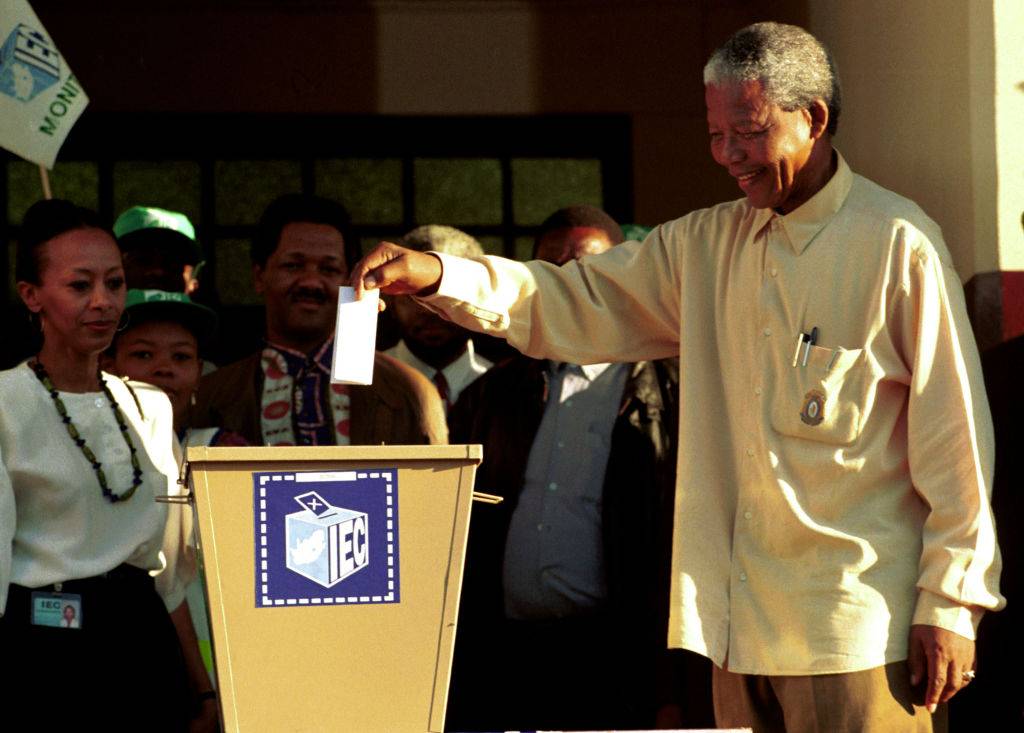
Successful brands use visual cues to signal identity. During the run-up to the 1994 election, Mandela’s visual brand underwent a specific evolution. He traded the austere suits of a revolutionary for the colorful, patterned “Madiba shirts.” This choice was a brilliant piece of brand design. It signaled a break from the rigid, Western, colonial aesthetic of the old regime. It portrayed him as a man of the people—approachable, vibrant, and authentically African. Combined with his constant smile, these visual assets worked to dismantle the “terrorist” brand image that the previous government had spent decades building.
Rebranding a Nation: Transitioning from Pariah State to the “Rainbow Nation”
While Mandela’s personal brand was being solidified, the nation itself was undergoing a radical corporate identity overhaul. In 1994, the “South Africa” brand was associated with segregation, sanctions, and systemic oppression. For the country to survive economically and socially, it needed a new brand architecture that could appeal to both internal stakeholders and international investors.
Desmond Tutu’s Coining of a New Identity
Every great brand needs a tagline or a “mission statement” that resonates emotionally. Archbishop Desmond Tutu provided this when he coined the term “The Rainbow Nation.” This wasn’t just a poetic phrase; it was a strategic brand framework. It allowed for a “multi-product” national identity where individual cultures (the colors of the rainbow) could remain distinct while forming a beautiful, unified whole. During the 1994 voting period, this concept was used to market the idea of diversity as a competitive advantage rather than a source of conflict.

Symbols of Change: The New Flag and National Anthem
In corporate branding, logos and jingles are essential for brand recognition. The 1994 transition saw the introduction of a new national flag—a masterpiece of design that combined the colors of the ANC, the former Boer republics, and the British colonial flags. This “logo” was designed to be inclusive, ensuring that every citizen could see a piece of their identity within it. Similarly, the merger of “Nkosi Sikelel’ iAfrika” and “Die Stem” into a single national anthem served as a powerful auditory brand identity. It forced two disparate groups to sing each other’s songs, physically manifesting the brand’s promise of unity during the voting process.
Marketing Democracy: The Logistics of Campaign Communication in 1994
The 1994 election was essentially a massive product launch in a market with high illiteracy rates, limited infrastructure, and severe geographical fragmentation. The ANC’s marketing strategy during this period is still studied today for its effectiveness in “reaching the unreachable.”
Reaching the Unreachable: Multi-channel Communication Strategies
The target audience for the 1994 election included millions of people in rural areas who had never voted before and had limited access to television or newspapers. To address this, the branding teams utilized grass-roots marketing techniques. They used radio—the most accessible medium—to broadcast educational content about how to vote. They also relied heavily on experiential marketing, sending activists into villages to perform mock voting exercises. This face-to-face brand engagement ensured that the “customer” (the voter) felt confident using the “product” (the ballot) on election day.
Messaging for Unity: “A Better Life for All”
The slogan “A Better Life for All” was the central value proposition of the 1994 ANC campaign. In brand terms, this was a masterful “big tent” message. It was vague enough to be inclusive but specific enough to offer hope. It addressed the economic anxieties of the poor without explicitly threatening the assets of the wealthy. During the tense days of voting, this slogan appeared on millions of posters, creating a consistent brand narrative that focused on the future (the “Better Life”) rather than the grievances of the past.
The Lasting Legacy of the 1994 Brand Strategy on Global Marketing
The events of 1994 provide several key takeaways for modern brand strategists and corporate leaders. The success of the South African transition was not just a political miracle; it was a triumph of strategic communication and identity management.
Brand Resilience in Times of Crisis
The 1994 election took place amidst significant violence and the threat of civil war. The “South Africa” brand survived because it was built on a foundation of radical transparency and authentic leadership. In modern branding, crisis management often fails because companies try to hide their flaws. The 1994 strategy did the opposite—it acknowledged the scars of the past and integrated them into the new brand story. This authenticity created brand resilience that allowed the nation to weather the storms of transition.
The Ethical Brand: Why Authenticity Mattered in 1994
Today, “Brand Purpose” is a buzzword in marketing, but in 1994, it was a matter of national survival. Mandela’s brand was successful because his actions perfectly aligned with his brand promise. When he invited his former jailer to his inauguration, he was “living the brand.” This alignment between promise and delivery is the holy grail of brand strategy. It proved that a brand built on ethical principles—when executed with professional marketing precision—can change the course of history.
In conclusion, what was happening during the Mandela voting in 1994 was a masterclass in how to pivot a toxic brand into a global leader. Through the strategic use of visual identity, emotional storytelling, and inclusive messaging, the leaders of 1994 did not just win an election; they built a brand that would define a nation for decades to come. For brand strategists today, the 1994 South African election remains the ultimate case study in the power of rebranding to create a new reality.
aViewFromTheCave is a participant in the Amazon Services LLC Associates Program, an affiliate advertising program designed to provide a means for sites to earn advertising fees by advertising and linking to Amazon.com. Amazon, the Amazon logo, AmazonSupply, and the AmazonSupply logo are trademarks of Amazon.com, Inc. or its affiliates. As an Amazon Associate we earn affiliate commissions from qualifying purchases.