
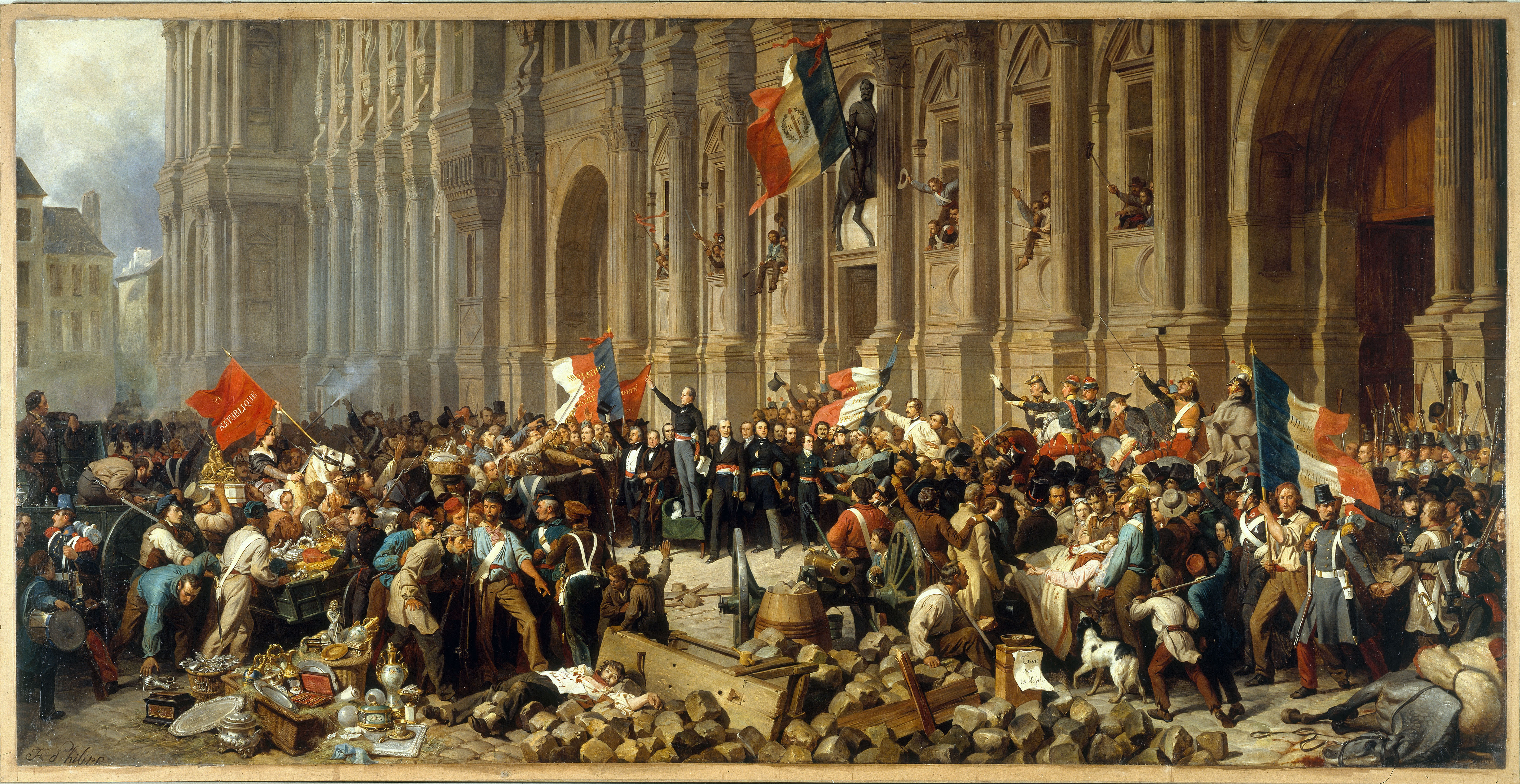
The year 1848 stands as a pivotal moment in global history, often remembered for its widespread political upheaval, dubbed the “Spring of Nations.” However, beneath the surface of revolutionary fervor and social unrest lay a complex tapestry of economic forces, financial shifts, and nascent business trends that fundamentally reshaped the world’s monetary landscape. From the sudden eruption of unprecedented wealth in California to the ideological battlegrounds of Europe, 1848 was a year where money, or the lack thereof, was a primary driver of change and a significant shaper of the future.

The Economic Catalysts of European Revolutions
Europe in 1848 was a powder keg of social, political, and, crucially, economic grievances. A series of poor harvests in the mid-1840s, particularly the potato blight that devastated Ireland and spread across the continent, led to widespread food shortages and soaring prices. This agricultural crisis was compounded by an industrial downturn, creating a potent cocktail of unemployment, poverty, and hunger that fueled popular discontent.
Agricultural Distress and Market Volatility
The agricultural sector, still the backbone of most European economies, suffered immensely. Grain prices surged, making staple foods unaffordable for the working class and peasantry. This created a demand-side shock in urban centers, as disposable income for manufactured goods plummeted. For many, the ability to feed one’s family became the most pressing political issue, directly translating into calls for economic reform and government intervention. The financial burden on individuals was immense, leading to widespread personal debt and a collapse in household solvency. Banks and lenders faced increasing defaults, creating a domino effect through the financial system.
Industrial Stagnation and Unemployment
The nascent industrial economies of Britain, France, and parts of Germany experienced a significant downturn in the late 1840s. Overproduction in some sectors, coupled with reduced consumer demand due to high food prices, led to factory closures and mass layoffs. This created a burgeoning urban proletariat with little to no social safety net. The sheer number of unemployed and underemployed workers presented an enormous economic and social challenge. Cities like Paris, Berlin, and Vienna saw their populations swell with rural migrants seeking work, only to find an already saturated and contracting labor market. The financial strain on municipalities to provide basic services for an impoverished populace was immense, often leading to budget crises and an inability to maintain public order without heavy-handed suppression.
Financial Strain on States and Calls for Fiscal Reform
The existing monarchical and aristocratic regimes faced severe financial pressures. They struggled to maintain expensive armies, bureaucracies, and royal households while facing dwindling tax revenues and increased demands for social welfare. The economic crisis exposed the fiscal fragility of many European states. Revolutionaries often demanded not just political rights but also significant economic reforms, including progressive taxation, land redistribution, and state-backed employment programs. The revolutions of 1848, in many ways, were as much about economic justice and financial security as they were about liberty and national self-determination. The inability of states to manage their finances and address the economic plight of their citizens directly fueled the revolutionary fires, demonstrating the critical link between stable finance and social stability.
The Dawn of a Gold Rush Economy: California’s Transformation
While Europe grappled with revolution, a discovery on the other side of the world began to lay the groundwork for a massive, unprecedented economic boom that would reshape global finance: the California Gold Rush. James W. Marshall’s discovery of gold at Sutter’s Mill on January 24, 1848, set in motion a chain of events that would transform a sleepy, newly acquired American territory into a crucible of wealth generation and entrepreneurial innovation.
Immediate Financial Impact and Migration
News of the gold discovery spread slowly at first, but by late 1848, it had ignited a frenzy. Early prospectors, primarily from California itself, began to extract significant quantities of gold, creating instant wealth for some. This triggered a massive migration of “forty-niners” in 1849, but the initial trickle in 1848 already foreshadowed the economic earthquake to come. Land values soared in nascent settlements, basic goods became incredibly expensive, and an informal economy based on raw gold dust quickly emerged. Merchants and entrepreneurs who provided supplies to the miners often made fortunes even faster than the miners themselves. The focus shifted entirely to quick wealth acquisition, with traditional economic activities being abandoned in favor of prospecting.

Creation of New Industries and Market Dynamics
Even in 1848, the groundwork was being laid for an economy built around servicing the gold seekers. Blacksmiths, outfitters, hoteliers, and transporters saw immediate, unprecedented demand. The scarcity of labor meant wages for non-mining activities skyrocketed, drawing people away from their established trades. The sudden influx of gold created a unique market where supply struggled to keep up with demand, leading to exorbitant prices for everything from shovels to foodstuffs. This raw capitalism, driven by immediate gratification and speculative opportunity, would define California’s early financial development and profoundly influence American economic expansion westward. It was a true free-market laboratory, albeit a chaotic one, demonstrating the power of a sudden wealth injection to create new markets and redistribute capital on a massive scale.
Ideological Foundations of Economic Thought: The Communist Manifesto
Amidst the economic turmoil and the promise of new wealth, 1848 also marked a seminal moment in economic philosophy with the publication of Karl Marx and Friedrich Engels’ The Communist Manifesto. While its immediate impact was limited, its long-term influence on economic theory, labor movements, and state-planned economies cannot be overstated.
Critique of Capitalism and Class Struggle
The Manifesto offered a searing critique of industrial capitalism, arguing that it inherently created class struggle between the bourgeoisie (owners of capital and means of production) and the proletariat (wage laborers). It posited that capitalism was inherently exploitative, alienating workers from the fruits of their labor and concentrating wealth in the hands of a few. From a financial perspective, it challenged the fundamental assumptions of private property, free markets, and profit motives, proposing instead a collective ownership of the means of production to achieve economic equality and eliminate poverty.
Long-Term Economic and Political Ramifications
Although not immediately influential on the economic policies of 1848, the Communist Manifesto laid the theoretical groundwork for future socialist and communist movements that would profoundly shape the 20th century’s economic landscape. Its ideas would inspire revolutions, the creation of state-controlled economies, and significant debates about wealth distribution, labor rights, and the role of government in the economy. For business owners and investors, it represented a radical challenge to their very existence, outlining a vision where private capital would be abolished. The ideas presented in 1848 would echo for decades, influencing labor negotiations, the development of social welfare programs, and ultimately the economic systems of entire nations, creating a global ideological divide concerning financial organization.
Global Trade and Early Industrial Finance
Beyond the revolutions and gold rushes, 1848 was also a period of incremental, yet significant, developments in global trade and industrial finance, largely driven by the ongoing Industrial Revolution.
Expanding Global Trade Networks
Despite regional instability, global trade continued to expand, albeit unevenly. New technologies such as steamships and railways were beginning to shrink distances and speed up the movement of goods and capital. Britain, as the preeminent industrial and maritime power, continued to dominate international commerce, exporting manufactured goods and importing raw materials from its vast colonial empire and other trading partners. The ability to transport goods more efficiently meant that markets were becoming more interconnected, and prices for commodities were beginning to stabilize across wider geographic areas. This interconnectedness also meant that economic shocks in one region could more easily ripple across others, as seen with the pan-European impact of agricultural failures.
Nascent Industrial Finance and Capital Markets
Industrial finance in 1848 was still relatively rudimentary compared to later periods. Large-scale corporate structures were evolving, and the pooling of capital for massive industrial projects – railways, canals, factories – was increasingly important. Banks played a crucial role in providing loans and facilitating international payments. Stock exchanges, while existing, were less sophisticated and accessible to the general public than they would become. Investment decisions were often made by wealthy individuals or small groups of financiers. The concept of joint-stock companies, allowing for broader investment and risk-sharing, was gaining traction, laying the foundation for modern corporate finance and broader public participation in capital markets. The need for capital to fund the expansion of industry and infrastructure was immense, driving innovation in financial instruments and institutions.
In summary, 1848 was a year where economic forces were undeniably at the forefront of global change. The scarcity of resources and the unequal distribution of wealth ignited revolutions across Europe, while the discovery of gold transformed the economic prospects of a continent. Simultaneously, new intellectual frameworks emerged to challenge existing financial paradigms, and the underlying mechanisms of global trade and industrial investment continued their steady, transformative march. Understanding 1848 requires looking not just at political manifestos, but at ledgers, market prices, and the desperate financial realities of millions.
aViewFromTheCave is a participant in the Amazon Services LLC Associates Program, an affiliate advertising program designed to provide a means for sites to earn advertising fees by advertising and linking to Amazon.com. Amazon, the Amazon logo, AmazonSupply, and the AmazonSupply logo are trademarks of Amazon.com, Inc. or its affiliates. As an Amazon Associate we earn affiliate commissions from qualifying purchases.