
While Albert Einstein’s genius is undeniable, the question of his exact IQ score is a subject of perpetual fascination and, often, speculation. This fascination isn’t merely about a number; it delves into our understanding of intelligence itself, how we measure it, and what it truly signifies. When we talk about Einstein’s IQ, we’re not just discussing a historical figure; we’re engaging with concepts that are deeply intertwined with the evolution of cognitive science and the way we approach the measurement of human potential, especially in the realm of technological advancement.
The Elusive Nature of Einstein’s IQ Score
The immediate challenge when addressing “what was Einstein’s IQ” is that Einstein himself never took a standardized IQ test during his lifetime. The modern IQ test, as we know it, was still in its nascent stages during much of his active scientific career. Therefore, any figure you might encounter is an estimation, a retrospective calculation based on his achievements, intellectual output, and perhaps anecdotal evidence. This inherent lack of direct empirical data is crucial to understanding why the topic is so prone to mythologizing.
Retrospective Estimations and Their Limitations
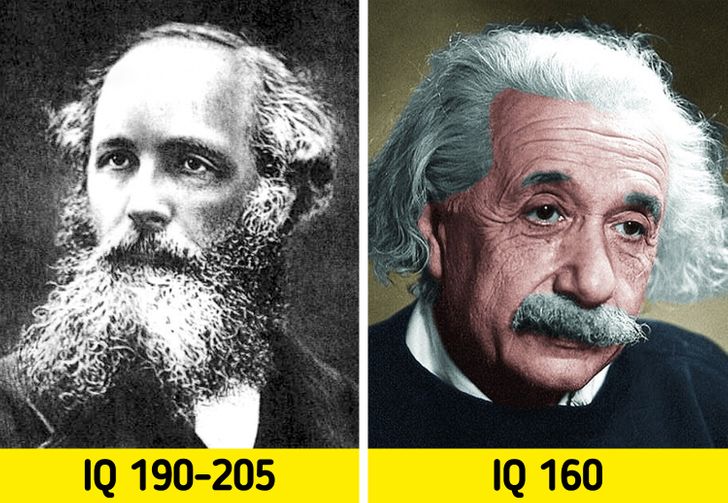
Numerous psychologists and researchers have attempted to estimate Einstein’s IQ posthumously. These estimations often place his IQ in the stratosphere, with figures frequently cited around 160 or even higher. These calculations are typically derived by analyzing his contributions to physics, his problem-solving methodologies, his capacity for abstract thought, and his ability to articulate complex ideas. However, it’s vital to acknowledge the significant limitations of such retrospective analyses.
IQ tests are designed to measure a range of cognitive abilities, including logical reasoning, spatial intelligence, verbal comprehension, and working memory. While Einstein undoubtedly excelled in many of these areas, particularly logical reasoning and abstract thought, a comprehensive assessment would require standardized testing under controlled conditions. Relying solely on his scientific output, while impressive, is akin to judging a chef’s full culinary skill set based on only one masterpiece dish. It provides an indication, but not a complete picture. Furthermore, different IQ tests employ varying scales and methodologies, meaning even if he had taken a test, the score could differ depending on the specific instrument used.
The Evolution of Intelligence Measurement
The very concept of IQ has evolved significantly since the early 20th century. Initially conceived to identify children with learning difficulties, the focus gradually shifted towards a broader assessment of cognitive abilities. The development of more sophisticated tests, such as the Stanford-Binet Intelligence Scales and the Wechsler Adult Intelligence Scale (WAIS), aimed to provide a more nuanced understanding of different facets of intelligence. These tests also introduced concepts like the deviation IQ, which compares an individual’s score to the average performance of their age group, offering a more robust statistical measure than earlier ratio IQs.
Einstein’s era predates the widespread adoption and refinement of these modern assessment tools. His brilliance was primarily recognized through his groundbreaking scientific theories and his ability to challenge established paradigms. His contributions, such as the theory of special relativity, the explanation of the photoelectric effect (which earned him the Nobel Prize), and the theory of general relativity, are testaments to a cognitive capacity that transcended conventional measures. These achievements demonstrate an extraordinary ability in abstract thinking, pattern recognition, and the formulation of novel hypotheses – skills that are undoubtedly components of high intelligence.
Einstein’s Intellectual Prowess Beyond a Single Number
Focusing solely on an IQ score risks oversimplifying the multifaceted nature of Einstein’s genius. His true impact lies not in a quantifiable number, but in the profound ways he reshaped our understanding of the universe and the scientific method. His cognitive abilities were characterized by a unique blend of imagination, intuition, and rigorous logical deduction.
Creativity and Intuition in Scientific Discovery
Einstein himself often emphasized the role of intuition and imagination in scientific discovery. He famously stated, “The most beautiful thing we can experience is the mysterious. It is the source of all true art and science.” This suggests that his “intelligence” wasn’t merely about rote memorization or rapid calculation, but a profound ability to connect disparate concepts, visualize complex phenomena, and pose questions that others hadn’t even considered. His thought experiments, such as imagining riding alongside a beam of light, were crucial in developing his theories. This creative spark, this ability to see beyond the observable and into the theoretical, is a hallmark of exceptional intellect.
The Power of Focused Problem-Solving
While creativity was essential, Einstein was also a master of focused, persistent problem-solving. His work on general relativity, for instance, was the culmination of years of intense intellectual labor and wrestling with complex mathematical and conceptual challenges. He possessed an extraordinary capacity for deep concentration and an unwavering commitment to unraveling the most intricate scientific puzzles. This sustained intellectual effort, coupled with his ability to approach problems from unconventional angles, allowed him to achieve breakthroughs that eluded his contemporaries.
The Modern Lens: How We Assess High Intelligence Today
In the contemporary landscape, the assessment of high intelligence, particularly in fields related to science and technology, often involves a combination of factors. While IQ tests remain a common tool, they are increasingly viewed as one piece of a larger puzzle.
Beyond IQ: Broader Cognitive Assessments
Modern cognitive assessments often go beyond traditional IQ scores to include measures of creativity, critical thinking, problem-solving agility, and even emotional intelligence. In the tech world, for instance, employers often look for candidates who not only possess strong analytical skills but also exhibit adaptability, a capacity for innovation, and the ability to collaborate effectively. The rapid pace of technological change demands individuals who can learn quickly, unlearn outdated information, and apply their knowledge in novel ways.
The development of artificial intelligence has also offered new perspectives on intelligence. AI research explores different forms of intelligence, from the machine learning algorithms that power recommendation engines to the sophisticated natural language processing that enables tools like chatbots. This ongoing exploration of AI’s capabilities inadvertently prompts us to re-evaluate our own definitions of intelligence and how we measure it. The ability of AI to perform complex calculations or recognize patterns at speeds far exceeding human capacity raises questions about what constitutes “human” intelligence and its unique attributes, such as consciousness and subjective experience, which remain beyond the scope of current AI.
The Role of IQ in Technological Fields
Within technologically driven fields, high IQ scores are often correlated with success, particularly in areas requiring abstract reasoning, complex problem-solving, and rapid learning. Fields like theoretical physics, advanced mathematics, computer science, and certain engineering disciplines benefit from individuals who can grasp intricate theoretical frameworks and develop innovative solutions. For example, the development of cutting-edge AI algorithms or the design of complex quantum computing systems requires a profound level of analytical and abstract thinking.
However, it’s crucial to reiterate that a high IQ is not a sole determinant of success, even in these fields. Other factors, such as perseverance, a strong work ethic, collaboration skills, and the ability to communicate complex ideas clearly, are equally, if not more, important. The history of innovation is replete with examples of individuals who, while possessing exceptional intellect, also benefited from a supportive environment, mentorship, and the ability to translate their theoretical insights into practical applications.
The Legacy of Einstein’s Intellect: Inspiration and Aspiration
Ultimately, the fascination with Einstein’s IQ serves as a proxy for our collective admiration of his unparalleled intellectual contributions. His legacy is not defined by a single number, but by the profound transformation he brought to our understanding of the cosmos. His work laid the foundation for numerous technological advancements, from nuclear energy to the lasers used in everything from barcode scanners to medical procedures.
The Ongoing Influence of His Theories
Einstein’s theories continue to be the bedrock of modern physics and cosmology. Concepts like spacetime, black holes, and the expansion of the universe, which he conceptualized and helped to explain, are now areas of active research and technological development. The precision required for GPS systems, for instance, is only possible because of the corrections derived from Einstein’s theories of relativity. The very existence of technologies we take for granted, from advanced communication networks to sophisticated medical imaging, owes a debt to the foundational understanding of physics that Einstein helped to establish.
Cultivating Future Geniuses
The enduring interest in Einstein’s mind encourages us to ponder how we can foster similar levels of intellectual curiosity and problem-solving ability in future generations. While not everyone will achieve Einstein’s level of scientific breakthrough, the principles he embodied – deep curiosity, imaginative thinking, rigorous analysis, and a relentless pursuit of understanding – are universally valuable. In the context of technology, this translates to encouraging STEM education, fostering creativity, and nurturing the critical thinking skills necessary to navigate an increasingly complex and technologically driven world. The quest to understand intelligence, exemplified by the ongoing discussion around Einstein’s IQ, remains a vital endeavor in our pursuit of human potential and our capacity for innovation.
aViewFromTheCave is a participant in the Amazon Services LLC Associates Program, an affiliate advertising program designed to provide a means for sites to earn advertising fees by advertising and linking to Amazon.com. Amazon, the Amazon logo, AmazonSupply, and the AmazonSupply logo are trademarks of Amazon.com, Inc. or its affiliates. As an Amazon Associate we earn affiliate commissions from qualifying purchases.