
The journey of Bitcoin, from an esoteric concept on a cryptography mailing list to a global financial asset, is punctuated by extraordinary volatility. Its price trajectory has been a breathtaking rollercoaster, marked by meteoric rises and dramatic, often terrifying, crashes. For investors, enthusiasts, and even skeptics, understanding Bitcoin’s historical lows is not merely a matter of curiosity; it offers critical insights into its resilience, its market dynamics, and the psychological fortitude required to navigate the frontier of digital assets. While many celebrate its all-time highs, the deepest troughs often tell a more profound story about its fundamental value, investor sentiment, and its enduring capacity for recovery.

Tracing Bitcoin’s Genesis and Early Valuations
To truly understand Bitcoin’s “lowest price,” one must delve into its origins, a period before it held any discernible monetary value in the traditional sense. Its genesis was not a financial transaction but a technical one, laying the groundwork for a revolutionary peer-to-peer electronic cash system.
The Genesis Block and First Transactions
Bitcoin officially came into existence on January 3, 2009, with the mining of the Genesis Block by its pseudonymous creator, Satoshi Nakamoto. The first 50 Bitcoins created had no market price; they were simply the reward for validating the initial block. For months, Bitcoin remained a purely technical curiosity, traded only among a small group of cypherpunks and developers. Its “price” at this stage was effectively zero, existing outside any established financial market.
The most famous early transaction occurred on May 22, 2010, when Laszlo Hanyecz paid 10,000 Bitcoins for two pizzas. At that time, the value was negotiated offline, with the merchant accepting $25 worth of pizza for what would eventually become hundreds of millions of dollars. This event, now celebrated as “Bitcoin Pizza Day,” exemplifies the nascent stage of Bitcoin where its utility was just beginning to be explored, and its market value was almost non-existent.
The Initial Exchange Listings and Fluctuations
The first rudimentary exchanges began to appear in 2010, allowing users to trade Bitcoin for fiat currency. The earliest recorded exchange rate was on October 5, 2009, when New Liberty Standard set a rate of 1 USD = 1,309.03 BTC, valuing one Bitcoin at approximately $0.00076. This was based on the cost of electricity used to mine the coins. For a period, Bitcoin hovered around these fractions of a cent.
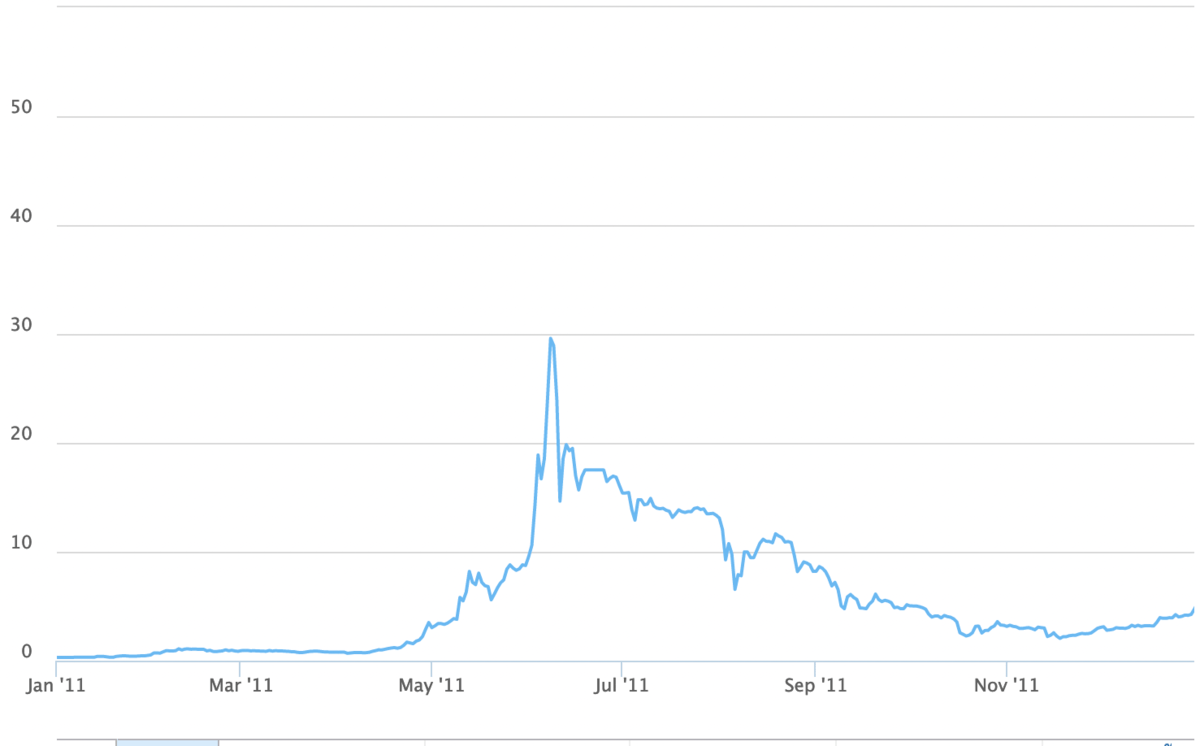
As more exchanges launched and interest grew, its price started to fluctuate more actively. By early 2011, Bitcoin had reached parity with the U.S. dollar, and even briefly surpassed it, climbing to over $30 by June of that year. However, these early surges were often followed by sharp corrections. The “lowest price” in a market sense, after it gained some traction, was still very much tied to these initial fractions of a cent before it consolidated any significant value.
Bitcoin’s Lowest Recorded Price (Post-Initial Valuation)
Pinpointing a single “lowest price” after Bitcoin acquired a discernible market value is nuanced, as different exchanges might have recorded slightly different lows. However, the period between 2010 and early 2011 saw Bitcoin trade consistently for mere cents. The absolute lowest recorded value on any exchange during its early days, post-initial calculation, remained around $0.00076 to $0.0008 per Bitcoin. This was the ultimate financial floor for Bitcoin as it transitioned from an idea to a tradeable asset. Even after its initial pumps and dumps to a few dollars, it never returned to these sub-cent levels.
The Rollercoaster Ride: Major Crashes and Subsequent Lows
Beyond its initial, near-zero valuation, Bitcoin’s history is peppered with significant price corrections that have tested the resolve of investors. These “crypto winters” represent subsequent lowest points after it had established substantial market value, providing crucial lessons in volatility and resilience.
The Mt. Gox Collapse (2014)
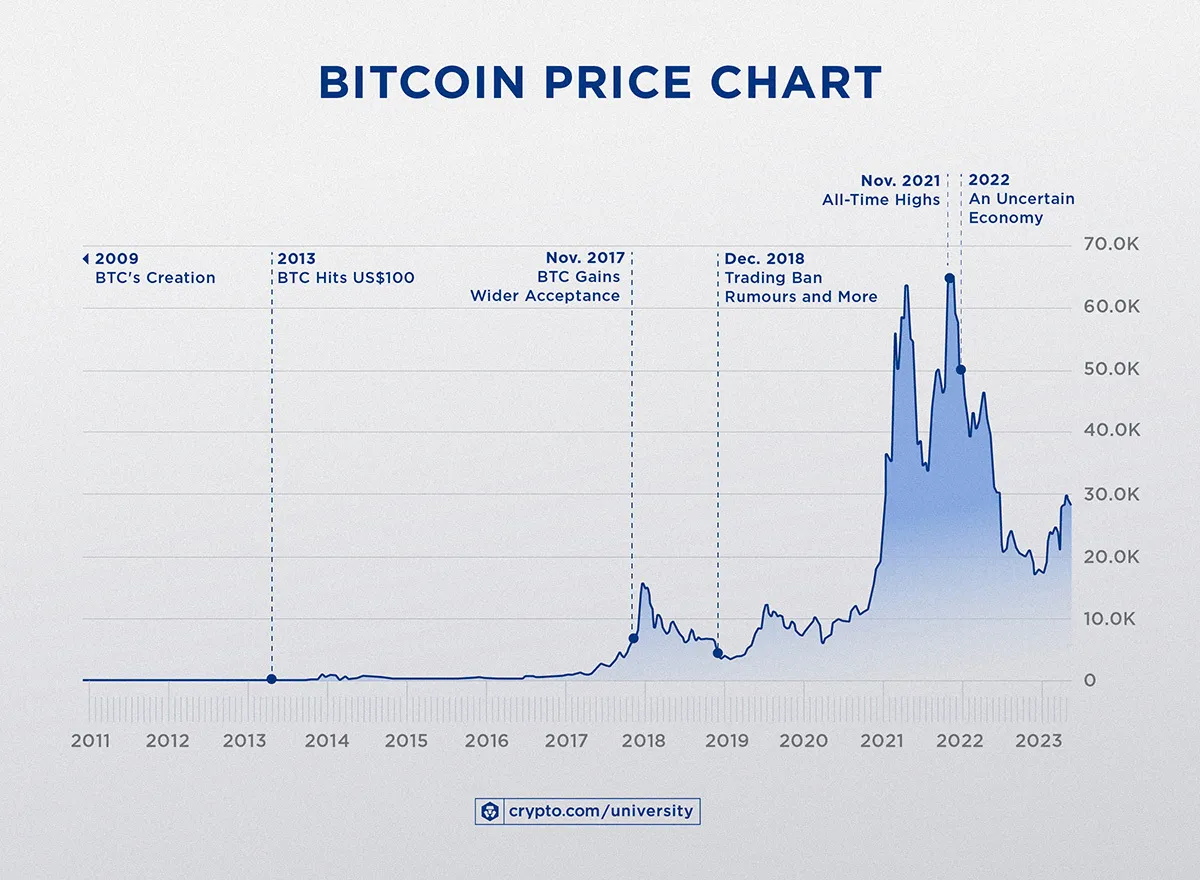
Following its first major bull run in 2013, which saw Bitcoin climb past $1,000, the market was shaken by the collapse of Mt. Gox, then the world’s largest Bitcoin exchange. The exchange’s insolvency and eventual bankruptcy, due to hacks and mismanagement, triggered a massive sell-off and a prolonged bear market. From its peak, Bitcoin crashed significantly. During this period, in late 2014 and early 2015, Bitcoin touched lows around $150-$200. This represented a staggering 80%+ drop from its peak, a stark reminder of the nascent market’s fragility and the risks associated with unregulated exchanges.
The Crypto Winter of 2018-2019
The year 2017 was legendary for Bitcoin, seeing its price surge from under $1,000 to nearly $20,000 by December. This parabolic rise was followed by an equally dramatic collapse, ushering in the “crypto winter” of 2018. Throughout 2018, Bitcoin steadily declined, shedding over 80% of its value from the all-time high. By December 2018, Bitcoin reached its lowest point of that cycle, hovering around $3,100-$3,200. This period was marked by widespread capitulation, with many calling Bitcoin a failed experiment. Yet, it also proved to be a significant accumulation zone for those with a long-term vision.
The Black Thursday Crash (March 2020)
As the COVID-19 pandemic began to spread globally in March 2020, fear gripped financial markets worldwide. Traditional assets plummeted, and Bitcoin, which had shown signs of recovery from the 2018 crash, was not immune. On March 12-13, 2020, an event dubbed “Black Thursday,” Bitcoin experienced a flash crash, falling over 50% in a single day. Its price briefly touched lows around $3,800-$4,000 before quickly rebounding. This event demonstrated Bitcoin’s growing correlation with broader macroeconomic sentiment, particularly during extreme market panic.
Other Notable Bear Market Bottoms
Bitcoin has seen other significant downturns, each leaving its mark. For instance, after reaching new all-time highs above $60,000 in late 2021, the market entered another prolonged bear phase throughout 2022. This period saw Bitcoin drop significantly, reaching lows around $15,500-$16,000 in November 2022, largely driven by macroeconomic pressures (inflation, rising interest rates) and significant events within the crypto space, such as the collapse of FTX. Each of these lows, while higher than the previous cycle’s trough, represented profound tests of investor conviction.
Why Understanding Bitcoin’s Lows Matters for Investors
For those engaged in personal finance and investing, Bitcoin’s historical lows are not just points on a chart; they are invaluable case studies in risk, opportunity, and market psychology.
Volatility as a Characteristic
Bitcoin’s journey unequivocally demonstrates that extreme volatility is an inherent characteristic of this nascent asset class. Its price swings dwarf those of traditional assets. Understanding its historical lows helps investors internalize that significant drawdowns are a feature, not a bug, of Bitcoin’s market behavior. This awareness is crucial for setting realistic expectations and preparing for potential losses.
Risk Management and Entry Points
Knowledge of past lows can inform robust risk management strategies. It underscores the importance of not investing more than one can afford to lose and diversifying one’s portfolio. For long-term investors, historical bottoms also present potential opportunities. Strategies like dollar-cost averaging (DCA), where one invests a fixed amount regularly regardless of price, can capitalize on dips, effectively lowering the average purchase price over time. Identifying capitulation points, even retrospectively, helps in understanding potential “buy the dip” scenarios, though predicting the exact bottom is notoriously difficult.
Long-Term Perspective
Perhaps the most significant lesson from Bitcoin’s lows is its remarkable resilience and capacity for recovery. Despite numerous pronouncements of its death, Bitcoin has consistently recovered from every major crash, eventually surpassing previous all-time highs. This long-term perspective is vital for investors to avoid emotional selling during downturns and to appreciate Bitcoin’s potential as a generational asset. The fact that it has grown from fractions of a cent to tens of thousands of dollars, despite multiple 80%+ corrections, is a powerful testament to its enduring value proposition.
Psychological Resilience
Navigating a highly volatile asset like Bitcoin demands significant psychological resilience. Understanding the historical price action – how severe the drops can be, but also how robust the recoveries have been – can help investors maintain conviction during bear markets. It teaches that panic selling often locks in losses, while patience and adherence to a long-term strategy can be richly rewarded.
The Financial Implications of Price Floors
Beyond individual investment strategy, Bitcoin’s price floors have broader financial implications that resonate throughout the crypto ecosystem and beyond.
Assessing True Value vs. Speculative Bubbles
While Bitcoin’s ultimate “true” value is a subject of ongoing debate, its price floors can offer clues. The lowest points during bear markets often represent periods where speculative froth has been largely purged, leaving behind investors who believe in its fundamental utility as a decentralized, censorship-resistant, hard-capped digital currency. These lows might suggest a floor derived from its adoption as a store of value or a medium of exchange, rather than pure speculation.
Miner Profitability and Network Security
Bitcoin’s security is directly tied to its mining network, which relies on miners expending computational power (and thus electricity) to validate transactions and secure the blockchain. When Bitcoin’s price falls significantly, it can push some miners out of profitability, especially those with higher operational costs. Sustained low prices can lead to a decrease in mining activity, potentially impacting the network’s hash rate and, consequently, its security. Conversely, a rising price floor supports a robust and secure network.
Regulatory Scrutiny and Market Maturation
Periods of extreme volatility, particularly sharp downturns, often intensify calls for greater regulation of the cryptocurrency market. Policymakers and financial institutions become more concerned about investor protection and systemic risk. While seemingly negative, this scrutiny can contribute to market maturation by prompting the development of clearer regulatory frameworks, more robust infrastructure, and increased institutional participation, which could, paradoxically, lead to more stable price floors in the future.
The Role of Macroeconomic Factors
Initially, Bitcoin’s price was largely independent of traditional financial markets. However, as it has matured and gained institutional adoption, its price, especially during downturns, has shown increasing correlation with macroeconomic factors. Global inflation rates, interest rate hikes, geopolitical tensions, and overall market liquidity now play a significant role in determining Bitcoin’s perceived risk-on/risk-off status, influencing its floor during periods of global financial stress.
Looking Ahead: The Future of Bitcoin’s Price Discovery
Bitcoin’s journey is far from over. As it continues to evolve, its price discovery mechanisms, and thus its future “lowest prices,” will likely be shaped by a confluence of unique characteristics and broader financial trends.
Maturing Market Dynamics
With growing institutional involvement, clearer regulatory landscapes, and the development of sophisticated financial products (like Bitcoin ETFs), the market dynamics are maturing. This could lead to less extreme volatility over time, potentially establishing higher, more stable price floors during future downturns compared to the wild swings of its early years. Professional traders and large financial entities tend to smooth out extreme price movements.
Halving Cycles and Scarcity
The periodic “halving” events, which reduce the supply of newly minted Bitcoins, continue to be a fundamental driver of its scarcity and, by extension, its price. Each halving has historically preceded a significant bull run, followed by a correction that, while substantial, establishes a new, higher price floor than the previous cycle. This built-in supply shock mechanism will likely continue to influence future lows.
Bitcoin’s Role as a Store of Value
Bitcoin’s narrative is increasingly shifting from a speculative digital currency to a “digital gold” or a robust store of value, especially in an era of unprecedented fiat currency debasement. As this narrative strengthens and gains wider acceptance, its perceived fundamental value as a hedge against inflation and economic instability could contribute to higher, more resilient price floors, even during periods of market stress.
Conclusion
Bitcoin’s lowest price, in its earliest days, was a mere fraction of a cent – a historical footnote marking its transition from an abstract concept to a digital commodity. Subsequently, its journey has been characterized by multiple significant crashes, each pushing its value down by 80% or more from its peaks. From the ~$150-$200 lows following the Mt. Gox collapse, to the ~$3,100-$3,200 bottom of the 2018 Crypto Winter, and the ~$3,800-$4,000 flash crash of Black Thursday 2020, Bitcoin has repeatedly tested the resolve of its holders.
Yet, each of these “lowest prices” has served not as an end, but as a crucible, forging a more resilient asset. Understanding these historical lows is paramount for any investor in the digital age. They underscore the inherent volatility of a nascent asset class, highlight the critical importance of risk management and a long-term perspective, and reveal the extraordinary psychological demands of navigating such a market. As Bitcoin continues to mature, its future price floors will undoubtedly offer new lessons, but the foundational principle remains: even from its deepest valleys, Bitcoin has consistently demonstrated an unparalleled capacity to rise again, reshaping the landscape of global finance one price discovery at a time. Prudent financial decision-making, informed by historical context, remains the cornerstone of successful engagement with this revolutionary asset.
aViewFromTheCave is a participant in the Amazon Services LLC Associates Program, an affiliate advertising program designed to provide a means for sites to earn advertising fees by advertising and linking to Amazon.com. Amazon, the Amazon logo, AmazonSupply, and the AmazonSupply logo are trademarks of Amazon.com, Inc. or its affiliates. As an Amazon Associate we earn affiliate commissions from qualifying purchases.