
In the annals of financial history, few assets have captured the imagination and delivered returns as spectacularly as Bitcoin. Its journey from an obscure digital experiment to a global financial phenomenon is punctuated by moments that defy conventional economic logic. Yet, to truly appreciate its current stature, one must rewind to its genesis, specifically to the year 2010—a time when Bitcoin’s “worth” was less a market valuation and more a speculative curiosity, a fleeting thought exchanged by a handful of dedicated enthusiasts. For those who stumbled upon it then, the perceived value was negligible; for those who recognize it today, the missed opportunity represents one of the greatest financial what-ifs of the 21st century. This article delves into Bitcoin’s nascent valuation in 2010, exploring the economic context, the earliest transactions, and the profound implications for modern investors looking back at this pivotal year.

The Genesis of a Digital Currency: Bitcoin’s Early Days
Before Bitcoin became a multi-trillion-dollar asset class, it was merely an idea – a whitepaper published by the pseudonymous Satoshi Nakamoto in late 2008, followed by the launch of its network in January 2009. The early days of Bitcoin were characterized by intense idealism, technical experimentation, and a distinct lack of monetary value in the traditional sense. It was a project for cryptographers, libertarians, and visionaries fascinated by the concept of decentralized, censorship-resistant digital money. The financial world, largely unaware of its existence, certainly wasn’t assigning it a price.
Bitcoin’s Inception and the First Transactions
The very first block, known as the “genesis block,” was mined on January 3, 2009. For months, Bitcoin remained a niche hobby, mined on personal computers by a small community. The first recorded commercial transaction didn’t even occur until well into 2010. This period was crucial for establishing the network’s technical viability, but its economic worth was essentially zero in fiat terms. Early “transactions” were more about testing the network and sharing tokens among participants rather than engaging in true commerce. The focus was on proving the concept, not on accumulating wealth.
The Elusive Value Proposition
In 2010, the concept of “digital currency” was alien to most, and the idea of a currency not backed by a government or physical commodity seemed radical. Bitcoin’s value proposition was thus highly elusive. It wasn’t seen as an investment vehicle or a store of value. Instead, its utility was perceived in its technological innovation: a peer-to-peer electronic cash system that bypassed traditional financial intermediaries. The few individuals who held Bitcoin in 2010 were generally not doing so with the expectation of massive financial gains, but rather out of intellectual curiosity, a belief in open-source technology, or a libertarian philosophical alignment with decentralized finance. This fundamental misunderstanding of its future economic potential would prove to be one of the most significant lessons in financial foresight.
Pinpointing Bitcoin’s Value in 2010: A Historical Snapshot
Determining Bitcoin’s exact worth in 2010 is a fascinating exercise, revealing a narrative of gradual, almost accidental, price discovery. Unlike today’s highly liquid and regulated markets, Bitcoin in 2010 was traded informally, sometimes directly between individuals, and later on nascent, rudimentary exchanges. Its value began to emerge not from speculative demand, but from its first practical applications as a medium of exchange.
The Initial Exchange Rates
The earliest records of Bitcoin being exchanged for fiat currency date back to 2009 and 2010. One of the very first documented exchanges was made on October 5, 2009, when NewLibertyStandard set an exchange rate of 1 USD to 1,309.03 BTC. This rate was determined by the cost of electricity used to mine the coins. This meant that each Bitcoin was worth approximately $0.00076 (less than one-tenth of a cent). This wasn’t a market rate driven by supply and demand, but a calculated cost of production.
As 2010 progressed, the first formal Bitcoin exchange, BitcoinMarket.com, launched in March. Here, Bitcoin started to gain a more market-driven price. By April 2010, a Bitcoin was trading for around $0.003 (0.3 cents). The prices were highly volatile and incredibly low, reflecting the extremely limited liquidity and the experimental nature of the asset. Transactions were sparse, and each trade had a disproportionate impact on the price.
Transaction-Based Valuation: The Bitcoin Pizza Day
Perhaps the most famous, and most illustrative, benchmark for Bitcoin’s value in 2010 occurred on May 22, 2010. A programmer named Laszlo Hanyecz made history by completing the first real-world commercial transaction using Bitcoin. He paid 10,000 BTC for two Papa John’s pizzas, delivered to his home. At the time of this transaction, the 10,000 Bitcoins were valued at approximately $41 USD, meaning each Bitcoin was worth about $0.0041 (0.41 cents).
This “Bitcoin Pizza Day” is iconic because it demonstrated Bitcoin’s potential as a medium of exchange, giving it a tangible, albeit minuscule, real-world value for the very first time. It transformed Bitcoin from a purely theoretical concept into a functional, albeit niche, currency. Hanyecz’s payment, now legendary for its astronomical current value (hundreds of millions of dollars at peak prices), perfectly encapsulates Bitcoin’s humble beginnings and the exponential growth few could have predicted.
The Rise on Mt. Gox
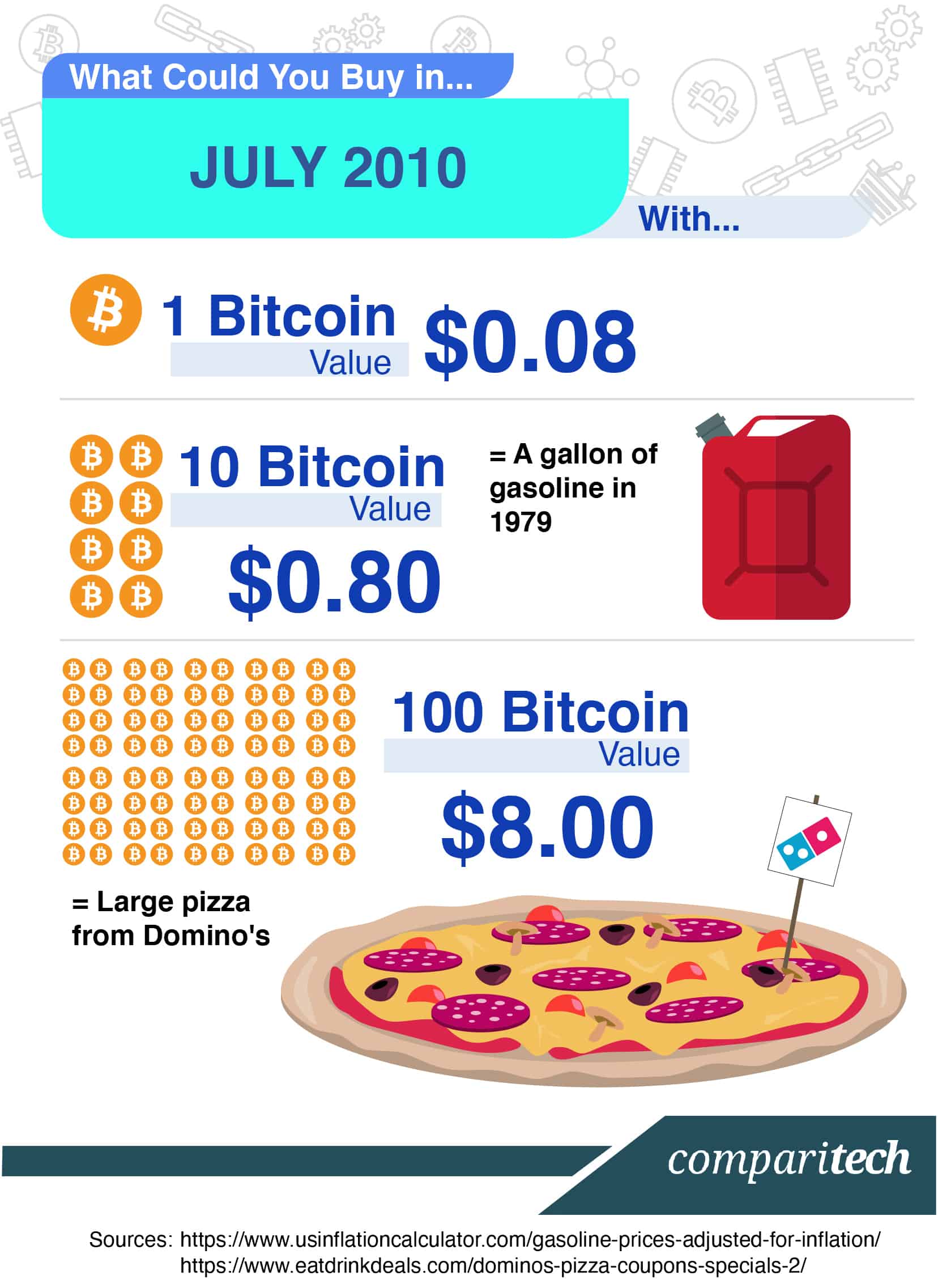
In July 2010, another pivotal event occurred with the launch of Mt. Gox, which would become the dominant Bitcoin exchange for several years. This platform significantly improved price discovery and liquidity. By July, Bitcoin’s price had climbed from fractions of a cent to around $0.08 (8 cents). This was a substantial leap from its early valuations and signaled a growing, albeit still small, interest in the digital asset. Towards the end of 2010, the price saw further increases, sometimes reaching over $0.30 (30 cents) on Mt. Gox, before settling back down. This upward movement, while tiny by today’s standards, represented a significant gain for early holders and marked the end of Bitcoin’s infancy, setting the stage for its first major bull run in 2011. The erratic price movements throughout 2010 were a precursor to the volatility that would become a hallmark of the cryptocurrency market.
The Investment Landscape of 2010: A Missed Opportunity for Many
From a contemporary investment perspective, 2010 presents a profound paradox: an asset trading for fractions of a cent that would later command prices in the tens of thousands of dollars. Yet, at the time, the idea of investing in Bitcoin was almost entirely foreign, overshadowed by a myriad of practical, psychological, and informational barriers.
The Speculative Nature of Early Crypto
In 2010, Bitcoin was not perceived as an “investment” in the traditional sense. It lacked regulatory oversight, institutional backing, and any widely accepted intrinsic value. Its value was entirely speculative, driven by the belief of a small, technically proficient community in its potential to disrupt traditional finance. The “investors” of 2010 were less financial professionals and more digital pioneers—individuals willing to experiment with a nascent technology that most considered to be a toy or a scam. The concept of “hodling” (holding on for dear life) had not yet emerged, and many who acquired Bitcoin early either spent it on mundane items or lost it due to technical mishaps or forgotten passwords.
Barriers to Entry and Risk Perception
Acquiring Bitcoin in 2010 was a far cry from the seamless process available today through regulated exchanges and mobile apps. There were no user-friendly platforms, no easy fiat on-ramps, and minimal information for the layperson. Mining required technical know-how, and purchasing often involved direct peer-to-peer exchanges or rudimentary, often insecure, online forums. The perceived risk was astronomical: people were dealing with an unknown, unregulated, and frequently misunderstood digital asset. The potential for scams, technical failures, and complete loss of funds was high, making it an unattractive proposition for anyone seeking conventional investment returns or even minimal financial security. Furthermore, there was no mainstream media coverage; awareness was confined to niche tech blogs and online forums.
The Visionaries and Early Adopters
Who, then, were the people buying Bitcoin for pennies? They were typically tech enthusiasts, programmers, libertarians, and early adopters of emerging internet technologies. Their motivations were diverse:
- Ideological: A belief in decentralized money, privacy, and freedom from government and corporate control.
- Experimental: A fascination with the underlying cryptography and the potential for a truly digital currency.
- Curiosity: A desire to simply “play around” with a new technology and understand its mechanics.
- Limited Speculation: A tiny fraction might have seen its long-term potential, but even they likely underestimated the magnitude of its future success.
These early adopters were not driven by the profit motive that defines modern investing, but by a combination of intellectual curiosity and a belief in a nascent technological paradigm. Their foresight, whether conscious or unconscious, would ultimately be rewarded beyond anyone’s wildest dreams.
From Cents to Millions: The Astronomical Growth Trajectory
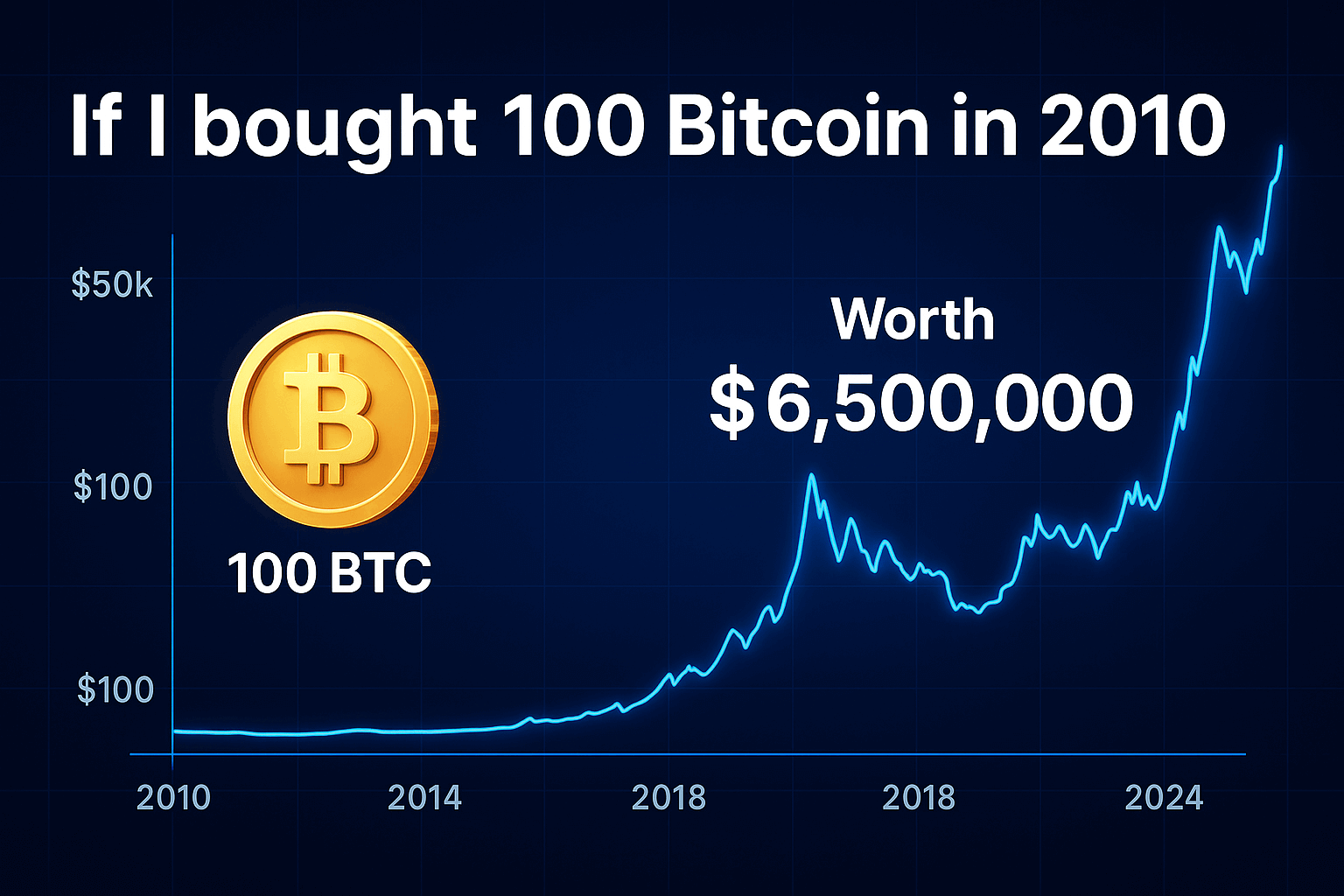
Looking back, the staggering contrast between Bitcoin’s value in 2010 and its subsequent peaks highlights one of the most remarkable investment stories ever told. What was once worth fractions of a cent exploded into an asset valued in tens of thousands of dollars, fundamentally altering the landscape of global finance.
Compounding Returns: The Power of Early Investment
The returns generated by an early Bitcoin investment are almost mythical. Consider a hypothetical scenario:
- An investment of just $100 in April 2010, when Bitcoin was trading around $0.003, would have yielded approximately 33,333 Bitcoins.
- If that same investment had been made during the “Pizza Day” period in May 2010 at $0.0041 per BTC, it would have purchased roughly 24,390 Bitcoins.
- Even if one had purchased $100 worth of Bitcoin at its peak in late 2010, say at $0.30 per BTC, they would have owned around 333 Bitcoins.
Fast forward to Bitcoin’s all-time high of nearly $69,000 in November 2021:
- The 33,333 BTC from an April 2010 purchase would have been worth approximately $2.3 billion.
- The 24,390 BTC from May 2010 would have been worth around $1.68 billion.
- The 333 BTC from late 2010 would have been worth approximately $23 million.
These figures are mind-boggling, illustrating the unprecedented power of early adoption and long-term holding in a truly disruptive asset. No traditional investment vehicle in modern history has delivered such exponential returns.
Factors Driving Subsequent Value Appreciation
Bitcoin’s journey from cents to millions was not a linear one. Several key factors contributed to its dramatic value appreciation post-2010:
- Increased Adoption and Utility: As more merchants and individuals began to accept and use Bitcoin, its utility and perceived value grew.
- Mainstream Media Attention: From 2013 onwards, Bitcoin started garnering significant media coverage, raising public awareness and attracting new investors.
- Technological Advancements: Continuous development of the Bitcoin network, along with the emergence of an entire cryptocurrency ecosystem, reinforced its foundational role.
- Halving Events: The programmed reduction in new Bitcoin supply (halving) every four years created scarcity, historically leading to price surges.
- Institutional Interest: The entry of institutional investors, major corporations, and even nation-states into the Bitcoin space legitimized it as a serious asset class.
- Macroeconomic Environment: Bitcoin’s narrative as a hedge against inflation and a “digital gold” gained traction amidst global economic uncertainties.
These factors, combined with speculative fervor and increasing liquidity, propelled Bitcoin to levels unimaginable to its earliest participants.
Lessons from Bitcoin’s Price History
Bitcoin’s incredible price trajectory offers several crucial lessons for investors:
- Disruptive Potential: Truly disruptive technologies, even if initially dismissed, can yield extraordinary returns.
- Long-Term Vision: The ability to see beyond short-term volatility and hold onto conviction for the long haul is paramount.
- Risk and Reward: High risk often comes with the potential for high reward, but also the possibility of complete loss. Early Bitcoin investment was an extreme example of this.
- Information Asymmetry: Those with early access to information and an understanding of nascent technologies have a significant advantage.
- Market Cycles: Bitcoin’s history is characterized by extreme boom and bust cycles, requiring a strategic approach to investment.
The Enduring Legacy and Modern Implications for Investors
The year 2010 serves as a powerful reminder of Bitcoin’s humble origins and the revolutionary path it has carved. Its initial worth, nearly imperceptible, underpins the narrative of an asset that fundamentally challenged established financial paradigms and redefined what an “investment” could be.
Bitcoin as a Store of Value vs. Medium of Exchange
While Bitcoin’s initial purpose was purely as a “peer-to-peer electronic cash system,” its rapid price appreciation has shifted its primary perception. Today, Bitcoin is largely considered a “store of value” or “digital gold” by many investors, an asset to be held rather than frequently spent, due to its capped supply and perceived inflation-hedging properties. Its role as a medium of exchange, while still present, often takes a backseat to its investment potential. This evolution from a transactional currency to a strategic asset class is a direct consequence of its astonishing growth since 2010.
The New Digital Gold Paradigm
In the modern investment landscape, Bitcoin occupies a unique position. It is increasingly viewed as a diversification tool, a hedge against traditional financial market volatility, and a potential safe haven in times of economic uncertainty. This “digital gold” narrative has attracted institutional money, leading to the creation of Bitcoin ETFs and greater integration into traditional financial portfolios. The very idea that a decentralized digital asset could compete with thousands of years of gold’s legacy was unfathomable in 2010, yet it is a widely debated and often accepted premise today.
The Future of Digital Assets
Bitcoin’s journey from pennies to prominence paved the way for the entire cryptocurrency market. It proved the viability of decentralized digital assets and blockchain technology, inspiring thousands of other cryptocurrencies and innovations in decentralized finance (DeFi), NFTs, and Web3. For investors today, understanding Bitcoin’s past in 2010 provides critical context for evaluating the potential of emerging digital assets. It highlights the importance of innovation, community, and the long-term vision in a rapidly evolving financial frontier.
In conclusion, Bitcoin’s worth in 2010 was a fleeting blip, a fraction of a cent that held profound implications for those with the foresight, luck, or conviction to engage with it. It was a time when the “investment” case for Bitcoin was non-existent in conventional terms, yet it laid the foundation for one of the greatest wealth creation events in modern history. The story of Bitcoin’s value in 2010 is not just about numbers; it’s a testament to the power of disruptive innovation and a perpetual lesson in recognizing potential where others see only negligible value.
aViewFromTheCave is a participant in the Amazon Services LLC Associates Program, an affiliate advertising program designed to provide a means for sites to earn advertising fees by advertising and linking to Amazon.com. Amazon, the Amazon logo, AmazonSupply, and the AmazonSupply logo are trademarks of Amazon.com, Inc. or its affiliates. As an Amazon Associate we earn affiliate commissions from qualifying purchases.