
The name Alice Marie Johnson, while once largely unknown to the public, has become synonymous with a powerful story of injustice, advocacy, and eventual redemption. Her release from federal prison after serving over two decades for a first-time, non-violent drug offense captivated the nation and sparked widespread conversations about criminal justice reform. While the details of her conviction are crucial to understanding her plight, the enduring resonance of her story lies not just in the legal specifics, but in the narrative that has been constructed around her – a narrative that has, in essence, redefined her personal brand from that of an incarcerated individual to a symbol of hope and a catalyst for change. This exploration delves into the initial circumstances that led to her imprisonment, examining how her personal brand was initially defined by her legal status, and then tracing the evolution of that brand through the lens of advocacy, media attention, and her eventual release.

The Genesis of a Sentence: Understanding the Conviction
To comprehend the arc of Alice Marie Johnson’s story, it’s essential to first understand the legal foundation upon which her long incarceration was built. Her case, while unique in its eventual outcome, is emblematic of a broader era of stringent drug sentencing policies in the United States. The narrative of her conviction is not one of personal malice or widespread criminal enterprise, but rather a complex interplay of circumstances, systemic pressures, and legal frameworks that, at the time, offered little room for leniency.
A First-Time Offense and the Weight of Conspiracy
Alice Marie Johnson was convicted in 1996 for her role in a cocaine trafficking conspiracy. Crucially, she was a first-time offender with no prior criminal record. Her involvement, however, was significant enough to draw the attention of federal prosecutors. The charges stemmed from her acting as a go-between for drug dealers, facilitating communication and acting as a courier. While she did not personally sell drugs or possess large quantities, her participation in the broader conspiracy led to her indictment under federal drug laws.
The Impact of Sentencing Guidelines and Mandatory Minimums
The punitive landscape of the 1980s and 1990s, characterized by the “War on Drugs,” saw the implementation of increasingly harsh sentencing guidelines and mandatory minimum sentences. These policies were designed to ensure that individuals involved in drug trafficking, regardless of their specific role, received significant prison time. For Johnson, this meant that her involvement in a conspiracy, even as a subordinate and first-time offender, subjected her to a lengthy mandatory sentence. The judge in her case, while reportedly expressing some reservations, was bound by these statutory requirements, which dictated a sentence of life imprisonment without parole. This aspect of her conviction is critical; it highlights how systemic legal frameworks, rather than solely individual culpability, can disproportionately impact lives. Her brand, at this stage, was unequivocally defined by her legal status as a convicted felon serving a life sentence for a drug offense.
The Silent Decades: An Incarcerated Identity
For over two decades, Alice Marie Johnson’s identity was primarily that of an inmate. Her days were spent within the confines of federal prison, her interactions limited, and her connection to the outside world significantly curtailed. This period of incarceration, while defined by her sentence, was also a time where her personal narrative was largely one of quiet endurance. The public was largely unaware of her existence, her case lost in the vast machinery of the American justice system. This silent decade underscores the challenge many incarcerated individuals face in maintaining any semblance of a personal brand or identity beyond their legal label. Her brand, in essence, was dormant, a story untold and unheard by the wider world.
The Emergence of a Voice: Advocacy and the Shifting Narrative
Johnson’s story began to shift from a tale of quiet suffering to a public call for justice through the persistent efforts of advocates and the increasing visibility of her case in the media. This period marks a significant evolution in her personal brand, moving from an anonymous inmate to a recognized advocate for clemency and criminal justice reform. This shift was strategically fueled by a growing awareness of the perceived injustices of her sentence and the broader implications of the laws under which she was convicted.
The Power of Advocacy: Champions for Clemency
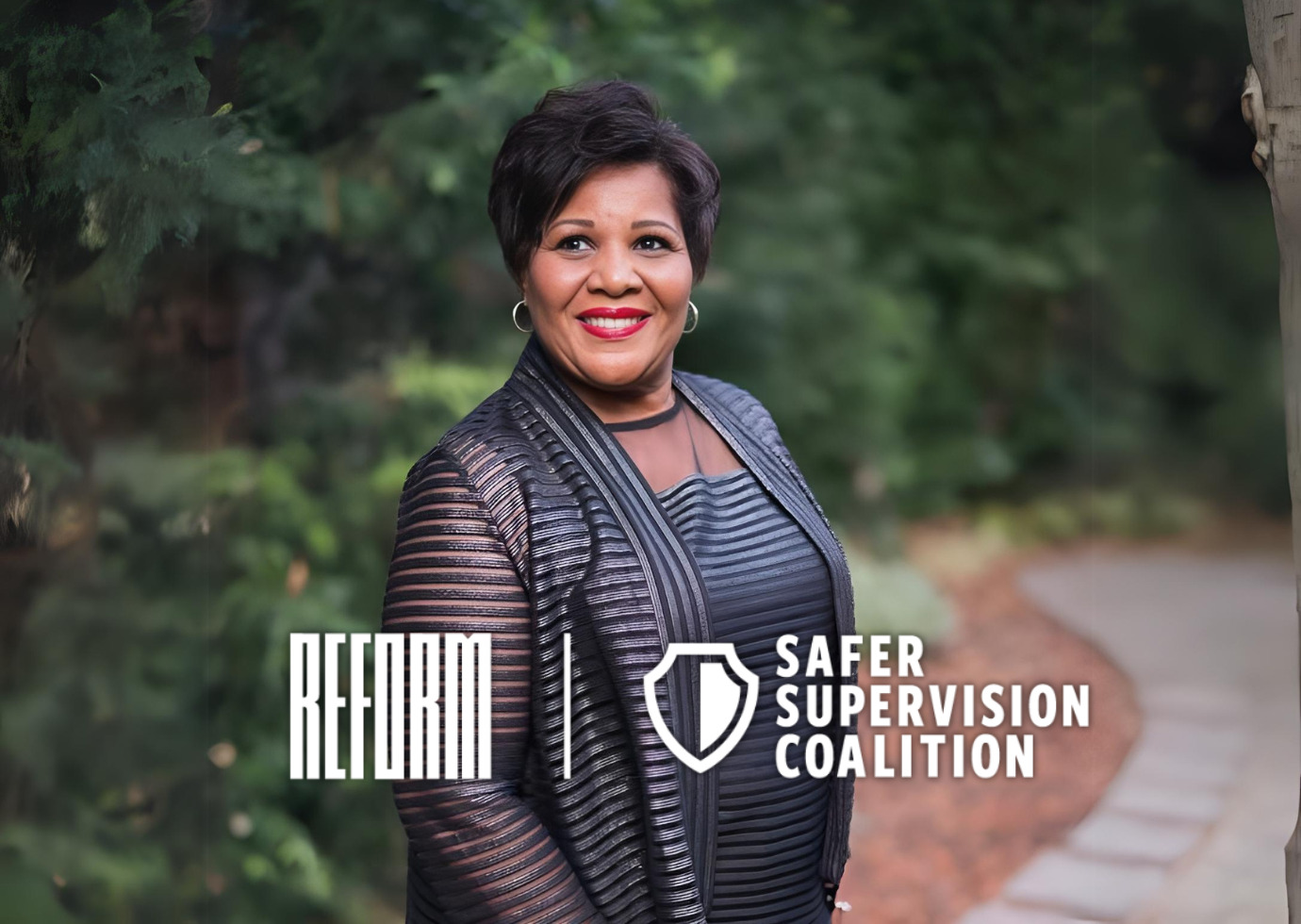
The initial spark for Johnson’s public awakening came from dedicated individuals and organizations committed to challenging what they saw as an unjust sentence. Kim Kardashian West’s engagement with the White House and President Donald Trump’s administration was a pivotal moment, bringing Johnson’s case to the forefront of national attention. Kardashian West, leveraging her significant platform and personal brand, began to advocate for Johnson’s clemency, highlighting the specific details of her case – her age at the time of the offense, her exemplary conduct in prison, and the disproportionate nature of her sentence for a non-violent, first-time offense. This advocacy was instrumental in transforming Johnson from a statistic into a human being with a compelling story.
Media Amplification: Crafting the “Clemency Story”
The media played a crucial role in amplifying Johnson’s narrative. News outlets, from major television networks to online publications, began to cover her story extensively. This coverage often focused on the human element: Johnson’s remorse, her desire to be reunited with her family, and the perceived unfairness of her lifelong sentence. The framing of her case as a story of injustice and potential redemption resonated deeply with audiences. This media attention was not merely reporting; it was the active construction of a compelling narrative that positioned Johnson not as a hardened criminal, but as a victim of outdated and overly harsh sentencing laws. Her personal brand began to be shaped by this public discourse, characterized by themes of second chances and the need for systemic reform.
From Inmate to Icon: The Rise of a Personal Brand
As her story gained traction, Alice Marie Johnson’s personal brand underwent a profound transformation. She was no longer solely defined by her conviction but by her resilience, her advocacy, and her role as a symbol of hope. Her image shifted from that of an anonymous prisoner to a compelling figure advocating for change. This evolution involved a deliberate focus on her positive attributes: her educational pursuits in prison, her mentorship of other inmates, and her unwavering desire to contribute positively to society upon release. Her brand became a testament to the possibility of rehabilitation and the importance of second chances, a narrative that transcended her legal past and resonated with a broad audience seeking a more just and compassionate criminal justice system.
The Redemption Arc: Reclaiming a Narrative and Rebuilding a Future
Alice Marie Johnson’s eventual release from prison was not merely the end of a sentence; it was the culmination of a powerful redemption arc that had been building through sustained advocacy and a shifting public consciousness. Her brand, now firmly established as one of resilience and advocacy, was poised for a new chapter, one focused on rebuilding her life and continuing her mission.
The Power of Presidential Clemency: A Landmark Decision
The decision by President Donald Trump to grant Alice Marie Johnson full clemency in August 2018 was a landmark moment, both for her and for the broader conversation around criminal justice reform. This executive action, influenced by sustained public pressure and advocacy, symbolized a significant shift in how her case was perceived at the highest levels of government. The granting of clemency was not just a legal act; it was a powerful endorsement of the narrative that had been carefully constructed around her: a narrative of a deserving individual who had paid a steep price for a past mistake and was ready to contribute to society. This decision solidified her brand as a symbol of successful advocacy and the potential for clemency to correct perceived injustices.
Post-Release: A Continued Brand of Advocacy
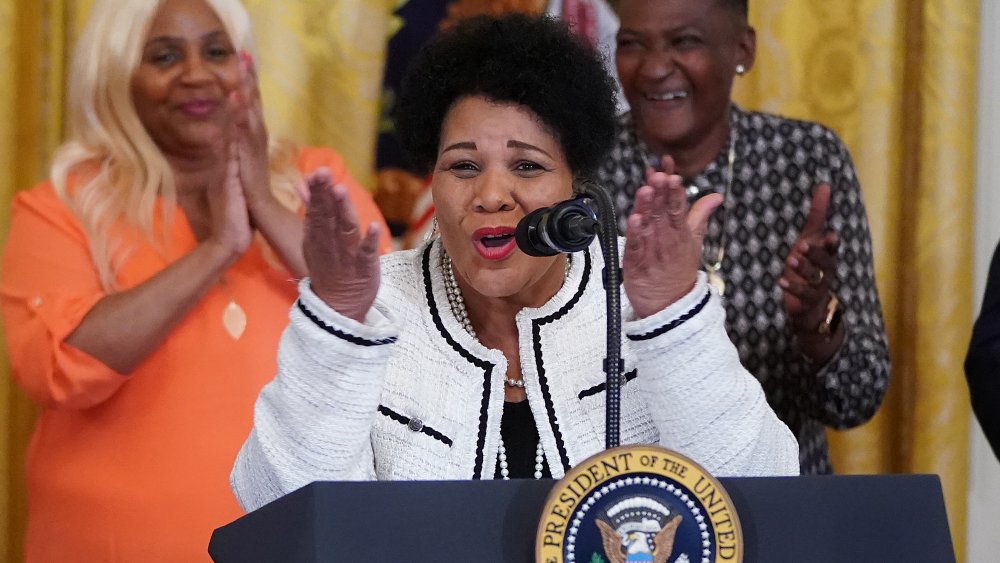
Upon her release, Alice Marie Johnson did not retreat into obscurity. Instead, she embraced her newfound freedom and continued to advocate for criminal justice reform with even greater vigor. She became a sought-after speaker, sharing her story at conferences, universities, and public forums. Her brand evolved to encompass not just her personal journey but also her commitment to helping others navigate the complexities of the justice system and advocating for policy changes that would prevent similar injustices. She actively worked with organizations dedicated to prison reform, clemency, and the rehabilitation of formerly incarcerated individuals, solidifying her image as a passionate and influential advocate.
The Enduring Legacy: A Symbol of Hope and Change
Alice Marie Johnson’s story has left an indelible mark on the landscape of criminal justice reform and personal branding. Her journey from an incarcerated individual to a national advocate demonstrates the profound impact of narrative, media attention, and persistent advocacy. Her personal brand is now deeply intertwined with the ongoing movement for reform, serving as a powerful reminder that individuals can overcome the most challenging circumstances and emerge as catalysts for positive change. Her story continues to inspire, demonstrating that a brand can be built not just on commercial success or celebrity, but on the strength of one’s convictions, the power of one’s voice, and the unwavering pursuit of justice.
aViewFromTheCave is a participant in the Amazon Services LLC Associates Program, an affiliate advertising program designed to provide a means for sites to earn advertising fees by advertising and linking to Amazon.com. Amazon, the Amazon logo, AmazonSupply, and the AmazonSupply logo are trademarks of Amazon.com, Inc. or its affiliates. As an Amazon Associate we earn affiliate commissions from qualifying purchases.