
In the early decades of the computing revolution, the “directory” served as the primary map for navigating the vast, burgeoning landscapes of both local file systems and the nascent World Wide Web. Before the ubiquity of high-speed algorithmic search engines and cloud-native object storage, directories were the essential frameworks that allowed users to locate, organize, and manage data. To understand what a directory was—and how its legacy continues to shape modern software architecture—one must examine its dual identity: as a structural component of operating systems and as a human-curated gatekeeper to the internet.
The Architectural Foundation: Hierarchical File Systems
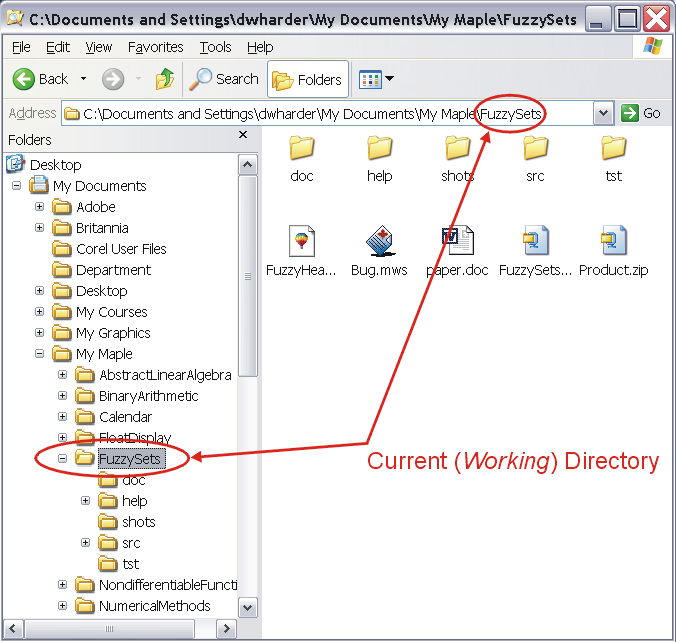
At its most fundamental level in computer science, a directory is a file system cataloging structure which contains references to other computer files, and possibly other directories. In the era of early mainframes and the first personal computers, data storage was a literal and figurative frontier. As storage capacities grew from kilobytes to megabytes, the need to organize files beyond a “flat” structure became a technical necessity.
The Shift from Flat to Hierarchical Structures
Early operating systems often utilized flat file systems where every file existed on the same level. However, as the number of files increased, this became unmanageable for both the system and the user. The introduction of the hierarchical file system—most notably popularized by Unix and later adopted by DOS and Windows—introduced the concept of the “root directory.”
In this model, a directory was not just a list but a node in a tree. The root directory (denoted by a forward slash / in Unix or a backslash in Windows) served as the trunk from which “subdirectories” branched out. This allowed for logical grouping based on function, project, or user. For example, a system might have a /bin directory for binaries and a /home directory for user data. This logic remains the backbone of every modern operating system, though the terminology has largely shifted toward “folders” to accommodate a more office-centric metaphor for general consumers.
Pathnames and Navigation
The directory structure birthed the concept of the “path.” To access a specific piece of data, a user or a program had to traverse the hierarchy. This required a strict syntax—a roadmap of sorts—that defined the location of a file relative to the root. For technicians and early power users, mastering the command line meant mastering the cd (change directory) command. The directory was not just a container; it was a physical location in the digital logic of the machine.
The Web Directory: Organizing the Chaos of the Early Internet
While developers were using directories to organize code on hard drives, a different kind of directory was defining how the public accessed the internet. In the 1990s, the World Wide Web was expanding at a rate that far outpaced the ability of primitive search engines to index it. The solution was the Web Directory.
The Era of Human Curation
Unlike a modern search engine like Google, which uses “spiders” to crawl the web and algorithms to rank results, a web directory was a human-edited list. The most famous example, Yahoo!, began its life in 1994 as “Jerry and David’s Guide to the World Wide Web.” It was a hierarchical directory of other websites, organized by subject.
In this context, a directory was a taxonomy. Editors would review website submissions and place them into specific categories such as “Recreation,” “Science,” or “Arts.” If you wanted to find information about a specific hobby, you didn’t type a query into a blank box; you clicked through layers of categories—starting broad and getting more specific—until you reached a list of curated links.
DMOZ and the Open Directory Project
One of the most significant milestones in this era was the Open Directory Project, also known as DMOZ (Directory Mozilla). It was a collaborative, community-driven effort to create the most comprehensive directory of the web. At its peak, DMOZ was maintained by tens of thousands of volunteer editors. For a decade, being listed in the DMOZ directory was the “gold standard” for Search Engine Optimization (SEO), as many early search engines used DMOZ data to supplement their own results.

The decline of the web directory coincided with the rise of the PageRank algorithm. As the web grew to billions of pages, human editors could no longer keep up. The “directory” as a web-discovery tool eventually succumbed to the “search engine,” which offered real-time indexing and a more intuitive, query-based user experience.
Enterprise Directories: Identity and Access Management
Parallel to the evolution of file systems and web lists, the tech industry developed a third, highly specialized type of directory: the Enterprise Directory. This technology was designed to manage users, devices, and permissions within a network.
LDAP and the Standardization of Access
The Lightweight Directory Access Protocol (LDAP) became the industry standard for accessing and maintaining distributed directory information services. In an enterprise environment, a directory was a specialized database optimized for reading, searching, and browsing. It didn’t store large files; instead, it stored “objects”—such as a user’s name, email address, password, and job title.
The directory served as the “single source of truth” for an organization’s digital identity. When a person logged into their workstation, the computer would query the directory to verify their credentials and determine which resources (printers, shared drives, software) they were authorized to use.
The Dominance of Active Directory
In 1999, Microsoft introduced Active Directory (AD) with Windows 2000 Server. It transformed the directory from a simple list of users into a sophisticated management tool. AD utilized a hierarchical structure of “Forests,” “Trees,” and “Domains” to reflect the complex organizational charts of global corporations. Even in the modern era of cloud computing, the principles of Active Directory persist in services like Azure AD (now Microsoft Entra ID), proving that the directory remains a vital component of digital security and administrative architecture.
The Transition from Location to Metadata
As we move further into the age of Big Data and AI, the traditional concept of the directory is undergoing a profound transformation. In modern software development, particularly in cloud environments, the rigid hierarchy of the directory is often replaced by more flexible models.
Object Storage vs. Block Storage
In legacy systems, a file’s “address” was its directory path. If you moved a file to a different directory, its address changed, often breaking links. Modern cloud storage, such as Amazon S3, utilizes “Object Storage.” In this model, files are stored in a flat address space. While users might see “folders” in a graphical interface, these are often just metadata “prefixes.” The “directory” has become a virtualized layer—a visual convenience rather than a physical constraint of the data’s location on a disk.
The Shift to Search and Tagging
In consumer software, we are seeing the “death of the directory” in favor of metadata and universal search. On a modern smartphone or a platform like Google Drive, users are increasingly encouraged to search for a file’s name or content rather than navigating through a nested directory structure. Tags, labels, and AI-driven recommendations are replacing the strict tree-logic of the 1980s and 90s. We no longer need to know where a file is; we only need to know what it is.

The Lasting Legacy of the Directory
Though the term “directory” may feel like a relic of the floppy-disk era to some, its influence is embedded in the DNA of modern technology. The directory was the first successful attempt to impose human logic on the binary chaos of the machine. It taught us how to categorize digital information, how to manage identity at scale, and how to navigate an interconnected world.
From the nested folders on a MacBook to the complex identity clusters in a cloud-native environment, the directory lives on. It has evolved from a static list into a dynamic, multi-dimensional system of organization. Whether it is a sysadmin managing a global network via LDAP or a developer structuring an API, the fundamental goal remains the same: creating a structured path to knowledge. The directory was not just a folder; it was the blueprint for the digital age.
aViewFromTheCave is a participant in the Amazon Services LLC Associates Program, an affiliate advertising program designed to provide a means for sites to earn advertising fees by advertising and linking to Amazon.com. Amazon, the Amazon logo, AmazonSupply, and the AmazonSupply logo are trademarks of Amazon.com, Inc. or its affiliates. As an Amazon Associate we earn affiliate commissions from qualifying purchases.