
In the rapidly evolving landscape of technology, the phrase “what unit of measurement” is more than just a question of scale; it is a fundamental inquiry into how we define progress, performance, and capacity. As we transition from the era of personal computing to the age of artificial intelligence and quantum processing, the units we use to measure our digital world have shifted from simple tallies to complex, multi-dimensional metrics. Understanding these units is essential for developers, IT professionals, and tech enthusiasts who wish to grasp the true power of the tools they use every day.
1. The Evolution of Data Storage: From Bits to Yottabytes
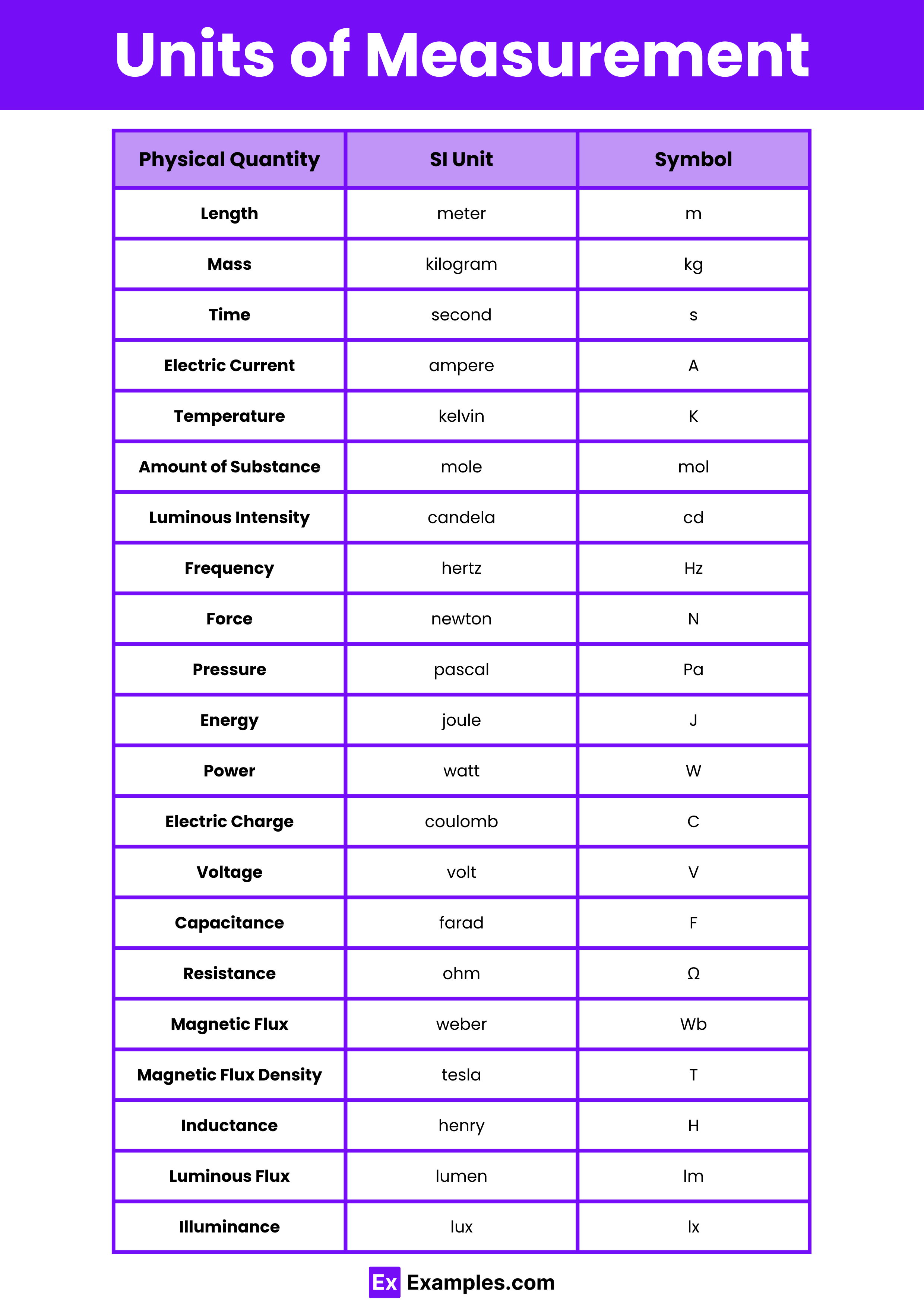
At the heart of all technology lies the bit—the most basic unit of measurement in computing. Representing a logical state of either 0 or 1, the bit is the DNA of the digital world. However, as our appetite for data has grown, the units we use to measure storage have undergone a massive transformation.
The Binary Foundation: Bits vs. Bytes
While a bit is the smallest unit, the “byte” (comprising 8 bits) became the standard unit for measuring data capacity. This distinction is crucial in the tech world. For instance, when you purchase a hard drive, the capacity is listed in bytes, but when you measure internet speed, it is often listed in bits per second (bps). This historical nuance often leads to confusion, as a 100 Mbps connection does not mean you can download a 100 MB file in one second; rather, it takes eight times longer due to the bit-to-byte ratio.
Scaling to the Infinite: The Rise of Terabytes and Beyond
For decades, the Megabyte (MB) and Gigabyte (GB) were the gold standards for personal storage. Today, the Terabyte (TB) is the baseline for consumer hardware, while enterprise data centers and cloud providers like AWS and Google Cloud operate in the realm of Petabytes (PB) and Exabytes (EB). We are now on the cusp of the Zettabyte and Yottabyte eras. To put this in perspective, a Yottabyte is equal to a septillion bytes. Measuring at this scale requires not just larger numbers, but more efficient file systems and compression algorithms to handle the sheer volume of information being generated by IoT devices and global telecommunications.
The Difference Between Decimal and Binary Prefixes
A recurring point of technical debate is the difference between “Gigabytes” (GB) and “Gibibytes” (GiB). In the decimal system (Base 10), a Gigabyte is 1,000 Megabytes. However, in the binary system (Base 2), which computers actually use, a Gibibyte is 1,024 Mebibytes. This discrepancy is why a “1 TB” drive often shows up as roughly 931 GB in an operating system like Windows. Understanding this unit of measurement is vital for system administrators when provisioning virtual machines or managing server storage.
2. Measuring Processing Power: Beyond Clock Speed
Historically, the primary unit of measurement for a CPU’s performance was its clock speed, measured in Hertz (Hz). A 3.0 GHz processor was universally understood to be faster than a 2.4 GHz one. However, as processor architecture has become more sophisticated, clock speed has become an incomplete metric for performance.
The Rise of the FLOP (Floating Point Operations Per Second)
In the modern era of high-performance computing (HPC) and artificial intelligence, the “FLOP” has become the definitive unit of measurement. FLOPS measure a computer’s ability to perform complex mathematical calculations involving fractional numbers. While your home PC might operate in Gigaflops (GFLOPS), modern supercomputers are measured in Petaflops (PFLOPS) and Exaflops. The “Frontier” supercomputer, for example, broke the exascale barrier, performing over a quintillion calculations per second. This metric is the standard for measuring the “intelligence” capacity of AI training clusters.
IPC: Instructions Per Clock
To understand why a modern 3.0 GHz chip outperforms a ten-year-old 3.0 GHz chip, we must look at IPC, or Instructions Per Clock. This unit measures how much work a processor can actually accomplish during a single clock cycle. It is a testament to architectural efficiency rather than raw speed. For software developers, optimizing code to increase IPC is often more effective than simply demanding more raw power from the hardware.
Specialized Units: TOPS and Tensor Cores
With the explosion of AI and machine learning, a new unit has entered the lexicon: TOPS (Tera Operations Per Second). Unlike FLOPS, which focus on general mathematical precision, TOPS often refer to integer operations used in neural network inference. When Apple or NVIDIA announce new chips, they emphasize the TOPS of their “Neural Engines” or “Tensor Cores.” This unit of measurement tells us how effectively a device can handle real-time tasks like facial recognition, voice processing, and generative AI image synthesis.
3. Visual and Display Metrics: Defining Digital Clarity
As we interact with technology through screens, the units of measurement for visual fidelity have become increasingly precise. We have moved far beyond the simple “pixel count” to metrics that define the depth and fluidity of our digital experiences.
Resolution vs. Pixel Density (PPI)
While “4K” is a popular marketing term referring to a horizontal resolution of approximately 4,000 pixels, it is an incomplete measure of quality. The more accurate unit for clarity is PPI (Pixels Per Inch). A 4K resolution on a 65-inch television results in a much lower PPI than 4K on a 27-inch monitor. For professionals in graphic design and mobile app development, PPI is the critical metric because it dictates the “retina” effect—where the human eye can no longer distinguish individual pixels.
Refresh Rates and Response Times
In the world of gaming and high-end interface design, the unit of measurement is the Hertz (Hz) for refresh rates and Milliseconds (ms) for response times. A 144Hz display updates the image 144 times per second, providing a level of fluidity that a standard 60Hz screen cannot match. Simultaneously, the “Grey-to-Grey” (GtG) response time measures how fast a pixel can change colors. These units are the benchmarks for low-latency environments, where every millisecond of delay can impact the user’s performance or immersion.
Color Gamut and Nit Levels
For creators, the unit of measurement for color accuracy involves percentages of standardized gamuts like sRGB, Adobe RGB, or DCI-P3. Furthermore, the brightness of a display is measured in “Nits” (candelas per square meter). With the rise of HDR (High Dynamic Range) technology, Nits have become a vital metric; a screen capable of 1,000 nits provides the contrast necessary for true-to-life highlights that standard 300-nit displays simply cannot reproduce.
4. Network Performance: Bandwidth, Latency, and Throughput
In our hyper-connected world, measuring how data moves is just as important as measuring how it is stored or processed. However, many users conflate different units of networking, leading to a misunderstanding of what makes a “fast” connection.
Bandwidth vs. Throughput
Bandwidth is measured in bits per second (bps) and represents the maximum theoretical capacity of a network path. Think of it as the width of a highway. Throughput, however, is the unit of measurement for the actual amount of data that successfully reaches its destination over a period of time. Factors like packet loss, overhead, and congestion mean that throughput is almost always lower than bandwidth. For network engineers, maximizing throughput is the ultimate goal.
Latency and Jitter: The Silent Performance Killers
While Mbps tells you how much data you can download, “Ping” or latency—measured in milliseconds (ms)—tells you how fast a single packet of data can travel to a server and back. In applications like cloud gaming, financial high-frequency trading, and remote surgery, latency is the only unit of measurement that matters. Furthermore, “Jitter” measures the variation in latency over time. A connection with high bandwidth but inconsistent jitter will result in dropped calls and stuttering video, proving that speed isn’t everything.
The Impact of 5G and Fiber Optics
The transition to 5G and fiber-to-the-home (FTTH) has shifted our baseline units from Megabits to Gigabits. This ten-fold increase in the unit of measurement isn’t just for faster downloads; it enables new technologies like edge computing, where data is processed closer to the user to maintain sub-10ms latency.
5. The Future Frontier: Quantum Measurement
As we reach the physical limits of silicon-based computing, we are looking toward a new set of units that operate on the principles of quantum mechanics.
From Bits to Qubits
The fundamental unit of measurement in a quantum computer is the “Qubit.” Unlike a standard bit, which is either 0 or 1, a qubit can exist in a superposition of both states simultaneously. The power of a quantum computer isn’t measured linearly; adding a single qubit can theoretically double the processing power of the system.
Quantum Volume and Fidelity
Because quantum systems are prone to errors caused by environmental noise, simple qubit counts are misleading. Instead, researchers use “Quantum Volume” as a holistic unit of measurement. Quantum Volume accounts for the number of qubits, how they are connected, and the “gate fidelity” (the accuracy of the operations). This metric represents the true “useful” power of a quantum system.
Decoherence Time
Another vital unit in the tech frontier is “Decoherence Time,” measured in microseconds. This represents how long a qubit can maintain its quantum state before it collapses. Extending this unit of measurement is the “Holy Grail” of quantum engineering, as it allows for longer, more complex calculations that could solve problems in cryptography and material science that are currently impossible for classical computers.
In conclusion, the question of “what unit of measurement” to use depends entirely on the technical context. Whether we are discussing the staggering scale of Yottabytes in the cloud, the mathematical precision of Petaflops in AI, or the near-instantaneous latency of 5G networks, these units provide the framework through which we understand the digital revolution. As technology continues to advance, our units of measurement will continue to evolve, pushing the boundaries of what is possible in the silicon and quantum realms.
aViewFromTheCave is a participant in the Amazon Services LLC Associates Program, an affiliate advertising program designed to provide a means for sites to earn advertising fees by advertising and linking to Amazon.com. Amazon, the Amazon logo, AmazonSupply, and the AmazonSupply logo are trademarks of Amazon.com, Inc. or its affiliates. As an Amazon Associate we earn affiliate commissions from qualifying purchases.